An Aluminum Door With Window can bring daylight into a room while keeping a clear connection to a patio, garden, or entryway. The right style depends on more than appearance. Opening width, available wall space, privacy needs, and local climate all affect the choice. A sliding patio door suits a narrow area because its panels move along a track. Hinged and French doors swing open, so they need clear floor space. Bi-fold doors fold back to create a wider opening, though their hardware and installation require careful attention.
There is no single best type for every home. A glazed entry door may offer a bright welcome, while a large sliding unit can frame an outdoor view. The glass, frame design, seals, and locking hardware matter as much as the door style. Thermal breaks and suitable glazing can improve comfort, but performance varies by product and installation. Check manufacturer specifications rather than relying on appearance alone. The labels can blur, and that is easy to overlook. A door that looks right in a showroom may feel different in a windy room or a busy household. This guide compares the most common types and the practical details that help narrow the options.
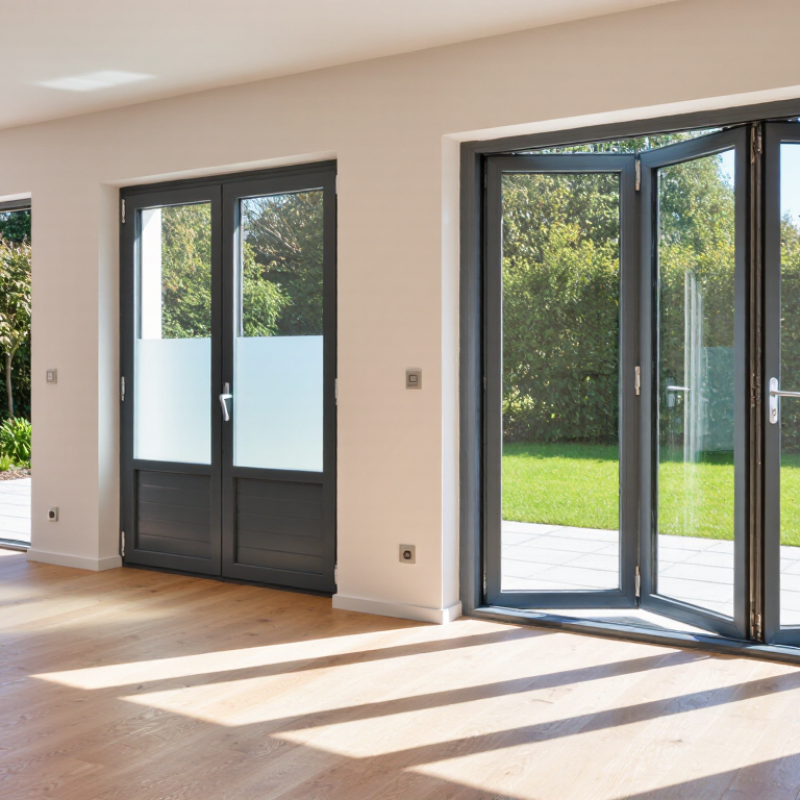
Aluminum doors with windows are best classified by how they open, how their glass is arranged, and where they are used. Operation is the clearest starting point. Hinged doors swing inward or outward on side-mounted hinges, while sliding models travel along a track and save clearance in compact rooms. Folding systems link several glazed panels, stacking them to one side when fully open. They create a wide passage, but their tracks need regular cleaning. Small detail, big difference.
Designers also classify these doors by glazing and panel layout. Full-lite doors have glass across most of the panel; half-lite versions combine an upper glazed section with a solid lower panel. Narrow vertical lites, divided grids, and sidelights affect privacy and daylight without changing how the door opens. Glazing may be single or insulated, depending on climate, noise, and performance needs. A large pane looks simple, yet it adds weight and can affect hardware performance. For a specific project, check the opening size, threshold drainage, and product specifications. Categories overlap: a sliding door can also be full-lite or divided. That overlap can be confusing, even for careful buyers.
Sliding aluminum doors with glass panels suit rooms that need daylight and a broad, unobstructed opening. Their narrow frames can create a clean view of a patio or garden, while the sliding track avoids the swing space required by hinged doors. Glass and frame performance still matter. The U.S. Department of Energy’s Energy Saver guidance estimates that windows account for about 25–30% of residential heating and cooling energy use. That figure is not specific to sliding doors, but it shows why glazing deserves attention. Check the National Fenestration Rating Council label for U-factor and solar heat gain coefficient, then compare options for your climate and the door’s sun exposure.
In daily use, look closely at the track, rollers, seals, and drainage openings. Fine grit can make a slider feel rough, and a poorly adjusted panel may admit drafts or water. Small details matter. Choose suitable safety glazing for the location, and ask how the sill handles rain before installation. A low threshold can make access easier, yet it may need careful water management. Large glass panels also bring more glare and less privacy; blinds or exterior shading can help, though they slightly interrupt the view. A beautiful sample in a showroom may feel different in a west-facing room at sunset.
Sliding aluminum doors commonly use two-, three-, or four-panel layouts. The chart shows example panel configurations; the number of movable panels varies by design and manufacturer.
Hinged aluminum doors with windows bring daylight into entryways, kitchens, and garden rooms. Their slim frames can leave more glass visible than bulkier profiles, while aluminum provides a rigid structure for daily use. Small details matter. Look for insulated glazing, a thermal break in the frame, and continuous weather seals if the door faces cold winds or strong sun. A single or double panel layout affects both light and privacy. Before choosing a door, check its swing direction and leave clear floor space for handles, curtains, and nearby furniture.
A good fit depends on more than appearance. Measure the opening at several points; older walls are rarely perfectly square. This is easy to miss. Ask an installer to check the sill, drainage path, and fixing points, especially for a larger glazed panel. Safety glass may be appropriate depending on the location and applicable building requirements, so confirm the specification rather than assuming. Compare whole-door performance figures, not just the glass rating. Hinges must support the panel’s weight, and adjustable hardware can help keep the latch aligned over time. Clean the frame channels and seals regularly. Hinged doors avoid sliding tracks, but worn seals can still let in drafts.
Bifold aluminum doors with glazed sections combine wide openings with slim, sturdy frames. Multiple panels fold and stack beside the opening, bringing daylight into kitchens, dining rooms, or garden rooms. When fully open, they create a broad connection to a patio. The effect is striking.
Aluminum frames resist warping and need relatively little upkeep, but performance depends on the complete door system. Look for thermal breaks in the frame and glazing suited to your climate. Low-emissivity, double-glazed units can help reduce heat transfer, though exact results depend on installation and local conditions. Check drainage details, weather seals, and the threshold, too. These small parts matter.
Panel width, opening direction, and stacking space deserve careful thought before ordering. A deep frame may affect the interior floor, while a raised threshold can be awkward for everyday access. A flush threshold looks seamless, but it needs well-planned water management. There is a trade-off. Ask an installer how the panels will operate in wind and whether the floor can support the chosen configuration. Also inspect the handle, locking points, and hinges in person; a large glazed opening should feel smooth and secure, not merely look impressive. One easy-to-miss detail is cleaning access, especially for outer panes above ground level.
French-style aluminum doors with windows pair two hinged leaves with broad glazed panels, bringing daylight into patios, dining rooms, and garden-facing spaces. Slim aluminum frames can preserve a clear view, while a thermal break helps limit heat transfer through the metal. For comfort, compare the whole door’s U-factor and solar heat gain coefficient, not glass alone. The National Fenestration Rating Council identifies these ratings as useful measures of energy performance. Ask for the tested assembly details, including glazing, frame, and weather seals.
The U.S. Department of Energy’s Energy Saver guidance estimates that windows account for about 25–30% of residential heating and cooling energy use. That figure is not specific to French doors, but it shows why glazing and installation deserve attention. Double-pane Low-E glass may suit many homes; the right choice depends on climate, orientation, and shade. Details matter. Check that the sill drains outward and that the locking hardware pulls both leaves snugly against the seals. Also measure the swing: a beautiful pair can be awkward beside a narrow walkway or dining chair. Aluminum’s clean lines are appealing, though I would not choose the slimmest frame without checking its thermal performance and warranty conditions.
They are grouped by operation, glass layout, and location. Hinged doors swing, sliding doors follow a track, and folding panels stack beside the opening. Categories can overlap.
Full-lite doors have glass across most of the panel. Half-lite doors combine upper glass with a solid lower section. Narrow glass strips and divided grids can also adjust privacy and daylight.
Check panel width, folding direction, and space for stacked panels. Tracks need regular cleaning. Also ask whether the floor supports the chosen setup.
Single or insulated glazing may suit different climates and noise needs. Double glazing with a Low-E coating can help reduce heat transfer, but installation and local conditions matter.
Check drainage, seals, and floor height. A flush threshold looks seamless, but it needs careful water management. Small detail, big difference.
Measure the swing beside walkways, chairs, and other furniture. Check that the sill drains outward and both leaves close snugly against the seals.
Not necessarily. Compare the whole door’s energy ratings, glazing, frame, and weather seals. I might choose a slim frame for the view, but performance deserves a closer look.
Yes. Large outer panes can be difficult to reach, especially above ground level. Plan how they will be cleaned before ordering. It is easy to forget.
An Aluminum Door With Window combines a durable frame with glazed sections that bring natural light into a space. These doors can be classified by how they open, the amount of glass they contain, and the layout of their panels. Choosing among the main styles depends on available room, access needs, and the look you want to create.
Sliding aluminum doors with glass panels move along a track, making them useful where a swinging door would take up space. Hinged designs open inward or outward and can suit everyday entrances. Bifold doors fold into sections to create a wide opening, while French-style aluminum doors typically feature paired panels with generous glazed areas for a balanced, classic appearance. Each option offers a different way to connect indoor and outdoor spaces while allowing daylight to enter.