0%

Choosing an Aluminium Washroom Door in 2026 requires more than comparing finishes and prices. Washrooms expose every weak detail: persistent humidity, cleaning chemicals, wet floors, and repeated impacts from carts or users. The right specification must balance hygiene, durability, accessibility, maintenance, and environmental performance.

The International Aluminium Institute reports that almost 75% of all aluminium ever produced remains in use today. That supports aluminium’s long service potential, but it does not guarantee a good door. Poor drainage can stain the frame. Weak hinges can sag. Unsealed edges may absorb moisture or trap dirt. The Global Status Report for Buildings and Construction also highlights the construction sector’s major energy and carbon burden, making recycled content and verified environmental product data increasingly relevant. Numbers matter.

Start with the site conditions. Specify corrosion-resistant alloys, powder coating suitable for humid interiors, stainless-steel fixings, and sealed panel edges. Check hinge-cycle testing, impact resistance, privacy hardware, ventilation gaps, and cleaning compatibility. Confirm the complete cubicle system, not only the door leaf. A strong door cannot compensate for a weak partition or badly aligned frame.

No material is perfect. Aluminium can dent, coatings can fail, and cheap hardware often becomes the first maintenance problem. That is why manufacturer test evidence, project references, warranty terms, and installation guidance deserve careful review. Independent certification helps, but it should match the actual product configuration. Before ordering, compare lifecycle cost against purchase price. A reliable Aluminium Washroom Door should feel stable, close quietly, clean easily, and remain serviceable years after installation.
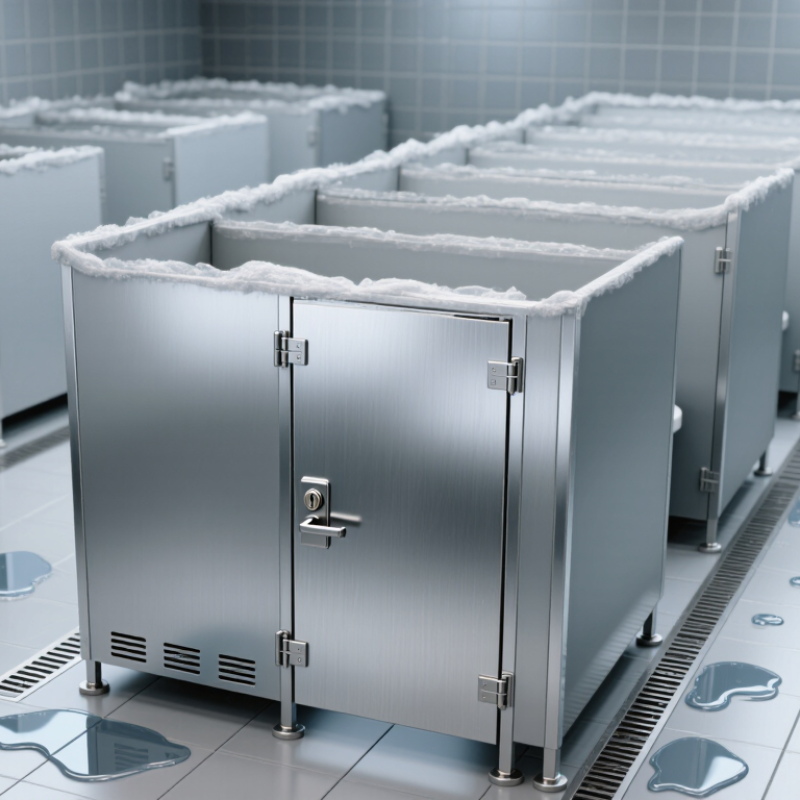
How to Choose an Aluminium Washroom Door in 2026?

Key Requirements for an Aluminium Washroom Door in 2026

How to Choose an Aluminium Washroom Door in 2026?

An aluminium washroom door must resist moisture, frequent cleaning, and daily impact. Look for corrosion-resistant aluminium, sealed joints, and stainless-steel fixings. In humid washrooms, untreated screws can stain the frame within months. That small detail matters.

Accessibility is another key requirement. Door width, opening force, thresholds, and handle height should follow local accessibility regulations. The 2023 Global Status Report for Buildings and Construction highlights growing demand for healthier, resource-efficient buildings. A practical door should support that aim through durable parts and easy maintenance.

Recycled aluminium also deserves attention. The International Aluminium Institute reports that recycling aluminium uses about 5% of the energy required for primary production. Ask for verified recycled content, not vague environmental claims.

Privacy needs careful testing. A narrow sight gap, stable hinges, and a reliable latch can prevent uncomfortable movement and noise. Ventilation gaps should not expose users or weaken the door leaf.

In real projects, installers sometimes focus on appearance and overlook drainage near the threshold. I have seen attractive doors swell around nearby materials after poor detailing. Aluminium itself will not solve bad installation. Check the frame alignment, sealant quality, and cleaning instructions before approval. Perfect performance is unlikely, but measurable requirements make poor choices easier to avoid.

Aluminium Door Types and Suitable Washroom Applications

How to Choose an Aluminium Washroom Door in 2026?

Door type should match moisture, traffic, and cleaning routines. Framed aluminium doors suit schools, offices, and busy public washrooms. Their reinforced edges resist daily impacts and support stable privacy hardware. Frameless doors create a lighter appearance, but they need accurate wall alignment and stronger fixing points. Sliding doors save space in compact accessible washrooms. Folding doors work well in narrow cubicles, although their hinges require frequent inspection.

Wet changing rooms need corrosion-resistant finishes, sealed edges, and stainless-steel hardware. Anodised aluminium offers a durable surface, while powder coating provides wider colour choices. Site teams should check drainage, splash zones, and door clearances before installation. A beautiful door can still fail when water collects beneath it. That detail is often missed.

Material selection also affects environmental performance. The International Aluminium Institute reports that recycling aluminium requires about 5% of the energy used for primary production. Ask suppliers for recycled-content evidence and product documentation. The 2023 WHO and UNICEF Joint Monitoring Programme report estimated that 3.5 billion people lacked safely managed sanitation services in 2022. This highlights why washroom design needs durability, hygiene, and inclusive access. Local accessibility requirements still control final dimensions. Data helps, but real site conditions can challenge the specification. Inspect hinges, locks, seals, and frame joints before approving installation.

Essential Materials, Hardware, and Durability Features

Choosing an aluminium washroom door starts with the material, not the finish. Look for corrosion-resistant aluminium with consistent wall thickness. Thin profiles may feel light, but they can twist around busy cubicles. A powder-coated surface helps resist moisture, cleaning chemicals, and daily scuffs. Check the coating edges carefully. Poor coverage often appears near corners and hinge cutouts.

Hardware controls much of the door’s real performance. Use stainless steel hinges, privacy indicators, and fixing screws suited to damp interiors. A strong latch should engage smoothly without forcing the handle. Adjustable hinges are useful when floors settle slightly. They also simplify future alignment. Avoid hardware that feels loose during the first inspection. It rarely improves with heavy use.

Durability depends on installation as much as materials. The frame must sit square, with even gaps along the latch side. A practical check is simple: open the door halfway and release it. Excessive movement may reveal weak hinges or an uneven frame. Doors in schools, gyms, and transport facilities need tested cycle performance, not attractive samples alone. Ask for documented load, corrosion, and opening-cycle tests. Some specifications look impressive but omit maintenance conditions. That is worth questioning. Leave clearance below the door for cleaning, while preventing excessive gaps that reduce privacy. A durable choice is not always the cheapest one. Sometimes, the stronger detail is almost invisible.

How to Choose an Aluminium Washroom Door in 2026? - Essential Materials, Hardware, and Durability Features

Selection Dimension Recommended Specification Practical Benefit What to Verify Before Purchase Suitability
Door Frame Alloy Architectural aluminium alloy such as 6063 for extruded frames; 6061 may be selected where higher structural strength is required. Provides a good balance of corrosion resistance, low weight, machinability, and surface finish quality. Confirm the alloy and temper, profile wall thickness, corner construction, and whether the frame is suitable for wet interior environments. Most washroom applications
Frame Wall Thickness Common commercial profiles are approximately 1.5–2.0 mm thick; heavier-duty profiles may be specified for high-traffic locations. Improves rigidity, screw retention, resistance to denting, and long-term alignment. Check the actual section drawing rather than relying only on the overall frame appearance. Medium to heavy traffic
Door Leaf Material Aluminium sheet, compact laminate, moisture-resistant composite panel, or another non-porous washroom-grade infill. Reduces moisture absorption and makes routine cleaning easier than untreated porous materials. Confirm water resistance, edge sealing, panel flatness, impact resistance, and compatibility with the frame system. Wet and humid interiors
Surface Finish Anodized aluminium or a factory-applied powder coating designed for interior architectural use. Improves appearance and helps protect the aluminium surface from oxidation, staining, and everyday abrasion. For anodizing, request the stated coating thickness and applicable standard; for powder coating, verify pretreatment, coating coverage, and cleaning instructions. General commercial use
Hinges Adjustable stainless-steel or corrosion-resistant aluminium hinges; use at least two hinges for standard-height doors and add a third when required by door weight or height. Supports reliable opening, alignment, and maintenance adjustment in a humid environment. Check load rating, fastener compatibility, hinge-cycle testing, adjustment range, and whether the hinge is suitable for the door’s actual weight. All traffic levels
Lock and Indicator Set Privacy lock with occupied/vacant indicator, emergency release, and corrosion-resistant internal components. Improves privacy, safety, and ease of use while allowing external emergency access. Verify door-thickness compatibility, emergency-release method, indicator visibility, latch operation, and replacement-part availability. Public and commercial washrooms
Fasteners Stainless-steel fasteners, preferably selected to limit galvanic corrosion when used with aluminium. Provides better resistance to rust and repeated cleaning than ordinary carbon-steel screws. Check fastener grade, protective washers or isolators, screw engagement length, and compatibility with the aluminium profile. Humid and frequently cleaned areas
Bottom Clearance Use a clearance appropriate for the cubicle system, floor finish, accessibility needs, and local building requirements; avoid direct contact with standing water. Improves ventilation, cleaning access, and protection against prolonged water exposure. Confirm the finished-floor level, drainage arrangement, privacy requirements, and accessibility criteria for the project. Wet-floor washrooms
Edge and Joint Protection Use sealed or mechanically protected edges, rounded exposed corners where practical, and accurately fitted joints. Limits water ingress, sharp-edge risks, dirt accumulation, and premature panel deterioration. Inspect corner joints, cut edges, sealant compatibility, drainage paths, and visible gaps after installation. High-use facilities
Cleaning Compatibility Select finishes that tolerate the facility’s approved neutral or manufacturer-recommended cleaning products. Helps preserve the finish and reduces staining, dulling, and corrosion caused by unsuitable chemicals. Request a cleaning and maintenance guide; avoid abrasive pads and unapproved acidic, alkaline, or chloride-rich chemicals. Healthcare and public facilities
Durability Documentation Require documented material specifications, corrosion-resistance information, hardware cycle testing, installation instructions, and warranty terms. Makes product comparisons more objective and helps identify lifecycle and maintenance risks before installation. Check test methods, stated performance limits, exclusions, spare-parts support, and whether the documentation applies to the complete door assembly. All projects
Specification note: Final door dimensions, clearances, hardware quantities, accessibility provisions, fire requirements, and installation details should be confirmed against the applicable local building codes and the complete door-system manufacturer documentation.

How to Compare Privacy, Safety, Maintenance, and Accessibility

How to Choose an Aluminium Washroom Door in 2026?

How to Compare Privacy, Safety, Maintenance, and Accessibility

Privacy should be judged beyond the door’s appearance. Check the side gaps, bottom clearance, latch strength, and hinge alignment. A slim sightline may look modern, but it can expose movement inside. Test the lock with one hand. It should engage smoothly without forcing the handle. In busy facilities, a vacant indicator and emergency release can prevent confusion during stressful moments.

Safety depends on details that are easy to overlook. Choose rounded door edges, secure hinges, and hardware that resists loosening in humid conditions. Soft-closing systems can reduce finger injuries, but they must not make the door difficult to open. Confirm that ventilation does not weaken privacy. A small mistake here matters. Ask for material specifications, load information, and tested hardware data rather than relying on attractive photographs.

Maintenance is usually simpler with powder-coated aluminium and moisture-resistant fittings. Still, smooth surfaces need regular cleaning, especially around the lower edge and hinges. Avoid designs with deep grooves that collect soap and dust. Accessibility requires more than a wide-looking entrance. Measure the clear opening, threshold height, handle position, opening force, and turning space. Follow applicable local accessibility requirements. Wheelchair users and people with limited grip strength may experience the door differently. I would inspect a sample on site before ordering, because drawings rarely reveal every awkward movement.

How to Choose an Aluminium Washroom Door in 2026?

Comparing privacy, safety, maintenance, and accessibility across common aluminium door configurations

Scores use a practical 1–5 comparison scale, where 5 indicates stronger performance for the stated criterion. Solid aluminium-faced doors generally provide better privacy, while glazed or louvered designs can improve visibility and ventilation. Accessibility should be confirmed against local regulations; common ADA reference points include a minimum 815 mm clear opening, a maximum 13 mm threshold, opening force of approximately 22 N for interior hinged doors, and a closing time of at least 5 seconds.

Installation Standards, Costs, and Long-Term Value Considerations

How to Choose an Aluminium Washroom Door in 2026?

Installation quality should lead the purchasing decision. Check the wall opening, floor level, frame alignment, and drainage conditions before ordering. For accessible washrooms, the U.S. ADA Standards generally require a 32-inch clear door opening and opening force no higher than 5 pounds for interior doors. Local fire, ventilation, privacy, and moisture requirements still control the final specification. A qualified installer should record these measurements. Small errors become expensive later.

Cost comparisons often hide missing items. Request separate prices for the door leaf, frame, hinges, closer, lockset, seals, delivery, installation, and future adjustments. RSMeans Facilities Construction Cost Data shows why regional labor and site conditions can change installed costs significantly. A cheap quotation may exclude preparation work. That is not efficient. I would allow a modest contingency for uneven walls, damaged tiles, or revised hardware. The exact percentage depends on the site, so pretending otherwise is poor estimating.

Long-term value depends on corrosion resistance, repairability, and replacement access. Select a suitable aluminium alloy and finish for humid, chemical-cleaning environments. Isolate aluminium from incompatible metals where necessary. The International Aluminium Institute reports that recycled aluminium uses about 5% of the energy required for primary aluminium production. This supports circular procurement, but recycled content alone does not guarantee durability. Check the Environmental Product Declaration, coating specification, warranty terms, and cleaning instructions. A door that closes quietly after five years matters more than a polished brochure.

FAQS

What should an aluminium washroom door resist?

It should resist moisture, frequent cleaning, and daily impacts. Choose corrosion-resistant aluminium, sealed joints, and stainless-steel fixings. Untreated screws may stain the frame within months.

Which door types suit different washroom spaces?

Framed doors suit schools, offices, and busy public facilities. Sliding doors save space in compact accessible washrooms. Folding doors suit narrow cubicles, but their hinges need regular inspection.

How can a door provide reliable privacy?

Check side gaps, bottom clearance, hinge alignment, and latch strength. Test the lock with one hand. A sight gap can expose movement, even when the door looks attractive.

What accessibility details require measurement?

Measure clear opening width, threshold height, handle position, opening force, and turning space. Follow applicable local accessibility requirements. A wide-looking entrance may still be difficult for wheelchair users.

How should aluminium doors be maintained?

Clean the lower edge, hinges, seals, and handle regularly. Avoid deep grooves that collect soap and dust. Smooth finishes usually make cleaning easier.

Which finishes and fittings work well in wet areas?

Anodised aluminium offers a durable surface. Powder coating provides more colour choices. Use moisture-resistant fittings and stainless-steel hardware near splash zones.

How can safety risks be reduced?

Choose rounded edges, secure hinges, and hardware that resists loosening. Soft-closing systems may reduce finger injuries. They must not make the door hard to open.

What should installers inspect before approval?

Check frame alignment, drainage, sealant quality, door clearances, and water collection near the threshold. Inspect hinges, locks, seals, and joints. Installation can undermine a good design.

Is recycled aluminium worth considering?

Yes, but request verified recycled-content evidence. Recycling aluminium uses about five percent of primary production energy. Vague environmental claims are not enough.

Can drawings prove that a door will work well?

Not completely. I would inspect a sample on site before ordering. Real users may experience awkward movements that drawings never show. Perfect performance is unlikely.

Conclusion

Choosing the right Aluminium Washroom Door in 2026 requires balancing privacy, durability, safety, accessibility, and overall value. The selection should begin with the washroom’s environment, traffic level, layout, and ventilation needs. Different door types, including hinged, sliding, and folding designs, may suit residential, commercial, or high-traffic facilities in different ways. A suitable aluminium frame should be paired with corrosion-resistant panels, reliable hinges, secure locks, smooth edges, and moisture-resistant finishes to support long-term performance.

Privacy and user safety are equally important, so features such as controlled gaps, stable operation, emergency access, anti-slip surroundings, and accessible clear openings should be considered. Easy-clean surfaces and replaceable hardware can reduce maintenance time and future repair costs. Before installation, verify accurate measurements, wall conditions, drainage arrangements, and applicable building and accessibility requirements. Comparing product quality, installation complexity, initial cost, expected service life, and maintenance needs will help ensure that the chosen door remains practical, hygienic, and cost-effective over time.

Aurora

Aurora

Aurora is a highly accomplished marketing professional with a deep understanding of the company’s products, target markets, and customer needs. Combining strategic insight with clear, engaging communication, Aurora helps transform complex product information into practical ideas that businesses and......