Precision Fenestration & Entrance Systems
Manufactured under strict ISO 9001:2015 quality frameworks and accredited to European Standard EN 14351-1. Explore our high-demand configurations designed for seamless integration into low-energy buildings.
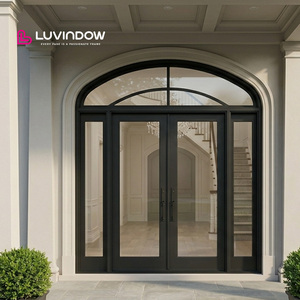
Luvindow Automatic Double Glazed Aluminium Entry System

Modern Aluminium Frame Double Glazed Curtain Wall Module
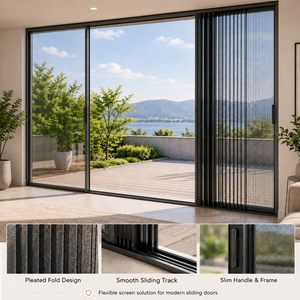
Narrow-Frame Sliding Aluminium Fenestration & Door System
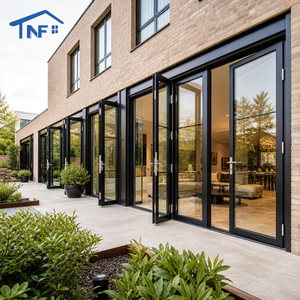
Thermal Wood-Clad Aluminium Casement French System
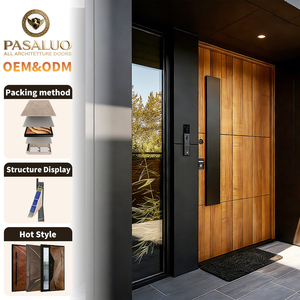
PSL High-Security Composite Aluminium Villa Aperture
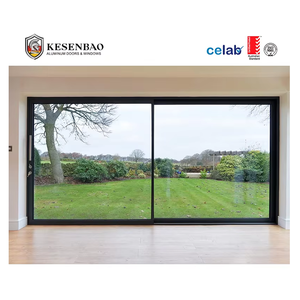
Slim Architectural Glazed Aluminium Sliding Fenestration
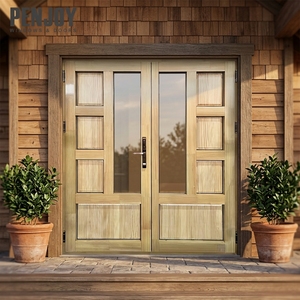
PENJOY Acoustic Soundproof Aluminium-Clad Casement
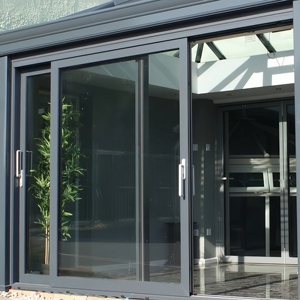
Panoramic Custom Balcony & Window Wall Aperture
Architectural Specification of CE-Marked Aluminium Small Windows for European Projects
In modern architectural envelope engineering, small-format windows—often designated as secondary daylighting apertures, micro-ventilators, clerestory openings, bathroom transoms, or punch-in acoustic barriers—carry technical demands that are disproportionately complex relative to their dimensions. When sourcing from overseas manufacturers, European project managers, structural façade consultants, and general contractors face rigorous harmonised standards under the Construction Products Regulation (EU) No 305/2011 (CPR). A compliant CE Certified Aluminium Small Window Supplier must not merely fabricate an aluminium sub-frame; they must deliver an empirically validated, factory-controlled building envelope component compliant with EN 14351-1:2006+A2:2016.
Guangdong Dejiyoupin Doors and Windows Co., Ltd. (DERCHI) operates one of the most technologically advanced fenestration manufacturing bases in Foshan, China, spanning 180,000 square meters. With an engineering history crossing 25 years, our manufacturing systems bridge the gap between lean Asian industrial capacity and exacting European statutory compliance. We engineer architectural aluminium small windows that satisfy thermal transmittance targets (Uw ≤ 0.8 to 1.3 W/m²K), air permeability (Class 4 according to EN 12207), watertightness (Class 9A and E1200 according to EN 12208), and wind-load structural resistance (Class C5/B5 according to EN 12210).
Information Gain Insight: Unlike mass-market large patio systems where frame-to-glass ratios favour low center-of-glass U-values (Ug), small windows suffer from elevated edge-loss dynamics due to higher frame area percentages (often 35% to 50% of the gross opening). Meeting Germany's Building Energy Act (GEG 2024/2026) or the UK's Approved Document L require precision-extruded multi-cavity polyamide (PA66 GF25) thermal breaks combined with warm-edge composite spacers to prevent condensation along internal gaskets.
EN 14351-1 Conformity
Third-party verified Initial Type Testing (ITT) validating declared thermal performance, acoustic attenuation, water barrier reliability, and continuous operating durability through 20,000 mechanical test cycles.
Hydro CIRCAL Low-Carbon Extrusion
Architectural grade 6063-T6 and 6060-T66 aluminum alloys utilizing certified recycled billets, substantially diminishing embedded carbon to under 4.0 kg CO2e/kg for BREEAM and DGNB credit alignment.
Micron CNC Joint Machining
Automated dual-head corner crimping with two-component polyurethane bonding adhesives (Henkel / Soudal), preventing corner hairline fracture, water intrusion, and micro-torsional sash sagging.
Performance Benchmark: European Harmonised Standard (EN 14351-1) Testing Criteria
Commercial procurement officers and façade engineers require verifiable engineering data rather than promotional declarations. The following performance matrix outlines the testing benchmarks DERCHI aluminium window profiles routinely achieve under accredited laboratory inspections (including IFT Rosenheim and inter-laboratory mutual recognition frameworks):
| Performance Indicator | Harmonised EU Standard | Achieved Classification | Engineering Specification & Detailing |
|---|---|---|---|
| Air Permeability | EN 12207 | Class 4 (600 Pa) | Triple co-extruded cellular EPDM continuous vulcanised perimeter gaskets. |
| Watertightness | EN 12208 | Class 9A / E1200 (1200 Pa) | Cascading step drainage chambers equipped with concealed pressure-equalisation valves. |
| Resistance to Wind Load | EN 12210 | Class C5 / B5 (2000 Pa) | High moment-of-inertia mullion sections; deflection threshold restricted to ≤ L/300. |
| Thermal Transmittance (Uw) | EN ISO 10077-1 / -2 | 0.82 – 1.25 W/m²K | 34mm to 42mm multi-chamber Technoform PA66 GF25 low-lambda insulation thermal strips. |
| Acoustic Attenuation (Rw) | EN ISO 717-1 | 38 dB – 46 dB (-1; -4) | Asymmetric acoustic laminated glass makeup (e.g., 6mm Float + 0.76 Acoustic PVB + 8mm Float). |
| Burglar Resistance | EN 1627 – EN 1630 | RC2 / RC3 Configuration | Mushroom-head perimeter cam locks, anti-drill strike plates, P4A/P5A security laminated glass. |
Future Procurement Trends in European Window & Facade Sourcing (2026–2030)
The cross-border fenestration procurement ecosystem is undergoing structural realignments driven by EU climate policies, carbon transparency mandates, and advanced building automation. Architectural procurement leads must navigate the following four pivotal shifts:
CBAM Carbon Taxation Compliance
With the EU Carbon Border Adjustment Mechanism (CBAM) enforcing embodied carbon taxation, suppliers must present Type III Environmental Product Declarations (EPD) verifying primary aluminum cradle-to-gate emissions.
Pre-Glazed Modular Façade Cassettes
High on-site European construction labor rates are steering builders toward factory-glazed, fully taped small window modules that bolt directly into steel or timber framing with zero wet trades.
Integrated BMS IoT Actuation
Concealed 24V linear actuators for automated natural night cooling and smoke ventilation (EN 12101-2) are moving from custom retrofit into integrated factory-installed specifications.
C2C Closed-Loop Circular Metallurgy
Demands for 'Cradle to Cradle' material passports require easily deconstructable composite profiles, separable dry glazing gaskets, and mechanically fastened thermal barriers without resin adhesives.
Technological & Engineering Evolution of Small-Aperture Aluminium Fenestration
Small-sized windows present unique thermodynamic and mechanical paradoxes. While large curtain walls distribute stress over continuous expansion joints, small windows must endure concentrated thermal shock across condensed profile spans. Below are the key engineering breakthroughs defining our 2026 manufacturing pipeline:
1. Polyurethane Aero-Foam Multi-Chamber Infilling: By injecting specialized micro-cellular PU insulating foam inside the extruded aluminium profile cavities surrounding the polyamide strip, convection loops inside the profile chambers are effectively halted. This reduces the frame U-factor (Uf) from typical industry levels of 2.1 W/m²K down to 1.1 W/m²K, allowing small casement and hopper formats to achieve Passivhaus-level envelope standards.
2. Fully Concealed Sash Hardware Kinematics: Visible surface-mounted hinges break the continuous perimeter EPDM gasket line, introducing thermal bridges and acoustic leak paths. Our engineering team integrates 180-degree concealed hinge gear directly within the Euro-groove channel. This design retains an unbroken double or triple compression gasket system while accommodating sash weights up to 130 kg despite ultra-compact outer frame footprints.
3. Micro-Ventilation & Passive Anti-Condensation Channels: Small bathroom and kitchen windows are particularly vulnerable to surface condensation. DERCHI profiles incorporate micro-trickle venting integrated into the head profile. This channel facilitates continuous background air exchange (conforming to DIN 1946-6 and UK Part F) without degrading the acoustic envelope or violating thermal baseline parameters.

Housing automated precision CNC machining centers, automated powder-coating lines (Qualicoat Class 2), and cleanroom glass lamination lines.
Trusted by premier British developers and European building partners as an OEM/ODM source matching Schüco and Reynaers dimensional tolerances.
Free shop drawing generation for every schedule line item, including thermal bridge analysis, glass deflection calculations, and anchoring details.
Dedicated English-speaking technical sales engineers coordinating directly during CET/GMT hours for seamless tender support.
International Certification, Testing & Quality Accreditations
All DERCHI fenestration and entrance systems are certified under comprehensive quality regimes, providing structural engineers and building control authorities the verifiable documentation needed for swift approval.

Frequently Asked Questions: B2B Sourcing of CE Certified Aluminium Windows
Direct technical answers addressing the logistical, commercial, and regulatory questions European architectural firms and procurement directors ask before issuing purchase orders:
What documentation accompanies DERCHI small windows for CE conformity in the European Union?
+
How do you maintain structural and thermal performance on custom small-size windows?
+
Can DERCHI fabricate bespoke sizes to match European renovation and historic retrofit schedules?
+
What surface finishing warranties are supplied for harsh coastal or high-salinity European environments?
+
What are the lead times and sea freight protection methods for full container (FCL) shipments to Europe?
+
Initiate Your Engineering & Tender Schedule Review
Send your project elevations, window schedules, or tender specifications. Our technical engineering division prepares complimentary CAD shop drawings, thermal calculations, and competitive FOB/DDP quotations aligned with your critical path.