Architectural Portfolio
High-Performance Exterior Envelope & Door Systems
Engineered to comply with stringent European standard EN 14351-1, our product range integrates structural stability, airtightness, and architectural flexibility.
Technical Whitepaper
Engineering Standardizations in CE Certified Exterior Door Systems
In contemporary building envelope engineering, specifying an aluminum exterior entrance assembly goes far beyond aesthetic matching. As building regulations throughout the European Union (e.g., German GEG, UK Building Safety Act, and EN standards) enforce stricter carbon caps and life safety parameters, international exporters must implement disciplined structural verification. CE certification under the harmonised European standard EN 14351-1:2006+A2:2016 (Windows and doors - Product standard, performance characteristics) serves as the primary technical declaration of performance (DoP) for external pedestrian doorsets without resistance to fire or smoke leakage characteristics.
1. Multi-Chamber Polyamide Thermal Insulation Barrier Design
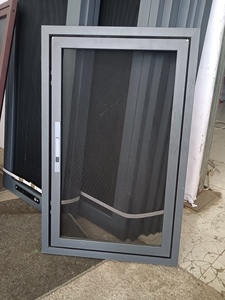
Standard extruded aluminum exhibits high thermal conductivity (approximately 160 to 200 W/m·K), which creates significant condensation risks and heat loss issues without engineered isolation. To mitigate this, our export assemblies employ reinforced multi-chamber extruded polyamide strips (PA66 GF25, reinforced with 25% structural glass fibers). These barriers separate internal and external aluminum profiles, drastically lowering the overall thermal transmittance coefficient (UD values). Configured in combination with argon-gas-filled triple insulated glazing units (IGUs) incorporating warm-edge spacers, our systems routinely attain thermal metrics compliant with Passivhaus standards (UD < 0.8 W/m²·K).
2. Wind Load Resistance, Air Permeability, and Watertight Integrity
Structural reliability across variable climates—from the exposed Atlantic coasts of Western Europe to severe sub-zero Nordic regions—requires methodical profile calculations according to EN 12211 (wind load resistance) and EN 12207 (air permeability). DERCHI systems utilize co-extruded EPDM continuous perimeter gasket matrices. Rather than relying on simple miter adhesives, corner junctions feature vulcanized injection corner pieces and heavy internal cast-aluminum alignment corners that maintain elastic recovery and air tightness under severe positive and negative deflection pressures (up to Class C5/B5 under EN 12210 testing).
3. Multi-Point Perimeter Security and RC2/RC3 Burglary Resistance
For modern commercial complexes, multi-family residences, and premium villas, security is inherently tied to anti-burglary specifications framed by EN 1627 to EN 1630. Aluminum exterior doors engineered for export incorporate hardened multi-point hook locking mechanisms, anti-drill cylinder shields, robust concealed hinges rated for leaves exceeding 400kg, and P4A/P5A laminated security glazing configurations. By pairing structural internal reinforcing steel or heavy-gauge extruded aluminum extrusions with security strike plates anchored straight into sub-frames, our entry systems provide verified static and dynamic resistance against sophisticated mechanical intrusion methods.
180,000
Sq.m Production Base
25+
Years Engineering Experience
600+
Skilled Technical Staff
100+
Global Patents & Certifications
Strategic Procurement
Emerging Trends in Global Architectural Door Procurement
Analyzing the intersection of sustainable construction, architectural minimalist aesthetics, and digital building integration for 2026-2030.
Oversized Pivot Formats & Flush Profiles
Architects are increasingly transitioning from conventional standard hinged doors toward monumental pivot door formats reaching 3.5 to 5 meters in height. Flush integration between door leaf, frame, and perimeter wall cladding creates clean architectural lines while requiring heavy-duty hydraulic self-closing floor springs and balanced offset pivot assemblies capable of seamless, effortless operation.
Smart Access Integration & Biometrics
Modern building access specification has shifted toward integrated, concealed home automation hardware. Motorized electromechanical multipoint locks driven by low-voltage bus systems, concealed handle-integrated biometric fingerprint scanners, facial recognition access terminals, and integration into overall smart building management systems (BMS) are now mandatory baseline inclusions in architectural tenders.
Circular Economy & Low-Carbon Aluminum
Green procurement initiatives across Europe and North America demand transparent Environmental Product Declarations (EPDs). Specifiers favor entrance assemblies manufactured using post-consumer recycled aluminum alloys (low carbon footprint aluminum billet, smelted via renewable hydropower), paired with non-toxic, powder-coat finishes resistant to extreme atmospheric marine exposure (Qualicoat Class 2 certified).
Direct Factory Value
Why Tier-1 Contractors and Global Importers Partner with DERCHI
A vertically integrated supply chain backed by Foshan’s premier metallurgical infrastructure, tailored shop drawings, and direct factory-level engineering support.
Comprehensive CAD Shop Drawings
We remove engineering friction before manufacturing starts. Our dedicated engineering department transforms tender door schedules into fully realized 2D/3D shop drawings, detailing wall anchor interfaces, sub-frame thresholds, structural drainage channels, and glazing cutouts for immediate client and architect sign-off.
Certified Quality Accreditations
DERCHI products pass exhaustive testing regimes, meeting CE compliance (EN 14351-1), ISO 9001 quality system criteria, North American NFRC thermal metrics, UL fire-resistance ratings, and Australian AS 2047 cyclonic pressure parameters (tested to the ultimate N6 standard for air, water, and cyclic structural wind conditions).
Aligned Engineering Timezones
Communication delays can derail construction critical paths. Our bilingual structural sales engineers maintain working hours aligned with Central European Time (CET) and Greenwich Mean Time (GMT), providing swift technical coordination, real-time revision reviews, and direct video conferencing for on-site installers.
Complete One-Stop Openings Package
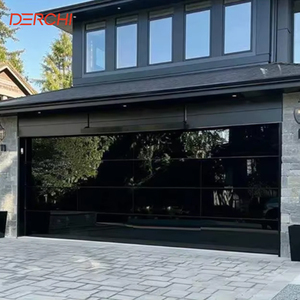
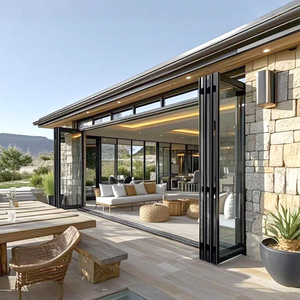
Reduce handling risks and freight consolidation costs. Source all exterior pivot assemblies, thermally broken casement windows, automated garage overhead panels, sliding glass patio systems, and interior architectural entry doors directly from a unified 180,000 m² state-of-the-art production complex.
Procurement Guide
Frequently Asked Questions for Project Specifiers & Importers
Essential guidance covering technical compliance, maritime packaging standards, thermal values, and global logistics execution.
What specific documentation is provided to satisfy European building control for CE marking?
For every European commercial or residential delivery, DERCHI supplies a legally verified Declaration of Performance (DoP) under the harmonized standard EN 14351-1. This is accompanied by formal factory-executed testing certifications documenting achievable UD values (EN ISO 10077), watertightness classification (EN 12208), air permeability rating (EN 12207), and wind resistance load parameters (EN 12210), alongside corresponding CAD cross-sections for immediate submission to local building authorities.
How does your factory ensure profile alignment and thermal break durability over long-term temperature swings?
We use premium virgin polyamide PA66 GF25 insulative strips mechanically crimped into precisely extruded primary 6063-T6 or 6061-T6 aluminum profiles with knurling depth verification to prevent composite profile slippage. Our composite systems are subjected to shear testing under high-temperature (up to +80°C) and sub-zero (down to -30°C) simulated conditions to confirm zero delamination, warp, or thermal bridging failure over continuous operational lifespans.
What packaging and moisture-protection methods are deployed to safeguard custom finishes during ocean shipping?
Export door assemblies are pre-fitted with perimeter protective low-tack surface film to guard against abrasion. Each panel is enveloped in high-density pearl cotton foam, enclosed in moisture-barrier PE shrink wraps, fortified with rigid heavy corner guards, and secured within custom fumigation-free solid plywood export crates. Crates feature integrated shock indicators, desiccant pouches to mitigate maritime sweating, and reinforced base channels suitable for safe forklift unloading at the destination port.
Can DERCHI engineer doors to match unique hardware configurations, European lock cylinders, or existing access controls?
Yes. Our CNC profile machining lines can perform custom mortise pre-machining based on client-specified hardware templates. Whether your project specifies high-security German multipoint locksets (e.g., KFV, GU, or Winkhaus), concealed pivot door floor hinges (Dorma, FritsJurgens), or integrated 12V-24V motorized strikes and biometric handles, our engineering team integrates the exact cutouts, wiring ducts, and strike reinforcement plates into the shop drawings prior to extrusion fabrication.
What is the typical production and delivery schedule from CAD approval to port delivery?
Upon final sign-off of shop drawings and finish specifications, standard manufacturing cycles range between 25 and 35 working days depending on customization complexity (e.g., custom RAL powder-coating, curved frames, or specialized triple Low-E safety glass). Shipping to major European maritime terminals (Rotterdam, Hamburg, Felixstowe, Antwerp) typically requires 28 to 35 transit days, with full tracking and customs export clearance handled by our global logistics team.