180,000m²
Smart Production Base
25+
Years Engineering Mastery
100+
Patents & CE Test Reports
600+
Master Craftsmen & Engineers
Curated Portfolio
Engineered Fenestration Systems & Profiles
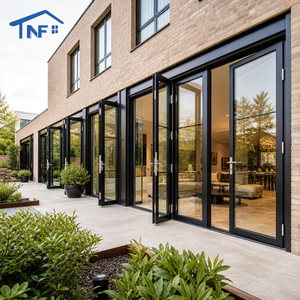
Tested strictly against EN 14351-1 standards, our structural profiles and architectural glass units serve luxury villas, multi-family developments, and commercial high-rises.
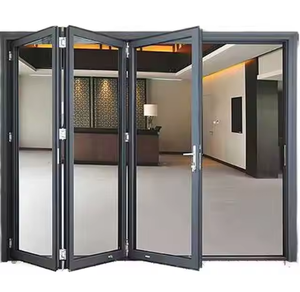
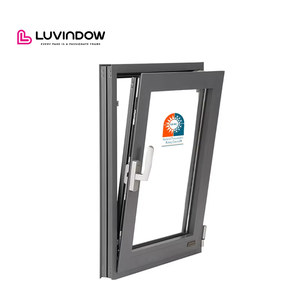
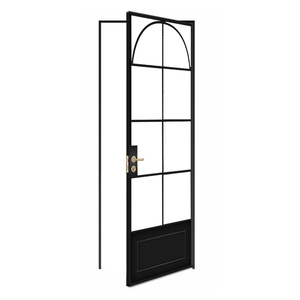
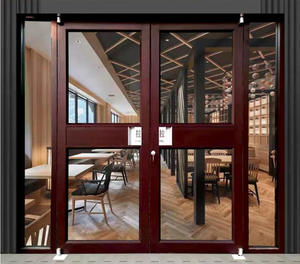
Technical Whitepaper
Global Fenestration Procurement Trends: European Standards Focus
A rigorous examination of shifting compliance baselines, decarbonization frameworks, and high-performance building envelopes.
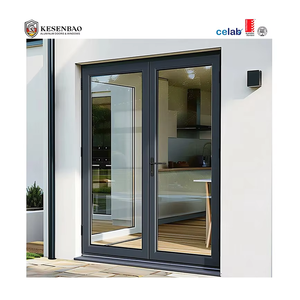
The global facade and fenestration industry is traversing an epochal pivot. No longer treated as passive building envelope components, CE Certified Aluminum Glass Windows are now evaluated as complex thermodynamic valves. Sourcing decision-makers—ranging from tier-one general contractors across London, Frankfurt, and Rotterdam to architectural specifiers globally—face an evolving web of statutory decarbonization mandates. Most notably, the recalibration of the European Union's Energy Performance of Buildings Directive (EPBD) has redefined baseline U-value targets, elevating the demand for thermal break structural systems.
As the market shifts towards nearly Zero-Energy Buildings (nZEB) and passive structures, fenestration procurement requires thorough cross-examination of structural integrity, embodied carbon footprints, and lifecycle testing certifications. When evaluating aluminum-framed windows and entrance systems, compliance verification under the harmonized product standard EN 14351-1 stands as the irreducible foundation. Without transparent Declaration of Performance (DoP) certificates supported by accredited Notified Body test reports, importers risk devastating regulatory impoundments, project handover rejections, and substantial fiscal liabilities.
| Performance Dimension | European Harmonized Standard | Commercial Specifier Threshold | DERCHI Manufacturing Delivery |
|---|---|---|---|
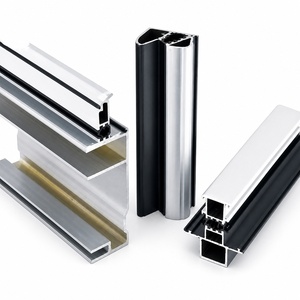
| Thermal Transmittance (Uw / Ud) | EN ISO 10077-1 / EN ISO 10077-2 | ≤ 1.0 W/m²K (Standard) / ≤ 0.8 W/m²K (Passive) | Polyamide PA66 GF25 thermal breaks with aerogel filling (Down to 0.78 W/m²K) |
| Air Permeability | EN 12207 | Class 4 (600 Pa maximum test pressure) | Continuous EPDM co-extruded multi-fin gaskets delivering verified Class 4 airtightness |
| Watertightness Under Pressure | EN 12208 | Class 9A (600 Pa) to Class E1200 (>1200 Pa) | Pressure-equalized cascade drainage chambers achieving Class E1050 to E1350 ratings |
| Wind Load Resistance | EN 12210 | Class C4 / C5 (Deflection < 1/300) | High-moment-of-inertia 6063-T6 aluminum alloys certified up to Class C5 (3000 Pa) |
| Burglar & Intrusion Resistance | EN 1627 to EN 1630 | RC2 (Residential) / RC3 (Commercial/Prestige) | Concealed perimeter multi-point locking cams with mushroom pins & P5A laminated safety glass |
| Acoustic Attenuation | EN ISO 717-1 | Rw + Ctr ≥ 38 dB (Urban corridors) | Asymmetrical double/triple IGU units with acoustic PVB interlayers (Rw up to 47 dB) |
Evolutionary Trajectory
Architectural Trends Reshaping Aluminum Fenestration
Emerging structural paradigms driving luxury residential engineering and commercial building envelopes.
Ultra-Slim Sightlines & Structural Concealment
Architects increasingly demand minimal frame-to-glass ratios. The industry is moving rapidly toward fully recessed outer frames where the perimeter aluminum is completely concealed within external insulation systems (ETICS), leaving only a pristine 20mm interlock visible along the glazed plane.
Vacuum Insulated Glass (VIG) Hybridization
While triple and quadruple glazing systems achieve historic low U-values, they impose structural dead-weight penalties on hardware. Next-generation developments integrate 8.3mm tempered Vacuum Insulated Glass within slim profiles, delivering Center-of-Glass Ug values of 0.45 W/m²K at one-third the mass.
Decarbonized Circular Aluminum Alloys
The introduction of the EU Carbon Border Adjustment Mechanism (CBAM) has turned embodied carbon into a critical procurement parameter. Leading manufacturers are transitioning to primary extrusions produced exclusively using renewable hydroelectric smelting or certified ≥75% post-consumer scrap recycling.
Motorized Smart Building Integration (BMS)
High-end fenestration now incorporates micro-concealed actuators, contact monitoring sensors (reed switches), and automated thermal purge modes linked directly to automated Building Management Systems via KNX or BACnet communication protocols.
Extreme Climate Barrier Resilience
With volatile weather events on the rise, high-exposure coastal installations require advanced surface coatings capable of enduring 3,000+ hours of continuous neutral salt spray (Qualicoat Class 2 / Seaside endorsement) without blistering, chalking, or filiform corrosion occurring at mitred corner joints.
Manufacturing Authority
Enterprise Precision Engineering: The DERCHI Advantage
Combining industrial scale with European metallurgical engineering excellence from our 180,000 m² Foshan manufacturing base.
DERCHI (Guangdong Dejiyoupin Doors and Windows Co., Ltd.) represents the vanguard of industrialized door and window engineering. Established over a quarter of a century ago in the core manufacturing hub of Foshan, our industrial campus spans a staggering 180,000 square meters, housing a workforce of 600+ highly trained technical specialists, master joiners, and facade structural engineers. Unlike standard assembly shops, our comprehensive facility integrates automated CNC precision extrusion milling, fully robotic corner-crimping cells, and temperature-controlled architectural glass unit assembly cleanrooms.
Validated European System Engineering
Our technical capabilities are endorsed by international partnerships, including selection by long-standing UK Schüco installation partners for multi-villa residential frameworks. Every extrusion die, thermal gasket profile, and corner cleat is engineered to achieve dimensional repeatability within 0.1mm tolerances.
Comprehensive Multilateral Certification
We do not rely on self-declarations. DERCHI assemblies possess independent testing certifications spanning CE (EN 14351-1), ISO 9001 Quality Management, AS 2047 N6 (the Australian market's ultimate structural weather rating), and rigorous UL-certified fire containment classifications.
Dedicated Pre-Construction CAD/BIM Services
We bridge the communication chasm between design concept and factory floor. Our in-house technical department generates complete structural static calculations, wind pressure deflection models, and full-scale CAD shop drawings matched directly to the specifier's scheduled opening dimensions at zero cost.
Knowledge Base
Frequently Asked Questions: Global Window & Door Sourcing
In-depth technical answers addressing regulatory verification, material composition, packaging, and logistics.
How do you verify CE marking authenticity under EN 14351-1 for European imports?
Under the EU Construction Products Regulation (CPR 305/2011), external windows and pedestrian doorsets require an official Declaration of Performance (DoP) based on Initial Type Testing (ITT) conducted by an accredited Notified Testing Body. DERCHI provides comprehensive test documentation covering air permeability (EN 1026/12207), watertightness (EN 1027/12208), wind load resistance (EN 12211/12210), and thermal simulation reports (EN ISO 10077). Every consignment leaving our factory carries physical CE labeling indicating the relevant harmonized standard, system family, and traceable production lot.
What specific alloy grades and surface treatments are utilized for coastal applications?
All DERCHI structural window and door systems are extruded exclusively from primary billet 6063-T6 or 6060-T6 architectural aluminum alloy, avoiding contaminated scrap secondary melts. For marine or high-salinity zones, our profiles undergo an acid pre-etching conversion wash followed by Qualicoat Seaside-class architectural powder coating (≥60-80 microns thickness) or Class 20/25 deep-tank hard anodizing. This chemistry prevents subsurface filiform corrosion around weep holes, mitred joints, and mechanical fasteners.
How are glass units engineered to prevent seal failure during long-distance maritime freight?
Our Insulated Glass Units (IGUs) are constructed with warm-edge composite spacers (Technoform or Swisspacer) sealed with a dual-stage barrier: primary polyisobutylene (PIB) gas seal backed by structural silicone or polysulfide secondary edge seals. When transporting units across varying elevations and barometric ocean journeys, capillary breathing tubes are temporarily installed to equalize internal-external pressure differences, preventing seal bursting or distortion before jobsite crimping.
What export packaging is implemented to prevent damage during containerized intermodal transit?
Fenestration export protection follows a multi-tier regime: all finished aluminum faces are taped with non-residue protective PE film, wrapped in protective foam sheets, fitted with high-density plastic corner protectors, and securely crated within fully enclosed, fumigated solid timber or composite plywood maritime crates. Inside sea containers, crates are balanced, braced with heavy timber framing, and lashed with load-rated ratchet straps to counter severe ocean-crossing rolling dynamics.
Can custom hardware mechanisms (e.g., German Siegenia, GU, or Roto) be factory-integrated?
Yes. DERCHI fenestration profiles are engineered around standard European Euro-groove dimensions (standard 16mm or 20mm hardware tracks). While our standard packages utilize high-grade in-house multi-point locking systems, we routinely install, test, and warranty hardware systems directly from premier European partners including Siegenia, Roto Frank, Hoppe, and Giesse, ensuring seamless site-level alignment with master-key setups and building access protocols.
Ready to Engineer Your Project's Fenestration Schedule?
Submit your door and window elevations, CAD schedules, or target thermal criteria. Our engineering team will return comprehensive shop drawings, thermal estimates, and competitive factory-direct export proposals within 24 hours.