Architectural Casement, Tilt-and-Turn & Engineered Openings
Precision-milled structural profiles, multi-cavity thermal barriers, and European multi-point locking gear engineered directly for high-exposure multi-residential and commercial façades.
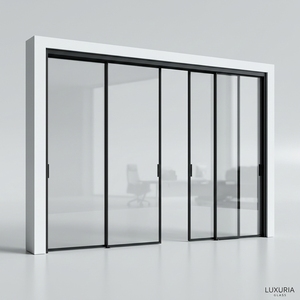
Direct Factory Slimline Aluminum Glass Door and Laundry Room Partition with Soft-close System
Factory Directly Supply Triple Glazed Roof Tilt and Turn Casement Window Glass Casement Windows with Security Mesh
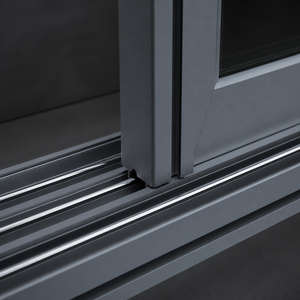
Aluminum Glass Interior Sliding Window Anthracite Frame Brush Seal Design for Tasting Room Bakery Patisserie Bistro Factory
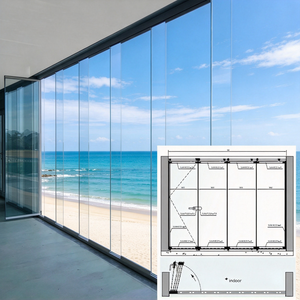
HDSAFE 8/10mm Frameless Glass Bi Folding Door Aluminum Track Waterproof Glass Partition Door Window for Balcony Terrace Indoor
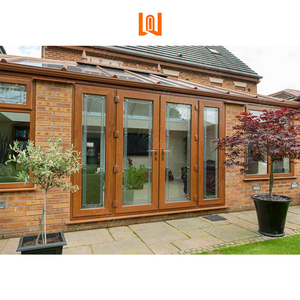
New Design Replacement Custom House Aluminum Clad Wood Doors Oak Wood French Doors Exterior Entrance Double Doors
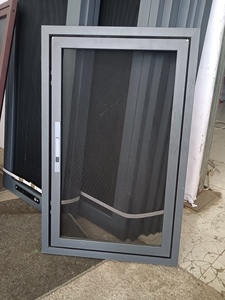
High Quality Modern Outdoor Anti-Mosquito Anti-Fly Insect Screen Window Aluminum Alloy Frame Easy Install Door
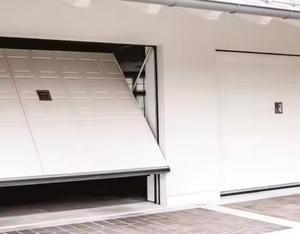
Modern Custom Tilt-Up Garage Door Aluminium Trackless Whole Plate Insulated Motorized Overhead One Piece Customized Villas
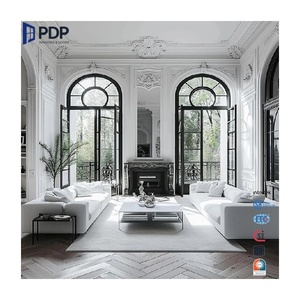
PDP French Doors Double Leaf Casement Door Thermal Break Aluminum Frosted Glass Grill for Entry Bedroom Fiberglass Interior Use
Engineering Rigor: The Technical Blueprint of CE-Certified Windows
In accordance with the Construction Products Regulation (EU CPR 305/2011) and EN 14351-1:2006+A2:2016, placing openable fenestration systems in the European Union requires stringent empirical validation.
Thermal Transmittance ($U_w$ / $U_f$)
Utilizing multi-chamber 6063-T6 virgin aluminum alloy billets, our thermal break frames integrate 24mm to 34mm Technoform polyamide PA66 GF25 insulative strips. Calculated per EN ISO 10077-1 and validated through guarded hot box physical testing (EN ISO 12567-1), system thermal transmittance values reach as low as $U_w \le 0.80 \text{ W/(m}^2\cdot\text{K)}$, exceeding strict Passive House and German GEG requirements.
Aero-Hydraulic Performance (EN 12207 / 12208)
Continuous co-extruded cellular EPDM vulcanized corner gaskets eliminate perimeter bypass. Windows are systematically pressure-chamber tested up to 600 Pa for Air Permeability (Class 4), water tightness under static driving head up to 1200 Pa (Class E1200), and structural deflection resistance against severe typhoons or coastal gales achieving Wind Load Resistance Class C5/B5 (EN 12210).
Acoustic & Forced Entry Barrier (RC2/RC3)
To combat urban high-frequency ambient noise, asymmetric acoustic laminated glazing configurations coupled with decoupled hollow gasket chambers deliver decibel reductions of up to $R_w(C; C_{tr}) = 46 \text{ (-1; -4) dB}$ per EN ISO 717-1. Structural perimeter mushroom cams, hardened steel strike plates, and internal glazing beads conform strictly to DIN EN 1627-1630 anti-burglary standards.
Architectural Specification & Testing Benchmark Matrix
Direct performance data comparison between DERCHI CE-certified aluminum systems and standard tier export profiles.
| Engineering Criteria | Harmonized Test Standard | DERCHI CE Specification Level | Standard Export Grade |
|---|---|---|---|
| Thermal Barrier Insulation | EN ISO 10077-2 / DIN 4108 | 34mm PA66 GF25 Polyamide + Aerogel infill ($U_f \le 1.1$) | 14mm PVC / Unfilled cavity ($U_f \ge 2.8$) |
| Air Permeability Class | EN 1026 / EN 12207 | Class 4 (≤ 3 m³/h·m² at 600 Pa) | Class 2 (≤ 27 m³/h·m² at 300 Pa) |
| Water Tightness Under Pressure | EN 1027 / EN 12208 | Class 9A / E1200 (No water ingress at 1200 Pa) | Class 4A (Ingress occurs at 150 Pa) |
| Wind Load Resistance | EN 12211 / EN 12210 | Class C5 (≤ 1/300 deflection at 2000 Pa test pressure) | Class B2 (≤ 1/200 at 800 Pa) |
| Acoustic Attenuation Index | EN ISO 10140-2 / EN ISO 717-1 | $R_w = 42\text{ dB to }48\text{ dB}$ (Asymmetric Laminate) | $R_w = 28\text{ dB to }32\text{ dB}$ (Standard Double IGU) |
| Hardware Durability & Cycles | EN 13126-8 / EN 1191 | Grade 5: 25,000 to 50,000 opening cycles (Siegenia/G-U/Roto) | Grade 2: 5,000 cycles (Unbranded zinc alloy) |
Industrial Capacity Built for Major European & Global Projects
Operating from Foshan, Guangdong—the world epicenter of precision aluminum extrusion—Guangdong Dejiyoupin Doors and Windows Co., Ltd. (DERCHI) represents over a quarter-century of technical mastery in building envelope systems.
Schüco-Level Partner Trust
Selected by premier UK architectural builders and long-time German system partners for complex multi-villa residential portfolios requiring zero dimensional tolerance.
CET / GMT Aligned Engineering
Dedicated English-fluent structural facade engineers stationed to support European design offices during standard European commercial working hours.
Full BIM & Free CAD Services
Complete project submittal packages, fabrication shop drawings, wind moment of inertia calculations, and BIM Revit files supplied at zero upfront charge.
Technological & Sourcing Trends Reshaping European Fenestration (2025–2030)
Navigating the shift toward zero-emission buildings (EPBD), extreme weather resiliency, and automated intelligent envelope systems.
Concealed Sashes & Ultra-Slim Sightlines
Architectural demand is moving away from bulky exterior frames toward structural glazed step-sashes and invisible concealed vents. By hiding the openable window frame entirely behind the outer structural masonry reveal, natural daylight transmission increases by up to 18%, while maintaining full tilt-and-turn capability.
Low-Carbon Recycled Aluminum Billets
Driven by the EU Corporate Sustainability Due Diligence Directive (CSDDD) and Environmental Product Declarations (EPD), developers are mandating certified low-carbon primary aluminum (e.g., smelted using renewable hydro-power with ≤ 4.0 kg CO₂/kg Al) alongside a minimum of 40% post-consumer circular alloy fractions.
Mechatronic Actuators & Smart Envelopes
Openable windows are no longer strictly manual devices. Fully integrated 24V concealed chain drives linked via KNX or BACnet building management protocols provide autonomous night purge cooling, automated CO₂ balancing, and motorized storm closure synced with real-time weather stations.
Multi-Hazard Hurricane & RC3 Hybridization
With changing global micro-climates, urban centers require dual-threat envelope protection. Future fenestration bundles EN 1627 Class RC3 forced-entry security with ASTM E1886/E1996 hurricane missile impact laminates in a single thermally broken aluminum casement format.
Direct-to-Factory Pre-Fabricated Sub-Frames
Procurement teams are cutting intermediary distributors to specify pre-assembled extruded sub-frame installation collars. These integrated sub-sill pans guarantee envelope water-tightness before the final window arrives on site, reducing expensive on-site installation labor in Western Europe by 35%.
Vacuum Insulated Glass (VIG) Integration
The merging of hybrid slim IGUs featuring 8.3mm tempered Vacuum Insulated Glass with a central cavity rating of $U_g = 0.45 \text{ W/(m}^2\cdot\text{K)}$ enables slender 65mm aluminum sash profiles to achieve total window thermal insulation values historically restricted to heavy 90mm triple-glazed profiles.
Frequently Asked Procurement & Technical Questions
Direct answers for project managers, quantity surveyors, and architectural specifiers sourcing openable window systems directly from China.
How does DERCHI ensure CE Declaration of Performance (DoP) compliance for custom sizes?
Under AVCP System 3 (EN 14351-1), we execute Initial Type Testing (ITT) with accredited third-party notified laboratories (such as ift Rosenheim or equivalent European notified bodies). For unique dimensional schedules, our engineering division runs finite element thermal simulations (FEM per ISO 10077-2) and structural load calculations to issue job-specific Declarations of Performance (DoP) and CE conformity markings.
What powder coating and anodizing surface standards are applied for coastal marine projects?
For installations situated within 3 km of saltwater coastlines (exposure class C4/C5 per ISO 12944), we apply Qualicoat Seaside Class powder coatings with a minimum dry film thickness of 60–80 microns, or Qualanod certified hard anodizing up to 25 microns. Aluminum billets are chemically pretreated via chromate-free zirconium conversion wash to prevent filiform corrosion.
How are opening sash corner joints constructed to prevent water leakage over time?
Unlike budget windows joined with manual mechanical self-tapping screws, DERCHI utilizes automated CNC heavy-duty corner crimping machines. Frame corners receive extruded aluminum corner cleat brackets, stainless steel alignment shims, and high-pressure dual-component polyurethane (PUR) injected expanding structural glue, creating an impermeable molecular seal.
What export packaging protocols protect large window shipments against oceanic transit damage?
Window frames and sashes undergo four layers of heavy protection: peelable UV-resistant static protective film, 5mm cellular PE foam edge corner bumpers, vacuum shrink wrapping, and fully enclosed solid fumigated marine-grade plywood crates with built-in internal desiccant bags to prevent vapor condensation and white rust during 30-day maritime shipping.
Direct Factory Collaboration for Architectural Open Window Packages
Submit your door and window schedule, architectural elevations, or structural tender specifications. Our Foshan engineering headquarters will deliver comprehensive CAD section drawings, thermal performance audits, and a transparent FOB/CIF commercial quotation within 48 hours.