Engineered Assemblies
Featured Aluminum Storm & Architectural Fenestration Systems
High-durability extruded aluminum storm protection, impact-rated sliding units, thermal barrier partitions, and bespoke commercial facades engineered for demanding structural envelopes.
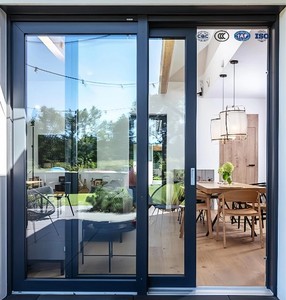
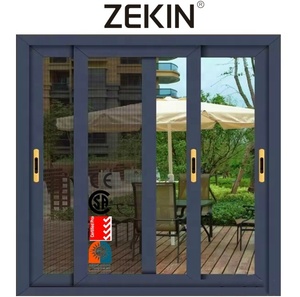
Modern Aluminum Alloy Sliding Windows And Doors With Tempered Glass Soundproof Exterior Use
View Product Specs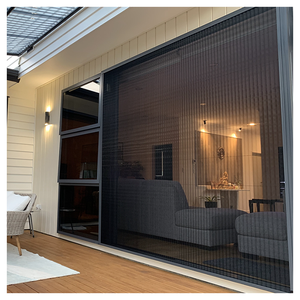
Retractable Anti-Insect Horizontal Open Fly Screen Door With Pleated Mesh Anti-Mosquito Net
View Product Specs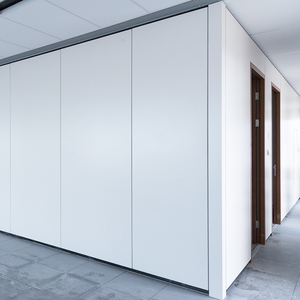
Steel Office Partition Wall System Sliding Aluminum Partitions Meeting Room Privacy Divider
View Product Specs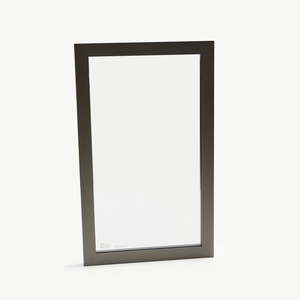
Italy Brand Aluminum Door And Window Frames For Bathroom Cabinets Kitchen Cabinet
View Product Specs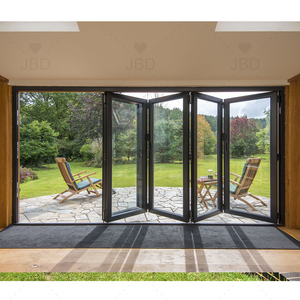
Competitive Price Custom Aluminum Bifold Doors Vertical Outdoor Folding Garage Modern Design
View Product Specs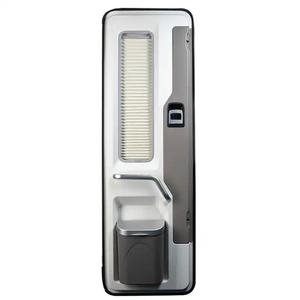
Customized AGE Modern Aluminum Alloy RV Door Motorhome Accessories Tambour Door
View Product Specs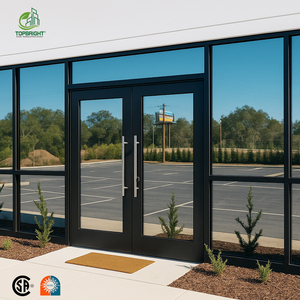
Topbright Commercial Hotel Storefront Door Soundproof Aluminum Double Glass Exterior Security
View Product Specs180,000m²
Production Capacity Base
25+Yrs
Fenestration Engineering
100+Int'l
Patents & Global Certifications
600+Staff
Engineers & Manufacturing Crew
Technical White Paper
Engineering Standards for CE Certified Aluminum Storm Windows
An authoritative technical appraisal on building envelope resilience, European Construction Products Regulation (CPR 305/2011), structural wind loading, and advanced thermal performance.
In modern commercial and residential facade engineering, the procurement of CE certified aluminum storm windows represents a critical intersection between extreme weather resilience, life safety, and sustainable thermal boundary dynamics. Under the European standard EN 14351-1:2006+A2:2016 (Windows and doors - Product standard, performance characteristics), an exterior fenestration unit is subject to rigorous initial type testing (ITT) and factory production control (FPC) that govern essential characteristics including resistance to wind load, watertightness, air permeability, load-bearing capacity of safety devices, and overall thermal transmittance (Uw).
Sourcing from verified manufacturers who possess independent third-party test reports and authentic declarations of performance (DoP) is vital for architects, facade consultants, and general contractors. Aluminum alloy profiles—primarily structural 6063-T5 or 6063-T6 architectural grades—deliver tensile yield strengths exceeding 205 MPa, presenting an optimal strength-to-weight ratio capable of enduring hurricane-force gusts, cyclic pressure differentials, and coastal salt-spray degradation without structural racking or air-barrier rupture.
Structural Wind Deflection (EN 12210)
Classified from Class 1 up to Class 5, with frontal deflection testing (C1 to C5) ensuring that the sash and mullion deflection does not exceed 1/300 of the span under negative and positive cyclonic loads up to 3000 Pa.
Dynamic Watertightness (EN 12208)
Engineered multi-chamber EPDM continuous perimeter gasket arrays and calibrated internal weep channels prevent moisture intrusion up to Class E900 (900 Pa static water pressure without penetration).
Polyamide Thermal Barriers
Integrated PA66 GF25 (polyamide reinforced with 25% glass fiber) thermal breaks mitigate interior frame condensation, driving framework heat transfer coefficients down to Uf ≤ 1.6 W/(m²·K).
Acoustic Attenuation and Laminated Impact Glazing Mechanics
A defining differentiator of high-performance aluminum storm windows lies in the composition of the glazing assembly. To attain simultaneous CE conformity and hurricane-grade impact resilience (comparable to ASTM E1886/E1996 and Australian AS 2047 standards), our manufacturing protocol integrates multi-ply laminated configurations featuring virgin polyvinyl butyral (PVB) or SentryGlas (SGP) ionoplast interlayers.
When exposed to aerodynamic projectile impacts or violent pressure inversions during severe convective storms, the exterior glass plies may experience micro-fracturing while the specialized elastomer interlayer maintains airtight structural integrity. This prevents sudden internal building pressurization—the primary catalyst for catastrophic roof blow-offs in commercial structures. Concurrently, the viscoelastic interlayer dampens acoustic frequencies across the 100 Hz to 5000 Hz spectrum, conferring weighted sound reduction indices of Rw ≥ 42 dB, perfectly suited for high-density urban environments, transit hubs, and oceanfront developments.
| Performance Dimension | Harmonized European Standard | Commercial Grade Specification | Engineering Benefit for High-Rise Envelope |
|---|---|---|---|
| Air Permeability | EN 12207 | Class 4 (≤ 3 m³/h·m² at 100 Pa) | Eliminates convective drafts, enhances HVAC efficiency, prevents airborne dust infiltration. |
| Watertightness | EN 12208 | Class 9A / Class E750 to E1200 | Guarantees zero water penetration under simulated driving torrential rains and gale pressures. |
| Wind Load Resistance | EN 12210 / EN 12211 | Class C4 / C5 (±2000 to ±3000 Pa) | Maintains frame structural stability without glass pull-out or permanent framing deformation. |
| Thermal Transmittance | EN ISO 10077-1 / EN ISO 10077-2 | Uw 0.9 - 1.4 W/(m²·K) | Complies with strict EU EPBD (Energy Performance of Buildings Directive) requirements. |
| Acoustic Insulation | EN ISO 717-1 | Rw (C; Ctr) = 38 - 45 dB | Mitigates environmental sound pollution in dense urban centers and transportation corridors. |
Market Dynamics
Future Procurement & Technology Trends in Aluminum Storm Windows
How regulatory decarbonization, smart automated fenestration, and circular economy demands are shaping global architectural procurement over the next decade.
Low-Carbon & Recycled Aluminum Billet
Global developers increasingly mandate Environmental Product Declarations (EPDs). Procuring secondary aluminum smelted with renewable hydroelectric power reduces embodied carbon from 16.7 kg CO2/kg to under 4.0 kg CO2/kg aluminum.
Ultra-Narrow Sightlines & Concealed Hardware
Architectural demand is rapidly moving away from bulky industrial storm frames toward minimalist, structurally bonded profiles with hidden multi-point perimeter gear locking systems (RC2 / RC3 burglar resistance).
BMS-Integrated Sensor Automation
Procurement schedules now regularly specify embedded magnetic reed contacts, automated actuators, and storm-warning sensors tied directly into central Building Management Systems (BMS) for automated envelope sealing.
Furthermore, shifting climate patterns have accelerated the convergence of hurricane impact resistance with Passivhaus thermal efficiency. Historically, heavy storm windows suffered from severe thermal bridging due to uninsulated monolithic frames. Modern manufacturing leverages deep thermal isolators, aerogel-infused profile cavities, and triple-glazed warm-edge spacer technology. As municipal building codes across North America, the UK (Part L 2025), and the European Union tighten maximum allowable thermal loss boundaries, commercial projects require multi-attribute fenestration that offers unyielding structural storm defense while preserving net-zero operational energy profiles.
Industrial Scale & Heritage
Guangdong Dejiyoupin Doors and Windows Co., Ltd. (DERCHI)
Established as an elite fenestration manufacturer with over 25 years of engineering heritage, Guangdong Dejiyoupin Doors and Windows Co., Ltd. (DERCHI) commands a premier 180,000 square meter automated production base situated in Foshan, Guangdong—the primary epicenter of high-end aluminum extrusion in Asia.
With an integrated workforce of over 600 specialized fabricators, structural fenestration engineers, and ISO 9001 quality controllers, our facility delivers end-to-end bespoke fabrication ranging from heavy commercial storm facades to thermal-break architectural sliding systems, cast aluminum entries, and high-performance pivot doors.
- Schüco-Level Benchmark Quality: Trusted by premier UK and European builders as an audited partner for luxury residential and multi-villa estates.
- International Accreditation: Fully compliant with European CE (EN 14351-1), Australian AS 2047, North American NFRC, and UL fire-rating standards.
- Comprehensive CAD Shop Support: Complimentary BIM/CAD parametric drawings provided within 48 hours based on architectural schedules.





Procurement Clarity
Frequently Asked Questions (FAQ) for Global Sourcing Managers
Addressing compliance, testing evidence, surface finishing, multi-unit shipping logistics, and structural warranty safeguards for large-scale developments.
What specific documentation verifies that an aluminum storm window supplier is genuinely CE compliant?
Genuine CE marking requires an audited Declaration of Performance (DoP) issued in accordance with EU Construction Products Regulation No 305/2011 (CPR). Suppliers must provide ITT (Initial Type Testing) test reports from an accredited Notified Body confirming performance values under EN 14351-1 for wind load resistance (EN 12210), watertightness (EN 12208), air permeability (EN 12207), and thermal transmittance (EN ISO 10077-1). DERCHI supplies complete CE dossier packages with every consignment, including full test certificates and factory ISO 9001 compliance logs.
How does an aluminum storm window configuration differ from a standard residential window frame?
Aluminum storm windows feature heavy-gauge structural wall thicknesses (typically 1.8 mm to 3.0 mm vs. 1.2 mm to 1.4 mm in ordinary residential windows), reinforced corner corner-keys with injected polyurethane sealing adhesives, multi-point heavy-duty shoot-bolt hardware, and deep glazing pockets engineered to house thick laminated safety glass. They are specifically configured to absorb repetitive positive and negative wind gust loads without seal rupture, sash derailment, or metal fatigue.
What surface treatments are recommended for coastal applications prone to salt fog exposure?
For coastal deployments within 5 kilometers of the shoreline, we specify Qualicoat Class 2 or Class 3 superdurable architectural powder coatings with a minimum film thickness of 60-80 microns, or anodized finishes conforming to Qualanod Class 20/25 (20-25 μm). These treatments deliver accelerated salt-spray resistance exceeding 3,000 to 5,000 hours under ASTM B117 / ISO 9227 testing, preventing filiform corrosion, chalking, and premature finish blister.
What are the minimum order quantities (MOQ) and sample lead times for custom architectural schedules?
Because we operate a 180,000 m² high-capacity production center, our production schedule supports both boutique bespoke villa projects (low MOQ of 20-50 square meters for custom systems) and large-scale commercial developments exceeding 10,000 square meters. Pre-production sample units and mock-up corner sections are typically fabricated and air-freighted within 10 to 14 working days following final CAD drawing sign-off.
How are fragile oversized glazed window units protected during international ocean transit?
Finished fenestration assemblies undergo multi-layer protective packaging: primary wrapping with electro-static protective PE film, heavy shock-absorbing EPE foam edge and corner guards, vacuum desiccants within moisture barrier liners, and encasement in custom-engineered, fully fumigated, steel-banded IPPC ISPM-15 plywood crates. Crates are mechanically loaded and secured within ocean containers using heavy-duty nylon lashing and timber dunnage to eliminate transit shifting.
Partner with an Audited Fenestration Manufacturing Leader
Whether you are engineering a coastal resort project, developing an urban residential mid-rise, or sourcing custom impact-resistant fenestration for wholesale distribution in Europe or overseas, our engineering specialists offer complete specification analysis, structural calculations, and CAD detailing.