Featured Export Solutions: High-Performance Doors & Windows
Engineered specifically to satisfy European Union Construction Products Regulation (CPR No 305/2011), UKCA standards, and international building envelopes subject to extreme meteorological and structural loading.
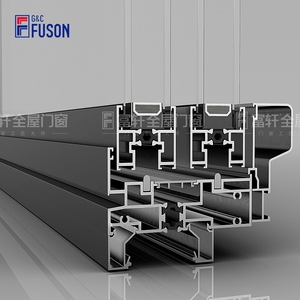
Fuson Aluminum Energy Efficient Design Sliding Window Louver Customized Impact
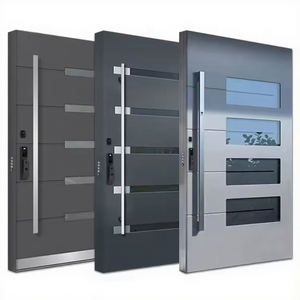
Luxury Villa Entrance Security Aluminium Front Doors Stainless Steel Pivot System
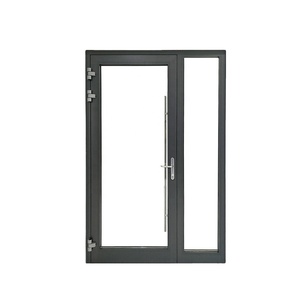
Superhouse Residential Impact Aluminium Double & Single Casement Hinged Doors
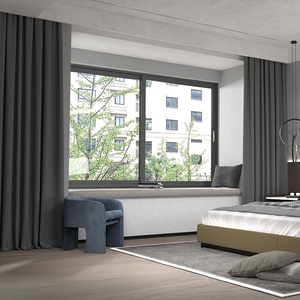
Australian Standard AS2047 Acoustic Glazed Multi-Track Sliding System
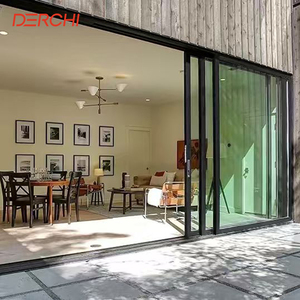
Double Glazed Balcony Patio Sliding Door Integrated Precision Screen Track
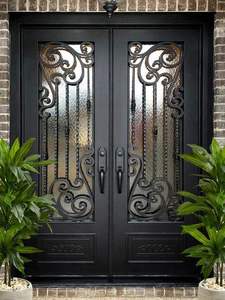
Thermal Break High-Insulation Composite Exterior Architectural Entry Door
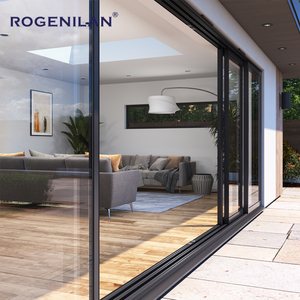
Panoramic Architectural Slim Frame Large Glass Panel Sliding System
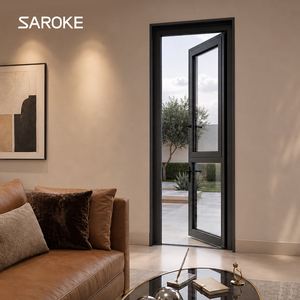
Architectural White Thermal Break Terrace & Exterior Entry Door Systems
In modern building physics, specifying an exterior door for high-end residential estates, institutional complexes, or modern commercial facilities across the European Economic Area (EEA) requires stringent adherence to EN 14351-1:2006+A2:2016 (Windows and doors - Product standard, performance characteristics). For procurement engineers, chief specification writers, and international importers, a mere marketing claim of "compliance" is legally insufficient. Under the EU Construction Products Regulation (EU CPR No 305/2011), external pedestrian doors must bear verifiable CE marking supported by an authentic Declaration of Performance (DoP) validated through accredited Notified Bodies.
The color white (traditionally specified as RAL 9016 Traffic White, RAL 9010 Pure White, or RAL 9003 Signal White) presents distinct thermodynamic challenges when paired with architectural aluminum profiles. Aluminum profiles exhibit a linear thermal expansion coefficient of approximately 2.3 × 10⁻⁵ /K. While white coatings naturally boast high Solar Reflectance Index (SRI > 82%) compared to anthracite grey (RAL 7016) or jet black, preventing the dreaded "bi-metal deflection" effect still necessitates advanced multi-cavity thermal break extrusions. When exposed to harsh Nordic winters (-25°C) on the exterior face and heated interior conditions (+22°C), differential contraction can cause leaf bowing, compromising airtightness and latch bolt engagement if structural anchoring and mechanical hardware aren't engineered correctly.
| Performance Characteristic | Harmonised EN Standard | Minimum Baseline for Entry | DERCHI High-Spec Engineering Tier | Impact on Building Asset Value |
|---|---|---|---|---|
| Thermal Transmittance (UD) | EN ISO 10077-1 / EN ISO 10077-2 | ≤ 1.4 W/(m²·K) (UK Part L / GEG) | 0.78 – 0.95 W/(m²·K) (Triple Low-E + Aerogel Core) | Passivhaus certification, 38% reduction in doorway thermal bridge transmission. |
| Air Permeability | EN 1026 / EN 12207 | Class 2 (300 Pa test pressure) | Class 4 (600 Pa maximum positive & negative pressure) | Prevents infiltration drafts; crucial for airtightness testing (n50 < 0.6 /h). |
| Watertightness | EN 1027 / EN 12208 | Class 4A (150 Pa unshielded) | Class 9A / E900 (Continuous cascade spray at 900 Pa) | Eliminates structural water egress risks in severe coastal cyclonic gale conditions. |
| Wind Load Resistance | EN 12211 / EN 12210 | Class C2 (Deflection < 1/300 at 800 Pa) | Class C5 / B5 (Extreme pressure stability > 2000 Pa) | Prevents permanent frame deformation during severe Atlantic/North Sea storms. |
| Burglar Resistance Class | EN 1627 to EN 1630 | RC1N / Standard latch | RC3 / RC4 Verified (Multipoint security locking) | Direct insurer compliance, resistance against heavy crowbars, drills, and chisels. |
| Acoustic Insulation (Rw) | EN ISO 10140-2 / EN ISO 717-1 | Rw ≥ 29 dB | Rw ≥ 42 – 46 dB (Resilient acoustic core matrix) | Attenuates urban road noise and airport sound contours for luxury hospitality. |
The international supply chain for architectural metal fenestration is undergoing tectonic shifts driven by legislative decarbonization, digital supply chains, and evolving architectural aesthetics. Importers, developers, and regional distributor networks are pivoting their procurement policies based on four macro-market realities:
Low-Carbon Circular Aluminum (CBAM Compliance)
The European Union's Carbon Border Adjustment Mechanism (CBAM) requires third-party reporting of embodied carbon in aluminum products. Tier-1 exporters must transition from coal-smelted virgin bauxite to hydro-powered electrolytic smelting and scrap-recycled billeting (≥ 75% post-consumer scrap), reducing the cradle-to-gate footprint from 18 kg CO₂/kg Al down to less than 4.0 kg CO₂/kg Al, verified via ISO 14025 Environmental Product Declarations (EPDs).
Oversized Pivot Formats & Seamless Thresholds
Architectural demand for standard 2100mm × 900mm entry doors is giving way to monumental pivot entrance systems reaching up to 3500mm high and 2000mm wide. Procurement specs now stipulate hidden floor closers with EN 1154 compliance, 360-degree rotation capabilities, and zero-barrier magnet-activated drop thresholds that meet DIN 18040 barrier-free living without sacrificing airtightness.
Direct CAD/CAM & Prefab Integration
Leading engineering firms no longer accept ambiguous catalog sizes. Successful multi-unit tenders mandate comprehensive Revit and IFC BIM models with native Level of Development (LOD) 350 specifications. Complete pre-hung systems with factory-calibrated multipoint hardware reduce on-site trade installation times by up to 65%, avoiding costly defect disputes during building inspection handovers.
White exterior door systems face intense degradation challenges from short-wave ultraviolet (UV-A and UV-B) radiation. Standard commercial polyester powder coats exposed to direct sunlight often exhibit rapid chalking, discoloration, and loss of gloss within 36 to 48 months. For high-prestige residential developments and public venues, premature surface degradation is fatal to supplier warranty agreements.
To achieve a minimum 25-year service life, professional suppliers utilize Qualicoat Class 2 (Superdurable Polyester) or Qualicoat Class 3 / AAMA 2605 Fluoropolymer (PVDF) electrostatic coatings. These resins employ specialized titanium dioxide (TiO₂) pigments treated with alumina and silica barriers, providing photochemical stability against photo-oxidation.
6063-T6 & 6060 Architectural Billets
Extruded exclusively with precise magnesium-to-silicon ratios (0.45–0.9% Mg, 0.2–0.6% Si) to prevent intergranular stress corrosion. Yield tensile strength exceeds 215 MPa, maintaining dimensional tolerances within EN 12020-2 precision classes.
PA66-GF25 Structural Polyamide Bars
Multi-chamber insulating struts reinforced with 25% transverse glass fibers match the thermal expansion of the aluminum sash, preventing shear failure under thermal shock cycles between -30°C and +80°C.
Hexavalent Chromium-Free Pretreatment
Automated zirconium/silane nanotechnology conversion bath guarantees chemical adhesion according to ISO 2409 Cross-Cut Class 0, exceeding 1,000 hours of Acetic Acid Salt Spray (AASS) testing per ISO 9227 without filiform corrosion.
Guangdong Dejiyoupin Doors and Windows Co., Ltd. (DERCHI)
Ranked among China's top 10 premium door and window manufacturing leaders, DERCHI brings over 25 years of specialized door engineering expertise to European architects, developers, and trade distributors. Headquartered in Foshan—the epicenter of the world's precision aluminum processing industry—our facility integrates advanced CAD/CAM processing, high-tonnage thermal extrusion break lines, automated laser welding, and robotic finishing cells.
DERCHI stands as a vetted, dependable partner for complex commercial and residential programs across the United Kingdom, Germany, France, the Netherlands, and Australia. Demonstrating our structural and material parity with Europe's premier fenestration systems, our engineering team was chosen by a veteran UK partner of German Schüco for a major multi-villa development program in Great Britain.
- Full CE Documentation: Factory Production Control (FPC) verified under ISO 9001 and compliant with EN 14351-1.
- Tested to Extremes: Certified to AS 2047 N6 cyclonic testing for wind loading, air pressure, and water tightness.
- CET/GMT Hour Technical Operations: Dedicated project managers and structural engineers aligned with European working hours.
- Comprehensive Port Logistics: Standardized, impact-resistant fumigated timber crating with direct shipping to Rotterdam, Hamburg, Antwerp, and Felixstowe.
Frequently Asked Technical Questions (FAQ)
Crucial regulatory, engineering, and logistical clarifications for global facade contractors, quantity surveyors, and door importers.
Every shipment includes an authentic Declaration of Performance (DoP) per EN 14351-1, marked with the unique product identification code, the Notified Testing Body laboratory report numbers, structural classification levels (UD, airtightness, watertightness, wind load), and factory production control registration. The physical door frame bears an indelible CE label containing our manufacturer code and the standard reference.
We exclusively specify architectural grade Qualicoat Class 2 superdurable thermosetting powders (such as AkzoNobel Interpon D2525 or Tiger Drylac Series 68). These resins maintain over 85% of their initial gloss retention and show zero chalking after 3 years of South Florida accelerated weathering tests, which equates to more than 20 years of real-world European UV exposure.
RAL 9016 (Traffic White) is the European architectural default, boasting high luminosity with neutral cool undertones that pair seamlessly with modern white rendering and minimalist interiors. RAL 9010 (Pure White) carries a slightly warmer, creamy tint favored for heritage renovations. RAL 9003 (Signal White) is an intense, crisp optic white chosen for contemporary commercial curtain wall facades. Custom gloss levels (30% satin, 70% semi-gloss, or fine textured matte) are fully customizable.
We perform finite element thermal analysis simulations in accordance with EN ISO 10077-2 using approved thermal imaging software. Values are validated against actual physical hot-box tests performed in accordance with EN ISO 12567-1. For every architectural order, our engineering team supplies a project-specific calculation report reflecting your unique leaf dimensions, panel core materials (PUR, XPS, or Vacuum Insulated Panels), and glass center Ug ratings.
We partner with premium German and European hardware systems including GU (Gretsch-Unitas), Siegenia, and Winkhaus. Standard configurations feature 3-point or 5-point automatic security locks with solid steel hooks, anti-lift pins, drill-resistant escutcheons, and euro-profile security cylinders certified to EN 1303 Class 6. Motorized electronic access (biometric fingerprint, RFID, and BACnet/KNX smart building integration) is engineered on-demand.
Every door undergoes full pre-hanging and operational testing at our Foshan facility. Before packing, high-adhesion protective film covers all powder-coated surfaces. Units are cocooned in micro-cellular EPE foam wraps, edge-protected with rigid composite angles, and secured within custom steel-reinforced OSB/plywood crates containing industrial desiccants to eliminate condensation cycles during maritime transit through tropical zones.
Accelerate Your European Project Tender with Direct Factory Engineering
Submit your door schedule, architectural elevations, or target thermal values today. Our English-speaking fenestration engineers will provide free shop CAD drawings, structural static calculations, and transparent factory-direct pricing within 24 business hours.