Featured Architectural Aluminium & Glass Doors
Direct from Foshan's premier manufacturing base: rigorous structural testing, NFRC energy performance, and bespoke fabrication tailored to high-end residential and commercial developments.
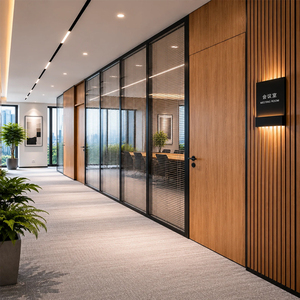
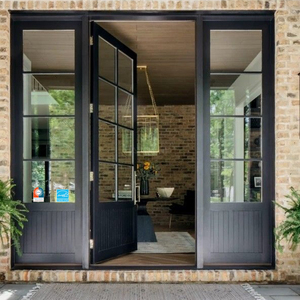
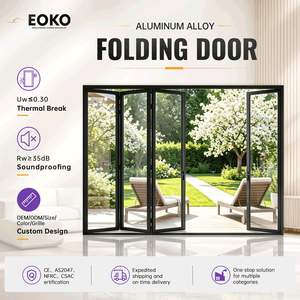
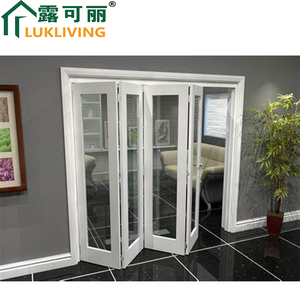
Architectural Fenestration White Paper: Engineering Aluminium Glass Front Doors for Global Climates
When sourcing from an aluminium glass front door factory in China, international architects, structural engineers, and property developers must look beyond surface aesthetics. The modern building envelope is an active shield that balances dynamic wind load deflection, stringent thermal envelope targets, air permeability, and mechanical security. As modern architectural trends champion oversized pivot doors, floor-to-ceiling panoramic glass panels, and minimalist narrow-sightline profiles, the structural demands placed on high-grade aluminum extrusions have surged exponentially.
A premium architectural aluminium entry door relies heavily on alloy chemical composition and extrusion temper. In our Foshan production facility, primary billets conform strictly to 6063-T5 and structural 6061-T6 metallurgical standards. Unlike inferior scrap-recycled aluminum alloys that exhibit structural porosity and micro-cracking under torsional stress, high-purity virgin aluminum extrusions ensure optimal wall thicknesses ranging from 2.0mm to 3.5mm on structural stiles and rails. This high tensile yield strength prevents deflection when supporting insulated glass units (IGU) weighing upward of 300 to 500 kilograms on monumental pivot axes.
| Performance Metric | International Standard | Factory Technical Benchmark | Application Significance |
|---|---|---|---|
| Thermal Transmittance (U-Value) | EN ISO 10077-2 / NFRC | Ud ≤ 0.85 to 1.2 W/(m²·K) | Multi-chamber PA66 GF25 thermal breaks stop condensation and meet strict Passivhaus and UK Part L codes. |
| Wind Load Resistance | AS 2047 N6 / ASTM E330 | Serviceability ≥ 3000 Pa, Ultimate ≥ 4500 Pa | Prevents structural leaf deflection in exposed coastal zones, high-rise wind tunnels, and open terrain villas. |
| Hurricane Impact Resistance | Miami-Dade TAS 201/202/203 | Large Missile Impact Level D (50 fps) | Laminated SentryGlas® (SG) interlayer stops cyclic pressure penetration and projectile breach during storms. |
| Forced Entry Security | EN 1627-1630 (RC2 / RC3) | Multi-Point Hook Locks & Anti-Drill Escutcheons | Defeats crowbars, mechanical drilling, and wedge forced entry via hardened steel shoot-bolts and heavy-duty keeps. |
| Acoustic Attenuation | ISO 717-1 / ASTM E413 | Rw (C; Ctr) = 38 dB to 44 dB | Asymmetric acoustic laminated glass panels deaden urban street noise, traffic rumble, and low frequencies. |
Furthermore, thermal isolation is achieved via precision polyamide insulation strips (Technoform PA66 GF25) mechanically knurled and crimped into dual aluminum extrusion chambers. This structural barrier decouples exterior solar radiation or freezing temperatures from interior architectural living spaces. Paired with triple-glazed units featuring warm-edge spacers, argon gas filling, and dual-surface magnetron sputtering Low-E coatings, our entry systems mitigate condensation, prevent profile thermal bowing, and cut heating, ventilation, and air conditioning (HVAC) operating costs.
Global Procurement & Technological Trends (2025–2030)
In-depth insights into evolving architectural specifications, low-carbon lifecycle mandates, and smart entrance integration driving next-generation supply chains.
1. Monumental Pivot Engineering
Architectural entranceways are moving away from traditional butt hinges toward monumental, single-leaf pivot doors exceeding 2.0 meters in width and 4.0 meters in height. Global buyers now require heavy-duty floor-concealed hydraulic closers with load capacities exceeding 600kg, integrated damping hold-open points, and precision adjustable pivots that maintain fluid, featherweight fingertip operation.
2. Embedded Biometrics & IoT Access
Mechanical keys are rapidly yielding to concealed biometric scanning, motorized multi-point solenoid locks, and building management system (BMS) interfaces. High-end residential projects specify facial recognition sensors seamlessly milled flush into vertical architectural pull handles, complete with tamper detection, emergency battery backup, and encrypted smartphone app connectivity.
3. Extreme Weather & Impact Resilience
With shifting climate realities, hurricane-rated and coastal-grade fenestration is no longer confined to Florida or the Caribbean. B2B buyers across Europe, Australia, and coastal Asia require testing up to ASTM E1886/E1996 and AS 2047 N6 criteria. Fluoropolymer coatings (AAMA 2605 PVDF) are standard to counter severe salt-spray degradation and UV radiation without chalking.
4. Low-Carbon Lifecycle & EPD Certification
Institutional developers and tier-1 general contractors increasingly mandate Environmental Product Declarations (EPD). Hydro-powered green smelting aluminium, recycled billets with traceable chain of custody, and non-toxic powder finishes are required to achieve LEED Platinum and BREEAM Outstanding environmental credentials.
5. Crittall & Ultra-Slim Sightline Aesthetics
Industrial-chic heritage aesthetics with ultra-narrow sightlines dominate high-end residential interiors and exterior transitions. Extruded aluminium structural profiles replicating authentic steel Crittall mullions provide modern thermal break efficiency, eliminating the heavy corrosion, thermal bridging, and exorbitant fabrication costs historically tied to raw structural steel.
6. Parametric BIM & Modular Prefabrication
Procurement teams avoid field-assembly labor bottlenecks by ordering fully unitized, factory-glazed, and pre-hung entry systems. Complete with sub-frames, integral flashings, sill pans, and downloadable Revit/BIM 3D models, site installation speeds increase by 60% while drastically cutting on-site punch list discrepancies.
Why Global Specifiers Partner with DERCHI: Foshan Manufacturing Authority
Headquartered in the global aluminium manufacturing epicenter of Shishan Town, Foshan, Guangdong Dejiyoupin Doors and Windows Co., Ltd. (DERCHI) has represented industrial-grade manufacturing discipline for over 25 years. Ranking consistently among the Top 10 door and window brands in China, our operation spans an expansive 180,000 square meter intelligent production campus staffed by more than 600 dedicated engineering and manufacturing professionals.

German Schüco Partner Track Record
Chosen by long-standing UK Schüco installation partners for multi-villa luxury developments across Great Britain, proving our dimensional tolerances, hardware milling accuracy, and surface finish match premier European luxury standards at direct-from-factory economies of scale.
Free In-House CAD & Shop Drawings
Our dedicated engineering office reviews architectural door schedules, providing detailed structural calculations, wind-load analysis, threshold integration details, and complete shop drawing submittals within 48 hours for immediate architect and general contractor sign-off.
Synchronous Global Time-Zone Support
Technical project managers and bilingual sales engineers align seamlessly with CET, GMT, and EST business hours, ensuring rapid answers during contract negotiations, pre-production approvals, site installation briefings, and ongoing client handover warranties.
Frequently Asked Technical & Procurement Questions
Direct answers to critical engineering, logistics, compliance, and quality-assurance inquiries raised by project specifiers and commercial procurement directors.
Solar radiation can heat dark external aluminium faces (RAL 7016 anthracite or RAL 9005 black) up to 80°C while air-conditioned interiors sit at 22°C, creating high thermal gradients. We counter this bimetallic bowing effect using specialized split-insulation thermal break profiles with rolling anti-bi-metal polyamide strips (Technoform). This mechanically absorbs differential expansion while keeping the door sash perfectly flat, ensuring long-term seal contact and smooth multi-point latching.
Our insulated glass units (IGU) are tailored to project requirements. Typical configurations incorporate 6mm Low-E Tempered + 12A/16A Argon warm-edge spacer + 6mm+1.52PVB/SentryGlas+6mm Laminated Safety Glass. For hurricane or severe forced entry threats (RC3/RC4), we engineer Kuraray SentryGlas® (SG) ionoplast interlayers, which are 5 times tougher and up to 100 times stiffer than standard PVB interlayers, remaining rigid even if both glass panes shatter.
Every door assembly undergoes a systematic five-stage export packing protocol: 1) Protective static film across all aluminum extrusions and glass surfaces; 2) Closed-cell EPE pearl foam perimeter padding; 3) Heavy-duty corner impact caps; 4) Vacuum-sealed anti-moisture desiccant wrapping; and 5) Fully enclosed, ISPM-15 compliant fumigated non-coniferous plywood crates with internal structural bracing. Crates are loaded with forklift clearance to eliminate container-transit damage.
Yes. While we supply high-performance German hardware suites (G-U, Siegenia, Hoppe, Dormakaba), our CNC machining centers mill custom mortise cutouts for any third-party or domestic hardware system. Whether your project requires UL-listed panic crash bars for US hotels, euro-profile cylinders for European residential villas, or electric strikes wired for Australian access systems, precision templates are engineered directly into the CAD shop drawings.
We maintain flexible procurement paths for private villa developments (MOQ starting at 1 bespoke set) up to containerized commercial developments. Standard lead time is 25 to 35 business days following final CAD drawing approval and glass specification sign-off. Expedited fast-track manufacturing slots are available for urgent building schedule deadlines.
Each commercial project delivery includes a comprehensive documentation binder: CE Declaration of Performance (DoP) under EN 14351-1, ISO 9001 factory inspection certificates, mill test reports verifying 6063-T5 aluminum alloy composition, tempered glass IGCC/CE test certificates, powder coating salt-spray warranty documents, and step-by-step structural installation manuals.
Request Architectural Shop Drawings & Factory Price Matrix
Collaborate directly with our Foshan engineering desk. Send us your project schedules, opening elevations, or specification requirements to receive engineered CAD drawings, thermal modeling reports, and competitive factory-direct quotations within 24 business hours.
Get Catalog