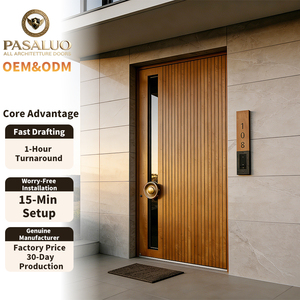
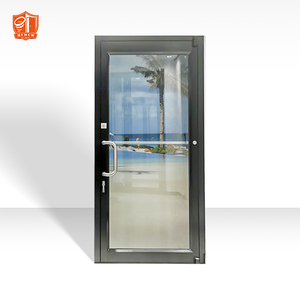
Security & Entrance Systems
Engineered in our Foshan smart manufacturing complex, our structural aluminium assemblies deliver unmatched envelope weather-tightness, acoustic attenuation, and architectural flexibility across residential, commercial, and hospitality typologies.
Evaluating architectural louvres beyond simple aesthetic sunscreens: A rigorous technical analysis of aerodynamic discharge coefficients (Cd), natural draft cross-ventilation calculations, rain defence efficiencies, and metallurgical extrusion criteria.
Modern architectural façades demand a rigorous equilibrium between volumetric aerodynamic throughput and severe rain rejection. As a premier China Best Aluminium Louvre Windows Factory, our engineering team utilizes high-fidelity Computational Fluid Dynamics (CFD) modeling to formulate blade geometry that maximizes the aerodynamic discharge coefficient (Cd) while eliminating water carryover.
Traditional louvre blades create severe turbulence wakes on the leeward edge, choking effective free area (often reducing gross geometric aperture by upwards of 55%). By contrast, our dual-stage and three-stage extruded aerodynamic louvre profiles establish laminar airflow boundary layers across operational angles from 0° to 90°, achieving free ventilation areas up to 82% without compromising structural stiffness under gust pressures.
Under international EN 13030 standards for wind-driven rain testing, our Class A weather louvre assemblies demonstrated 99.2% water rejection efficiency under dynamic 50 Pa simulation pressures combined with 13 m/s wind velocities, making them the preferred specification for coastal high-rises and subtropical monsoon regions.

Envelope durability starts at the billet furnace. While low-tier manufacturers rely on recycled secondary ingot with high iron contamination, our factory mandates prime architectural grade Aluminium Alloy 6063-T5 and structural 6063-T6. This guarantees a minimum tensile strength of 205 MPa and yield strength exceeding 170 MPa, delivering immense resistance against permanent frame deflection under cyclonic load.
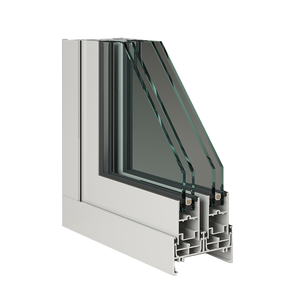
To prevent envelope thermal transmission and condensation bridging, our insulated louvre variants incorporate multi-chambered polyamide PA66 GF25 thermal break strips. Unlike conventional non-insulated blades, thermally broken louvre jambs and motorized insulated hollow-core blades deliver an overall thermal transmittance value of Uw ≤ 1.6 W/(m²·K).
Coupled with EPDM co-extruded acoustic sealing lips, our louvre frame assemblies attenuate intrusive traffic frequencies by up to 34 dB (Rw) when fully closed, complying with strict urban acoustic master-planning requirements across the United Kingdom, Europe, and North America.

Our heavy-duty louvre window profiles are rigorously verified under Australian Standard AS 2047, passing the pinnacle cyclonic wind classification N6. Profiles withstand ultimate limit state wind pressures exceeding 4500 Pa with zero fastener shear or blade dislodgement.
Precision linear actuators integrated into frame perimeters interface natively with KNX, BACnet, and Modbus building management automation. Blades synchronize in micro-steps (0.5° tolerances) responding dynamically to solar trackers and indoor CO2 air quality sensors.
For coastal marine and high-UV environments, our in-house fluorocarbon PVDF coating lines utilize 70% Kynar 500 resins exceeding AAMA 2605 requirements. Alternatively, Qualicoat Class 2 super-durable powder coats and 25-micron marine anodizing guarantee 25-year gloss retention.
| Performance Vector | International Standard | Tested Specification Benchmark | DERCHI Factory Assurance |
|---|---|---|---|
| Structural Wind Load | AS 2047 / ASTM E330 | Serviceability: 2500 Pa | Ultimate: 4500 Pa (N6) | Finite element structural analysis (FEA) certified per project elevation. |
| Water Penetration | EN 13030 / AAMA 501.1 | Class A Efficiency (>99% at 13 m/s + 50 Pa dynamic) | Internal baffle traps & labyrinth sub-sill drainage manifolds. |
| Air Permeability (Closed) | EN 12207 / AS 4420.4 | Class 4 (≤ 0.75 m³/h·m² under 600 Pa test) | Perimeter santoprene co-extruded weather seals with compression cams. |
| Solar Heat Gain (SHGC) | NFRC 200 / ISO 9050 | Adjustable SHGC: 0.12 (closed) to 0.78 (fully opened) | Integrated solar shading blades reduce AC cooling demands by up to 38%. |
| Acoustic Attenuation | ISO 717-1 / ASTM E90 | Rw (C; Ctr) = 31 dB (-1; -3 dB) in hollow insulated louvre | Acoustic damping foam fill within custom 100mm-150mm extrusion cavities. |
| Operating Durability | EN 1191 / AS 4145 | Grade 4 (50,000 continuous open/close duty cycles) | CNC precision brass and 316 marine-grade stainless hardware link arms. |
Strategic guidance for procurement managers, façade engineers, and property developers navigating evolving decarbonization standards, smart building integration, and supply chain rationalization.
Global architectural specifications increasingly require Environmental Product Declarations (EPDs). Procurement contracts mandate recycled post-consumer scrap quotas and hydro-electric smelter billets, bringing embodied carbon thresholds below 4.0 kg CO2e per kg of finished extrusion.
Solar shading is transforming into decentralized power generation. Building envelopes now specify monocrystalline and thin-film Building Integrated Photovoltaic (BIPV) glass louvres that generate clean energy while dynamically tracking azimuth angles to shade internal office floor plates.
To slash on-site crane time and expensive Western construction labor, developers are transitioning away from field-assembled louvre stick frames toward pre-glazed, factory-torqued unitized louvre-spandrel panels pre-tested in China for instant modular hook-on installation.
Green building certifications (LEED v5, BREEAM Outstanding, WELL v2) demand hybrid ventilation. Motorized louvre assemblies integrate smart differential pressure sensors, opening automatically during low-enthalpy ambient evenings to flush thermal mass without mechanical HVAC.
Headquartered in the global aluminium capital of Shishan Town, Foshan, DERCHI represents over a quarter-century of manufacturing discipline, supporting mega-projects across the UK, Germany, North America, and Australia.

When a British luxury builder and long-standing European partner of German Schüco required a bespoke fenestration and louvre package for a signature multi-villa enclave, DERCHI was selected following strict factory audit protocols. Our computerized 5-axis CNC machining centers, automated elumatec-grade double-mitre saws, and digital multi-point corner-crimping assemblies guarantee cutting and milling tolerances within 0.1mm.
Every louvre sash, pivot hinge, and blade drive bar undergoes 100% pre-assembly function and dimension inspection before crating. With an annual capacity exceeding 300,000 square meters of high-end envelope solutions, we safeguard procurement critical-path delivery timelines.

Complete vertical control from raw extrusion selection to ocean-going steel-pallet protection eliminates intermediaries, lowering capital expenditure while assuring warranty compliance.
Our 35-person technical drafting office provides full architectural submittals, parametric Revit/BIM families, structural wind-pressure calculations, and interface perimeter flashing details mapped straight to your project's opening schedule.
Exporting to ports including Rotterdam, Hamburg, Felixstowe, Long Beach, and Sydney requires extreme protection. Sashes and louvre sets receive multi-layer foam wraps, desiccants, edge corner armor, and fumigated steel-frame shipping crates to ensure zero maritime moisture or impact damage.
Never wait for responses due to time shifts. Our bilingual senior façade engineers synchronize schedules to CET, GMT, and EST business hours, ensuring rapid responses on technical RFIs, variation revisions, and site installation remote video guidance.
Direct, transparent answers regarding engineering feasibility, quality assurance, international code approvals, minimum order quantities, and ocean freight logistics.
We test in accordance with EN 13030 and ASTM E331 in our calibrated on-site testing rig. Blade profiles integrate co-extruded high-density EPDM gasket seals that interlock mechanically in a step-down shingle pattern. Sub-frame sills incorporate dual-chambered gravity drainage slots that prevent wind-driven pressure blowback.
Yes. With an in-house tooling and die center, we turn custom architectural profiles into functional extrusion dies within 12 to 16 calendar days. Sample extrusions and mechanical stress reports are produced and verified before bulk extrusion lines are scheduled.
All commercial shipments are supplied with certified Declaration of Performance (DoP) files under CE EN 14351-1, ISO 9001 factory production audit trails, AS 2047 structural reports, NFRC thermal simulation certificates, and AAMA coating thickness and cross-hatch adhesion verification test logs.
Our louvre motors feature standard dry-contact relays, 0-10V analog inputs, or integrated RS485 interfaces that connect natively to BACnet, Modbus, or KNX bus architectures. Actuators provide digital position feedback down to 1% travel resolution and include master emergency smoke fire triggers.
Shop drawings are submitted for approval within 3 to 5 business days from structural schedule receipt. Following drawing sign-off, fabrication and powder coating require 25 to 35 calendar days depending on color complexity, followed by scheduled vessel booking from Shenzhen or Guangzhou ports.
We offer a 10-year comprehensive structural integrity warranty on all 6063-T5/T6 frames, 15 to 25-year performance warranties on Qualicoat Class 2 and AAMA 2605 fluorocarbon finishes against peeling or chalking, and a 5-year replacement warranty on all linear actuators and linkage drive gearboxes.
Send your architectural drawings, window schedules, or performance targets to our Foshan engineering group. We will review achievable U-values, wind-load deflections, and provide complete factory-direct pricing within 24 hours.
Send an Inquiry