Safety & Industrial
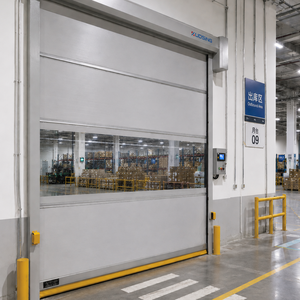
Heavy Industrial Rapid Door Fire Rated Safety for Emergency Exit Warehouse Corridor Escape Passage in China
UL Fire-Rated
High Speed
Emergency Egress
Engineered for commercial storefronts, luxury villa portals, corporate office elevations, and high-frequency hospitality entrances. Tested for extreme structural wind deflection, water intrusion resistance, and low-E thermal efficiency.
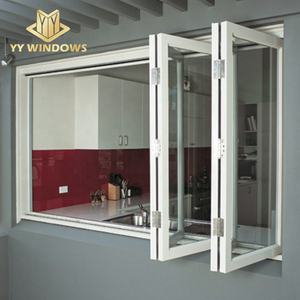
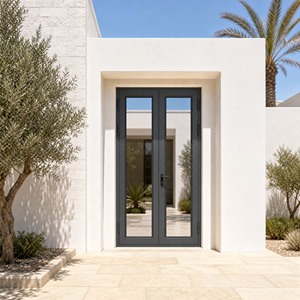
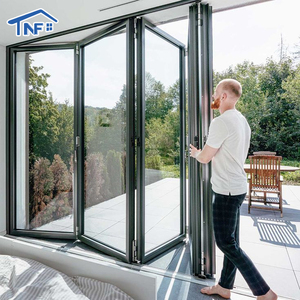
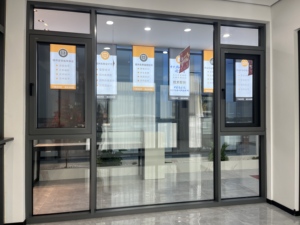
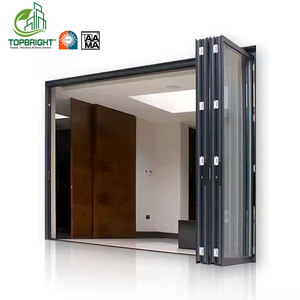
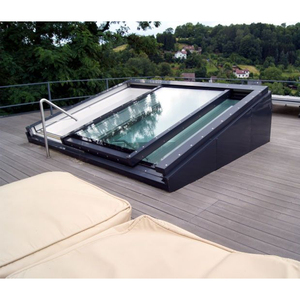
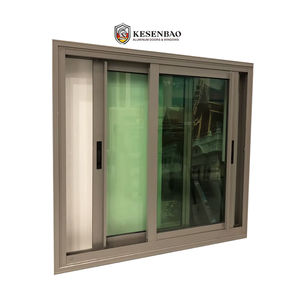
In modern retail and corporate development, the shop front window is not merely a transparent barrier; it is the critical nexus between brand identity, building envelope energy conservation, and structural life-safety.
DERCHI shop front framing systems exclusively deploy primary virgin 6063-T6 and 6061-T6 architectural aluminium alloys. Engineered with precise magnesium-to-silicide ratios, these extrusions provide ultimate tensile strength exceeding 205 MPa and yield strength of 170 MPa. This structural fortitude allows ultra-slim sightlines capable of supporting expansive jumbo IGUs without structural sag, cyclic fatigue, or wind-induced deflection under severe gale conditions.
Uncontrolled conductive heat transfer through commercial shop fronts undermines HVAC efficiency and creates destructive interior condensation. DERCHI integrates reinforced PA66 GF25 (25% glass fiber-reinforced polyamide) thermal barriers crimped securely into multi-chambered extrusion cavities. This creates an impermeable thermal discontinuity, dropping the overall assembly U-factor from an inefficient 5.8 W/m²K down to an ultra-efficient 1.2–1.6 W/m²K, strictly fulfilling German GEG and UK Part L regulations.
Commercial facades face violent rain and differential air pressure. DERCHI implements pressure-equalized rain-screen engineering across all shop front transoms and mullions. Triple EPDM automotive-grade vulcanized synthetic rubber gaskets maintain 100% elasticity across extreme temperature fluctuations (-40°C to +120°C). Concealed internal drainage channels divert pressurized moisture away from building slabs, ensuring Class 9A water tightness under EN 12208 standards.
Under international building codes (including IBC Chapter 16 and Eurocode 3), architectural shop fronts must satisfy strict serviceability limit states. In DERCHI laboratories, our mullion sections undergo cyclic load testing up to ±4500 Pa (equivalent to Category 5 cyclone winds), with maximum lateral deflection strictly restricted to L/175 or L/250. This prevents structural glass pinching, perimeter seal rupture, and catastrophic anchor pull-out in commercial environments.
As commercial developers, general contractors, and facade consultants restructure international supply networks, procurement decisions are governed by sustainability metrics, digital design interoperability, and end-to-end direct manufacturing partnerships.
Global procurement teams are rapidly abandoning domestic trading re-sellers. Engaging directly with Tier-1 Foshan manufacturing powerhouses like DERCHI reduces capital expenditures by 30% to 45% while eliminating technical translation errors. Direct factory coordination gives developers dedicated access to structural engineers, free parametric shop drawing revisions, and synchronized shipping container staging aligned directly with site crane schedules.
Embodied carbon has become a definitive tender metric across the European Union, the UK, North America, and Australasia. Future storefront sourcing is shifting toward circular economy billets smelted utilizing hydroelectric power and guaranteed post-consumer recycled content (>50%). DERCHI provides certified Environmental Product Declarations (EPDs), enabling commercial assets to capture vital credits within BREEAM, LEED, and DGNB green building frameworks.
Skyrocketing jobsite labor costs across Western economies demand Design for Manufacture and Assembly (DfMA). On-site framing assembly is being replaced by pre-glazed, pre-gasketed shop front modules manufactured under sterile factory tolerances. DERCHI precision-cuts, anchors, and factory-glazes storefront spans, delivering plug-and-play modules that cut onsite installation timetables by over 60%, drastically minimizing weather disruption risks.
Continuous capital investment into automated machining centers, structural glazing polymer chemistry, and automated smart access protocols underpins DERCHI's product development roadmap.
Traditional chunky exterior face caps are giving way to sleek, all-glass aesthetics. Using two-component high-modulus neutral cure silicone structural adhesives (Dow Corning 983 / Sika 605), DERCHI bonds double and triple insulated glass units directly to concealed sub-frames. The resulting flush, planar storefront façade maximizes visual transparency, repels atmospheric dust accumulation, and creates modern architectural street-presence.
To satisfy net-zero carbon operational mandates without adding unmanageable glass mass, DERCHI is integrating next-generation tempered Vacuum Insulated Glazing (VIG). Achieving center-of-glass U-values of 0.45 W/m²K within an ultra-thin 10.3mm profile, this breakthrough allows historic renovations and modern slender storefront profiles to surpass the thermal resistance of solid insulated masonry walls.
Commercial entry portals are transitioning to touchless biometric and BMS-integrated security. DERCHI's commercial swing, pivot, and sliding shop fronts integrate European mechatronic perimeter hardware. Features include motorized multi-point deadbolts rated to RC3/RC4 anti-burglary standards, concealed panic exit rim bars certified to EN 1125, and seamless interface with building access control matrices.
Direct comparative validation illustrating how DERCHI commercial aluminium shop front window systems compare against standard commercial generic profiles across fundamental structural, thermal, and acoustic parameters.
| Performance Characteristic | Standard Generic Shop Front | DERCHI Commercial System | Governing International Code | Engineering Compliance |
|---|---|---|---|---|
| Aluminium Alloy & Temper | Recycled 6063-T5 (Uncertified) | Primary 6063-T6 / 6061-T6 Billet | ASTM B221 / EN 755-2 | Certified High-Yield |
| Thermal Barrier Technology | Non-Thermal or Poured Resin | Polyamide PA66 GF25 Isobar Bar | EN ISO 10077-2 / DIN 4108 | Uw ≤ 1.3 W/m²K |
| Structural Wind Load Resistance | Up to 1800 Pa (Serviceability) | Up to 4500 Pa (N6 Cyclonic Level) | AS 2047 / ASTM E330 / EN 12210 | Class C5 / N6 Approved |
| Water Penetration Tightness | Static 300 Pa (Occasional Leaks) | Dynamic 600–900 Pa Equalized | AAMA 501.1 / EN 12208 | Class 9A / E1050 |
| Air Infiltration Permeability | 1.5 to 2.0 m³/(h·m²) | < 0.1 m³/(h·m²) Hermetic Multi-Seal | EN 12207 / ASTM E283 | Class 4 Maximum |
| Acoustic Sound Attenuation | Rw 28–32 dB (Noisy Urban) | Rw 42–48 dB (Acoustic PVB/Argon) | ISO 717-1 / ASTM E90 | Acoustic Comfort Peak |
| Surface Coating Warranty | Basic Powder (3–5 Year Chalking) | Qualicoat Class 2 / PVDF 3-Coat | AAMA 2605 / Qualicoat Standard | 20-Year Color Fastness |
Headquartered in Foshan—the world capital of aluminium metallurgy—Guangdong Dejiyoupin Doors and Windows Co., Ltd. (DERCHI) combines massive industrial scale with surgical European engineering tolerances.
DERCHI's sprawling production base in Foshan integrates computerized CNC profile cutting, 5-axis corner crimping stations, and automated glass handling lines. This heavy industrial capacity easily supports multi-tower commercial developments, large shopping complex re-glazing, and multi-villa contracts with rock-solid delivery precision.
DERCHI's engineering excellence is evidenced by our long-term collaboration with leading UK builders and certified Schüco distribution partners who chose DERCHI to fabricate custom architectural facades across dozens of prestigious villa projects. Our structural tolerances, mitre alignments, and gasket compressions match Europe's strictest facade norms.
We de-risk overseas procurement by offering fully integrated architectural engineering before fabrication starts. Our bilingual technical team transforms architectural door schedules into detailed CAD fabrication drawings, 3D structural wind-load simulations, thermal bridging finite element analyses, and complete Revit BIM models at zero surcharge.
Clear, technically thorough answers addressing code compliance, international logistics, material verification, and jobsite installation protocols.
Yes. DERCHI products are independently tested by accredited notified bodies. We deliver factory Declarations of Performance (DoP) under EN 14351-1 for CE/UKCA requirements, and our structural shop fronts hold AS 2047 N6 certification—the highest classification for cyclonic wind and water tightness in Australia. We provide project-specific calculation dossiers for submission to local building inspectors.
Export preservation is an engineering priority. Glass units and aluminium framing components receive scratch-resistant peelable protective films, impact-absorbing foam corner protectors, and sealed desiccant packets. Spans are packed into heavy-duty fumigated steel-reinforced wooden crates engineered for overhead crane and forklift loading, ensuring 0% transit damage to Rotterdam, Hamburg, Los Angeles, Sydney, or Dubai.
Absolutely. In addition to our extensive library of over 500 standard commercial dies, we maintain an in-house tooling workshop. For large-scale developments requiring unique facade depths, articulated mullion fins, or integrated LED reveal lighting, our engineers can create custom extrusion dies within 14 days, followed by sample delivery in under 3 weeks.
We partner with leading global hardware specialists including Siegenia, GU, Hoppe, DormaKaba, and Roto. Commercial shop front doors can be configured with concealed overhead closers, heavy-duty adjustable pivot hinges supporting up to 500 kg per leaf, automatic sliding operators, touchless wave-to-open sensors, and electro-magnetic panic escape bolts meeting EN 179 and EN 1125 standards.
Every custom opening is mathematically evaluated using Lawrence Berkeley National Laboratory (LBNL) WINDOW and THERM software in accordance with EN ISO 10077-1/2. We provide simulated thermal break section models detailing exact frame U-values (Uf), glass center U-values (Ug), linear spacer thermal bridging coefficients (Ψ), and total integrated assembly U-factors (Uw) prior to fabrication.
Every container shipment includes labeled components keyed directly to the approved CAD shop drawings, along with step-by-step 3D assembly and anchor installation manuals. Our English-speaking project engineering team provides live video support aligned with European (CET), American (EST/PST), and Australian (AEST) working hours to resolve any jobsite queries in real time.