Featured Precision Aluminium Door Systems
Manufactured under strict ISO 9001 and CE directives in Foshan, China. Designed for international structural deflection, acoustic dampening, and rigorous climate cycling.
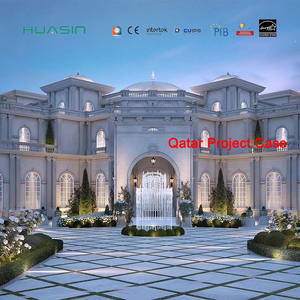
- Polyamide PA66GF25 Thermal Break
- Triple EPDM Continuous Gaskets
- U-Value: ≤ 1.1 W/m²·K
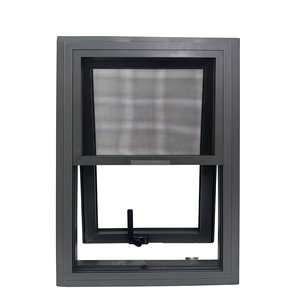
- Architectural 6063-T6 Extrusion
- Concealed Perimeter Multi-Point Hardware
- Class 4 Air Tightness (EN 12207)
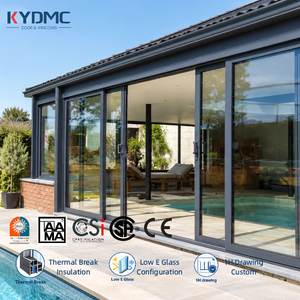
- Double Toughened Safety Low-E Glass
- Heavy-Duty Bottom Roller System (300kg)
- Sound Reduction: Rw 38 dB
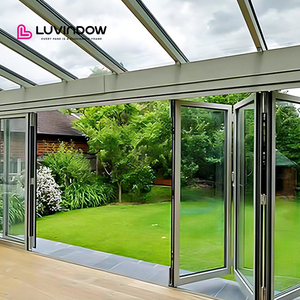
- Top-Hung Stainless Steel Carrier Bogies
- Flush Weather-Rated Threshold
- Water Tightness: Class 9A (600 Pa)
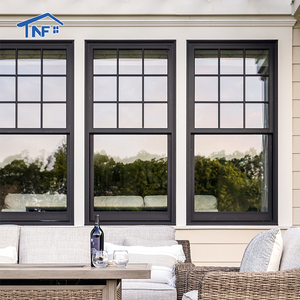
- Internal Structural Security Grilles
- Fluorocarbon Powder Coating (25μm)
- Wind Load Resistance: Class C5
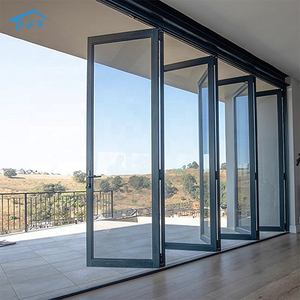
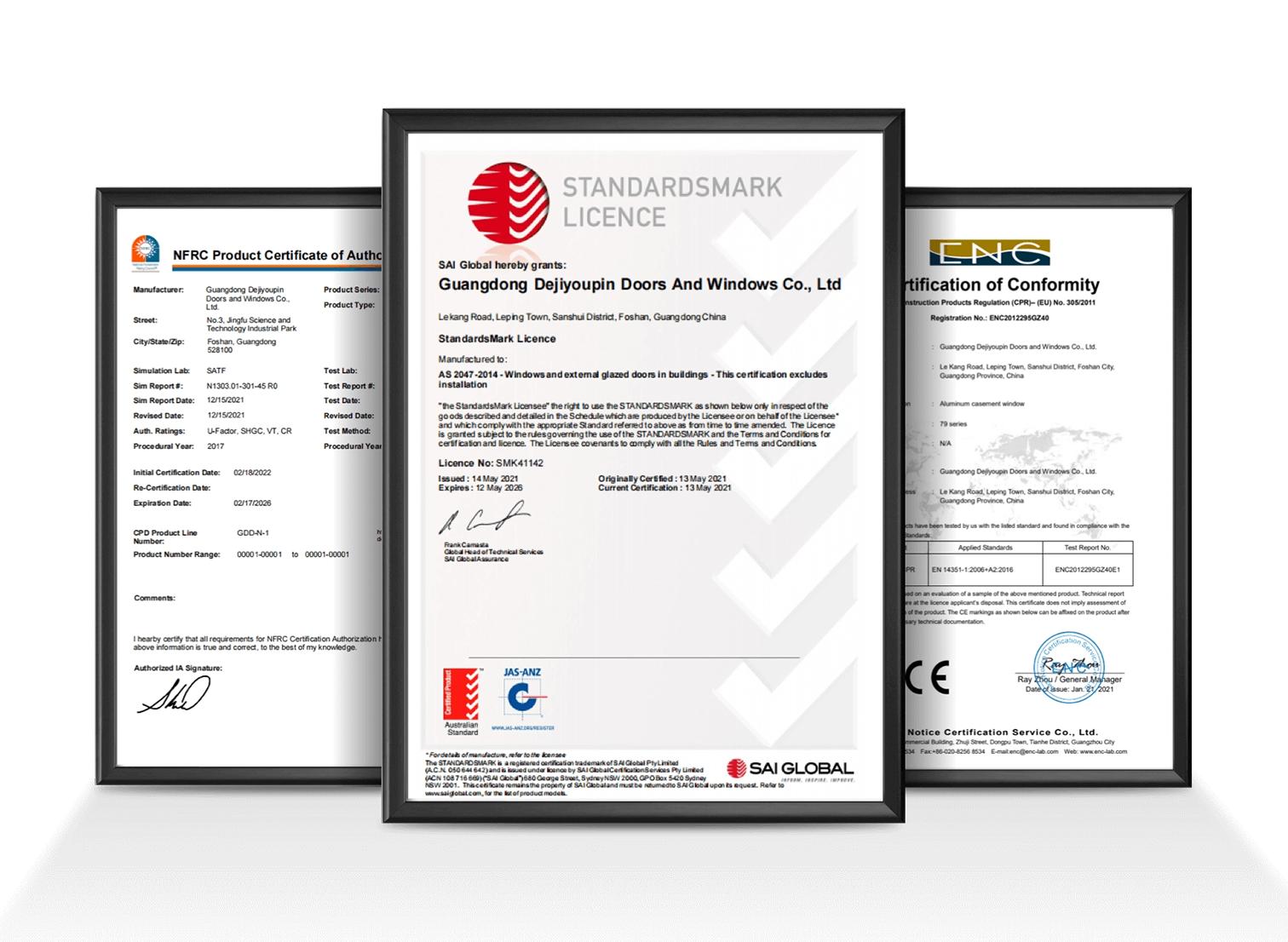
- NFRC & AAMA Standard Certified
- Warm Edge Spacer Technology (Argon Fill)
- Security Class: RC2 / PAS 24
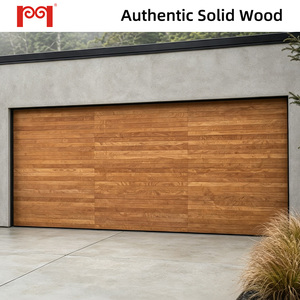
- Solid Red Oak / Teak Clad with Aluminum Core
- Polyurethane Injected Foam (45 kg/m³)
- Acoustic Dampening: STC 35
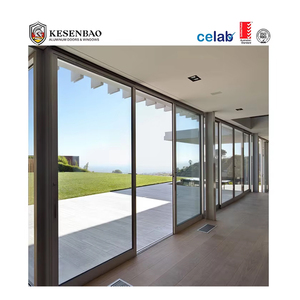
- AS 2047 & AS 1288 Certified Cyclonic N6
- Double/Triple Glazed Acoustic Interlayers
- Heavy Duty Commercial Interlock Stile
Structural Aerodynamics and Mechanical Kinematics of Architectural Aluminium Swing Doors
Aluminium swing doors represent the primary operational fenestration envelope in high-traffic commercial buildings and luxury residences. Unlike sliding configurations where gravity is transferred directly to bottom tracks, swing systems place concentrated shear loads and torsional stress on perimeter jambs and localized hinge pivots.
As a leading Chinese manufacturer and direct exporter to European, Australian, and North American markets, our factory implements aviation-grade primary aluminum billets (Alloy 6063-T6 and 6060-T66). Through high-pressure extrusion and precise artificial aging, our profiles achieve an ultimate tensile strength exceeding 205 MPa and a yield strength greater than 160 MPa.
Our corner joinery leverages hydraulic compound corner-crimping machines with structural epoxy injection channels. Rather than mechanical screw fasting, two-component polyurethane joint adhesives ensure water tightness under positive and negative wind loads up to 4500 Pa (equivalent to Cyclonic N6 under AS 2047 testing regimes).

Multi-Point Deadbolt Security
European-engineered multi-point drive gear mechanisms with hardened manganese steel deadbolts. Resists lateral prying and wedge deflection, meeting EN 1627 RC3 and PAS 24 security classifications.
Triple-Sealed Co-Extrusion
Seamless cellular EPDM perimeter seals provide permanent elastic recovery. Maintains continuous compression under dynamic wind deflection, eliminating thermal bridging and drafts down to 0.05 m³/(h·m).
C5-M Marine Surface Longevity
Certified Qualicoat Seaside Class 2 fluorocarbon (PVDF) powder coatings and 25μm hard anodization withstand over 3,000 hours of neutral salt spray testing (ISO 9227) without filiform blistering.
Technical Benchmark: Global Engineering Standards
How our heavy-duty aluminium swing doors align with European (EN), American (AAMA/NFRC), and Australian (AS) building codes.
| Performance Vector | International Test Standard | Engineering Threshold Achieved | Architectural Impact |
|---|---|---|---|
| Thermal Transmittance ($U_D$) | EN ISO 10077-1 / NFRC 100 | 0.85 – 1.2 W/(m²·K) | Passes German GEG 2024 and UK Building Regs Approved Document Part L. |
| Air Permeability | EN 12207 / ASTM E283 | Class 4 (≤ 3 m³/h·m² @ 600 Pa) | Minimizes mechanical HVAC loads in net-zero energy and passive commercial projects. |
| Water Tightness | EN 12208 / ASTM E331 | Class 9A (Zero leakage @ 600 Pa) | Guaranteed weather barrier against driven wind-rain in high-rise and coastal locations. |
| Wind Load Resistance | EN 12210 / AS 4055 N6 | Class C5 (Δp = 2000 Pa, Pmax = 3000 Pa) | Allows oversized glass spans without permanent profile deformation or deflection. |
| Acoustic Attenuation ($R_w$) | ISO 717-1 / ASTM E413 | Rw 42 dB (-1; -4) / STC 43 | Critical sound decoupling for boutique hotel entrances, urban lofts, and airport avenues. |
| Mechanical Operating Cycles | EN 1191 / ANSI A156.4 | 500,000+ Cycles (Grade 8 Heavy Duty) | Ensures 30+ year lifespan in continuous high-frequency commercial entrances. |
Future Sourcing & Technological Trends (2025–2030)
Strategic analysis for procurement directors, commercial estimators, and international developers.
Decarbonized Circular Metallurgy
Global CBAM (Carbon Border Adjustment Mechanism) compliance is accelerating the transition toward low-carbon billets smelted with renewable hydro energy, accompanied by Environmental Product Declarations (EPD).
Architectural Extreme Spans
Demand for single-leaf oversized swing and pivot configurations up to 4,200 mm in height. Structural reinforcement relies on internal concealed carbon-fiber stiffeners preventing profile deflection.
Invisible Kinematics & Automation
Fully concealed electromechanical drive systems embedded inside head rails. Seamless communication with KNX, BACnet, and Crestron smart building ecosystems via biometrics and encrypted RFID.
Vacuum Insulating Glazing (VIG)
Integration of 8.3mm tempered VIG units replacing 36mm triple-glazed buildups. This drops overall door weight by 45% while achieving center-of-glass thermal performance of Ug 0.45 W/m²·K.
Export Packaging, Traceability, and Shop Drawing Precision
International procurement success relies not merely on raw extrusion, but on systemic engineering rigour. Every custom project dispatched from our Foshan facility begins with detailed fabrication CAD/BIM shop drawings, reviewing clear frame dimensions, structural dead-load support, perimeter expansion joints, and threshold drainage details.
Our quality management workflow implements three levels of pre-shipment sign-off:
- 100% Dimensional Trial Assembly: Leaves and outer sub-frames are pre-hung on factory test rigs to verify corner squareness and perimeter seal compression.
- Laser Electronic Squareness Check: Tolerances are restricted to ±0.8 mm diagonally across openings up to 3 meters.
- Maritime Fumigated Crate Packaging: Encapsulated within EPE pearl cotton, scratch-resistant film, desiccant bags, and heavy-duty IPPC-stamped plywood cases to prevent sea-freight humidity damage.

Frequently Asked Questions for Project Specifiers
Direct technical answers addressing structural compliance, lead times, customization, and sea logistics.
Ready to Engineer Your Project's Entrance Facade?
Submit your door schedules, CAD sections, or architectural tender packages directly to our bilingual engineering team. We supply full static wind-load calculations, thermal analysis reports, and bespoke fabrication drawings.
Get a Quote