Featured Aluminum Balcony & Patio Door Systems
Explore our premium architectural configurations optimized for thermal efficiency, high wind-load structural resistance, seamless flush transitions, and severe coastal weathering.
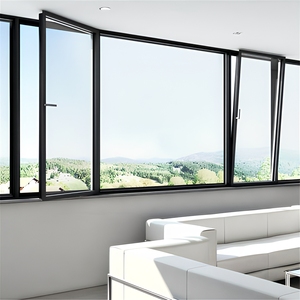
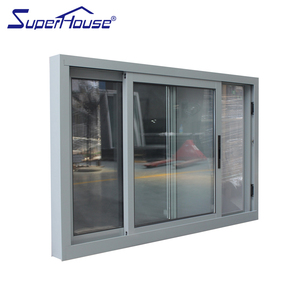
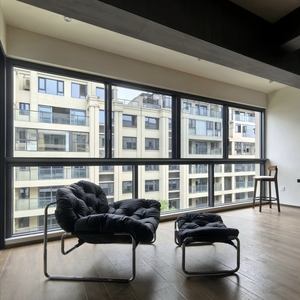
Engineering High-Performance Aluminum Balcony Fenestration Systems
A comprehensive technical analysis of thermal barrier integrity, mechanical alloy behaviors, wind-load deflection physics, and international code compliance for commercial and residential developments.
In modern multi-family residential, luxury villa, and commercial hospitality architecture, the aluminum balcony door serves as a hyper-critical envelope interface. Positioned between conditioned interior living spaces and extreme exterior atmospheric variables, balcony fenestration must simultaneously deliver structural resistance against severe cyclical wind pressures, watertight hermetic barrier performance under driving rain, acoustic attenuation against dense urban traffic, and uncompromising thermal barrier isolation to satisfy progressively rigorous international building energy codes such as Europe's Energy Performance of Buildings Directive (EPBD), Germany's Gebäudeenergiegesetz (GEG), the UK Building Regulations Approved Document L, and North America's ASHRAE 90.1 envelope standards.
Procuring aluminum balcony doors directly from elite tier-one Chinese manufacturers has transitioned over the past decade from a pure unit-cost arbitrage strategy to an advanced technical integration partnership. Forward-thinking real estate developers, façade consultants, and general contractors now demand complete parametric traceability, architectural BIM library compatibility, and custom extrusion precision fabricated from virgin 6063-T6 or 6060-T66 aluminum alloys. As the global fenestration supply chain consolidates around automated CNC multi-axis fabrication centers, understanding the underlying metallurgy, thermal barrier mechanics, hardware kinematic tolerances, and fenestration testing regimes is paramount for procurement teams tasked with mitigating catastrophic envelope failure risks.
The Critical Role of Polyamide PA66-GF25 Thermal Break Science
Standard architectural aluminum possesses an intrinsically high thermal conductivity of approximately 160 to 200 W/(m·K), which easily induces thermal bridging, structural condensation, fungal mildew formation, and uncontrolled interior HVAC energy loss if left unmitigated. Premium tier Chinese manufacturers mitigate this thermodynamic liability by introducing multi-chambered polyamide insulation struts reinforced with 25% chopped transverse glass fibers (PA66-GF25), delivering a nominal transverse thermal conductivity coefficient of merely 0.30 W/(m·K). When pressed into knurled extrusion cavities under strict automated mechanical crimp torque verification, these thermal break systems decouple the interior profile from exterior thermal shocks, reducing holistic frame U-values (Uf) below 1.30 W/(m²·K).
Alloy Purity & Extrusion Metallurgy
Derchi systems utilize high-grade primary electrolytic aluminum ingots (Al-Mg-Si series) homogenized to strictly regulate magnesium and silicon ratios. This guarantees ultimate tensile strength exceeding 205 MPa, Yield strength surpassing 160 MPa, and superior surface finishing retention for anodized or PVDF coatings.
Hermetic Tri-Seal EPDM Weathering
Continuous co-extruded vulcanized EPDM gaskets engineered with specialized vulcanized corner-vulcanization injection nodes prevent perimeter shrinkage. Triple-barrier pressure equalization cavities effectively counter negative wind pressure, preventing rainwater aspiration and draft infiltration.
Kinematic Multi-Point Locking Systems
Heavy-duty lift-and-slide or tilt-turn multi-point mushroom cam hardware forged from austenitic Grade 304 or 316 stainless steel prevents levering and forced entry, achieving European RC2/RC3 burglar resistance ratings and resisting coastal salt spray corrosion up to 1,000+ ASTM B117 salt spray hours.
Fenestration Classification & Performance Matrix
Empirical laboratory validation data across core structural, thermal, and acoustic performance parameters.
| Performance Criterion | Harmonized Global Standards | Laboratory Test Baseline | Derchi Engineering Value | Architectural Application Field |
|---|---|---|---|---|
| Thermal Transmittance (Uw) | EN ISO 10077-1 / NFRC 100 | 1.80 – 2.40 W/(m²·K) | 0.85 – 1.20 W/(m²·K) | Passive House / Low-Carbon Green Villa Schemes |
| Air Permeability | EN 12207 / ASTM E283 | Class 2 (300 Pa) | Class 4 (600 Pa) | High-Altitude High-Rise Balcony Enclosures |
| Watertightness Under Pressure | EN 12208 / ASTM E331 | Class 5A (200 Pa) | Class E900 (900 Pa+) | Severe Coastal Storm & Typhoon Zones |
| Wind Load Resistance | EN 12210 / AS 2047 / ASTM E330 | Class C3 (1200 Pa) | Class C5 / N6 (4500 Pa+) | Exposed Oceanfront & High-Velocity Hurricane Zones |
| Acoustic Attenuation (Rw) | EN ISO 717-1 / ASTM E413 | 30 dB (-1; -3) | 42 dB to 48 dB (with PVB) | Urban Airport Corridors & Dense Metro Centers |
| Burglar & Impact Resistance | EN 1627 / TAS 201, 202, 203 | RC1 / Standard Impact | RC3 / Miami-Dade NOA Level | Secure Diplomatic, Commercial & Luxury Residences |
Future Sourcing & Procurement Trends for Aluminum Balcony Doors
How macroeconomic pressures, supply chain digitalization, and aggressive global decarbonization goals are reshaping international B2B fenestration procurement.
Procurement directors and corporate specification officers operating in Europe, North America, Oceania, and the GCC region face unprecedented pressures to balance capital efficiency against demanding carbon mandates. Over the next five to ten years, cross-border procurement of aluminum balcony doors from China will be defined by five pivotal commercial and operational shifts:
1. Decarbonized Low-Carbon Green Aluminum Procurement: Driven by the European Union's Carbon Border Adjustment Mechanism (CBAM) and corporate ESG governance requirements, Tier-1 Chinese fabricators are rapidly migrating their supply upstream to hydro-powered and renewable-energy-smelted low-carbon aluminum billets. Incorporating post-consumer recycled aluminum into structural alloys reduces embodied carbon emissions from standard industry baselines of ~16 kg CO2e per kg of primary aluminum down to under 4 kg CO2e per kg, ensuring foreign projects can fulfill LEED Platinum, BREEAM Outstanding, and DGNB Gold certifications.
2. Complete Modular Pre-Glazed and Pre-Hung Assemblies: Rising domestic trade labor rates in Western construction markets (the UK, Germany, USA, Canada, and Australia) make site-glazing and field adjustment of massive multi-panel patio doors economically punitive. Advanced manufacturers are shipping fully assembled, pre-glazed, factory-torqued, and helium leak-tested sub-assemblies wrapped in heavy-duty maritime crating. By eliminating field glazing errors, site installation durations are reduced by over 60%, drastically cutting contractor site liabilities.
3. Deep Technical Specification via Digital BIM & CAD Integration: Sourcing is no longer executed through generic PDF catalogs. Elite Chinese door producers now maintain comprehensive Autodesk Revit, Archicad, and IFC-compatible parametric BIM families. Sourcing contracts are awarded to suppliers capable of generating custom shop drawings, wind-deflection finite element analysis (FEA) thermal models, and threshold water drain simulations within 48 to 72 hours of architectural floor plan release.
4. End-to-End Direct Factory Auditing via Photorealistic Remote Tools: Sourcing managers are increasingly utilizing full 360-degree immersive VR factory walk-throughs, synchronized live drone plant inspections, and third-party automated video quality control checkpoints (witnessing live hydro-static chamber tests and spectrometer alloy testing remotely). This ensures complete quality transparency without requiring repeated cross-continental site inspections.
Architectural & Engineering Development Trends
Analyzing the architectural move toward panoramic visual transparency, motorized envelope integration, and zero-barrier thresholds.
Ultra-Narrow Minimalist Sightlines
Architects demand the dematerialization of heavy structural frames. The modern trend favors ultra-slim interlocking stiles measuring merely 18mm to 25mm in visible face width. The primary load-bearing aluminum frame is entirely concealed within exterior wall insulation and floor finishes, delivering unobstructed glazed expanses exceeding 95% total aperture area.
Zero-Barrier Flush Drainage Thresholds
Universal design and accessibility standards (e.g., ADA compliance and DIN 18040) necessitate zero-threshold balcony transitions. Advanced engineering solves the inherent water leakage vulnerability through concealed subterranean linear trench drainage systems, continuous magnetic drop-down seal mechanics, and siphon evacuation chambers capable of processing extreme deluge volumes.
Motorized IoT & Building Automation
As single sliding glass leaves surpass 400 kg to 800 kg in luxury developments, manual operation becomes impractical. Brushless DC motorization embedded discreetly inside upper header profiles pairs with radar pinch sensors, building management protocols (KNX, BACnet), and smart biometric wall readers to provide whisper-quiet, automated envelope articulation.
Automated Quality Verification: Schüco-Benchmark Standards
Guangdong Dejiyoupin Doors and Windows Co., Ltd. (DERCHI) operates rigorous German-calibrated fabrication standards throughout its 180,000 m² Foshan manufacturing base. With automated CNC four-axis machining centers, profile miter cutting tolerances are restricted within ±0.1 mm, while robotic corner-crimping units inject two-part structural polyurethane sealant directly into corner-cleat chambers to permanently prevent diagonal frame sagging and perimeter corner delamination under extreme wind suction.
Every production batch undergoes comprehensive pre-shipment calibration: laser spectrophotometer color delta audits (ΔE < 0.5), coating thickness eddy-current testing, and dynamic structural air-water cycling in our internal AAMA/EN calibrated environmental simulation chambers.

Why Tier-1 Global Builders Trust DERCHI
Combining 25+ years of fenestration engineering with an integrated manufacturing ecosystem capable of executing complex international architectural contracts.
Massive 180,000 m² Production Powerhouse
Located in the heart of China's aluminum industrial capital (Shishan Town, Nanhai District, Foshan), our manufacturing infrastructure employs over 600 skilled technicians, producing over 350,000 square meters of high-end architectural fenestration annually with guaranteed on-time port delivery.
Proven European Partnership Track Record
Selected by a prominent long-term UK Schüco fabricator for a multi-villa prestige estate, our engineering tolerances matched European legacy systems at competitive direct-factory pricing. We actively service major commercial and villa contracts across the UK, Germany, France, Australia, and the US.
Synchronized CET/GMT Project Engineering
Our dedicated bilingual structural and facade engineers operate directly in your regional time zones. We deliver free CAD structural sections, wind deflection assessments, and detailed hardware scheduling tailored precisely to your tender documents within 24 to 48 hours.

Frequently Asked Questions for International Buyers
Detailed technical answers addressing compliance, quality control, shipping logistics, and structural configuration.