Export Portfolio
Featured Aluminum Ventilation & Entrance Systems
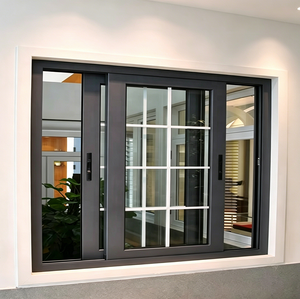
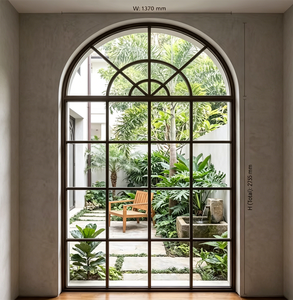
Precision engineered by Guangdong Dejiyoupin Doors and Windows Co., Ltd. (DERCHI). Built with aerospace-grade 6063-T6 aluminum extrusions, advanced thermal barriers, and specialized passive-flow air cavities.
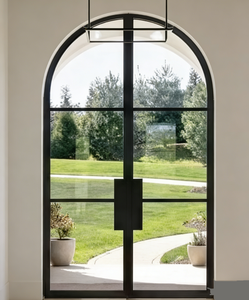
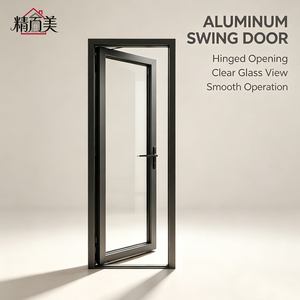
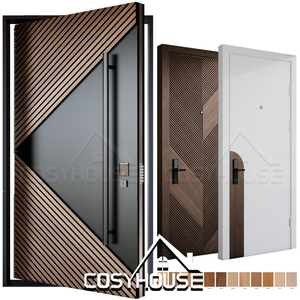
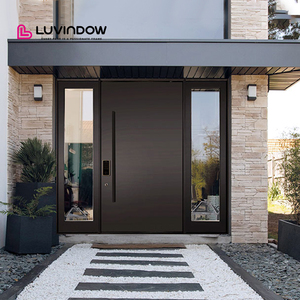
180,000
Square Meter Industrial Base
600+
Specialized Technicians & Staff
30+
In-House Engineering Patents
25+
Years Global Export Heritage
Manufacturing Authority
Guangdong Dejiyoupin Doors and Windows Co., Ltd. (DERCHI)
Headquartered in Foshan, Guangdong—the epicenter of China's high-precision aluminum extrusion and fenestration cluster—DERCHI ranks consistently among China's Top 10 architectural door and window manufacturers. For over two and a half decades, our industrial infrastructure has pioneered the shift from generic window fabrication to bespoke, high-performance building envelope systems.
Our aluminum ventilation windows are designed to solve an age-old architectural dilemma: reconciling continuous passive fresh-air exchange with rigorous thermal insulation (low U-values), exceptional acoustic attenuation (high Rw/STC), and zero water infiltration under typhoon wind loads. Recognized by an international client roster spanning Europe, North America, the Middle East, and Australasia, DERCHI supplies comprehensive fenestration packages for prestigious residential villas, multi-family mid-rises, and commercial complexes.
Industrial Peer Validation: Demonstrating our uncompromising production tolerance, DERCHI was selected by a long-term British partner of Germany's Schüco to engineer and deliver custom fenestration arrays for a multi-villa development in the UK, satisfying the strictest European thermal standards without cost escalation.

System Rigidity & Alloys
Forged exclusively from virgin 6063-T6 aluminum alloys with minimum wall thicknesses of 1.8mm to 3.0mm, exceeding standard residential deflection thresholds under EN 12210 Class C5 / AS 2047 N6 conditions.
Thermal Decoupling
Incorporating multi-chambered Technoform PA66 polyamide insulating struts, low-E triple IGUs with warm-edge spacers, achieving overall frame values capable of reaching Uf ≤ 1.2 W/m²K for Passive House applications.
Audited Compliance
Complete factory batch tracing under ISO 9001:2015, with verified certification protocols encompassing CE marking (EN 14351-1), Australian AS 2047, and North American NFRC / AAMA performance criteria.
Engineered Support
Dedicated project engineering desks providing parametric CAD details, windload moment of inertia calculations, shop BIM integration, and structural anchorage layouts direct to commercial contractors.
Engineering Baseline
Ventilation Window Specification Matrix
Direct empirical performance metrics across DERCHI aluminum ventilation window systems compared to baseline industrial configurations.
| Performance Dimension | DERCHI Architectural Spec | Generic Market Standard | Engineering Significance |
|---|---|---|---|
| Profile Material & Hardness | Primary Billets 6063-T6 (Webster Hardness ≥ 12) | Recycled aluminum scrap mixtures | Prevents frame bowing, sag, and stress fracture across tall structural openings. |
| Thermal Transmittance (Uw) | Down to 0.95 – 1.3 W/(m²·K) (Triple IGU Low-E) | 2.8 – 3.6 W/(m²·K) (Cold frame) | Complies with European EPBD / German GEG and US Energy Star regional tiers. |
| Ventilation Aerodynamics | Acoustically baffled trickle vents + 15° micro-tilt | Crude sash cracks / unbaffled penetrations | Maintains air hygiene without creating air draughts or transmitting street-level decibels. |
| Air Permeability | EN 12207 Class 4 / AS 2047 Level 300Pa | EN 12207 Class 2 | Eliminates exfiltration energy losses and stops convective air drafts completely. |
| Watertightness | EN 12208 Class E1050 (1050 Pa static pressure) | Class 4A (150 Pa) | Guarantees zero driving-rain penetration during monsoons and coastal gale fronts. |
| Acoustic Isolation (Rw) | Up to 44 dB (Asymmetrical laminated glazing) | 26 – 30 dB | Essential for quiet residential zones adjacent to urban arterial roads and rail lines. |
| Surface Protection | Qualicoat Class 2 Fluorocarbon (PVDF) / 25μm Anodized | Single-bake standard polyester | Ensures 30+ year resistance to chalking, UV degradation, and coastal salt-spray fog. |
Market Intelligence
Future Procurement Trends in Aluminum Ventilation Systems
How evolving carbon codes, smart city automation, and IAQ (Indoor Air Quality) mandates are reshaping procurement directives for project specifiers worldwide.
TREND 01 // 2026-2030 OUTLOOK
Decoupled Micro-Ventilation & Passive Purge
The historical practice of opening full-size sash windows to attain fresh air is obsolescent. Modern high-rise and luxury villa specs demand micro-trickle louvers integrated directly within the head profile or transoms. These systems integrate sound-attenuating labyrinth cores that equalize indoor CO2 levels while preserving the building's airtight acoustic boundary. Specifiers increasingly reject unattenuated operable vents in dense metropolitan centers.
TREND 02 // AUTOMATION & BMS INTEGRATION
Low-Voltage Actuators & Sensor arrays
Concealed 24V DC electric motorized chain drives are transitioning from specialized hospital and smoke-evacuation systems into standard high-end residential schedules. Driven by smart building systems (KNX, BACnet, Zigbee), window sashes automatically adjust to ambient air quality, solar heat gain, and exterior wind force, closing seamlessly at the first contact of an integrated rain sensor.
TREND 03 // EMBODIED CARBON & EPD AUDITING
Hydro-Electric Smelted Low-Carbon Aluminum
Tier-1 general contractors in Europe and Australasia now demand ISO 14025 Environmental Product Declarations (EPDs). Sourcing is pivoting toward manufacturers capable of tracing billets back to low-carbon smelters utilizing hydroelectric generation. Aluminum ventilation profiles must demonstrate recyclability ratios above 95% alongside documented Life Cycle Assessments (LCAs).
Technical Due Diligence
Frequently Asked Questions for Window Procurement
Crucial answers addressing engineering validation, logistical packing, testing protocols, and project customs requirements.
How does DERCHI ensure structural air and water tightness on motorized ventilation windows?
Our systems utilize continuous automotive-grade cellular EPDM gaskets configured into three-tier weatherstripping barriers: an external rain baffle, an acoustic central isolation fin, and an internal airtight perimeter compression gasket. Our motorized hardware packages integrate multipoint perimeter locking drive bars, guaranteeing that even oversized sashes (up to 3.2 meters in height) compress gaskets uniformly to 4.5mm ± 0.3mm across all four edges, achieving Class E1050 water tightness.
Can your engineering team calculate structural wind-load deflections per regional building codes?
Yes. Our in-house technical department consists of structural facade engineers who evaluate your project’s geographical coordinates, terrain category, installation height, and opening dimensions. We provide detailed structural moment of inertia (Ix, Iy) reports conforming to Eurocode 1 (EN 1991-1-4), American ASCE 7-22, or Australian AS 1170.2, guaranteeing that mullions and transoms remain within L/250 or L/300 deflection tolerances.
What export packaging methods prevent frame scuffing and glass breakage during oceanic freight?
All DERCHI exports adhere to our four-stage crating protocol: Profiles are wrapped in 0.08mm electrostatic PE scratch film, encased with high-density pearl cotton edge protectors, shrink-wrapped in moisture-barrier polymer, and enclosed within fumigated ISPM-15 compliant plywood crates. Crates feature integrated internal steel lifting points and shock-absorbing rubber bases to endure intermodal container transshipment.
What is the lead time for custom extruded or non-standard RAL powder-coated systems?
Standard architectural finishes (RAL 7016 Anthracite Grey, RAL 9005 Jet Black, and Anodized Matt Silver) maintain a factory cycle of 25 to 30 calendar days from shop drawing approval. Fully custom aluminum extrusion dies require 10 to 12 days for tooling and sampling, followed by 30 days for mass extrusion, thermal-strip insertion, precision CNC fabrication, and dual-color powder coating.
Do your ventilation units support fire-rated or smoke-evacuation (AAV) certifications?
Yes, our automated ventilation series can be engineered to comply with EN 12101-2 for Natural Smoke and Heat Exhaust Ventilators (NSHEV). We supply specialized tested actuators capable of opening to 60° within 60 seconds under backup battery power (operating reliably at temperatures up to 300°C), seamlessly interfacing with central fire alarm panels.
Direct Manufacturing Access
Request Complete Architectural Catalog & Technical Schedule
Connect directly with our engineering sales group in Foshan to receive complete CAD section libraries, testing certificates, and direct factory pricing for your upcoming developments.