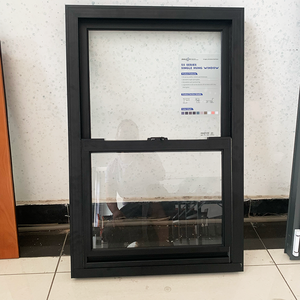
Engineered For High-Moisture Efficiency
Factory-Engineered Bathroom Ventilation Windows
Discover high-precision fenestration models customized for residential towers, commercial developments, and luxury hospitality villas. Every unit is manufactured directly from our Foshan facility with strict tolerance controls.
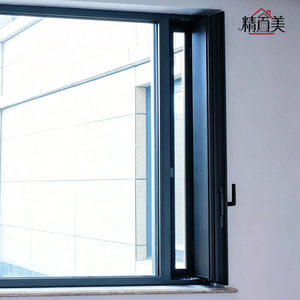
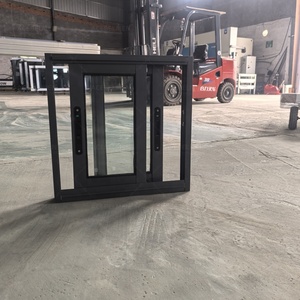
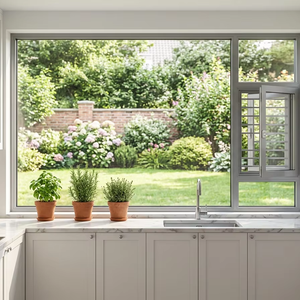
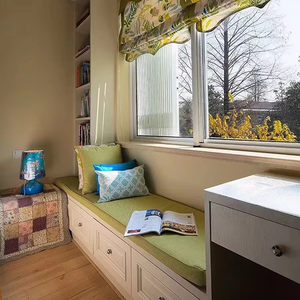
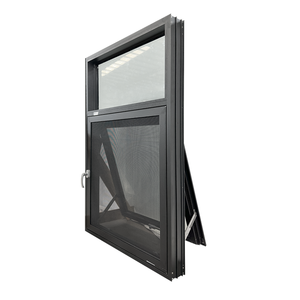
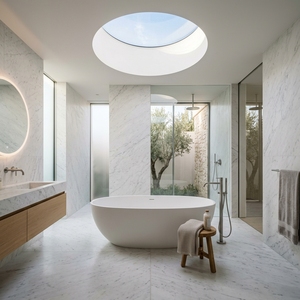
Engineering Excellence in Moisture-Critical Fenestration
Bathroom ventilation windows occupy an exacting position in architectural envelope engineering. Unlike standard residential fenestration, windows installed in wet areas, private en-suites, and commercial spa environments must continuously withstand acute relative humidity, extreme thermal cycling, persistent chemical exposure from detergents, and the imperative for absolute acoustic privacy.
As leading Chinese architectural extrusion and assembly manufacturers based in Shishan Town, Foshan—the epicenter of global aluminum innovation—we approach the production of bathroom ventilation units through precision metallurgy, multichambered thermal isolation, and advanced hydrophobic surface treatment. Navigating international procurement requires an exhaustive comprehension of condensation risk index (CRI), structural alloy purity, and mechanical cycle thresholds.
Core Metallurgy & Material Performance Specifications
The standard failure mode of subpar bathroom windows traces directly to the alloy substrate. Low-tier producers frequently introduce recycled scrap content with unregulated copper and zinc traces, causing rapid galvanic corrosion and pitting when exposed to continuous steam. Leading Chinese export manufacturers enforce prime-billet 6063-T5/T6 and 6060-T66 architectural alloys.
| Evaluation Parameter | Standard Specification | High-Performance Marine / Humid Grade | Operational Significance |
|---|---|---|---|
| Extrusion Alloy | GB/T 5237 / 6063-T5 | EN AW-6060 T66 / 6063-T6 Structural | Prevents frame bowing under localized mechanical air pressure and thermal deflection. |
| Thermal Barrier System | 14.8mm Standard PA66-GF25 | 24mm - 34mm Low-Lambda Polyamide Strips | Stops inner dew-point precipitation; lowers envelope thermal bridge (Uf < 1.6 W/m²K). |
| Gasket Vulcanization | Standard EPDM Rubber | Co-extruded Continuous Foam EPDM / Silicone | Maintains hermetic elastomeric resilience against moisture and aggressive detergents. |
| Surface Finishing | Architectural Powder Coating (60μm) | Qualicoat Class 2 / PVDF 3-Coat Flurocarbon | Resists micro-blistering, chalking, and fungal spore incubation in wet rooms. |
| Glass Configuration | 5mm + 9A + 5mm Tempered Clear | 6mm Low-E + 16Ar Warm Edge + 6mm Frosted Acoustic | Guarantees privacy, structural child safety limit stops, and superior sound buffering. |
Future Procurement Trends for Global Architects & Developers
Predictive Micro-Ventilation
Transitioning from manual sashes to hidden mechanical trickles and multi-stage opening regulators, mitigating heat loss while discharging moist air 24/7 without security risks.
Smart Actuation & IAQ Integration
Direct integration of DC brushless concealed chain actuators linked directly to centralized Building Management Systems (BMS) for automated humidity and steam mitigation.
Acoustic Glazing Demands
High-density urban multi-family towers demand Rw + Ctr acoustic decibel mitigation (>38dB) using laminated PVB layers, ensuring bathroom acoustic decoupling from dense city noise.
Industry Evolution: Where Ventilation Engineering is Headed
Historically treated as an afterthought or filled by simple frosted sliding louver panes, bathroom fenestration is undergoing rapid structural convergence with building exterior curtain wall technologies. The modern focus combines slender architectural sightlines with high passive insulation metrics.
Modern architectural concepts such as flush single-hung counterbalances, multi-axis tilt-turn configurations, and motorized hidden awning vents prevent rainwater backflow while maximizing laminar air currents. Concurrently, zero-threshold transition drainage profiles allow condensation run-off directly through integrated base extrusions, eliminating internal sill water accumulation and subsequent bacterial proliferation.
Enterprise Reliability & Production Depth
Direct Manufacturing Advantages
Guangdong Dejiyoupin Doors and Windows Co., Ltd. (DERCHI) operates one of Southern China's most advanced custom architectural manufacturing complexes. Partner with an accredited factory that guarantees performance down to the micron.
180,000 m² Mega Industrial Base
Located in Foshan, Guangdong, our infrastructure incorporates high-precision 4-axis and 5-axis CNC machining centers, automated powder-coating lines, and robotic sealant application cells.
Free BIM & CAD Engineering Shop Drawings
Our engineering bureau delivers full structural CAD details, thermal node simulations, glass static wind calculations, and BIM models tailored directly to your tender specifications within 48 hours.
Global Regulatory Approvals
Our products hold CE marking under EN 14351-1, ISO 9001 quality systems, AS2047 Australian certification (up to cyclonic N6 ratings), and North American NFRC/AAMA compliance.
Export-Grade Heavy Protective Packaging
Every sash is individual-wrapped with scratch-resistant poly-foam, corner-armored with high-density polymers, and loaded into fumigated solid plywood crates for direct ocean transport to Europe, North America, and Australia.
Overlapping Timezone Technical Support
Dedicated bilingual project managers and engineers bridge CET/GMT/EST business hours to guarantee seamless jobsite coordination, hardware revisions, and logistics tracking.
Rigorous Multi-Phase Quality Assurance
Raw profile spectrometer testing, corner crimping pull-force evaluations, water penetration chamber audits, and cyclic cycle testing ensure a flawless 10-year structural service life.
Procurement Clarity
Frequently Asked Questions
Crucial engineering, logistical, and compliance insights for international contractors, builders, and procurement officers sourcing from China.
How does a specialized bathroom ventilation window differ from standard residential window systems?
Standard windows often neglect the elevated humidity, rapid temperature spikes, and chemical detergents typical of wet rooms. High-performance bathroom ventilation units utilize anodized or specialized fluorocarbon-treated aluminum extrusions to prevent micro-corrosion. Furthermore, they incorporate high-grade, continuous EPDM or silicone seals to block mold formation, pressure-equalized hidden water drainage paths, and customized privacy glazing (such as frosted, reeded, or Low-E smart switchable glass) alongside safety limiters to prevent falls without restricting continuous airflow.
What surface treatment is best suited for aluminum frames in humid or coastal bathroom installations?
For standard high-humidity bathrooms, electrostatic architectural powder coating complying with Qualicoat Class 2 standards (minimum 60-80 microns thickness) provides exceptional protection against steam and daily cleaners. For coastal developments or luxury resort villas exposed to maritime salt-spray along with internal steam, we recommend either architectural hard-anodizing (Class 20 or 25) or high-grade PVDF (polyvinylidene fluoride) 3-coat fluorocarbon coatings that surpass 4,000 hours of continuous acetic acid salt spray (AASS) testing.
How do Chinese fenestration factories certify compliance with international building standards?
Tier-1 Chinese factories maintain comprehensive compliance records through recognized third-party test laboratories such as Intertek, TÜV Rheinland, and SGS. For the European Union, products are audited under EN 14351-1 with CE documentation confirming air permeability (EN 12207), water tightness (EN 12208), and wind load resistance (EN 12210). For the Australian market, systems are fully verified against AS 2047 and AS 1288 standards, while North American orders comply with NAFS/AAMA/WDMA/CSA specifications.
What is the standard production lead time and typical Minimum Order Quantity (MOQ)?
Standard project cycles require approximately 20 to 30 working days from the final approval of detailed CAD shop drawings to container stuffing. Custom powder-coat RAL matching or custom structural molds may add 7 to 10 days to initial batch setups. Because we serve both high-end private architectural villas and high-volume commercial towers, our MOQ is flexible—we accept specialized mixed-model project schedules ranging from bespoke single-container multi-unit packages to multi-thousand unit condominium runs.
Can your facility integrate integrated safety screens, security bars, and automated actuators?
Yes. Our custom assembly lines seamlessly integrate 304 or 316 marine-grade stainless steel diamond security insect mesh, child safety restrictor locks, concealed child-limit friction stays, and internal louver shutters. For modern smart buildings, we integrate hidden 24V DC chain-driven electric actuators that interface with digital home automation networks, rain-sensing modules, or bathroom light/exhaust switches.
How does the factory prevent damage to pre-glazed window units during ocean shipping?
Export protection uses a six-tier packaging process: (1) low-tack protective film over all aluminum profiles, (2) rigid structural corner edge guards, (3) waterproof shrink-wrapping with inner desiccant packs, (4) heavy honeycomb cardboard encasement, and (5) custom-built fumigated solid wooden or plywood crates secured with steel strapping. Each crate contains integrated lifting points designed for forklift offloading directly on construction job sites.
Request A Detailed Factory Proposal & CAD Specification
Connect directly with our Foshan engineering and estimation team. Receive tailored window schedules, certified thermal node simulations, and factory-direct pricing for your project tender.
Send an Inquiry