180,000
m² Production Base
25+
Years of Manufacturing
100+
Patents & Certifications
600+
Direct Technical Specialists
Engineering Lineup
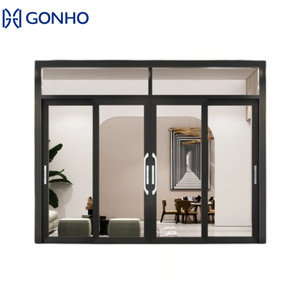
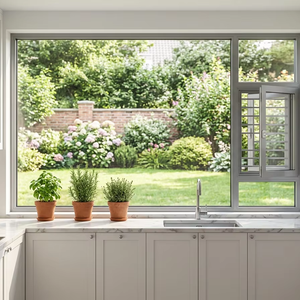
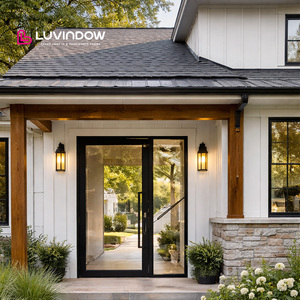
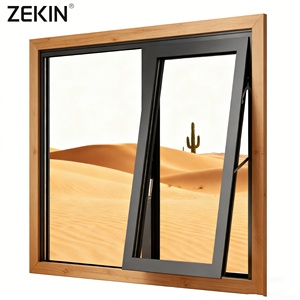
Commercial & Architectural Aluminium Product Showcase
Explore our high-performance systems precision-built in our Foshan industrial complex, compliant with European, American, and Australian building safety frameworks.
Verified Manufacturing Competence
Direct-From-Factory Capabilities & Global Quality Controls
Operated by Guangdong Dejiyoupin Doors and Windows Co., Ltd. (DERCHI), our facility in Foshan sets global standards for precision extrusion, automated structural assembly, and stringent testing.
Certified Structural Rigor
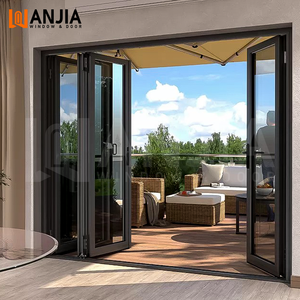
Our concertina and entry assemblies hold full CE mark (EN 14351-1), ISO 9001, AS 2047 (N6 cyclone rating), and UL fire approvals, clearing tier-one audits globally.
180,000 m² Direct Supply
Direct-from-source pricing without intermediary trader markups. With 600+ personnel and CNC profile processing centers, we ensure fast lead times on bespoke orders.
Free Shop Drawings & BIM
Eliminate project errors. Our in-house façade engineering division crafts shop drawings, thermal simulation reports, and CAD layouts matched to exact schedules.
Real-Time Engineering Support
Bilingual project engineers operating along CET, GMT, and EST business timezones provide turnkey assistance from site rough-opening review to installation logistics.
Procurement Whitepaper
Aluminium Concertina Doors: Technical Evolution & Procurement Trends
A comprehensive analysis for commercial developers, structural specifiers, and high-volume glazing distributors balancing thermal regulations, acoustics, and durability.
1. Polyamide Thermal Barriers
Early concertina systems suffered high heat transfer. Modern top-tier factories utilize multi-chambered PA66 GF25 thermal breaks exceeding 34mm width. This structural insulation achieves system U-values ($U_w$) below $1.1\ \mathrm{W/(m^2\cdot K)}$, fully satisfying stringent German GEG and UK Part L conservation codes without condensation risk.
2. Heavy-Duty Stainless Hardware
Concertina integrity depends entirely on rolling and hinge mechanics. Contemporary engineering shifts toward SUS316 quad-roller carriers running on hardened bottom tracks. Each leaf can safely carry up to $150\ \mathrm{kg}$, allowing architects to specify double- or triple-laminated glass leaves exceeding 3.5 meters in architectural height.
3. Slim-Sightline Architectural Trends
Developers are prioritizing uninterrupted panoramic views. Factories now engineer ultra-slim profile stiles with interlock widths reduced to under 110mm. This geometric optimization boosts visual clarity while structural corner cleats and high-tensile 6063-T6 aluminum preserve wind load resistance across Class 4 pressures.
4. Automated Production & Smart Integration
Leading Chinese plants now employ 5-axis automated CNC machining centers for milling, cutting, and corner crimping. This reduces human tolerance errors below $\pm0.5\ \mathrm{mm}$. Concurrently, hidden automated magnetic driving units and motorized sensor releases are transforming high-end commercial spaces.
5. Weatherization & Threshold Barrier Dynamics
Weather tightness is the primary field failure point in concertina applications. Our research-driven threshold designs incorporate continuous dual EPDM co-extruded gaskets combined with hidden drainage cascade channels, ensuring water tightness tested up to 900 Pa pressure differentials.
| Evaluation Parameter | International Standard | DERCHI Engineering Capability | Procurement Impact |
|---|---|---|---|
| Thermal Insulation ($U_w$) | EN ISO 10077-1 / NFRC 100 | Down to $1.1\ \mathrm{W/(m^2\cdot K)}$ (Triple glazed + Argon) | Complies with European Low-Carbon / Passivhaus Standards |
| Structural Wind Load | AS 2047 Serviceability / ASTM E330 | Certified up to N6 / 4500 Pa Design Pressures | Essential for coastal high-rise buildings and typhoon zones |
| Air Infiltration | EN 12207 / AAMA 501 | Class 4 (Positive & Negative Pressure sealed) | Prevents HVAC efficiency loss and exterior drafts |
| Forced Entry Security | EN 1627 (RC2 / RC3) | Multipoint shootbolt locking with hardened pins | Critical for domestic safety and low insurance premiums |
Purchasing Due Diligence
Frequently Asked Questions on Sourcing Concertina Doors
Direct technical answers addressing risk management, compliance verification, and international logistic protocols.
How do Chinese factories maintain uniform quality across large volumes?
At DERCHI, quality control operates under an ISO 9001 certified workflow. Extruded raw billets use pure virgin A00 aluminum alloy rather than scrap mixtures. Profile cutting, corner pressing, and gasket fitting use calibrated digital CNC equipment. Every completed unit undergoes shop-floor dry assembly, roller leveling, and locking engagement checks before crating.
Can custom configurations, dimensions, and colors be matched?
Yes. Concertina openings up to 12 meters wide with 2 to 14 multi-panel configurations can be specified in inward or outward fold designs. We offer full RAL polyester powder coating, Qualicoat-compliant architectural finishes, PVDF marine-grade coatings, and realistic heat-transfer woodgrain veneers tailored to site conditions.
How are large bi-fold glass panels protected during sea transport?
Shipments are packed in reinforced, fumigation-free solid plywood crates. Glass panels and frames are wrapped in protective polyethylene scratch films, fitted with high-density EVA shock-absorbing corner pads, and sealed with moisture desiccant packs to prevent transit micro-abrasions, salt air corrosion, and frame movement.
What is the key difference between top-hung and bottom-rolling systems?
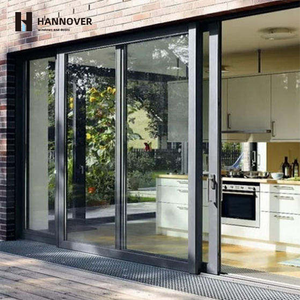
Top-hung systems suspend all leaf weight from the structural head track, allowing flush zero-threshold floor lines, but demand substantial structural lintel reinforcement. Bottom-rolling mechanisms carry door weight on an engineered ground track, making them ideal for standard residential headers and retrofits while offering superior wind and water resistance.
What is the typical production lead time and documentation delivery?
CAD shop drawings are released within 48 to 72 hours of receiving schedule parameters. Manufacturing lead times typically span 25 to 35 calendar days following drawing sign-off and color confirmation. Complete structural test sheets, CE Declaration of Performance (DoP), and installation manuals ship together with container manifests.
Ready to Engineer Your Next Glazing Package?
Connect directly with our Foshan engineering and estimation department. Send us your door schedules, target performance ratings, or project blueprints for a full structural evaluation and factory-direct quote.