Precision Engineered Aluminium Windows & Architectural Doors
Verified double glazed configurations manufactured in Foshan, China—engineered to surpass European EN 14351-1, North American NFRC/AAMA, and Australian AS 2047 cyclonic performance standards.
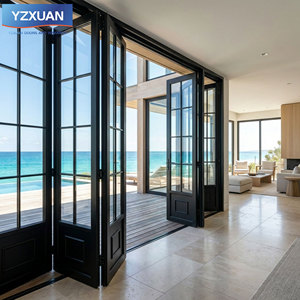
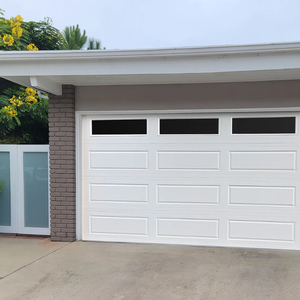
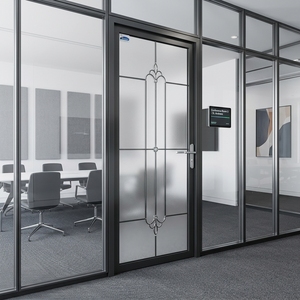
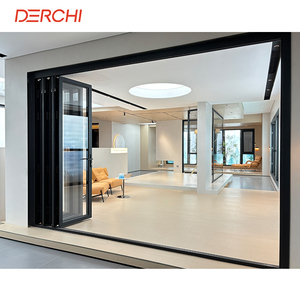
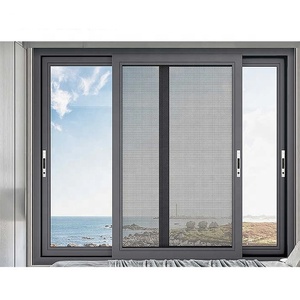
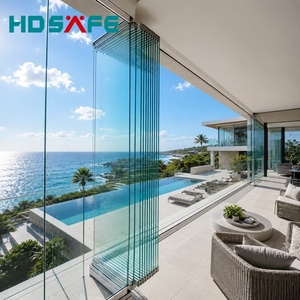
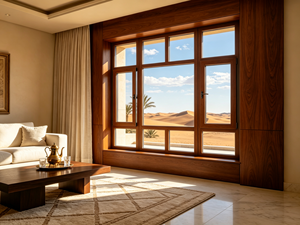
The Evolution of China's High-Performance Double Glazed Aluminium Systems
A rigorous examination of thermal break thermodynamics, glass metallurgy, and export-compliant architectural fenestration.
In the contemporary landscape of high-performance architectural design, fenestration is no longer treated as a passive building enclosure element. Global building mandates—such as the European Union's Energy Performance of Buildings Directive (EPBD recast), the UK Building Regulations Approved Document L, North America's ASHRAE 90.1, and Australia's National Construction Code (NCC Section J)—have forced a structural paradigm shift. Sourcing aluminium double glazed windows from China has shifted from simple cost arbitrage to a strategic hunt for advanced fenestration engineering, precision CNC profile machining, and certified thermodynamic performance.
As a leading Chinese fenestration enterprise headquartered in Foshan, Guangdong Dejiyoupin Doors and Windows Co., Ltd. (DERCHI) leads this transformation. Operating from an integrated 180,000 square meter intelligent fabrication complex, we control the entire value chain: from primary alloy compounding (using architectural-grade 6063-T5 and high-tensile 6060-T66 billets) through multi-cavity continuous polyamide insertion, robotic double-seal insulating glass unit (IGU) compounding, and calibrated multi-point perimeter compression locking assembly.
| Performance Dimension | Technical Test Standard | DERCHI Engineering Specification | Compliance Benchmark |
|---|---|---|---|
| Thermal Transmittance ($U_w$) | EN ISO 10077-1 / NFRC 100 | $0.85 - 1.4\text{ W/(m}^2\cdot\text{K)}$ (Profile & glass selected) | CE EN 14351-1 / Energy Star / PHI Low-E |
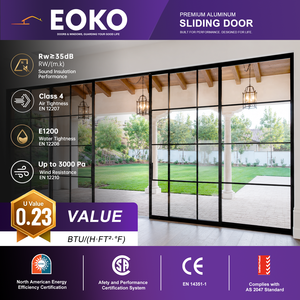
| Air Permeability | EN 12207 / ASTM E283 / AS 2046 | Class 4 (< 0.05 m³/(h·m) at 100 Pa) / < 0.1 cfm/ft² | AS 2047 Air Infiltration Class Standard |
| Water Tightness | EN 12208 / ASTM E331 / AS 4420.5 | Class 9A / E1200 (Static pressure > 1200 Pa zero leak) | AAMA CW-PG60 to CW-PG100 |
| Wind Load Resistance | EN 12210 / ASTM E330 / AS 4055 | Class C5 (> 5000 Pa structural ultimate limit state) | AS 2047 N6 Cyclonic / Miami-Dade Impact Capable |
| Acoustic Insulation ($R_w / STC$) | ISO 717-1 / ASTM E413 | $R_w (C; C_{tr}) = 38\text{ dB }(-1; -4)\text{ up to }46\text{ dB}$ | Acoustic PVB / SentryGlas (SG) Laminated Infill |
| Extrusion Alloy & Temper | EN 573-3 / ASTM B221 | 6063-T6 / 6060-T66 Primary Billet (Wall thickness $\ge 2.0\text{mm}$) | High yield strength $\ge 160\text{ MPa}$, Brinell $\ge 75\text{ HB}$ |
| Surface Finish Chemistry | AAMA 2604 / 2605 / Qualicoat Class 2 | Fluoropolymer PVDF (>70% Kynar 500) or 25µm Marine Anodized | 10,000-hr Salt Spray neutral corrosion test passed |
Achieving whole-window performance values ($U_w$) requires balanced configuration between the frame ($U_f$), the glass centre-of-pane ($U_g$), and the edge-of-glass thermal perimeter spacer ($\Psi_g$). Our automated insulated glass production lines incorporate warm-edge composite spacers (such as Technoform or Swisspacer) with low internal conductivities ($\Psi \le 0.032\text{ W/(m}\cdot\text{K)}$), replacing traditional cold-drawn hollow aluminium spacers that cause edge condensation and seal failure over multi-year thermal cycling.
Future Procurement Trends in Aluminium Glazing (2025–2035)
Architectural fenestration procurement is rapidly changing. Key regulatory, ecological, and aesthetic developments will shape global supply chains over the next decade.
Low-Carbon Billet
Global carbon tariffs (such as EU CBAM) are making low-embodied-carbon aluminium essential. DERCHI supplies hydro-powered, recycled-billet extrusions with Environmental Product Declarations (EPD) yielding < 4.0 kg CO₂e/kg Al.
Micro-Sightline Assemblies
Structural silicone glazing (SSG) combined with slimline profiles (sightlines < 45mm) allows floor-to-ceiling glass installations capable of withstanding wind loads exceeding 3.5 kPa, maximizing visible light transmittance (VLT).
Electrochromic & BIPV
Next-generation double glazed assemblies feature active dynamic tinting (electrochromic glass) and integrated micro-inverter Building-Integrated Photovoltaics (BIPV), transforming passive facades into localized power generation units.
Modular Off-Site Glazing
Developers are moving away from loose knocked-down (KD) field assembly toward unitized, factory pre-glazed cassettes. Fully tested in factory cleanrooms, these assemblies reduce jobsite labor hours by up to 65%.
Why Tier-1 Contractors and Global Developers Partner with DERCHI
Combining 25+ years of engineering heritage with one of Southern China's most advanced architectural manufacturing ecosystems.
180,000 m² Foshan Industrial Hub
Located in the heart of China's aluminium extrusion cluster, DERCHI utilizes automated elumatec 5-axis profile machining centres, robotic German Bystronic IGU lines, and an automated vertical powder coating facility producing over 500,000 square meters annually.
Pre-Engineering & BIM Modelling
Every commercial order is assigned a senior facade engineer. We deliver complete shop drawing packages, thermal FEA profile simulations (THERM/WINDOW compliant with EN ISO 10077-2), structural wind deflection calculations, and integrated Revit/IFC BIM objects before cutting raw stock.
Schüco-Level European Heritage
Proven across luxury European developments, including a dedicated 14-villa project for a long-time UK Schüco partner. Our hardware channels integrate both proprietary heavy-duty fittings and certified European mechanisms from Sobinco, Siegenia, and Roto Frank.
Factory Gate Testing & Verification Workflow
Every window unit undergoes an integrated six-stage testing regimen before export container loading.
Spectrometric Alloy Verification
Every raw billet batch undergoes optical emission spectrometry to confirm 6063-T5 magnesium and silicon limits, ensuring structural strength and anodizing quality.
Polyamide Pull-Off Shear Testing
Thermal breaks undergo transverse tensile testing per EN 14024 ($Q \ge 24\text{ N/mm}$), confirming mechanical interlock after crimping.
Argon Gas Seal & Dew Point
Double glazed IGUs undergo spark emission analysis confirming ≥ 90% argon gas fill, with dew points verified below -50°C per EN 1279-2.
Air/Water Chamber In-House Rig
Randomly selected completed units undergo dynamic air pressure and water spray testing in our calibrated static pressure chamber up to 1500 Pa.
Multi-Point Cycle Testing
Hinges, balances, and multi-point perimeter locks are tested to 25,000 opening/closing cycles to guarantee smooth operation under sustained use.
Export Crate Reinforcement
Products are wrapped in protective polyethylene films, reinforced with corner buffers, and sealed in fumigated OSB plywood crates for moisture-free ocean transit.
Frequently Asked Questions on Importing Aluminium Windows from China
Key technical, structural, and logistics questions answered for architects, estimators, and procurement managers.
1. What is the difference between $U_g$, $U_f$, and whole-window $U_w$ values, and how does DERCHI verify them?
In architectural fenestration, thermodynamic performance is governed by EN ISO 10077-1 and calculated via the standard formula: $$U_w = \frac{\sum(A_g U_g) + \sum(A_f U_f) + \sum(l_g \Psi_g)}{\sum A_g + \sum A_f}$$ Where $U_g$ represents the center-of-glass thermal transmittance, $U_f$ is the frame system transmittance, and $\Psi_g$ (psi) measures linear heat loss along the glass edge spacer perimeter. A common mistake in procurement is accepting a quote with a low glass rating ($U_g = 1.0\text{ W/(m}^2\cdot\text{K)}$) and assuming it represents whole-window performance. If the aluminium frame lacks a thermal break or uses low-grade thermal struts ($U_f \ge 3.0$), the finished window ($U_w$) may degrade to $1.8\text{ or }2.2\text{ W/(m}^2\cdot\text{K)}$, failing energy code checks.
DERCHI validates each project schedule using verified finite element analysis (FEA) through LBNL THERM/WINDOW modeling. We supply project-specific certificates showing that our 75mm and 85mm architectural systems achieve whole-window $U_w \le 1.1\text{ W/(m}^2\cdot\text{K)}$ when paired with high-performance double glazing, and $U_w \le 0.82\text{ W/(m}^2\cdot\text{K)}$ with triple glazing.
2. How do you prevent seal failures and argon dissipation in double glazed units during ocean shipping?
Seal failure in imported double-glazed IGUs usually stems from low-grade primary sealants or pressure differences encountered during transit across varying altitudes and ocean climates. DERCHI addresses this with a dual-seal barrier system: a primary polyisobutylene (PIB) extrusion that stops moisture vapor transmission, combined with a structural secondary seal of two-component silicone or polysulfide applied by robotic dispensing nozzles.
For installations or delivery routes crossing elevated mountain passes (e.g., shipments to Switzerland, Colorado, or inland Australia), we install factory-calibrated capillary tubes or pressure relief valves. These equalize pressure differences during transit, preventing glass distortion or seal rupture before permanent jobsite crimping.
3. How do DERCHI window systems comply with Australian AS 2047, European CE EN 14351-1, and US NFRC codes?
Different markets mandate distinct testing and certification methods. For Australia and New Zealand, our assemblies undergo AS 2047 testing—reaching the maximum rating of N6 Cyclonic / Class C5 for deflection, air infiltration, and water penetration up to 1200 Pa. For the European Union and UK markets, our systems are CE marked under EN 14351-1 and verified through approved notified bodies for Declaration of Performance (DoP) filings. For North American projects, we supply NFRC certified thermal simulations and AAMA/WDMA/CSA 101/I.S.2/A440 structural performance certifications.
Our in-house project engineering team includes specialists familiar with international building codes. We verify project requirements before extrusion cutting to ensure your documentation clears local building control approvals without delay.
4. What glass configurations deliver optimal acoustic insulation ($R_w / STC$) against urban and airport noise?
Standard symmetrical double glazing (such as 6mm Clear + 12A + 6mm Clear) has a fundamental limitation: both glass panes share the same resonant frequency, allowing low-to-mid frequency traffic and engine rumble to pass through. DERCHI solves this by configuring asymmetric and acoustic-laminated makeups.
By pairing dissimilar glass thicknesses (e.g., 8mm toughened outer + 16mm warm-edge cavity with 90% Argon + 6.76mm acoustic PVB laminated inner), we decouple vibrational frequencies. This achieves verified sound reduction indices of $R_w (C; C_{tr}) \ge 42\text{ dB}$, attenuating heavy street and aircraft noise to produce tranquil interior spaces.
5. What are the practical minimum order quantities (MOQ), production lead times, and shipping terms?
For custom villa programs and boutique commercial developments, our typical project minimum begins at 50 square meters. For standard commercial systems utilizing current extrusion dies, there is no strict MOQ. Production lead times run 25 to 35 calendar days following CAD shop drawing and finish sign-off. Bespoke custom extrusion profile dies require an additional 12 to 15 days for extrusion tool fabrication, flow-testing, and sample approval.
We routinely manage export logistics under EXW, FOB (Foshan, Guangzhou, or Shenzhen ports), CIF, and DDP (Delivered Duty Paid directly to your staging yard or jobsite across Europe, North America, Oceania, and the GCC region).
6. How do you protect exterior finishes against coastal salt-spray and high-UV environments?
For coastal projects (within 1 km of saltwater) or high-UV solar environments, standard polyester powder coatings can chalk, fade, or blister. For these environments, DERCHI offers two exterior treatment solutions: AAMA 2605-compliant 70% fluoropolymer (PVDF Kynar 500) triple-coat systems, and 25-micron class 2 marine-grade architectural anodizing.
These finishes pass 4,000 to 10,000-hour continuous neutral salt spray (ASTM B117) and intense accelerated UV exposure tests, backed by 15-to-25-year non-fading structural warranties against chipping, cracking, and chalking.
7. Can DERCHI engineer thermal break systems to match existing European hardware routes (e.g., Euro-groove)?
Yes. DERCHI profiles are precision-extruded with standard European Euro-groove (Type 1 and Type 2) or standard North American C-channel hardware profiles. This allows seamless integration of European multi-point locking gear, concealed hinges, tilt-and-turn gearing, or heavy lift-and-slide rollers from manufacturers like Sobinco, Siegenia, Hoppe, GU, and Roto Frank, alongside our factory-tested high-performance hardware lines.
8. What on-site installation support and spare parts assistance do you provide to international contractors?
Each unit leaves our factory pre-tagged with a unique identification code matched directly to your project door and window schedule. Shipments include detailed, 3D installation manuals, sub-frame anchoring details, flashing and water-membrane interface guides, and 3% additional spare components (including EPDM rubber seals, corner covers, fasteners, and glazing blocks).
Our bilingual facade engineers offer remote video consultations during your local working hours, and for large commercial developments (over 3,000 m²), we can deploy field engineers on-site to oversee initial rough opening mock-up installations and water penetration testing.
Plan Your Project With Our Engineering Team
Send us your door and window schedule, architectural elevations, or structural specifications. Our engineers will return a complete shop drawing package, structural wind load analysis, and itemized factory-direct pricing within 24 hours.