Commercial Grade
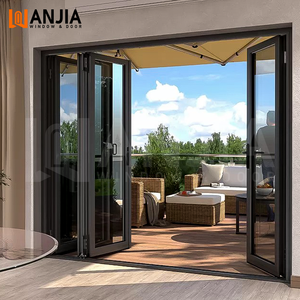
Engineered for European, North American, and Australian compliance: CE (EN 14351-1), AS2047, and ISO 9001 quality systems.
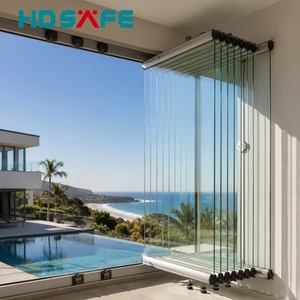
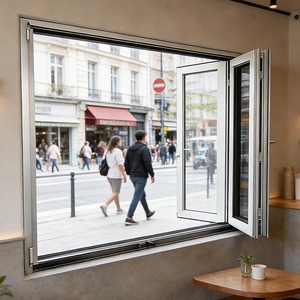
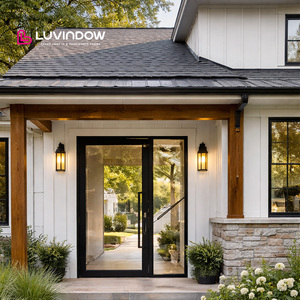
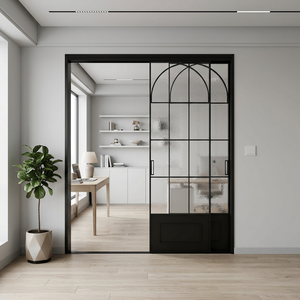
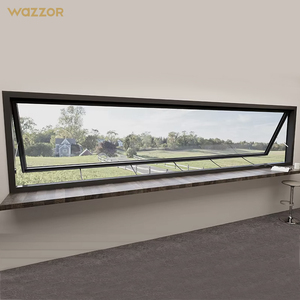
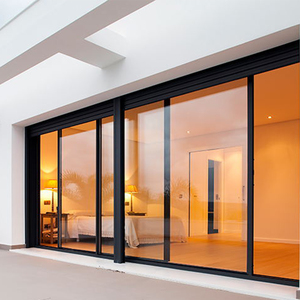
A comprehensive analysis of hybrid composite profiles, thermal physics, and structural envelope performance.
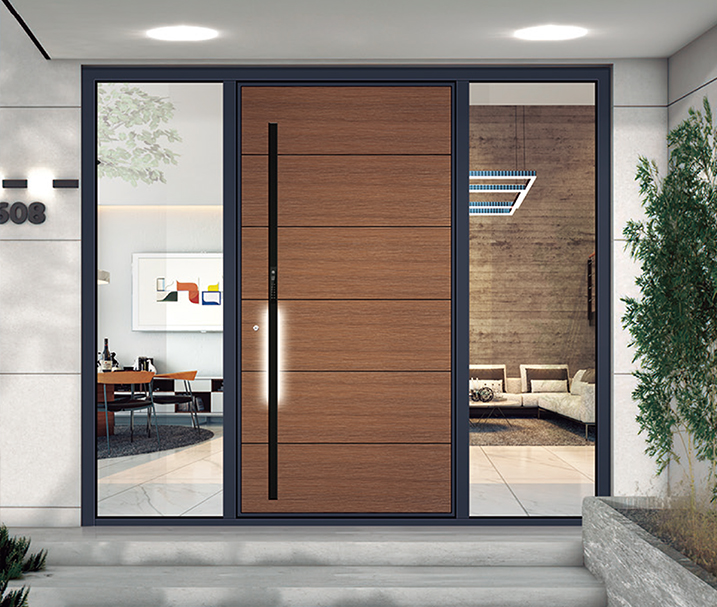
In modern fenestration terminology, the specification of "Aluminium Fibre Doors" represents an evolutionary breakthrough in high-performance building envelopes. Historically, international developers were forced to compromise between the structural rigidity and weather resistance of extruded architectural aluminium (6063-T6 / 6061-T6 alloys) and the superior thermal non-conductivity of composite organic polymers. Today, premier Chinese manufacturing clusters centered in Foshan, Guangdong—led by pioneer facilities like Guangdong Dejiyoupin Doors and Windows Co., Ltd. (DERCHI)—have re-engineered external entry and facade assemblies by integrating continuous glass-fibre reinforced polyamide (PA66 GF25) thermal isolators, carbon-fibre internal skeletal braces, and high-density mineral fibre insulation cores into composite structural leaves.
This composite approach directly addresses one of the most critical structural liabilities in large-scale modern architectural pivot and entry leaves: the "Bi-Metal Effect" (thermal bow). When an architectural entrance door faces extreme climatic variance—such as intense direct solar radiation on the exterior surface (+65°C) and climate-controlled indoor temperatures (+20°C)—conventional monolithic aluminium profiles suffer differential thermal expansion. Without advanced fibre-reinforced polyamide shear-relief joints and mineral-fibre insulated core slabs, the door leaf bows, degrading perimeter compression seals, causing air leakage, and compromising multi-point locking engagement. By combining structural exterior aluminium skins with fibre-matrix engineering, Chinese manufacturers achieve dimensional stability under severe thermal loads while attaining Passivhaus-level thermal transmittance values ($U_D \le 0.8\text{ W}/(\text{m}^2\cdot\text{K})$).
| Performance Metric | Standard Hollow Aluminum | Solid Timber / Steel Clad | Engineered Aluminium-Fibre Composite | Standard Compliance |
|---|---|---|---|---|
| Thermal Transmittance ($U_D$) | 2.8 – 3.8 W/(m²·K) | 1.6 – 2.2 W/(m²·K) | 0.72 – 1.10 W/(m²·K) | EN ISO 10077-1 / 2 |
| Acoustic Attenuation ($R_w$) | 28 – 31 dB | 32 – 35 dB | 38 – 45 dB (Acoustic Core) | EN ISO 717-1 |
| Thermal Bow Resistance | Poor (>8mm deflection) | Moderate (Subject to moisture) | Superior (<1.5mm via shear relief) | EN 12211 Class C5 |
| Burglar & Intrusion Class | RC1 / Standard latch | RC2 (Heavy timber) | RC3 / RC4 Multi-point automated | EN 1627-1630 |
| Weather & Cyclone Rating | Standard domestic | Prone to surface rot | AS2047 N6 (Cyclonic 4500Pa) | AS 2047 / AS 4055 |
| Expected Service Life | 15–20 Years | 10–15 Years (High upkeep) | 40+ Years (Qualicoat Class 2) | ISO 9001 / CE Mark |
Key technological, regulatory, and supply chain shifts reshaping global procurement from 2025 through 2030.
With the European Union's Energy Performance of Buildings Directive (EPBD recast) and stringent national targets such as the UK Future Homes Standard and Germany's GEG, procurement teams are abandoning uninsulated frames. Future procurement focuses strictly on low-carbon primary smelted aluminium, recycled scrap circularity (≥75% recycled billets), and bio-based/recycled polyamide thermal barriers. Sourcing directors require verified Environmental Product Declarations (EPD) and factory LCA data to secure tier-1 commercial developments.
Architectural luxury projects increasingly require oversized entrance apertures exceeding 4.5 meters in height and 2.0 meters in leaf width. Sourcing these leaves requires precision fiber-matrix tensioning rods integrated inside the composite sash to calibrate planar trueness. Smart home interoperability (KNX, BACnet, biometric face-recognition, motor-driven multi-point locking) is becoming standard factory-integrated equipment rather than an aftermarket addition.
B2B buyers are moving away from manual RFQs toward complete BIM (LOD 300-400) and automated CNC shop drawing generation. Tier-1 Chinese factories are now natively integrated into developer workflows, producing fabrication-ready CAD submittals within 48 hours of schedule submission. This end-to-end digital continuity eliminates field fabrication errors and ensures that factory-mounted sub-frames align with pre-cast concrete or steel portal structures.
Procurement teams are cutting project delivery risk by sourcing entire fenestration packages—including entrance pivot doors, panoramic bifold glass partition systems, gas-strut awning serveries, and structural glass balustrades—from a single manufacturer. Consolidating into one verified Chinese manufacturing partner prevents finishes (e.g., anodized bronze, tiger powder coatings) and glass tint variances across different suppliers while slashing container ocean freight packaging expenses.
How 5-axis CNC automation, automated polyurethane-fiber core foaming, and rigorous testing redefine door durability.
Extrusions are processed on multi-axis CNC machining centers, guaranteeing hardware pocket milling tolerances within ±0.05mm for seamless integration of German GU, Siegenia, and Hoppe mechanical hardware.
Core structures receive high-density hydrophobic mineral wool and PIR insulation infused with composite reinforcement struts, eliminating internal convection loops and maximizing decibel sound attenuation.
Fully automated vertical and horizontal powder lines execute multi-stage pre-treatment (chromate-free conversion) and apply Qualicoat Class 2 PVDF / Fluorocarbon coatings for marine-grade corrosion resistance.
Prior to crating, finished leaves undergo complete factory pre-assembly and laser scanning for squareness, planar deflection under load, and pneumatic compression testing across multi-perimeter EPDM gaskets.
Ranked among China's Top 10 High-End Door & Window Brands, Guangdong Dejiyoupin Doors and Windows Co., Ltd. (DERCHI) operates from a massive 180,000 m² modern manufacturing complex in Shishan Town, Nanhai District, Foshan—the epicenter of global architectural aluminium extrusion and hardware manufacturing.
With over 600 skilled technicians, 100+ international patents and certifications, and comprehensive testing laboratories, DERCHI bridges the gap between competitive factory-direct supply and exacting Western construction standards. Our products have been successfully delivered to landmark luxury projects throughout the United Kingdom, Germany, France, the United States, Canada, Australia, and the UAE.
A benchmark testament to our manufacturing caliber: a premier British construction conglomerate and long-standing partner of German Schüco chose DERCHI to engineer and manufacture custom fenestration packages for a multi-villa luxury program, affirming that our tolerances, structural integrity, and architectural finishes meet Europe's highest standards.


Free structural detailing matching site structural opening dimensions.

Certified to AS2047 N6 (cyclonic 4,500 Pa) and EN 12207 Class 4 air permeability.

Export protection engineered for ocean transit directly to EU and global ports.
Engineered anchor designs, video guides, and European business-hour remote consulting.
Direct technical answers addressing engineering standards, testing, warranties, and international logistics.
Send us your door schedules, architectural elevations, or structural openings. Our English-speaking fenestration engineers will supply comprehensive CAD shop drawings, U-value thermal analysis, and competitive CIF/DDP cost breakdowns within 24 hours.