Acoustic Testing ISO 10140 / ASTM E90Rw Up to 48dB / STC 45+CE & ISO 9001 Certified Factory
China Top Aluminium Soundproof Windows Supplier & Exporters
Precision-engineered architectural acoustic fenestration systems manufactured in Foshan. Designed for luxury villas, commercial high-rises, and urban hospitality projects worldwide.
Engineered Acoustic Catalog
High-Performance Acoustic Windows & Architectural Systems
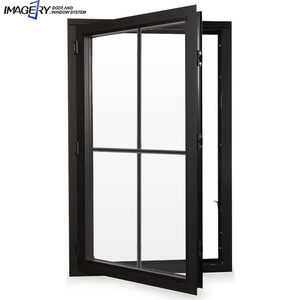
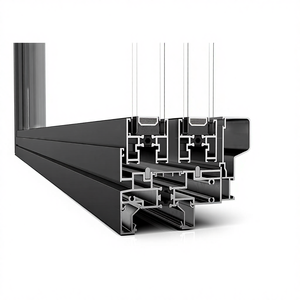
Explore our precision-fabricated soundproof aluminium fenestration range. Each unit incorporates multi-cavity thermal break extrusions, acoustic laminated glazing units (A-IGU), and multi-point perimeter compression seals.
The Mechanics of Acoustic Decibel Reduction in Architectural Fenestration
Sound insulation is not merely a matter of thicker glass; it is a multi-dimensional system physics challenge. An effective acoustic aluminium window mitigates structural vibration, eliminates coincidence resonance dips, and neutralizes low-frequency urban sound transmission.
Asymmetrical Acoustic Mass Law
Standard insulated double glazing utilizing two sheets of identical glass thickness (e.g., 6mm + 12Ar + 6mm) experiences a severe coincidence frequency dip between 2000 Hz and 3200 Hz, where acoustic energy passes straight through due to resonant sympathetic vibration. DERCHI engineers deploy asymmetric glass configurations—such as 8.76mm laminated glass paired with a 6mm outer pane. The disparate mass profiles disrupt resonant phase synchronization, elevating sound transmission loss across all critical octave bands.
Viscoelastic Acoustic PVB Interlayers
Acoustic dampening achieves peak attenuation when laminated with engineered Polyvinyl Butyral (A-PVB) or SentryGlas interlayers. The core layer acts as a viscoelastic shear damper that converts acoustic vibrational wave energy into negligible thermal energy through internal friction. In laboratory tests complying with ASTM E90 and ISO 10140-2, our acoustic interlayers suppress mid-to-high frequency airborne transportation noise, including aviation whine and steel-wheel rail screech, by up to 14 dB compared to conventional annealed glass.
Polyamide PA66 Thermal-Acoustic Barrier
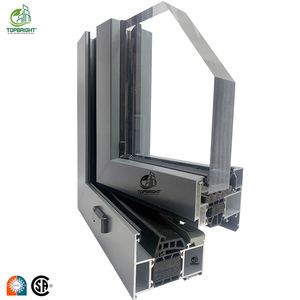
Extruded aluminium is an efficient conductor of sound wave vibrations. DERCHI extrusions incorporate heavy-duty Polyamide (PA66 GF25) thermal breaks reinforced with 25% glass fiber. This composite structural separation physically isolates the exterior aluminium chassis from the interior profile, arresting lateral sound conduction through the frame. Internal chamber cavities are injected with specialized high-density polyurethane or acoustic aerogel foams to eliminate internal cavern reverberation.
Zero Flanking Transmission: Hermetic Tri-Seal Perimeter Architecture
An acoustic window system is only as potent as its weakest perimeter seal. A minuscule air gap equivalent to 0.1% of the window's total area degrades overall sound reduction performance by as much as 10 dB, effectively cutting perceived soundproof efficacy in half.
DERCHI soundproof window systems engineer out air leakage through a continuous tri-stage gasket matrix crafted from automotive-grade Ethylene Propylene Diene Monomer (EPDM). Vulcanized corner joints prevent shrinkage, maintaining relentless physical contact along the entire frame perimeter.
Pre-compressed EPDM Center Bubble Gasket: Provides primary acoustic damping and creates an isobaric pressure chamber to neutralize air-driven sound infiltration.
Multi-Point Locking Cam Hardware: Robust German-engineered hardware brings up to 8 locking pawls into active compression against high-tensile keepers, ensuring airtight sash sealing.
How global building standards, climate metrics, and supply chain rationalization are transforming architectural procurement over the 2025–2030 horizon.
1. Acoustic-Thermal Co-Engineering
Building codes no longer treat acoustics and energy efficiency as separate silos. High-end tenders in the UK (Part L & Part E), Germany (GEG), and North America mandate unified building envelopes where windows achieve passive-level thermal insulation (U < 1.2 W/m²K) without compromising acoustic transmission loss (Rw > 42 dB).
2. Decarbonized Low-Carbon Aluminium
Global developers demand Environmental Product Declarations (EPD). Chinese top tier suppliers are rapidly migrating to hydro-powered primary aluminium billets with carbon footprints under 4.0 kg CO2/kg Al. Sourcing aluminium windows from verified low-carbon smelters will be mandatory for LEED and BREEAM certifications.
3. Single-Source Fenestration Packages
Procurement teams are shifting away from fragmented subcontracting. Sourcing exterior soundproof windows, architectural pivot entry gates, interior acoustic partitions, and commercial curtain walls from one single-source Chinese manufacturer radically minimizes field alignment errors and container shipping costs.
4. Pre-Assembly & Direct-to-Site Crating
Rising overseas labor costs are driving the adoption of factory-glazed, fully unitized window assemblies. High-performance acoustic windows arrive on-site pre-hung with factory-aligned compression gaskets and dynamic dampening hardware, eliminating erratic on-site glazing and reducing installation time by 40%.
Enterprise Manufacturing Authority
25+ Years of Extrusion & Glazing Mastery in Foshan
Headquartered in Foshan, Guangdong—the world’s undisputed epicenter of high-grade aluminium manufacturing—Guangdong Dejiyoupin Doors and Windows Co., Ltd. (DERCHI) operates a sprawling 180,000 square meter state-of-the-art production complex. Over 600 skilled technicians, metallurgists, and facade engineers power our advanced CNC fabrication infrastructure.
Recognized as an industry leader, DERCHI has earned long-term fabrication partnerships with esteemed European system brands, delivering architectural facade projects across the UK, Germany, France, Australia, and North America.
100% In-House Processing: From 6063-T6 virgin extrusion aging to electrostatic fluorocarbon (PVDF) spraying and robotic IGU lamination.
Rigorous Global Testing: Compliant with European CE marking under EN 14351-1, ISO 9001 quality audits, and Australian AS 2047 N6 cyclonic wind testing.
Corners are mechanically crimped with cast aluminum corner cleat brackets and injected with two-component polyurethane bonding adhesives. This eliminates micro-fissure leakage and creates an indestructible acoustic perimeter seal.
5-Axis CNC Precision Milling
Hardware slots, locking cam receivers, and multi-tier drainage weep holes are cut by 5-axis CNC machines to a tolerance within ±0.1mm. Precise machining guarantees that heavy-duty acoustic seals compress with mathematical consistency.
Export Packaging & Logistics
Every window unit is wrapped with 0.2mm protective film, enclosed in custom moisture-barrier polyethylene bags, and crated in fully enclosed, fumigated ISPM-15 plywood crates with integrated steel shock-absorbing foot pads.
Procurement Clarity
Frequently Asked Questions for Commercial Buyers & Importers
Technical, contractual, and regulatory guidance for developers, architects, and quantity surveyors sourcing acoustic fenestration systems from China.
What specific test standards validate your sound reduction ratings (Rw and STC)?
Our products undergo full-scale acoustic testing in certified laboratory reverberation chambers in compliance with ISO 10140-2 (Laboratory measurement of sound insulation of building elements) and ASTM E90 (Standard Test Method for Laboratory Measurement of Airborne Sound Transmission Loss of Building Partitions). Ratings are calculated in accordance with ISO 717-1 (Weighted Sound Reduction Index, Rw, including spectral adaptation terms C and Ctr) and ASTM E413 (Sound Transmission Class, STC). Complete third-party test reports detailing 1/3-octave band transmission loss from 100 Hz to 5000 Hz are provided with project documentation packages.
How do you handle low-frequency traffic noise (under 250 Hz) compared to high-frequency sounds?
Low-frequency traffic rumble (diesel engines, subways, heavy freight) exhibits long wavelengths that penetrate standard double glazing with minimal resistance. To counter this, we formulate asymmetric double and triple-glazed assemblies utilizing extra-heavy laminated glass panes (such as 10mm or 12mm glass) combined with wide, gas-filled cavities (16mm to 20mm Argon) and acoustic PVB interlayers. The wide gas airspace decouples the panes and lowers the Mass-Air-Mass resonant frequency below 80 Hz, effectively neutralizing low-frequency urban rumble where standard windows experience failure.
Can your soundproof windows achieve European CE Marking and Passivhaus thermal requirements?
Yes. All DERCHI export-series windows hold full CE certification under EN 14351-1:2006+A2:2016 for external pedestrian doorsets and windows. For projects with strict thermal efficiency requirements (such as Germany’s GEG, UK Building Regs Part L, or Passivhaus standards), we utilize 34mm multi-cavity Polyamide PA66 GF25 thermal breaks, triple-pane Low-E Warm Edge glass configurations, and aerogel-insulated profile chambers. This achieves total window thermal transmittance values (Uw) as low as 0.85 to 1.1 W/m²K, simultaneously satisfying acoustic and thermal benchmarks.
What is the difference between standard PVB and specialized Acoustic PVB interlayers?
Standard Polyvinyl Butyral (PVB) is designed primarily for impact resistance and safety retention. While it offers modest sound attenuation, its stiffness limits vibration damping. In contrast, Acoustic PVB (such as Saflex Acoustic or Trosifol SC) is engineered with a tri-layer structure featuring an ultra-soft viscoelastic inner core sandwiched between two rigid PVB sheets. This core absorbs bending vibrations and dampens the critical coincidence resonance frequency, yielding a 3 to 5 dB improvement over regular laminated glass and up to 10 dB over monolithic glass of equivalent mass.
How do you prevent water infiltration while maintaining high acoustic insulation at the weep holes?
Direct weep holes cut into window profiles create acoustic flanking paths that leak sound directly into living spaces. DERCHI utilizes an offset, pressure-equalized concealed drainage chamber system. Exterior drainage openings are baffled with one-way siliconized acoustic check valves that allow gravity drainage of water while preventing airborne sound backflow and wind-driven whistles. Our windows consistently test to Class 9A (600 Pa) water tightness under EN 12208.
What lead times and logistical frameworks are standard for container-load exports?
Our standard production lead time is 25 to 35 business days following final approval of technical CAD shop drawings and hardware finishes. We provide comprehensive export logistic services (FOB Foshan/Shenzhen, CIF, DDU, and DDP) to prime global ports including Rotterdam, Hamburg, Felixstowe, Sydney, Long Beach, and Dubai. Every consignment is packed in reinforced, ocean-ready steel-framed crates and loaded directly into shipping containers within our factory gates to eliminate multi-handling transit risks.
Can DERCHI supply complete customized architectural hardware schedules (e.g., German Siegenia/Sobinco)?
Yes. We integrate both world-leading European hardware systems (including Siegenia-Aubi, Roto Frank, Hoppe, and Sobinco) as well as premium Chinese commercial hardware (such as Kin Long and CMECH). All sash drive gears, tilt-and-turn gearboxes, and multi-point perimeter compression locks are custom-configured to the structural sash weight and desired security burglar resistance class (RC2 or RC3 per EN 1627).
What quality verification and factory acceptance testing (FAT) can clients perform prior to dispatch?
We welcome third-party inspection firms (e.g., SGS, Bureau Veritas, TÜV Rheinland) or client-appointed facade consultants to our Foshan plant. Prior to packing, mock-ups undergo 100% dimensional checks, corner weld strength tests, powder coating thickness gauge audits (minimum 60-80 microns for Qualicoat compliance), and cycle-opening tests. For remote clients, our engineers provide live high-definition video inspections alongside certified internal QC verification dossiers.
Direct Factory Collaboration
Engineer Your Acoustic Glazing Package with Foshan’s Premier Manufacturer
Submit your architectural drawings, window schedules, and acoustic performance requirements. Our facade engineering department will produce fully detailed CAD shop drawings, acoustic glass optimization models, and a competitive FOB/CIF commercial tender within 48 business hours.
 Rw 42dB | STC 40