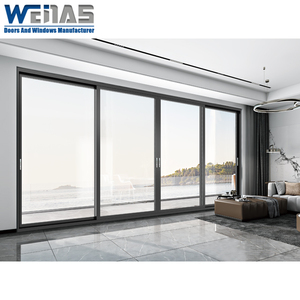
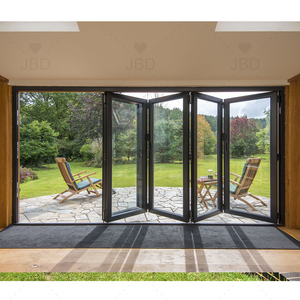
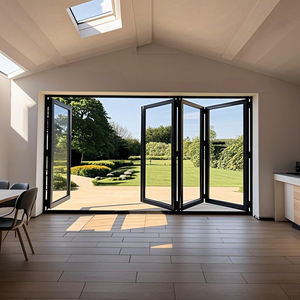
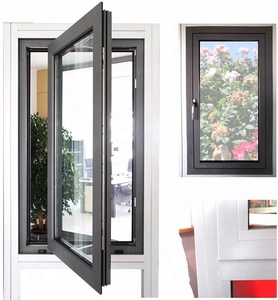
As commercial architecture, equine estate engineering, and luxury residential projects demand increasingly tight tolerances, the global market for aluminium stable doors has evolved significantly beyond rudimentary steel frames and timber panels. In current engineering parlance, modern stable doors—also referred to historically as Dutch doors—require split-leaf operational independence, high resistance to localized impact, zero moisture absorption, and comprehensive weatherization capable of satisfying international building codes such as European EN 14351-1 and Australian AS2047.
1. Metallurgical Foundations: 6063-T6 vs. Standard Alloys
The structural longevity of heavy-duty stable doors begins with primary billet selection. Sub-tier manufacturers often rely on recycled scrap aluminium containing iron and copper impurities, which induce intergranular corrosion when exposed to humid equine environments, coastal salt fog, or ammonia compounds. DERCHI strictly employs virgin 6063-T6 aerospace-grade architectural aluminum alloy. The T6 thermal precipitation hardening treatment delivers a minimum tensile strength of 205 MPa and yield strength of 170 MPa, ensuring the leaf resists physical strikes, deflection under negative wind pressure, and hinge-sag over millions of duty cycles.
2. Thermal Separation & Condensation Control
A persistent vulnerability of legacy metal doors is severe thermal conductivity, leading to interior condensation, mold, and energy loss. Modern architectural specifications mandate polyamide 66 reinforced with 25% glass fiber (PA66-GF25) thermal break strips crimped mechanically between the inner and outer profile chambers. This engineering approach disrupts heat bridges, allowing stable doors installed across extreme thermal gradients—such as Nordic winter zones or Gulf desert regions—to achieve overall thermal transmittance (UD) figures as low as 1.1 W/(m²·K) when integrated with argon-filled low-emissivity double or triple insulated glazing units (IGUs).
Smart Biometric & Access Control
Future architectural specifications prioritize concealed electromagnetic multipoint locking mechanisms, integrated RFID animal or custodian passage chips, and mobile IoT status reporting built directly into the profile rebate.
Extreme Climate Barrier Protection
Multi-barrier EPDM cellular automotive co-extruded gaskets combined with self-draining concealed sill profiles provide impenetrable seals against driving monsoon rains, storm surges, and particulate dust penetration.
Ecological Powder Coating & PVDF
Transition toward Qualicoat Class 2 Superdurable finishes and fluoropolymer (PVDF) surface treatments ensures 30+ year resistance to UV degradation, aggressive ammonia atmospheres, and mechanical micro-abrasion.
Comprehensive Architectural Fenestration Matrix
Procuring custom fenestration assemblies requires verifying certified performance metrics under standardized international testing conditions. The table below outlines parameters across critical operational categories:
| Performance Category |
Testing Standard |
Certified Benchmark |
Engineering Implementation |
| Structural Wind Load |
AS 2047 / EN 12211 |
Class C5 / N6 (>3000 Pa) |
Heavy-wall 3.0mm primary stiles, reinforced internal corner cleating. |
| Water Penetration |
EN 12208 / ASTM E331 |
Class 9A (≥600 Pa) |
Cascading drainage chambers, continuous vulcanized EPDM corner joints. |
| Thermal Transmittance |
ISO 10077-1 / NFRC |
UD ≤ 1.2 - 1.6 W/(m²·K) |
Multi-chamber polyamide thermal breaks, argon-filled warm-edge glass. |
| Acoustic Attenuation |
ISO 717-1 / ASTM E413 |
Rw = 38 - 45 dB |
Acoustic PVB laminated glazing, compression gasket rebating. |
| Burglary Protection |
EN 1627 (RC Rating) |
RC2 to RC3 Standard |
Stainless steel shoot-bolt multipoint locks, anti-jemmy security pins. |
Derchi Manufacturing Authority: Trust, Infrastructure & Quality Control
Operating from our modern 180,000 square meter industrial manufacturing base in Foshan, Guangdong—the recognized epicenter of China's structural metal engineering—DERCHI is ranked among China's Top 10 High-End Architectural Fenestration Brands. Backed by over 25 years of engineering experience and a multidisciplinary workforce of 600+ personnel, we integrate the entire value chain under rigorous ISO 9001 and ISO 14001 quality systems.
Our engineering division supports global architects, real estate developers, building contractors, and regional distributors with complete technical drawing approvals, bespoke CAD shop layouts, structural static calculations, and rapid prototype customization. Whether satisfying strict European Union building directives (CE Marking, EN 14351-1), complying with British Standards, or passing Australian AS2047 extreme weathering evaluations, DERCHI delivers consistent structural integrity, exact schedules, and direct factory pricing.