Specialized Architectural & Commercial Solutions
Complementing high-performance aluminum roller shutters, our Foshan smart plant fabricates structural envelope systems, high-wind patio assemblies, and thermal-break architectural fenestrations adhering strictly to international ASTM, CE, and AS/NZS codes.
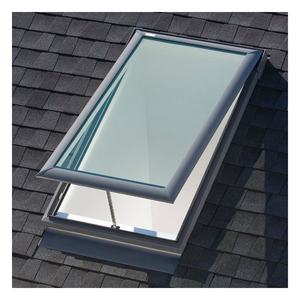
Electric Sliding Automatic LED Blue Glass Roof Skylight With Aluminum Alloy Frame High Quality
Product Specifications →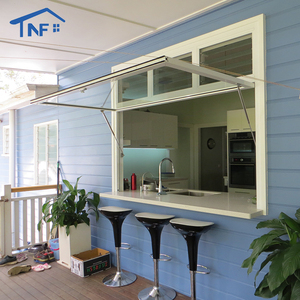
Aluminum Gas Strut Awning Window Double Glazed Glass Aluminum Windows For Kitchen
Product Specifications →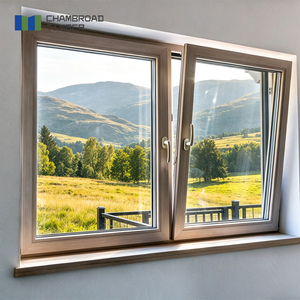
Modern Wood Aluminum Window Casement Fireproof Anti-Theft Double Glazed Insulated Glass CSA Certified For Office
Product Specifications →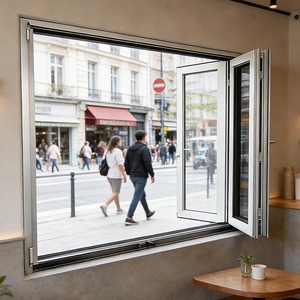
Customized Tempered Glass Heat Insulation Aluminum Frame Balcony Sliding Folding Window
Product Specifications →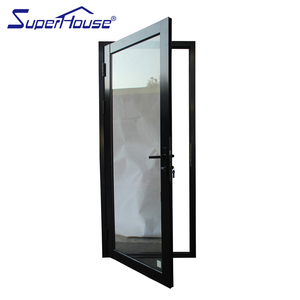
Miami NOA Approved Modern Hurricane Proof Impact Resistance Triple Glazed Aluminum Alloy Hinged Patio Door With Finished Surface
Product Specifications →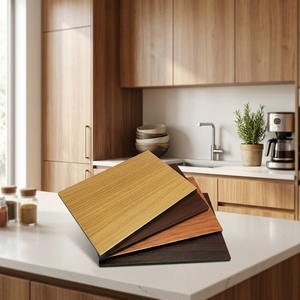
Modern Waterproof 3mm Apartment Kitchen Cabinet Door ACP Anti-static Fireproof Aluminum Composite Panel Wood Grain Board
Product Specifications →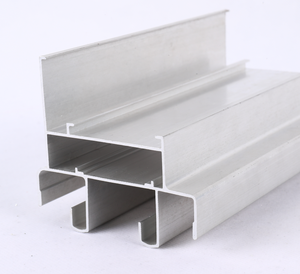
Aluminum Alloy Profiles 6000 Series for Windows and Doors Fabrication with Cutting Service for South Africa Market
Product Specifications →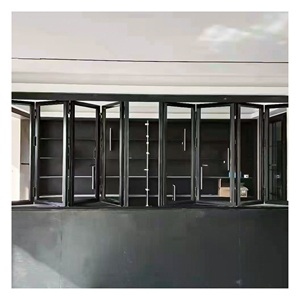
Aluminium Bi Fold Window Profile Fold up Glass Windows Best Selling High-End Vertical Folding Window
Product Specifications →Structural Metallurgy & Thermal Dynamics of Modern Aluminum Roller Shutters
An authoritative engineering evaluation of cold-rolled aluminum slat systems, polyurethane core densities, and hurricane wind-pressure mitigation for commercial and residential façades.
Industrial procurement of security shutters and motorized rolling curtain assemblies requires navigating complex balances between metallurgical properties, structural rigidity, and cyclic fatigue limits. As global climate patterns escalate the frequency of extreme storm events and municipal building codes demand lower building envelope U-values, extruded aluminum roller door systems have evolved from simple physical security barriers into high-performance kinetic building elements.
Primary extrusion formulations hinge on structural 6000-series aluminum alloys. While non-structural secondary applications frequently utilize commodity 6063-O or standard grade recycled scrap, tier-one manufacturers utilize virgin aluminum ingots alloyed precisely to 6063-T5, 6063-T6, and high-tensile 6082-T6 specifications. The introduction of optimized magnesium and silicon precipitates (Mg2Si) within tightly controlled artificial aging furnaces ensures yield strengths exceeding 160–210 MPa. This metallurgical discipline enables the production of double-walled hollow slats with wall thicknesses between 1.0mm and 2.5mm that resist severe lateral wind shear without permanent deflection.
Engineering Rule of Thumb for Wind Load Calculations: Under ASTM E330 testing procedures and EN 12424 dynamic wind classifications, deflection limit criteria ($L/20$ to $L/50$) dictate that curtain width cannot be expanded linearly without increasing the profile moment of inertia ($I_x$). For coastal installations subject to category 4 and 5 hurricane forces (exceeding 2.5 kPa to 4.5 kPa), patented end-retention wind locks cast from zinc alloy or ductile iron are riveted directly through internal aluminum webbing into heavy-gauge structural side guides.
In addition to structural strength, modern insulated rolling doors feature continuous roll-formed aluminum skins filled with high-density, CFC-free rigid polyurethane (PU) foam. Formulated with a core density ranging between 48 kg/m³ and 55 kg/m³, these composites function as composite sandwich panels. The cohesive bond between the closed-cell polyisocyanurate/polyurethane core and the chromate-pretreated aluminum slat skin significantly reduces drum noise during operation while achieving weighted sound reduction indices ($R_w$) up to 24–28 dB. Thermally broken guide channels, bottom sealing gaskets composed of high-elasticity EPDM rubber, and brush-sealed lintel boxes further minimize thermal bridging, supporting stringent building certifications such as LEED v4.1, BREEAM, and Germany's GEG (Gebäudeenergiegesetz).
Engineering Performance Matrix: Profile Classifications
| Profile Specification | Alloy & Hardness | Core Composition | Wind Load Standard (EN 12424) | Thermal Transmittance (U-Value) | Ideal Application Domain |
|---|---|---|---|---|---|
| 39mm / 45mm Micro-Slat | Alloy 3105-H14 (Roll-formed) | Eco-Polyurethane (45 kg/m³) | Class 2 (Up to 450 Pa) | $1.8 - 2.2 \text{ W/(m}^2\text{K)}$ | Residential window shading, sun protection, acoustic dampening |
| 55mm Standard Insulated | Alloy 6063-T5 (Extruded/Formed) | High-Density PUR (50 kg/m³) | Class 3 (Up to 700 Pa) | $1.5 - 1.8 \text{ W/(m}^2\text{K)}$ | Commercial storefronts, residential garages, light industrial openings |
| 77mm Heavy-Duty Commercial | Alloy 6063-T5 (Double Wall Extrusion) | High-Density PUR / Mineral Core | Class 4 (Up to 1000 Pa) | $1.2 - 1.5 \text{ W/(m}^2\text{K)}$ | Logistics centers, external boundary portals, airport cargo docks |
| 100mm Storm-Shield Extruded | Alloy 6082-T6 (Multi-Cavity Web) | Dual Air Chamber / Reinforced | Class 5+ (Exceeding 1800 Pa) | $2.0 - 2.4 \text{ W/(m}^2\text{K)}$ | Hurricane zones (Miami-Dade / AS 2047 N6), marine port defense |
Future Procurement Trends (2025–2030)
How international EPC contractors, developers, and wholesale distributors are transforming procurement matrices to de-risk supply chains and achieve carbon compliance.
Low-Carbon Recycled Metallurgy
Global procurement directives now mandate Environmental Product Declarations (EPD). Tier-one buyers insist on billets processed via renewable hydropower with audited Scope 1, 2, and 3 emissions under 4.0 kg CO2e per kg of primary aluminum, ensuring compliance with the EU's Carbon Border Adjustment Mechanism (CBAM).
Pre-Engineered Rapid Assembly
Rising on-site installation labor rates across North America, Australasia, and Western Europe are driving adoption of modular, pre-hung roller systems. Procuring factory-aligned cassette boxes featuring pre-wired motor packs, integrated safety sensors, and pre-punched guide rails drops site commissioning time by over 60%.
Total Cost of Ownership (TCO)
B2B specifications have moved past evaluating FOB price alone to scrutinizing the Total Cost of Ownership. Procurement matrices quantify lifecycle metrics, such as a minimum Mean Cycles Between Failures (MCBF) of 100,000 cycles, Class 2 powder coating longevity, and universal part interchangeability.
Advanced Manufacturing & Engineering Evolution
Emerging innovations reshaping the production, surface chemistry, and automated integration of architectural roller doors.
The international fenestration and rolling closure landscape is seeing substantial technological transformation. As industrial facilities, automated distribution centers, and high-performance commercial buildings seek greater operational velocity and energy efficiency, mechanical systems are integrating with digital building platforms.
IoT & BMS Networked Automation
Direct integration of RS-485, Modbus, and BACnet protocol interfaces within electronic control boxes enables direct two-way telemetry into commercial Building Management Systems. Real-time predictive maintenance sensors detect curtain drag, balance-spring tension loss, and motor heat buildup before operational failures occur.
Super-Durable Surface Chemistries
Application lines have transitioned to AAMA 2605 compliant PVDF fluorocarbon coatings and Qualicoat Class 2 / 3 architectural powder finishes. These continuous dry-film systems withstand over 3,000 hours of continuous acetic acid salt-spray testing, eliminating chalking, blistering, and galvanic degradation in hypersaline coastal environments.
Variable-Frequency Direct Drive
Replacing traditional AC stop-start induction drives, variable-frequency drive (VFD) servo motors provide soft-start and soft-stop acceleration curves. This removes shock loads on internal barrel shafts, bearings, and slat hinges, extending kinetic operating lifespans past 250,000 opening cycles while achieving travel speeds up to 1.5 m/s.
Square Meters Production Base
Years Fenestration Engineering
Skilled Factory Technicians
Patents & Global Certifications
Guangdong Dejiyoupin Doors & Windows Co., Ltd. (DERCHI)
Headquartered in Foshan, Guangdong—the primary hub of the global aluminum fabrication ecosystem—DERCHI stands recognized among the top 10 premium door, window, and dynamic shutter brands in China. Backed by a 180,000 m² smart manufacturing center and more than 600 specialized personnel, our engineering team manages complete product lifecycles in-house, from billet casting and automated extrusion down to robotic assembly, precision QA validation, and containerized export packing.
- In-House R&D: Over 30 independent design and technological patents
- Selected by long-standing UK Schüco partners for complex villa developments
- Engineered Support: Bilingual CAD/BIM shop drawings tailored to your schedule
- Time-Zone Aligned: Technical support operating across European & American business hours
Frequently Asked Questions: Global B2B Procurement
In-depth technical answers addressing engineering parameters, compliance documentation, quality control protocols, and shipping logistics.
What documentation accompanies export orders for building approvals?
Every commercial consignment includes certified Declarations of Performance (DoP), factory test reports confirming alloy yield strength (6063-T5/T6), mill certificates, and coating adhesion documentation (ASTM D3359). For European projects, compliance with EN 13241-1 and EN 12424 is fully itemized; for hurricane zones, structural calculation packs signed by accredited structural engineers are provided.
How do you configure dynamic wind retention for large openings?
For clear opening widths exceeding 5,000mm or coastal projects facing high wind loads, we use custom-extruded 6082-T6 end-locks riveted directly into reinforced double-wall slats. These hook into internal steel or extruded aluminum retention lips within the guide channels, preventing curtain blowout under differential wind pressures up to 4.5 kPa.
What motor automation systems and voltages are supported?
We install international motor brands including Somfy, Becker, and SEIP, alongside proprietary heavy-duty industrial side-mount chain drives. We configure power units for global voltages: single-phase 110V/60Hz, 230V/50Hz, or three-phase 380V–415V/50–60Hz. Systems feature manual override mechanisms, optical safety bottom edges, external photocell arrays, and UPS backup battery units.
What surface treatments protect against marine corrosion?
For C4 and C5 marine environments, we recommend architectural-grade PVDF coatings (2-coat or 3-coat systems containing minimum 70% Kynar 500 / Hylar 5000 resins) or hard-anodized finishes up to 25 microns (Qualanod certified). These finishes resist pitting, microscopic filiform corrosion, and salt-mist degradation across decades of coastal exposure.
What are standard manufacturing lead times and MOQs?
Standard architectural configurations require 15 to 25 business days from final CAD shop drawing sign-off to export container loading. Prototype validation or sample mockups can ship in 7 to 10 days. We accommodate project-specific requirements, supporting custom residential packages as low as 1 unit or full 20GP/40HQ container shipments for commercial developments.
How are export consignments packed to prevent transit damage?
Every profile is masked with protective peel-off film, followed by thermal-shrink polyethylene wrap, heavy corner guards, and honeycomb cushioning. Assembled curtain bundles or knocked-down components are packed in fully enclosed, IPPC-fumigated plywood crates with internal structural dunnage, ensuring ocean freight arrives without abrasion, denting, or moisture exposure.
Ready to Engineer Your Project Specifications?
Connect directly with our bilingual structural fenestration engineers in Foshan. Submit your project schedules, CAD architectural elevations, or tender documents for rapid analysis, free BIM shop drawings, and competitive factory-direct export proposals.