Modern Industrial Design Outdoor Aluminum Alloy Rolling Shutter
Reinforced storm-grade rolling profile with anti-lift bottom rails, high-cycle motors, and thermal insulation.
- Alloy: 6063-T5 Extrusion
- Wind Load: Class 4 / Hurricane Rated
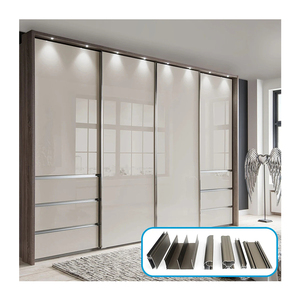
Industrial-grade multi-track, thermal break slimline, and heavy-duty sliding glass door solutions engineered for European and global commercial, residential, and villa developments.
Manufactured under strict ISO 9001 and EN 14351-1 standards to withstand demanding wind loads, heavy cycle counts, and extreme thermal conditions.
Reinforced storm-grade rolling profile with anti-lift bottom rails, high-cycle motors, and thermal insulation.
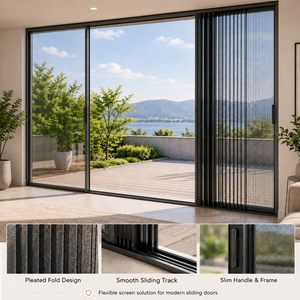
Ultra-slim interlock sightlines (20mm) paired with integrated foldaway stainless screen mesh for panoramic indoor-outdoor flow.
Precision CNC-machined structural aluminum track systems optimized for silent dual-roller suspension and heavy load-bearing panels.
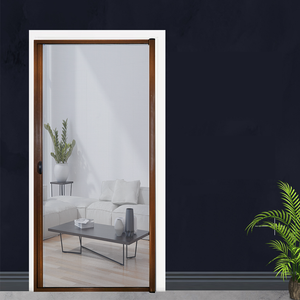
Durable architectural mesh with hydraulic soft-recoil mechanism designed for seamless retrofit on sliding patio doors.
Polyamide PA66 nylon thermal barrier with multi-point European perimeter locking, delivering superior insulation against severe climates.
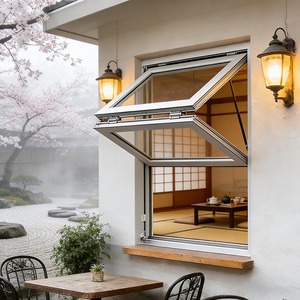
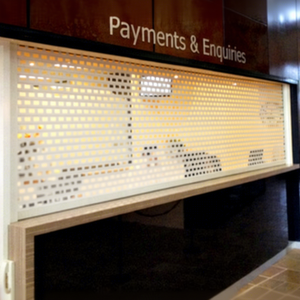
Engineered gas-strut and motorized fold-up mechanisms for bar counters, hospitality fronts, and modern retail facade integration.
Dual-action heavy lift-and-slide geometry tested to North American and Australian standards for air infiltration and acoustic reduction.
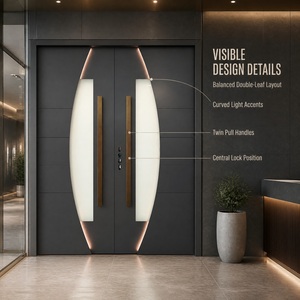
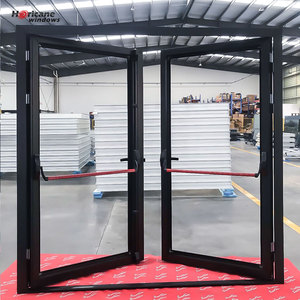
Heavy-duty commercial stile entrance engineered with panic hardware, crash bars, and impact laminated safety glass for high-traffic public access.
Operating from Foshan, Guangdong—the epicenter of global aluminum innovation—Guangdong Dejiyoupin Doors and Windows Co., Ltd. (DERCHI) stands among China's Top 10 fenestration manufacturers, delivering project-ready sliding systems backed by certified compliance.
Fully vertically integrated manufacturing spanning extrusion cutting, thermal break crimping, CNC precision milling, glass assembly, and pre-shipment dry runs.
Our aluminum sliding door systems strictly conform to EN 14351-1 (CE), AS2047 N6, NFRC energy benchmarks, and ISO 9001 quality management control.
Complimentary CAD drawings, structural wind-load load calculations, thermal simulations, and BIM object integration configured directly from your structural door schedule.
Dedicated English-speaking technical sales engineers aligned with European and North American business hours, offering live video inspection and post-sale technical support.
A technical examination of thermal barrier design, structural deflection, acoustic dissipation, and high-performance glass configurations for international architects and project procurement teams.
Standard aluminum conducts heat rapidly. High-performance sliding systems use reinforced multi-cavity Polyamide PA66-GF25 thermal break struts that mechanically isolate the exterior and interior aluminum extrusions.
Large sliding glass doors require precise insulating glass unit (IGU) construction to control heat transfer, sound penetration, and wind load resistance across wide spans.
Oversized panels exceeding 350 kg require specialized precision running gears. Lift-and-slide mechanisms disengage seals during sliding to reduce friction and preserve weather seals over decades of operation.
Market dynamics are shifting toward stricter carbon mandates, structural minimalism, and integrated building automation. Here is how Tier-1 commercial developers specify systems for 2026 and beyond.
Demand is accelerating for pocket-sliding and floor-to-ceiling recessed frames. Profiles conceal top, outer, and bottom tracks within building substrates, leaving visible sightlines under 20mm for uninterrupted sightlines.
Stricter energy codes are pushing standard sliding doors out of favor. Specifiers demand overall door thermal transmittance (UD) below 1.4 W/m²K, driving widespread adoption of triple-pane argon units with dual thermal breaks.
Commercial luxury estates and healthcare facilities increasingly specify quiet, concealed in-wall belt drives with anti-pinch sensors, automated weather-station triggers, and smart building access control integration.
Global developers prioritize supply partners utilizing renewable hydro-smelted aluminum billet, recyclable packing composites, and ISO 14001 Environmental Management certification to meet stringent green building audits (LEED, BREEAM).
Cross-reference critical European (EN) and International standards before finalizing factory fabrication shop drawings.
| Performance Parameter | Test Standard | Target Classification | Engineering Realization |
|---|---|---|---|
| Thermal Transmittance (UD) | EN ISO 10077-1 / 2 | 0.9 – 1.4 W/m²K | Multi-cavity PA66-GF25 thermal breaks + Low-E triple glazing filled with 90% Argon |
| Air Permeability | EN 12207 | Class 4 (< 3 m³/h·m²) | Continuous multi-lip vulcanized EPDM weather gaskets with active lift-and-slide compression |
| Water Tightness | EN 12208 | Class 9A / E1050 (1050 Pa) | Cascaded internal weep holes, integrated drainage sub-sills, and storm baffle blocks |
| Wind Load Resistance | EN 12210 / AS 2047 | Class C5 / N6 Serviceability | 6063-T6 alloy with structural internal steel stiffeners inside interlock mullions |
| Burglar Resistance | EN 1627 - 1630 | RC2 / RC3 Rated | Concealed mushroom-head multi-point deadbolts with anti-drill hardened strike plates |
| Acoustic Attenuation | EN ISO 717-1 | Rw (C; Ctr) = 38 – 44 dB | Asymmetric glass configurations (e.g., 6mm Low-E + 16Ar + 44.2 Acoustic PVB) |
* Final structural performance depends on panel dimensions, glass thickness, and elevation wind load. Custom calculations provided upon inquiry.
Essential guidance on lead times, CE compliance, structural engineering, and sea freight logistics for overseas aluminum door supply.
Send us your door schedules, CAD drawings, or project tender requirements. Our senior technical fenestration engineers will provide structural assessments, thermal calculations, and factory-direct pricing within 24 hours.
Inquire Now