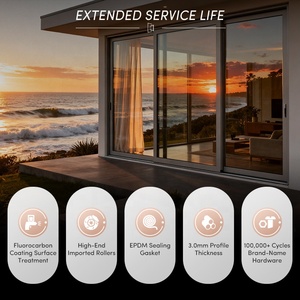
180,000m²
Foshan Production Base
25+ Yrs
Extrusion & Assembly Craft
100+
Global Patents & Certs
0.82W/m²K
Min Thermal Transmittance (Uw)
Engineered Product Portfolio
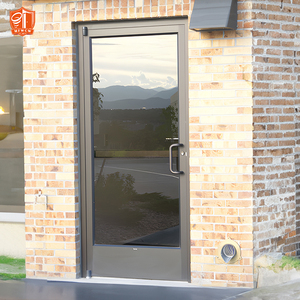
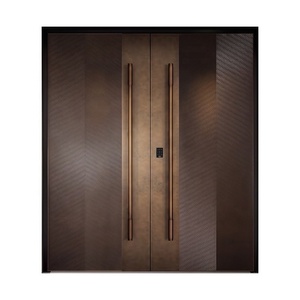
Architectural Flush Casement, Sliding & Entrance Systems
Explore precision-fabricated fenestration components compliant with CE, EN 14351-1, and AS2047 standards, designed to meet rigorous structural and thermal targets.
Technical Whitepaper
Engineering Architecture of Flush Casement Fenestration
A comprehensive technical appraisal of coplanar structural dynamics, thermal breaks, pressure equalisation, and structural acoustics for tier-1 building tenders.
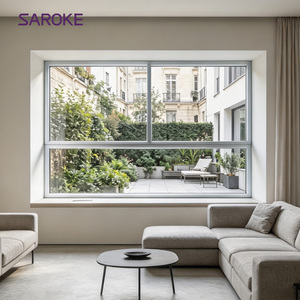
In contemporary high-performance building envelopes, the specification of aluminium flush casement windows represents a convergence between strict architectural minimalism and stringent thermal physics. Unlike standard rebated or stormproof profiles, flush casements require the sash profile to sit entirely coplanar with the outer frame profile on external elevations—and increasingly on interior elevations as well. This smooth plane removes unsightly profile steps, reducing micro-turbulences across windward facades while creating the ultra-flat aesthetic sought by international architects designing luxury residential villas, boutique hospitality spaces, and commercial civic infrastructure.
From an extrusion metallurgy perspective, China wholesale manufacturing leaders utilise primary billet 6063-T5 and 6063-T6 architectural-grade aluminium alloy. These profiles feature high tensile strength, exceptional anodizing response, and excellent dimensional stability across expansive openings. The fundamental engineering challenge of flush casement construction is the mitigation of thermal conductive bridges. Because aluminium exhibits high natural thermal conductivity (λ ≈ 205 W/m·K), cutting-edge systems incorporate multi-chamber continuous Polyamide PA66 GF25 thermal struts. These structural barriers, reinforced with 25% chopped glass fiber to match the linear thermal expansion coefficient of aluminium, separate interior and exterior extrusions to prevent systemic energy transfer and internal condensation.
| Engineering Metric | Standard System Spec | Architectural Flush Casement Spec | Compliance Test Standard |
|---|---|---|---|
| Alloy Composition | Commercial 6063-T5 Recycled Blend | Primary Billet 6063-T6 / Structural 6061-T6 | ASTM B221 / EN 573-3 |
| Thermal Transmittance (Uw) | 1.80 – 2.20 W/m²K | 0.82 – 1.20 W/m²K (Triple Argon Glazed) | ISO 10077-1 / EN 12567-1 |
| Air Permeability | Class 3 (≤ 300 Pa) | Class 4 (≥ 600 Pa airtight rating) | EN 12207 / AS 2047 Class N6 |
| Water Tightness | Class 7A (≤ 300 Pa) | Class E1200 / 9A (≥ 900 Pa - 1200 Pa) | EN 12208 / ASTM E331 |
| Wind Resistance | Class B3 (≤ 1200 Pa) | Class C5 (≥ 2000 Pa design, 3000 Pa test) | EN 12210 / AS 4055 N6 Cyclonic |
| Security Classification | Standard Single Cam Latches | EN 1627 RC2 / RC3 Concealed Multi-Point | PAS 24 / EN 1627 - 1630 |
Furthermore, maintaining weather sealing on coplanar profiles demands a sophisticated, three-tier pressure equalization sealing perimeter. DERCHI utilizes continuous, vulcanised cellular EPDM (Ethylene Propylene Diene Monomer) dry gaskets combined with co-extruded acoustic flippers. When the flush sash engages with its concealed scissor friction stays or heavy-duty hinges, continuous perimeter compression is applied across multiple planes. The integrated drainage sub-channels are routed through hidden front-decompression slots, allowing incident stormwater under hurricane wind pressure to shed immediately without compromising the interior airtight seal.
Market Horizon
Emerging Trends in Global Fenestration Procurement
How digital supply chains, stringent decarbonisation policies, and advanced mechatronics are reshaping international aluminium casement sourcing.
Passivhaus & Carbon Neutrality
Global building codes—including UK Part L and Germany's GEG—are mandating ultra-low U-values (≤ 0.8 W/m²K). Procurement shifts heavily toward triple and quadruple insulated glass units (IGUs) back-filled with 90%+ Argon or Krypton gas, combined with aerogel-filled polyamide break cavities.
Direct-to-Factory BIM Workflows
Overseas architectural firms are bypassing intermediaries by transmitting native Revit and IFC files straight to Chinese fabrication centers. In-house engineering teams generate instant precision shop drawings, automated CNC toolpaths, and parametric schedules that shorten lead times by 35%.
Concealed Actuation & Smart Building Integration
Next-generation flush casements feature completely concealed 180° hinges and hidden chain actuators linked to Building Management Systems (BMS). Automated nighttime cooling purge and smoke ventilation protocols are seamlessly unified with biometric multi-point locking hardware.

Why Choose DERCHI
25+ Years of Fenestration Leadership & Global Export Power
Recognized as one of China's top 10 premium door and window manufacturing powerhouses, Guangdong Dejiyoupin Doors and Windows Co., Ltd. (DERCHI) operates a sprawling 180,000 m² state-of-the-art production base in Foshan, Guangdong.
- Schüco-Level Engineering: Selected by long-standing UK Schüco partners for high-profile multi-villa projects, verifying our structural parity with European elite brands.
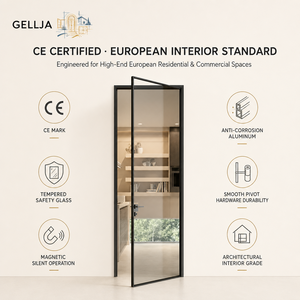
- Full International Certification: Products certified to CE (EN 14351-1), AS2047 N6 (Australia), ISO 9001, and UL fire-rated standards with verified Declaration of Performance (DoP).
- Turnkey One-Stop Envelope Supply: Seamlessly package flush casement windows with pivot front doors, curtain walls, and interior systems to reduce consolidated ocean freight expenses.
Procurement Knowledgebase
Frequently Asked Questions by Commercial Buyers
Essential technical and commercial clarifications for developers, project specifiers, and procurement managers sourcing aluminium flush casements from China.
How do flush casements prevent water pooling without a stormproof lip?
DERCHI flush casements integrate hidden sub-frame pressure decompression chambers with concealed horizontal drainage flutes. Gravity and negative pressure differential drive moisture down the outer frame channels rather than relying on protruding stormproof rebates.
Can custom RAL colors and seaside-grade anodizing be specified?
Yes. We offer AkzoNobel powder coatings compliant with Qualicoat Seaside standards (60-80 microns thickness) with 15 to 25-year anti-fading warranties, alongside architectural Grade 25 anodizing resistant to high-salinity coastal spray.
What is the standard production cycle and sea-freight timeline?
Standard fabrication takes 25–35 working days following CAD shop drawing approval. Reinforced ocean containers are dispatched to key ports including Rotterdam, Hamburg, Long Beach, and Sydney with full export documentation and transit tracking.
What documentation is provided to satisfy regional building inspectors?
We supply signed Declarations of Performance (DoP), structural wind load calculations (FEA), NATA-accredited test reports for AS2047, and CE compliance documentation mapped directly to EN 14351-1 before factory dispatch.