Engineered Architectural Doors & Glazing Systems
Explore our factory-direct precision series manufactured in our 180,000 m² Foshan production base. Each door and window system is fully tested to meet international structural, thermal, and security benchmarks.
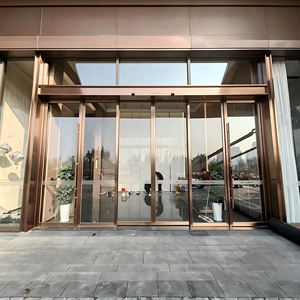
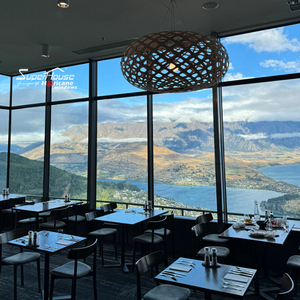
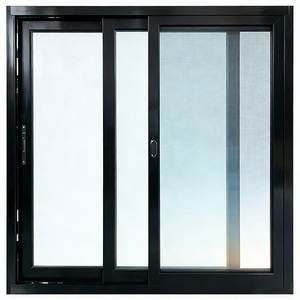
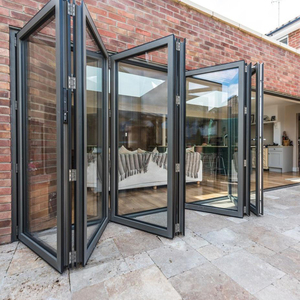
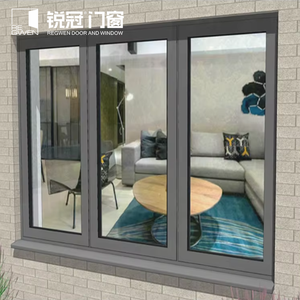
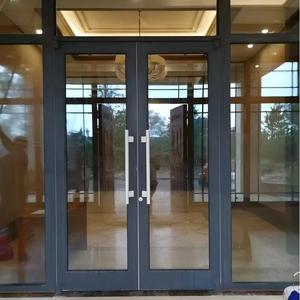
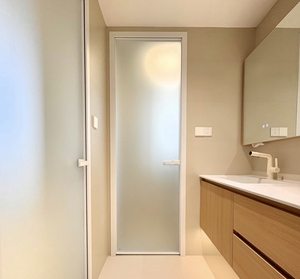
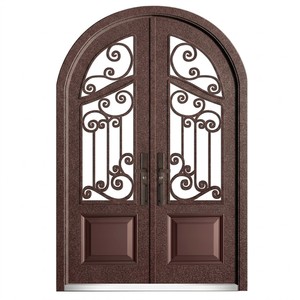
China Wholesale Aluminium Residential Doors Sourcing Executive Summary
The global residential construction and high-end architectural renovation sector is undergoing a rapid transition toward energy-efficient, structurally resilient, and aesthetically minimalist building envelopes. Within this paradigm shift, wholesale aluminium residential doors manufactured in China have risen to global prominence. China’s architectural aluminium door manufacturing ecosystem—anchored in Foshan, Guangdong—represents over 40% of worldwide production capacity, delivering unparalleled economies of scale, technological innovation, and structural engineering compliance.
For international B2B buyers, real estate developers, building contractors, and window & door distributors, navigating the Chinese manufacturing landscape requires a deep technical understanding of thermal insulation standards, material metallurgy, structural glazing performance, and export compliance. This whitepaper provides a comprehensive engineering and procurement analysis of aluminium residential doors, evaluating raw material standards, future market trends, production engineering, and factory-direct procurement strategies.
Enterprise Manufacturing Capabilities & Technical Authority
Guangdong Dejiyoupin Doors and Windows Co., Ltd. (DERCHI) stands at the forefront of high-precision residential door and window fabrication in China. Operating from Foshan, our fully integrated manufacturing infrastructure offers verified structural and logistical superiorities.
Equipped with automated CNC extrusion, precision double-head mitre saws, and robotic corner-crimping cells, ensuring millimetric dimensional accuracy across mass B2B production runs.
Certified under ISO 9001 quality systems with full compliance for European CE (EN 14351-1), Australian AS 2047 (N6 wind pressure rating), and American UL fire-resistance ratings.
Our dedicated team of 30+ architectural engineers provides complimentary shop drawings, structural calculation reports, and BIM models tailored to your door schedules.
Utilizing primary 6063-T5 and 6063-T6 architectural grade aluminium alloys, delivering tensile yield strengths exceeding 160 MPa for structural longevity and wind resistance.
Heavy-duty export packaging utilizing fumigated wooden crates, protective film layering, and corner armor guarantees damage-free sea freight delivery to major worldwide ports.
Fluent English-speaking engineering account managers provide real-time consultation, installation manuals, and remote site guidance aligned with overseas business hours.
Aluminium Residential Door Technological Development Trends
The engineering of residential entrance doors, patio sliding systems, and architectural swing doors has evolved significantly beyond basic structural barrier requirements. Modern residential doors are sophisticated envelope systems designed to manage thermal energy transfers, acoustics, structural deflection, and smart security integration. Key engineering developments shaping the industry include:
1. Advanced Polyamide Thermal Break Engineering
Uninsulated aluminium profiles exhibit high thermal conductivity ($k \approx 160 \text{ W/m}\cdot\text{K}$), making them prone to significant thermal bridging and condensation in cold or hot climates. Modern high-performance residential doors incorporate Polyamide PA66-GF25 (25% glass-fiber reinforced) thermal barrier strips. By separating the interior and exterior aluminium extrusions with PA66 strips ranging from 24mm to 39mm in depth, manufacturers reduce the overall frame thermal transmittance ($U_f$) to as low as $1.0 - 1.5 \text{ W/m}^2\cdot\text{K}$.
2. Oversized Heavy-Duty Pivot Hardware Systems
Architectural residential design increasingly favors grand entrance openings featuring large-format doors exceeding 1.5 meters in width and 3.5 meters in height. Traditional butt hinges struggle under the dead weight of oversized glass and cast aluminium panels (often weighing over 250 kg). The industry has shifted toward concealed floor-pivot systems with hydraulic damping and 360-degree axis support, allowing smooth, effort-free swing motion while carrying loads up to 500 kg.
3. Surface Treatment Durability: PVDF vs. Advanced Powder Coating
Exterior residential doors are exposed to aggressive environmental factors, including solar ultraviolet (UV) radiation, industrial atmospheric pollutants, and airborne coastal salts. Advanced manufacturing facilities now utilize automated electrostatic powder coating lines with AkzoNobel or Qualicoat Class 2 / Class 3 fluorocarbon (PVDF) coatings. These treatments ensure color retention, chalk resistance, and salt-spray corrosion resistance exceeding 3,000 hours in accelerated laboratory testing.
4. Multi-Point Biometric Security Integration
Mechanical single-latch locks are rapidly being replaced by integrated electronic multi-point locking systems. Modern wholesale residential doors are engineered with internal conduit raceways to house biometric fingerprint sensors, facial recognition cameras, RFID readers, and motorized lock actuators. These systems engage 3 to 5 steel deadbolts automatically upon door closure, pairing maximum intrusion resistance with keyless home automation connectivity.
Technical Specification Matrix: Door Systems Comparison
Understanding performance parameters is essential when selecting the appropriate door profile for residential development projects. Below is a comparative technical analysis of primary aluminium residential door typologies manufactured in our factory:
| Door Profile System | Thermal Value ($U_d$) | Acoustic Rating ($R_w$) | Wind Pressure Class | Glazing Specification | Ideal Application |
|---|---|---|---|---|---|
| Thermally Broken Casement Door | $1.2 - 1.6 \text{ W/m}^2\cdot\text{K}$ | 38 - 42 dB | Class 4 (EN 12210) | 5mm+12Ar+5mm Low-E Tempered | Main Entrances, Balconies |
| Heavy-Duty Architectural Pivot Door | $1.4 - 1.8 \text{ W/m}^2\cdot\text{K}$ | 35 - 40 dB | Class 3 (EN 12210) | Insulated Metal / Glass Hybrid Panel | Luxury Villa Main Gates |
| Thermal Break Bi-Fold Patio Door | $1.3 - 1.7 \text{ W/m}^2\cdot\text{K}$ | 36 - 40 dB | Class 3 (EN 12210) | 6mm+12Ar+6mm Double Low-E | Patio & Sunroom Extensions |
| Cast Aluminium Security Entry Door | $1.5 - 2.0 \text{ W/m}^2\cdot\text{K}$ | 40 - 45 dB | Class 5 (High Structural) | Cast Relief Panel + Triple Glazed | High-Security Residential Villa |
| Slimline Aluminium Sliding System | $1.4 - 1.8 \text{ W/m}^2\cdot\text{K}$ | 32 - 38 dB | Class 4 (EN 12210) | 8mm+12Ar+8mm Laminated | Panoramas, Terrace Openings |
Future Sourcing & Procurement Trends for B2B Importers
As international supply chains continue to mature, B2B procurement strategies for architectural aluminium doors are evolving from simple price-per-square-meter transactions into strategic OEM/ODM technical partnerships. Importers, contractors, and developers must align with the following future sourcing trends to maintain competitive advantage:
1. Decarbonization and Low-Carbon Aluminium Sourcing
With regulatory frameworks like the European Union's Carbon Border Adjustment Mechanism (CBAM) coming into effect, property developers are placing strict carbon accounting demands on building materials. Leading Chinese door factories are transitioning toward green aluminium billets extruded using hydro-electric or solar power, reducing embodied carbon footprints from the industry average of $16 \text{ kg CO}_2\text{/kg Al}$ down to less than $4 \text{ kg CO}_2\text{/kg Al}$.
2. Rigorous Modular Standardization & Pre-Assembled Hardware
On-site labor costs in Europe, North America, and Australia represent a major percentage of installation budgets. To lower total project expenditure, global procurement is shifting toward factory pre-assembled door kits. Complete door leaves, pre-installed multi-point locks, factory-fitted EPDM weather gaskets, and pre-drilled frame fixings allow installation crews to mount unitized assemblies rapidly, cutting field installation time by over 50%.
3. Digitized Supply Chain Visibility and Quality Assurance
Leading Chinese original equipment manufacturers (OEMs) now provide digital production tracking. Importers can monitor their order’s progress through raw material extrusion, CNC machining, surface coating, glass washing, assembly, and pressure testing in real time. Digital QA/QC documentation—including coating thickness gauge reports, glass deflection test certificates, and corner seam alignment photos—is compiled prior to container loading.
4. Demand for Hybrid Material Systems
Architects increasingly seek doors that combine the exterior weatherability and corrosion resistance of high-grade aluminium alloy with interior aesthetic elements such as real wood veneers, cast bronze textures, or ceramic stone panels. Chinese manufacturers with extensive supply chain integration are uniquely positioned to offer factory-laminated hybrid doors that fulfill both extreme exterior durability and warm interior living aesthetics.
Frequently Asked Procurement Questions (FAQ)
Detailed answers to critical technical, structural, and commercial inquiries routinely raised by international B2B buyers during factory audit and order placement phases.
Partner with China's Premier Aluminium Door Manufacturer
Whether you are sourcing custom architectural entry doors for a luxury residential project or establishing an OEM/ODM distribution partnership, our engineering team is ready to review your schedules, provide structural calculations, and supply competitive factory-direct pricing.