Engineered Aluminum Casement Doors for Global Architecture
Precision-extruded, thermally broken, and cyclonic-tested casement systems manufactured in Foshan, China. Explore our verified commercial, residential, and institutional door assemblies.
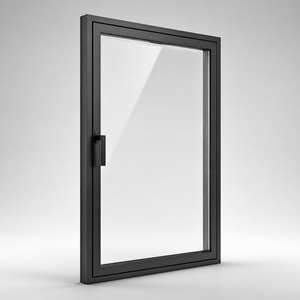
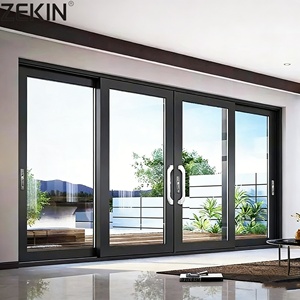
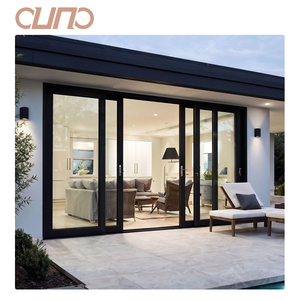
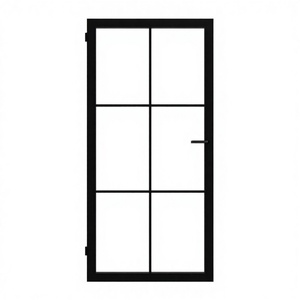
Why Global General Contractors & Developers Partner with DERCHI
Operating from Foshan, the epicenter of global aluminum extrusion, Guangdong Dejiyoupin Doors and Windows Co., Ltd. bridges architectural vision and industrialized B2B manufacturing.
180,000 m² Mega Facility
Vertical manufacturing infrastructure encompassing billet casting, CNC precision extrusion machining, automated German powder coating lines, and integrated IGU assembly under ISO 9001 control.
Tier-1 Global Compliance
Independently certified to CE (EN 14351-1), Australian AS2047 cyclonic impact standard (N6 rating), North American NFRC thermal standards, and UL fire-rated barrier specifications.
Free CAD & BIM Engineering
Dedicated technical engineering division drafting custom shop drawings, wind load calculations, structural anchor details, and U-value thermal simulations within 24-48 business hours.
European & US Time-Zone Support
Direct communication with fluent English-speaking facade engineers aligned with CET and EST working schedules, mitigating latency in architectural submittals and tender deadlines.
1. The Engineering Taxonomy of Architectural Aluminum Casement Doors
In contemporary facade architecture, the aluminum casement door represents the apex of structural hermeticity. Unlike sliding door assemblies that rely on brush seals prone to frictional air permeance over time, a high-performance casement door utilizes perimeter compression mechanics. When actuated via multi-point locking gearboxes, the sash leaf pulls evenly against continuous co-extruded EPDM gaskets situated along the rebate, achieving positive air and water barriers conforming to European Class 4 (EN 12207) and Class E900 (EN 12208) water tightness.
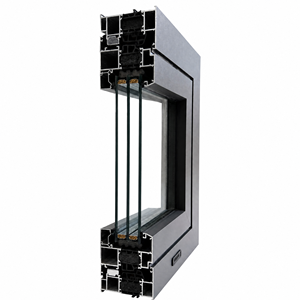
Cross-Section Structural Anatomy:
The structural longevity of Chinese manufactured casement doors is dictated by thermal separation engineering. Low-tier profiles implement inexpensive PVC insulating strips which exhibit divergent thermal expansion coefficients from aluminum, precipitating delamination in severe climates. High-tier manufacturers such as Guangdong Dejiyoupin utilize imported Technoform or PA66 GF25 (polyamide 6.6 reinforced with 25% short glass fibers). This creates an isothermal barrier that lowers profile thermal conductivity (Uf) from ~7.0 W/m²K in non-broken profiles down to 1.3 - 1.8 W/m²K.
2. Technical Specification & Performance Matrix
When specifying aluminum casement doors for hotel developments, coastal high-rises, or residential masterplans, procurement directors must evaluate verified performance standards rather than nominal product sheets. Below is the DERCHI architectural benchmark matrix:
| System Series | Frame Depth & Wall | Thermal Performance (Ud) | Acoustic Rating | Impact / Wind Rating | Target Market Spec |
|---|---|---|---|---|---|
| Eco-Thermal 65 Casement | 65mm / 2.0mm Wall | 1.6 – 1.8 W/m²K | STC 34 – 37 dB | 1800 Pa Design Pressure | Multi-Family Residential |
| Passive Lux 85 Triple Glazed | 85mm / 2.2mm Wall | 0.85 – 1.1 W/m²K | STC 40 – 43 dB | 3200 Pa Wind Resistance | European / Canadian Cold Climates |
| Hurricane Guard AS2047 / NOA | 80mm / 2.5mm Wall | 1.4 – 1.6 W/m²K | STC 38 – 42 dB | Cyclonic N6 / +90/-90 PSF | Coastal Florida, Caribbean, Australia |
| Heavy Commercial Heavy-Duty | 100mm / 3.0mm Wall | 1.5 – 1.9 W/m²K | STC 36 – 39 dB | 1,000,000 Cycle Testing | Hospitality & Public Lobbies |
3. Future Sourcing & Procurement Trends (2025–2030)
Procuring fenestration from China is no longer merely an exercise in arbitrage of manufacturing labor; it has evolved into a strategic search for low-carbon metallurgy, automation precision, and certified engineering submittals. International developers must align their tenders with three macroeconomic developments:
Low-Carbon Green Billet (EPD Verification)
European CBAM (Carbon Border Adjustment Mechanism) and US LEED v4.1 certifications increasingly penalize carbon-intensive aluminum. Forward-thinking Chinese extruders utilize certified hydroelectric-smelted primary ingots with verified Environmental Product Declarations (EPDs), slashing embodied carbon from 16kg CO2e/kg down to under 4kg CO2e/kg.
Concealed Automation & Smart Access
Mechanical handle locksets are transitioning to motorized multipoint locking gears concealed within the casement euro-groove. These integrate seamlessly with Crestron, KNX, or Control4 smart-home building management systems (BMS), incorporating biometric entry, micro-switch perimeter sensors, and motorized draft seals.
Oversized Sashes & Minimalist Sightlines
Architectural demand is moving rapidly away from heavy 90mm sash faces toward razor-thin 45-55mm sightlines that support heavier IGU weights. Heavy-duty 3D adjustable concealed hinges now routinely support single sash loads exceeding 250kg to 400kg, permitting floor-to-ceiling glass installations without transoms.
4. B2B Quality Control Checklist for Chinese Factory Audits
When auditing an aluminum casement door manufacturer in Foshan or neighboring industrial clusters, procurement teams should verify four indispensable production checkpoints to ensure long-term durability and eliminate project rework:
A. Corner Joint Integrity (Crimping vs Screw Pinning): Superior casement door leaves must utilize hydraulic corner crimping machines with dual-component polyurethane structural epoxy injected into the corner cleats. Mechanical screw-together joints invariably sag over 3-5 years under commercial usage.
B. Surface Treatment Durability: Inquire whether the powder coating adheres to Qualicoat Class 2 standards (AkzoNobel or PPG fluoropolymer PVDF systems). Coastal applications necessitate a minimum 60-80 micron thickness capable of enduring 3,000 to 4,000 hours of continuous acetic acid salt spray testing without micro-blistering.
C. Insulated Glass Unit (IGU) Hermeticity: Inspect the glass processing cleanroom. Dual-seal structural silicone over polyisobutylene (PIB) with warm-edge composite spacers (e.g., Technoform or Swisspacer) is mandatory to prevent dew-point failures and internal fogging under intense UV cycles.
D. Export Packaging & Moisture Control: Transporting heavy fenestration across sea containers involves thermal condensation and shock loads. Qualified manufacturers ship casement units within fumigated plywood crates with internal EPE foam bumpers, steel banding, and high-capacity desiccant packs to preclude white rust oxidation during ocean transit.
Frequently Asked Questions for B2B Importers & Contractors
Clear, direct technical answers regarding MOQ, custom CAD schedules, international freight handling, and structural compliance from our engineering desk.
Do your casement doors meet local European (CE) and US building codes?
Yes. DERCHI doors are manufactured under ISO 9001 quality systems and carry verified CE certifications under EN 14351-1 for external pedestrian doorsets. For North American and Caribbean projects, we fabricate assemblies compliant with NFRC thermal metrics and ASTM/TAS cyclonic impact testing.
What is the standard manufacturing lead time for containerized orders?
Following final shop drawing sign-off and deposit receipt, standard extrusion and assembly lead times are 25 to 35 calendar days. For bespoke architectural extrusions requiring custom die development or specialized RAL colors, please allow 40 to 45 days.
Can you match specific European or American architectural hardware?
Absolutely. While we manufacture our own precision engineered hardware lines, our profiles are routed with standard European 16mm euro-grooves. We regularly integrate Siegenia, Roto, Hoppe, Sobinco, or GU hardware as designated by your project schedule.
How do you handle site installation guidance for foreign contractors?
Every commercial consignment includes numbered sub-assembly diagrams, exploded cross-section CAD manuals, and hardware adjustment guides. Our bilingual facade engineers provide remote Zoom walkthroughs and live technical support during local business hours.
What is the Minimum Order Quantity (MOQ) for custom profiles?
For standard catalog configurations with in-stock extrusions, we accept project orders starting from 1 unit or sample mockups. For custom proprietary extrusion dies and exclusive finishes, the typical MOQ is 300 square meters or 1 full 20GP container equivalent.
How are the doors packaged to prevent damage during ocean transit?
We implement a 5-layer protective packing protocol: surface protective tape on all alloy faces, heavy-duty bubble wrap, corner guard protectors, and placement inside non-coniferous fumigation-free solid plywood crates secured with internal tension bands.
Ready to Engineer Your Project's Door Package?
Submit your door schedules, elevation drawings, or architectural specifications directly to our engineering desk. Receive an itemized B2B estimate, preliminary wind load confirmation, and structural shop drawings within 24 to 48 hours.