Featured Architectural Doors & High-Performance Glazing Systems
Factory-direct OEM/ODM fenestration modules manufactured in Foshan, China. Precision-extruded 6063-T6/6061 aluminium profiles integrated with European thermal barriers, multipoint security locking, and acoustic laminated glazing units.
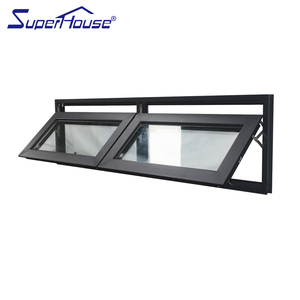
Superhouse Sound Insulation Aluminium Roof Swing Window
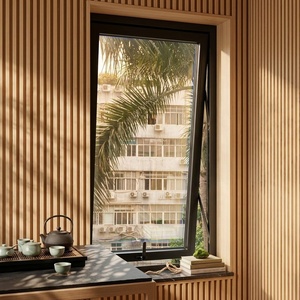
Slim Aluminum Casement Window with Removable Stainless Steel Screen
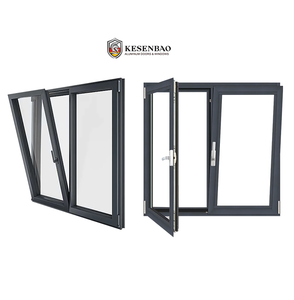
Modern Slim Double-Glazed Tilt & Turn Hospitality Windows
Factory High-Tensile Aluminium Woven Wire Mesh Barrier Netting
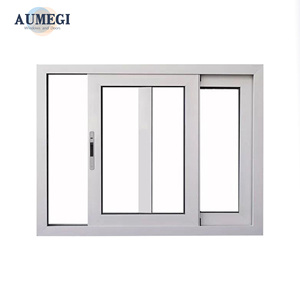
1.4mm Heavy-Duty Automatic Motorized Aluminum Sliding System
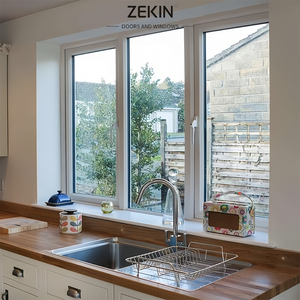
Soundproof Tempered Glass NFRC-Insulated Hotel Casement Unit
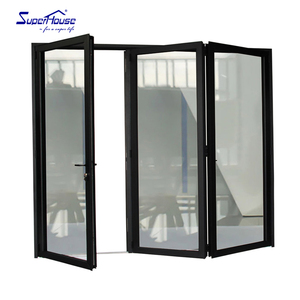
Hurricane-Rated Heavy Commercial Bifolding Exterior Door System
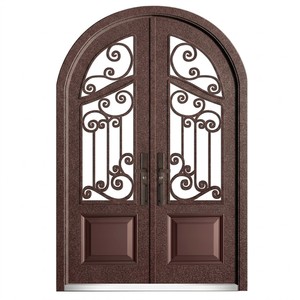
Luxury Weather-Resistant Aluminum Anti-Theft Double Swing Door
Engineering Custom OEM Aluminium Glass External Doors for High-Performance Fenestration Envelopes
Key Technological Development Trends in Architectural Aluminium Exterior Doors
How precision multi-chamber thermal breaks, high-tonnage structural pivot hardware, smart mechatronics, and surface fluorocarbon nanocoatings are transforming facade entrance assemblies.
Multi-Chamber Polyamide Thermal Barriers
Traditional cold aluminium profiles have been completely phased out in favor of multi-cavity, continuous polyamide 66 reinforced with 25% glass fiber (PA66 GF25) thermal breaks. DERCHI's proprietary profile engineering integrates multi-chamber insulating strips supplemented with aerogel and expanded polyolefin (PE) foams, mitigating linear thermal bridging and lowering system U-values down to Passive House thresholds.
Concealed Heavy-Capacity Floor Pivot Pivoting
Commercial and luxury residential specifications demand monolithic leaf dimensions exceeding 1,800 mm in width and 3,500 mm in height, weighing up to 500 kg. Development trends prioritize fully concealed, self-closing German-engineered hydraulic floor pivots offering 360-degree adjustability, dynamic wind-damping braking, and zero visible hinge hardware across the exterior face.
Mechatronic & Motorized Multi-Point Locking
Modern entry doors function as intelligent access nodes. Current R&D incorporates EN 1627 RC3/RC4-compliant automatic motorized mortise locks that engage upper and lower hardened stainless steel hook bolts instantaneously upon closure, completely synchronized with dry-contact Building Automation Systems (BMS), 3D facial recognition, biometric finger-vein sensors, and Z-Wave/KNX protocols.
Automated Drop-Down Acoustical & Flood Seals
Zero-barrier barrier-free accessibility (DIN 18040-1 compliance) is a priority. Technical advancements have shifted from cumbersome elevated water-dam sills to precision mechanical drop-down sealing gaskets made of co-extruded EPDM and silicone. Upon latch engagement, dual bottom seals depress downward to contact flat threshold plates, achieving airtightness up to 600 Pa while blocking airborne particulate and noise.
High-Selectivity Laminated Warm-Edge IGU Glazing
Glass external doors incorporate triple or quadruple glazed insulated glazing units (IGUs) filled with 90%+ Argon or Krypton gas. Integrating warm-edge composite thermoplastic spacers (TPS) and dual-surface magnetron sputtering Low-E coatings preserves solar heat gain control (SHGC below 0.28) while ensuring sound transmission loss (STC) ratings exceeding 42 dB in extreme noise corridors.
Qualicoat Class 2 & Fluorocarbon (PVDF) Finishes
To counter marine salinity, UV photolysis, and acidic precipitation, exterior aluminium extrusions utilize Qualicoat Seaside Class 2 super-durable thermoset powder coatings or 3-coat/2-bake fluorocarbon (PVDF) resins with 70% Kynar 500. This maintains color retention ($\Delta E < 2$) and chalking resistance over a verified 20-to-30-year lifecycle across harsh coastal and hyper-arid climates.
Future B2B Procurement Trends in Global Fenestration Sourcing
Strategic shifts in how commercial general contractors, regional distributors, and large-scale developers mitigate lead-time risks, meet ESG mandates, and enforce code verification.
1. Upstream OEM Standardization with Free CAD/BIM Integration
Procurement teams are cutting intermediary engineering delays by engaging directly with Tier-1 Chinese manufacturers capable of generating Parametric Revit/BIM families and millimeter-accurate shop drawings directly from architectural door schedules. DERCHI provides end-to-end structural FEA calculations and connection junction drawings before metal cutting, preventing costly jobsite adjustments.
2. Carbon Footprint Traceability & EPD Mandates
With the implementation of the EU Carbon Border Adjustment Mechanism (CBAM) and LEED v4.1 certifications, buyers require verified Environmental Product Declarations (EPD). Modern procurement contracts specify low-carbon secondary aluminium alloys (using 60%+ post-consumer scrap melted via hydroelectric power), verifiable material passports, and cradle-to-gate lifecycle assessment documentation.
3. Extreme Weather Resiliency & Impact Hardening
Driven by intensifying coastal meteorological events, international developers prioritize fenestration audited for cyclic air-pressure resistance, large missile impact (ASTM E1886/E1996), and high positive/negative wind loads. DERCHI assemblies certified to Australian Standard AS 2047 rating N6 (tested up to 4500 Pa wind resistance) satisfy demanding building envelopes from coastal Florida to Pacific cyclone corridors.
4. Turnkey Pre-Hung Unitized Shipments
Skyrocketing domestic on-site trades labor costs across Europe, the US, and Australasia have catalyzed the shift toward completely unitized, pre-hung door packages. Assemblies leave our Foshan facility with sub-frames pre-squared, concealed pivots factory-calibrated, multi-point locks tested via robotic rigs, and glass pre-glazed with structural silicone, shortening jobsite installation to a single plug-and-fix operation.
Enterprise Strength: Foshan's Premier Fenestration Base
Guangdong Dejiyoupin Doors and Windows Co., Ltd. (DERCHI) combines massive industrial scale with German-standard precision fabrication.



Frequently Asked Technical & Procurement Questions
Addressing the critical structural, regulatory, thermal, and shipping queries posed by architectural specifiers, general contractors, and trade importers.
Depending on the architectural configuration, our custom OEM doors achieve system $U_d$ values ranging from $1.30 \, \text{W/(m}^2\cdot\text{K)}$ down to $0.78 \, \text{W/(m}^2\cdot\text{K)}$. This is attained by combining 34 mm to 44 mm PA66 GF25 multi-chamber thermal struts, warm-edge insulated double/triple low-E IGU glass units filled with 90% Argon, and high-density polyolefin insulation inserts within the profile cavities, fully complying with Germany's GEG, UK Building Regs Part L, and US Energy Star guidelines.
We supply comprehensive Declaration of Performance (DoP) documentation and Initial Type Test (ITT) reports verified by accredited third-party test bodies. Each shipment provides traceable testing verification covering Air Permeability (EN 12207 Class 4), Water Tightness (EN 12208 Class 9A/E1200), Wind Load Resistance (EN 12210 Class C5/B5), and Acoustic Performance (EN ISO 717-1), ensuring immediate acceptance by local building control authorities.
Our heavy-duty concealed hydraulic pivot systems support monolithic active door leaves up to 2,200 mm in single width and 4,500 mm in clear height, handling panel dead loads up to 600 kg. Every custom leaf is engineered with internal anti-bowing tension rods adjusted inside the extrusion cavity to counteract bimetallic deflection caused by steep interior-to-exterior seasonal temperature differentials.
For coastal and harsh environments, we execute certified pre-treatment stripping followed by Qualicoat Seaside Class 2 architectural powder coating (minimum 60–80 micron film thickness) or three-coat PVDF fluorocarbon spraying using Kynar 500 resin. In addition, we offer Class 25 (25-micron) hard-coat electrolytic anodizing, guaranteeing complete protection against salt-spray corrosion (tested over 3,000 hours per ASTM B117) and filiform attack.
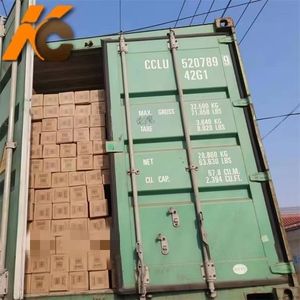
We employ heavy-duty export export crating protocols: all doors are wrapped in moisture-resistant polyethylene wrap, corner-shielded with high-density EVA shock bumpers, and completely sealed within fully enclosed, heat-treated plywood crates (ISPM 15 compliant) with integrated steel lifting lugs. Crates are fixed inside shipping containers using high-tensile polyester lashing and air-cushion dunnage bags to prevent micro-vibrations across ocean crossings.
Following door schedule confirmation and CAD drawing approval, customized sample prototypes (including bespoke color matching and hardware integration) require 15 to 20 working days. Commercial batch production runs (100 to 1,000+ units) are completed within 30 to 35 working days, accommodated by our 180,000 m² facility with multi-line simultaneous automated processing.
Initiate Your Custom OEM Fenestration Specification
Direct factory access for architects, builders, and distributors. Send your architectural door schedules, CAD sections, or project tender requirements to receive full structural engineering analysis, thermal modeling, and commercial quotations within 24 hours.