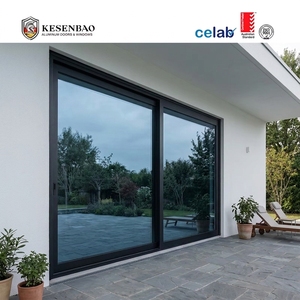
Factory Catalog Showcase
Engineered OEM Aluminium Door & Mesh Assemblies
Explore our integrated aluminium screen doors, heavy-duty sliding systems, and hurricane-rated architectural profiles fabricated in our 180,000 m² smart production center.
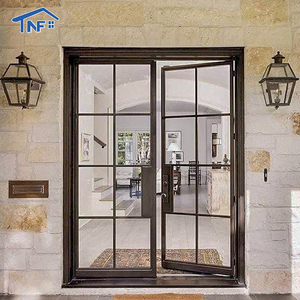
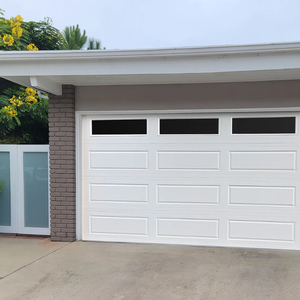
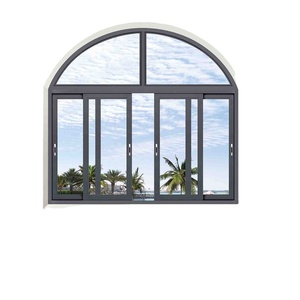
Architectural Metallurgy & Security Engineering
High-Performance Custom OEM Mosquito Mesh Doors: An Engineering Primer
In contemporary architectural design, the boundary between interior sanctuaries and natural exterior surroundings has become increasingly porous. Large-span fenestration systems, grand terrace pivot doors, and multi-slide panoramic apertures require advanced physical barriers that prevent insect vector infiltration without compromising natural cross-ventilation, scenic daylight transmittance, or baseline building security. Custom OEM aluminium mosquito mesh doors (frequently specified in commercial schedules as security insect screens, architectural flyscreen doors, or marine-grade woven mesh barriers) have evolved from fragile utilitarian accessories into sophisticated, structural fenestration assemblies.
As a premier tier-one Chinese fenestration manufacturer with over 25 years of specialized extrusion, coating, and hardware integration experience, Guangdong Dejiyoupin Doors and Windows Co., Ltd. (DERCHI) operates an expansive 180,000 m² smart production base. We deliver precision OEM contract manufacturing for international architectural firms, facade engineering consultants, commercial general contractors, and tier-1 window and door distributors throughout Europe, North America, Oceania, and the Middle East.
Information Gain Metric: High-specification mosquito doors must withstand not only vector penetration but also high cyclic dynamic loads, shear stress from coastal windstorms, and targeted manual forced-entry attempts. DERCHI incorporates primary virgin 6063-T5/T6 structural aluminium extrusions with wall thicknesses ranging from 1.4 mm to 3.0 mm, anchored by robotic clamping systems to AISI 304 or AISI 316 high-tensile security wire screens (0.80 mm – 1.00 mm diameter). This composite design provides an uncompromising barrier against mosquitoes, midges, rodents, and opportunistic intrusion.
| Mesh Material Classification | Wire Diameter & Mesh Count | Tensile Strength (MPa) | Salt Spray Corrosion Rating | Recommended Architectural Use |
|---|---|---|---|---|
| AISI 316 Marine Stainless Steel | 0.80 mm – 0.90 mm / 11x11 Mesh | > 900 – 1150 MPa | ASTM B117 > 3,000 hrs (Zero Pit) | Coastal & Super-Luxury Exposed marine environments, luxury oceanfront villas, hurricane/cyclonic zones. |
| AISI 304 High-Tensile Security | 0.70 mm – 0.80 mm / 12x12 Mesh | > 800 – 950 MPa | ASTM B117 > 1,000 hrs | Commercial & Residential High-traffic sliding patio doors, urban residential French doors, hospitality villas. |
| High-Ductility Aluminum Alloy Mesh | 0.60 mm – 0.70 mm / 14x14 Mesh | > 320 – 420 MPa | AAMA 2604/2605 Powder Coated | Medium Traffic Interior partition screens, bedroom folding balcony entries, budget institutional facilities. |
| Fiberglass / Polyester Retractable | 0.28 mm – 0.35 mm / 18x16 Mesh | N/A (Non-Security Class) | UV Stabilized polymer jacket | Pleated & Roll-up Concealed roll-up cassette screen doors, minimalist architectural openings with zero sightline impact. |
Market Foresight & Analytics
Emerging Procurement Trends in Global Mesh Door Supply Chains
How institutional specifiers and commercial developers are redefining technical schedules for 2026–2030 building cycles.
1. Convergence of Insect Proofing with Anti-Burglar RC2/RC3 Standards
Global architectural procurement no longer treats mosquito screens as separate secondary hangings. Buyers increasingly demand multi-point flush locking mechanisms integrated within thermally broken door extrusions, allowing stainless steel mesh screens to double as accredited EN 1627 RC2/RC3 burglar-deterrent barriers that resist levering, cutting, and blunt force impact.
2. Zero-Threshold & Barrier-Free Accessibility Compliance
Strict accessibility mandates, such as the Americans with Disabilities Act (ADA) and European DIN 18040-1/2, are driving demand for recessed tracks and caterpillar trackless chain mechanisms. Modern procurement requires flush threshold transitions (< 3 mm height differential) that safeguard elderly and wheelchair-bound occupants while maintaining high structural resistance to rain and draft infiltration.
3. Ultra-Slimline Visible Sightlines & Concealed Pocket Systems
Modern luxury villas prioritize uninterrupted visual panoramas. Global purchasers are switching from bulky 80 mm visible stile profiles to ultra-narrow interlock frames (18 mm to 25 mm). Mosquito mesh screens are increasingly designed to slide effortlessly into concealed wall pockets alongside primary glass panels, preserving unobstructed panoramic vistas.
Manufacturing Roadmap
Technological Evolution of Custom Aluminium Flyscreen Doors
A technical assessment of profile metallurgy, robotic tensioning, and nanotech surface passivations.
Historically, mosquito screens suffered from significant structural vulnerabilities: nylon fabric tore under low force, light aluminium frames warped under minor lateral loads, and galvanic reaction between carbon steel mesh and raw aluminium profiles caused rapid galvanic corrosion. DERCHI's proprietary engineering overcomes these failure modes through rigorous metallurgical and mechanical innovations:
Patented Mechanical Wedge Clamping
Instead of relying on fragile rubber splines that deteriorate under UV exposure, our high-security mesh door leaves utilize an uninterrupted high-pressure aluminium wedge clamping bar fastened by grade 316 stainless steel countersunk screws every 75 mm. This locks the woven wire in place, absorbing severe dynamic impacts without mesh slippage.
Dielectric Galvanic Isolation Barriers
When high-tensile stainless steel wire contacts an extruded aluminium sash in damp or saline atmospheres, aggressive galvanic galvanic corrosion occurs. We eliminate this failure mode by inserting proprietary extruded Santoprene or polyamide dielectric isolation gaskets between the wire mesh and sash frame, ensuring complete electrochemical separation.
Fluorocarbon (PVDF) & AkzoNobel Powder Coatings
All structural aluminium sub-frames undergo automated 7-stage chemical pre-treatment (chromate-free conversion) followed by electrostatic powder deposition using AkzoNobel Interpon D2525 ultra-durable powders or Qualicoat Class 2 coatings. This guarantees resistance to chalking, micro-fissuring, and salt-air oxidation for up to 25 years.
Tier-1 Chinese Manufacturing Benchmark
Guangdong Dejiyoupin Doors & Windows Co., Ltd.
Ranked among China’s top 10 premium door and window manufacturers, DERCHI combines 25+ years of fenestration engineering excellence with an expansive 180,000 m² high-tech smart production base located in Foshan, Guangdong.
From bespoke private residential villas to large-scale hotel chains and civic master developments, we act as a trusted end-to-end OEM and ODM partner for clients across Europe, North America, and Australia. Our dedicated international engineering teams provide complimentary structural CAD shop drawings, full parametric BIM models, and comprehensive scheduling based directly on architectural specifications.

180,000
m² Production Base
600+
Skilled Specialists
100+
Patents & Global Certs
25+
Years Manufacturing Prowess
Rigorous Quality Management
End-to-End Production & Verification Protocol
How every custom mosquito mesh door passes through our ISO 9001, CE, and AS2047 audited manufacturing lifecycle.

Stage 01
CAD & BIM Engineering
Full shop drawing verification, wind pressure calculations, threshold drainage simulation, and schedule cross-referencing.

Stage 02
CNC Milling & Tensioning
German CNC 4-axis profile centers maintain ±0.2 mm tolerances; automated hydraulic tables apply uniform biaxial wire tension.

Stage 03
Cyclic & Dynamic Testing
100,000-cycle hardware endurance tests, air permeability assays (EN 12207 Class 4), and water tightness checks (EN 12208 Class 9A).

Stage 04
Armored Export Packing
Reinforced foam corner buffers, non-abrasive shrink film, and fully enclosed solid timber crates built for sea freight logistics.

Architectural Procurement FAQ
Frequently Asked Technical & Commercial Questions
Essential guidance for commercial contractors, procurement managers, and facade engineers sourcing custom OEM mosquito mesh doors.
What are the key technical differences between 304 and 316 marine-grade stainless steel mosquito mesh? +
The metallurgical difference lies primarily in the addition of molybdenum (typically 2.0% to 3.0%) to grade 316 stainless steel. Standard 304 alloy contains 18% chromium and 8% nickel, which provides excellent tensile strength (800–950 MPa) and corrosion protection for inland or temperate urban projects.
However, in coastal environments within 5 km of seawater, airborne chloride ions quickly attack 304 alloys via pitting corrosion. Grade 316 stainless steel resists chloride attack and prevents micro-pitting, sustaining salt-spray resistance (ASTM B117) beyond 3,000 continuous hours without surface staining. For oceanfront resorts, coastal villas, and high-humidity tropical installations, DERCHI strongly advises specifying 316 marine-grade mesh.
Can custom OEM insect screen doors comply with international burglar-resistance standards like EN 1627 or AS 5039? +
Yes. When engineered as a structural security screen system, our custom aluminium mesh doors meet and exceed Australian AS 5039/5041 and European EN 1627 RC2 standards. Compliance is achieved by integrating three non-negotiable structural elements:
1. Mesh Clamping Integrity: We employ a patented mechanical wedge clamping system rather than simple adhesive or spline channels. The mesh is securely clamped around its entire perimeter, withstanding dynamic impact tests including repetitive 100-joule sandbag drops.
2. Multi-Point Hardware: We integrate specialized multi-point mortise locking gear that activates three to five stainless steel latch bolts simultaneously with a single handle turn.
3. Heavy-Wall Extrusions: Sash profiles feature minimum wall thicknesses of 2.0 mm to 2.5 mm, engineered with internal corner keys that prevent frame racking or spread under levering attacks.
How does high-density mosquito mesh impact airflow, optical visibility, and natural daylight transmittance? +
Optical performance is defined by the wire diameter and mesh aperture count (typically 11x11 or 12x12 strands per linear inch). High-tensile 0.8 mm stainless steel wire with an 11-mesh aperture achieves an open area ratio between 42% and 48%. This open configuration provides unimpeded natural cross-ventilation while blocking insect vectors, including mosquitoes (*Culex*, *Aedes*), wasps, midges, and flies.
From an optical perspective, applying a fine matte-black electrodeposition coating minimizes glare and specular reflection. When viewed from illuminated interior living spaces, the human eye focuses through the dark wire aperture, creating a nearly transparent, unobstructed view to the outdoors.
What are your OEM/ODM production lead times, minimum order quantities (MOQ), and sample policies? +
Our standard manufacturing turnaround for tailored OEM aluminium mosquito screen orders is 25 to 35 calendar days following final sign-off of shop drawings. We support project-specific requirements with flexible commercial terms:
• Sample Orders & Mockups: We fabricate 1:1 scale corner cutaways or complete project mockups within 10 to 14 days for facade engineer review and laboratory certification.
• Minimum Order Quantity: Our standard project MOQ is 50 square meters (or 15 door sets), but we readily accommodate phased production for multi-unit villa developments.
• Engineering Support: Complimentary 2D CAD elevations, 3D section cutaways, and hardware schedules are provided within 48 hours of initial brief submission.
How are large or oversized custom sliding screen doors packaged to prevent transit damage during ocean freight? +
Export shipping protection follows a multi-tier protective strategy. Each door sash is first wrapped in protective surface film to safeguard powder-coated finishes against abrasions. Heavy-density polyethylene (EPE) foam edge profiles and molded corner protectors are then applied around the entire perimeter.
Individual panels are strapped into ISPM-15 compliant, heat-treated plywood crates reinforced with internal steel bracing to prevent flexure or racking under sea freight loads. Desiccant packs are enclosed in each crate to prevent condensation during trans-equatorial shipments.