Featured OEM & Export Partition Sliding Door Portfolio
Engineered for prestige commercial, hospitality, luxury residential, and industrial interior space management. Every system is fabricated using high-grade 6063-T5/T6 architectural aluminum alloy extrusions, German-engineered heavy-duty carriage assemblies, and multi-laminate tempered glazing options compliant with European CE, Australian AS2047 N6, and North American NFRC performance benchmarks.
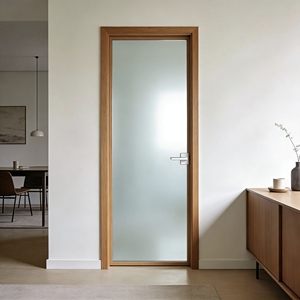
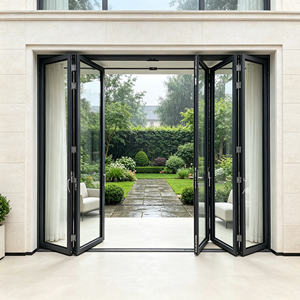
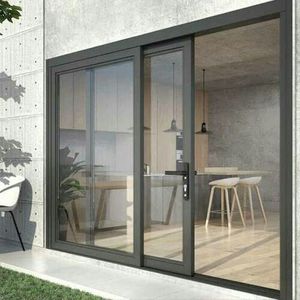
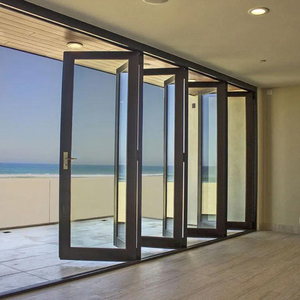
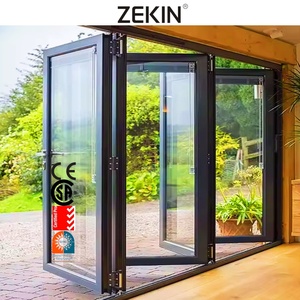
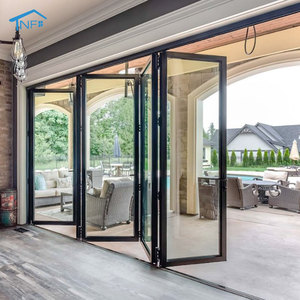
Engineering Architecture: The Structural Anatomy of Custom OEM Aluminium Partition Sliding Doors
In modern corporate architecture, high-end hospitality venues, and luxury residential projects, interior partition sliding doors have evolved far beyond mere visual room dividers. Today, an industrial-grade custom OEM aluminium partition sliding door acts as an active acoustic barrier, a structural load-bearing spatial system, and an integrated element of sustainable interior environmental quality (IEQ).
Selecting an OEM sliding door manufacturer requires deep technical scrutiny of profile alloys, extrusion tolerances, thermal and non-thermal partition barrier configurations, hardware fatigue cycles, and glass dampening acoustics. Below is a rigorous exploration of what separates standard light-duty fabricators from enterprise-level Chinese fenestration factories supplying European and North American projects.
1. Primary Extrusion Metallurgy: 6063-T5 vs. 6063-T6 Architectural Alloys
The longevity, deflection resistance, and structural stability of an oversized partition sliding panel depend primarily on the metallurgical purity and temper of the aluminum billets used during extrusion. While substandard workshops incorporate secondary remelt scrap contaminated with iron and silicon inclusions, tier-one OEM factories enforce strict chemical composition metrics using primary A00 aluminum ingots conforming to GB/T 5237 and EN 755 standards.
For partition doors exceeding 3,000 mm in height, DERCHI specifies 6063-T6 heat-treated aluminum profiles. The artificial aging process yields an ultimate tensile strength exceeding 205 MPa and a yield strength of at least 180 MPa, compared to the 130 MPa typical of standard T5 tempers. This superior modulus prevents vertical sash bowing when massive multi-layered acoustic glass units (IGUs) are installed, preventing inter-panel friction, air seal failure, and roller derailment under repeated commercial operation.
Wall Thickness Rigidity
OEM heavy-duty partition profiles feature wall thicknesses between 2.0 mm and 3.2 mm, exceeding national residential minimums (1.4 mm) to resist sustained lateral wind loads and high-traffic impact.
Polyamide (PA66GF25) Breaks
For climate-zoned interior partitions (e.g., separating conditioned wine cellars or indoor pools), multi-chamber 24 mm to 34 mm glass-fiber reinforced polyamide thermal struts eliminate thermal bridging.
Surface Passivation & Anodizing
Fluorocarbon PVDF coatings (70% Kynar 500 resin) or 25-micron Qualanod-certified anodizing provide salt spray resistance exceeding 3,000 hours without chalking, fading, or galvanic corrosion.
2. Hardware Kinetics: Carriage Dynamics, Dampers, and Floor Track Engineering
A sliding partition is only as reliable as its kinetic rolling mechanics. Large glass leaves weighing between 180 kg and 450 kg demand low-friction tandem bogie wheel assemblies engineered with sealed precision carbon-chrome stainless steel bearings (AISI 316). Cheap nylon wheels compress under static load over time, leading to flat spots, jerky rolling behavior, and unacceptable acoustic rumble during travel.
DERCHI integrates CNC-machined POM (polyoxymethylene) self-lubricating carriage wheels with integrated stainless steel needle bearings. Each carriage is dynamically cycle-tested to 150,000 continuous opening and closing strokes under maximum load without dimensional creep or bearing seizure. Furthermore, dual-directional hydraulic soft-closing dampers decelerate panels over their final 60 mm of travel, mitigating violent concussive shock waves into surrounding drywall partitions and masonry reveals.
Future Procurement Trends for Aluminium Partition Sliding Doors (2025–2030)
Procurement directors, general contractors, and speculative developers are shifting their sourcing criteria from low initial piece rates to total lifecycle value, regulatory compliance predictability, and modular architectural adaptability. The following four global purchasing trends are shaping next-generation OEM/ODM supply chains:
1. Pre-Engineered Modular Monoblock Crating
High on-site European and American union labor wages have made traditional knock-down (CKD) jobsite assembly cost-prohibitive. Global buyers are mandating semi-assembled, pre-glazed pocket sliding cassette modules that slash field installation times by 60%, delivering plug-and-play alignment right out of the timber shipping crate.
2. Decarbonized Low-Carbon Green Aluminum
Driven by the EU Corporate Sustainability Due Diligence Directive (CSDDD) and CBAM carbon border tariffs, institutional buyers require OEM factories to verify cradle-to-gate Environmental Product Declarations (EPDs). Sourcing aluminum smelted via hydropower rather than coal power reduces embodied carbon from 16 kg CO2/kg Al to under 4 kg CO2/kg Al.
3. Smart Building BMS & Motorized Automation
Architectural partition specifications are increasingly stipulating concealed brushless DC servo motors integrated into the head track. These low-noise (<32 dB) magnetic levitation systems tie directly into Crestron, KNX, or BACnet building automation protocols for touchless gesture operation, occupancy sensing, and card-key security partitioning.
Key Design & Technology Trends in Contemporary Aluminium Partitions
Modern interior design favors dematerialized boundaries where heavy structural bulk yields to glass transparency. To achieve this without sacrificing structural stiffness, leading OEM sliding partition manufacturers are deploying several groundbreaking engineering advancements:
| Technological Trend | Legacy Engineering Shortfall | Next-Gen OEM Solution (DERCHI Standard) | Direct Project Advantage |
|---|---|---|---|
| Ultra-Slim Minimal Sightlines | Bulky 75 mm to 110 mm interlocker stiles creating visual fragmentation. | Structural interlock stiles thinned to 16 mm to 22 mm with internal carbon-steel reinforcement fins. | Panoramic daylight penetration; expansive sightlines aligned with luxury architectural trends. |
| True Zero-Clearance Barrier-Free Tracks | Raised floor sills (25 mm–50 mm) presenting dangerous trip hazards and failing ADA guidelines. | 100% flush concealed floor guide channels with subterranean drainage sumps and self-clearing brush wipers. | Complies with international universal accessibility standards while preserving flooring continuity. |
| Dynamic Switchable PDLC Glazing | Dust-collecting mechanical blinds or permanently frosted obscure partition glass. | Integrated low-voltage Polymer Dispersed Liquid Crystal (PDLC) switchable film laminated between PVB layers. | Instant transition from transparent clarity to total boardroom privacy in milliseconds (<10 ms). |
| Multi-Chamber Acoustic Isolation | Standard single glass partitions leaking conversational frequencies (Rw < 28 dB). | Acoustic laminate glass (6mm + 0.76mm acoustic PVB + 6mm) seated in Santoprene EPDM gasket channels (Rw 38–42 dB). | Achieves confidential speech privacy compliance (ISO 140-3) for boardroom and medical executive suites. |
Why Global Specifiers & Tier-1 Contractors Source From DERCHI
As a recognized industry benchmark among China's top 10 door and window manufacturers, Guangdong Dejiyoupin Doors and Windows Co., Ltd. (DERCHI) operates from Foshan—the world’s primary capital for high-end aluminum extrusion and fenestration technology. Our comprehensive OEM/ODM infrastructure offers distinct operational advantages over trading intermediaries and smaller fabricators:
End-to-End Vertical Manufacturing Under One Roof
Spanning a 180,000 square meter modern production base with over 600 skilled fabricators and facade engineers, our facility encompasses precision die tooling, automated CNC profile cutting, 45-degree and 90-degree hydraulic crimping, automated powder-coating lines, glass lamination bays, and complete test-fit mockup rigs. By avoiding subcontracted processing, DERCHI guarantees absolute dimensional repeatability within ±0.5 mm tolerances across multi-thousand panel orders.
Selected by Schüco Partners: Our technical capability is proven by rigorous external audits. A premier UK-based certified partner of German Schüco selected DERCHI to manufacture complex fenestration packages for an ultra-luxury multi-villa development, validating that our fabrication precision meets Europe’s most demanding architectural thresholds.
Free Shop Drawings & BIM Coordination: Our English-fluent engineering department transforms rough architectural opening schedules into full shop drawings, BIM Revit families, structural calculation sheets, and wind-load deflection reports within 48 hours—eliminating expensive jobsite coordination discrepancies.

Frequently Asked Questions by Commercial Door Importers & Contractors
Clear, technically rigorous answers to common questions asked by B2B buyers, architects, procurement officers, and developers prior to issuing Requests for Quotation (RFQs):