Architectural Security & Fenestration Whitepaper

Custom OEM Aluminum Jali Door Manufacturer & Exporters

Precision-Engineered Heavy Duty Jali Screens, Decorative Cast Lattice, and Hurricane-Grade Architectural Fenestration for Global Projects

180,000m²
Intelligent Manufacturing Base
25+
Years Fenestration Engineering
RC2/RC3
Burglar Resistance Classification
100+
Patents & Global Certifications
Precision Fenestration Portfolio

High-Performance Aluminum Jali & Architectural Door Series

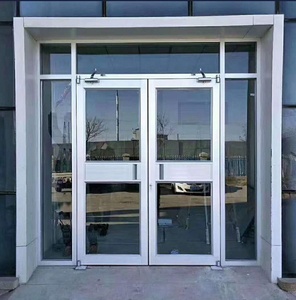
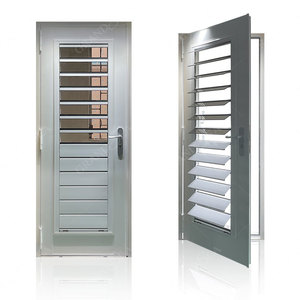
Integrating traditional ornamental lattice geometries (Jali) with 6063-T6 multi-chambered thermal break profiles, high-tensile 316 stainless steel woven mesh, and multipoint European locking hardware. Engineered specifically for prestige residential developments, Caribbean storm zones, and high-traffic commercial portals.

Inquire About Custom OEM Jali Profiles
Engineering Whitepaper & Technical Compliance

Global Fenestration Testing Standards & Material Matrix

In accordance with ISO 9001 quality systems and European CE marking prerequisites (EN 14351-1), custom OEM aluminum Jali doors must simultaneously fulfill stringent micro-climatic security, structural load-bearing, and passive ventilation criteria.

Evaluation Parameter Harmonized Protocol DERCHI Engineering Capability Strategic Advantage for Specifiers
Alloy Metallurgy & Structural Wall EN 573-3 / ASTM B221 6063-T6 / 6061-T6 2.0mm to 3.5mm nominal wall thickness Eliminates structural sag on oversized leaves (up to 4.5m height); delivers superior tensile strength during seismic and hurricane forces.
Burglar & Intrusion Resistance EN 1627-1630 (RC2 / RC3) 316 Marine Stainless woven wire (0.9mm dia.) + Multi-point interlocking gear High physical shear resistance against knife slicing, crowbars, and mechanical wedge attacks without compromising external sightlines.
Thermal Insulation (U-Factor) EN ISO 10077-1 / 10077-2 Isobar PA66 GF25 reinforced thermal polyamide breaks; Ud ≤ 1.4 W/(m²·K) Complies fully with German GEG 2024 and UK Building Regs Approved Document Part L, minimizing thermal bridging and interior condensation.
Corrosion Resistance & Finish AAMA 2604 / AAMA 2605 AkzoNobel Interpon fluorocarbon (PVDF) ≥ 65μm; Marine-grade anodizing Withstands >3,000 hours salt-spray testing (ASTM B117), providing zero blister or peel degradation in coastal environments.
Dynamic Air & Water Infiltration EN 12207 (Class 4) / EN 12208 (Class 9A) Continuous EPDM compression seals + precision-machined weep baffle tracks Guarantees 100% waterproof tightness under severe driving rains up to 600 Pa dynamic static pressure.
Industry Intelligence

Future Sourcing & Procurement Trends in Architectural Jali Systems

Global architectural procurement has transitioned beyond simple door supply. Discover the primary technological vectors driving commercial specifications and luxury residential developments from 2025 to 2030.

1. Carbon-Neutral Circular Aluminum Sourcing

Institutional developers across the UK, Europe, and the Middle East increasingly mandate Environmental Product Declarations (EPDs). Sourcing is shifting toward low-carbon billet alloys smelted with renewable hydro-power, delivering an embodied carbon score below 4.0 kg CO2e per kg of primary aluminum.

2. Hybridized Biophilic Passive Ventilation

Post-pandemic architectural norms prioritize passive air change without mechanical HVAC load. Precision-cut CNC perforated aluminum Jali doors deliver controlled aerodynamic intake volumes while maintaining complete shading efficiency and vector insect exclusion, optimizing internal thermal comfort index (PMV).

3. Smart Mechatronic RC-Rated Integration

Modern entry facades demand invisible security. Upcoming contracts require factory-milled raceways inside thermal break channels to house biometric facial recognition, motor-driven multi-locking deadbolts, and motorized drop-seals communicating directly with BACnet or KNX home automation systems.

Design Innovation

Technological Evolution of Aluminum Jali Doors

From rudimentary ornamental wrought iron gates to aerospace-grade alloy lattice composites: how modern manufacturing technology overcomes historic limitations of thermal bridging, oxidation, and frame fatigue.

5-Axis CNC Precision Laser Carving

Replaces fragile welded bar work with continuous monolithic plate aluminum carving. Complex Islamic, geometric, or parametric jali filigrees maintain high rigidity without stress fracture weld points.

Cast Aluminum Solid Reliefs

Integrating pressure die-casting technology for three-dimensional architectural panels. Delivers structural substance, sound-dampening inertia, and artisanal reliefs that never rust or corrode over decades.

Modular Quick-Release Screens

Engineered framing sub-assemblies allow property owners or facility teams to decouple the 316-mesh jali screen from the primary glazing sash for deep maintenance, glass polishing, or seasonal mesh swap.

Dual-Tone Thermal Powder Coating

Electrostatic vertical line powder-coating enables split-color finish specifications: sleek architectural AkzoNobel Noir Sable externally, with natural warm wood-grain sublimation internally.

Engineering Authority

Guangdong Dejiyoupin (DERCHI): 25+ Years of Export Manufacturing Excellence

Operating from Foshan, Guangdong—the epicenter of global structural aluminum extrusions—DERCHI commands a massive 180,000 square meter intelligent production base staffed by 600+ fenestration professionals. We bridge the gap between bespoke architectural vision and industrial-scale OEM execution.

  • End-to-End In-House R&D: Holding over 30 design and structural patents, trusted by long-term partners of German Schüco for multi-villa developments.
  • Global Regulatory Compliance: Full testing certification across European CE (EN 14351-1), Australian AS 2047 N6, North American ASTM impact, and UL fire ratings.
  • BIM & Free CAD Drafting: Turnaround of certified shop drawings, section profiles, and static load schedules within 48 hours to match your exact door schedule.
  • Reinforced Ocean Packaging: Solid multi-ply wooden crating with vapor-barrier lining, custom built to withstand long sea routes to Rotterdam, Hamburg, Felixstowe, and Jebel Ali.
Contact Us
Aerial view of the 180,000 sqm DERCHI manufacturing facility in Foshan
Procurement Intelligence

Frequently Asked Questions on Custom Jali Door Sourcing

Key technical, structural, and logistical questions routinely evaluated by architectural specifiers, general contractors, and door distributors during OEM contract negotiations.

How do aluminum Jali doors maintain acoustic and thermal ratings while allowing natural ventilation?

Our engineered systems utilize an intelligent dual-sash or decoupled multi-track design. The interior envelope leaf features thermally broken 6063-T6 aluminum profiles hosting double or triple-glazed Low-E argon insulated units, achieving Ud values down to 1.4 W/(m²·K) and sound reduction up to 38 dB. The exterior security sash incorporates the high-tensile 316 stainless steel jali mesh or cast aluminum fretwork. Homeowners and building occupants can keep the primary glass sash open while securely locking the jali leaf, enjoying continuous fresh airflow and passive cooling without compromising physical perimeter security.

Can our architectural practice submit custom parametric or traditional motifs for OEM fabrication?

Yes, 100% bespoke customization is our core manufacturing strength. We routinely ingest DWG, DXF, Rhino, and Revit files to feed our 5-axis CNC laser cutting centers and water-jet profiling machines. Our technical team prepares shop fabrication drawings with static wind deflection simulations at no charge, confirming structural ribbing and frame anchor requirements prior to production authorization.

What surface treatment standards are used to prevent filiform and galvanic corrosion near oceans?

For coastal and high-salinity zones, all extrusions undergo extensive chromate-free chemical pre-treatment followed by Qualicoat Class 2 / AAMA 2605 certified fluorocarbon (PVDF) powder coating, featuring premium resin systems from AkzoNobel or PPG. Additionally, all hardware fasteners, rivets, and interwoven jali meshes are strictly upgraded to marine-grade AISI 316 stainless steel with dielectric isolating spacers to eliminate electrolytic galvanic reaction between dissimilar metals.

What is the standard production lead time and ocean logistics coordination to export markets?

Standard fabrication cycles range between 25 and 35 calendar days following formal CAD shop drawing sign-off. Finished doors are packaged in reinforced fumigation-free solid timber crates lined with moisture desiccant bags and surface protection film. We manage regular direct full-container-load (FCL) and less-than-container-load (LCL) shipments out of Foshan, Shenzhen, and Guangzhou ports straight to primary European and global hubs including Rotterdam, Hamburg, Felixstowe, Sydney, and Miami.

Do your aluminum door systems qualify for European CE marking and building inspector sign-off?

Guangdong Dejiyoupin Doors and Windows Co., Ltd. products hold formal CE certification under EN 14351-1. We supply complete project technical submittals, including full Declarations of Performance (DoP), mechanical endurance test reports (Class C5 wind load, Class 9A water tightness), and structural calculations to ensure seamless building control authority approvals.

Request Custom Engineering Drawings & B2B Price Schedules

Collaborate with DERCHI's senior fenestration facade engineers. We provide comprehensive CAD shop drawings, hardware schedules, and competitive factory-direct export quotations within 24 business hours.