Featured Architectural Systems & Recommended Windows
Engineered to comply with stringent European, North American, and Australian building codes, our architectural series offer verified thermal separation, robust cyclone-grade hardware, and precision aesthetics.
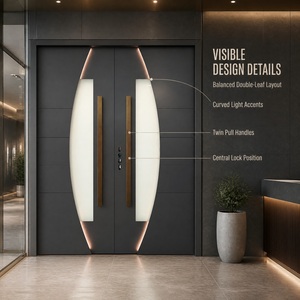
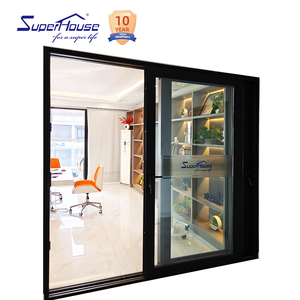
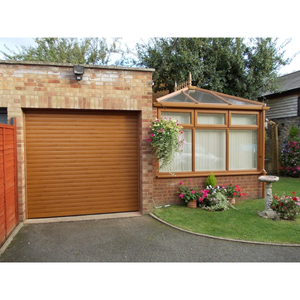
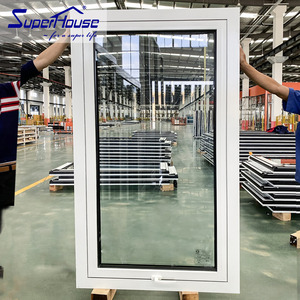
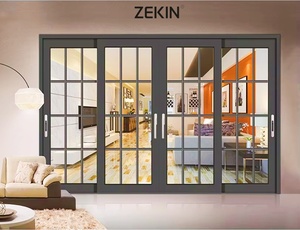
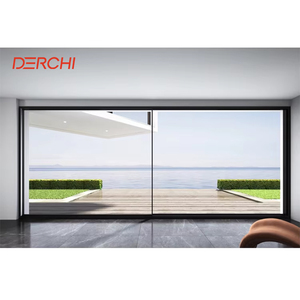
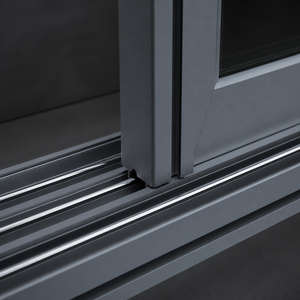
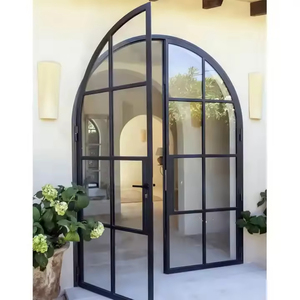
Why Top Global Specifiers Rely on DERCHI
With over 25 years of specialized engineering in Foshan, Guangdong Dejiyoupin Doors and Windows Co., Ltd. delivers institutional-grade manufacturing scalability, verified testing data, and comprehensive OEM/ODM integration.
Certified Global Compliance
Our fenestration assemblies are certified under CE (EN 14351-1), Australian AS2047 up to ultimate design wind pressure ratings (N6), and North American NFRC/AAMA thermal and structural testing requirements.
Full Shop CAD & BIM Library
Direct engineering collaboration with architectural teams. We provide full CAD elevation drawings, extrusion cross-sections, calculation sheets for thermal bridging, and 3D files for smooth BIM integration.
Proven Continental Track Record
From serving institutional developments alongside partners of prominent European systems like Schüco in the United Kingdom to high-end villa communities in California and the Middle East, our logistics and delivery guarantees ensure reliable lead times.
Engineering Dynamics & Future Procurement Trends in Aluminium Casements
The commercial and luxury residential fenestration markets are undergoing significant regulatory and material-science shifts. Sourcing directors must anticipate how evolving codes shape global supply chains.
Aluminium casement windows have emerged as the premier choice for architects prioritizing high structural rigidity, minimal sightlines, and unmatched longevity. Unlike uPVC profiles which suffer from high thermal expansion coefficients, or timber which requires ongoing preservation cycles, high-grade architectural aluminium (6063-T5 and 6063-T6 alloys) combined with advanced multi-chamber thermal barriers provides superior structural resistance and precise operation across multi-decade lifecycles.
| Technical Parameter | Standard Commercial Grade | DERCHI High-Performance Casement | Procurement Impact |
|---|---|---|---|
| Alloy Composition | Recycled 6063 Scrap (Variable T5) | 100% Primary Billet 6063-T5 / T6 Extrusion | Guarantees dimensional stability, higher tensile strength, and zero surface blistering post-finishing. |
| Thermal Insulation Bar | Standard PVC or 14.8mm PA66 | Multi-Chambered 24mm - 34mm PA66 GF25 | Lowers overall assembly U-factors to reach compliance with Passive House and strict building envelope standards. |
| Sealing Architecture | Dual EPDM Strip Gaskets | Continuous Vulcanized EPDM Triple-Seals | Mitigates air leakage under cyclonic conditions; delivers Class 4 air permeability and Class 9A watertightness. |
| Hardware & Fasteners | Zinc-Alloy Friction Hinges | Austenitic 304/316 Stainless Steel & Sobinco/Siegenia multipoint locks | Ensures burglar resistance up to RC2/RC3 levels and eliminates galvanic corrosion in saline coastal environments. |
| Surface Protection | Standard 40-50µm Powder Coat | AAMA 2604 / 2605 Qualicoat Class 2 Fluoropolymer (PVDF) | 30+ year resistance to chalking, fading, and intense UV degradation across challenging climates. |
Key Drivers Reshaping Casement Sourcing (2026–2030)
1. Stringent Building Energy Codes: Global building regulations such as Germany's Gebäudeenergiegesetz (GEG), the UK's Part L revisions, and California Title 24 mandate substantially lowered overall U-values for external envelopes (Uw ≤ 0.8 to 1.3 W/m²K). Importers and developers must verify that their factory partner implements genuine polyamide (PA66 GF25) thermal insulation strips and accommodates triple-glazed argon-filled Low-E insulated glass units (IGU) with warm-edge warm spacers.
2. Super-Slim Aesthetics vs. High Structural Performance: Modern architectural vernacular favors ultra-narrow outer frames with completely concealed sashes and flush interior-exterior transitions. Achieving these expansive glass ratios while meeting wind load requirements (often exceeding 3000 Pa design pressure) requires internal reinforced steel stiffeners, specialized corner crimping with two-component polyurethane adhesives, and heavy-duty structural glazing.
3. Decarbonization and Recycled Aluminium Traceability: Sourcing entities in Europe and North America increasingly demand environmental product declarations (EPD) and verifiable low-carbon aluminium billets smelted using renewable hydro or solar power. DERCHI continues to align its extrusion processes with global ESG directives, ensuring clients meet sustainability criteria for LEED and BREEAM certifications.
4. Smart Hardware & Automated Building Integration: Future-proof casement windows are now routinely specified with integrated concealment sensors, motorized actuators compatible with Modbus/KNX building management systems, and concealed multi-point lock actuators for automated natural night-cooling schemes.
Frequently Asked Technical & Sourcing Questions (FAQ)
Clear, definitive technical answers to the most common questions raised by developers, project managers, and distributor engineering teams.
We employ cast corner cleats injected with high-viscosity two-component structural corner adhesives, eliminating joint separation over time. Our window assemblies feature a stepped drainage system with concealed outflow valves and triple continuous vulcanized EPDM gaskets, passing Australian AS2047 N6 wind resistance tests up to 4500 Pa.
Our engineering facilities accommodate custom die extrusion design, frame depth options (from 60mm to 120mm profiles), specialized finishes including Tiger and AkzoNobel fluorocarbon powders or Qualicoat-certified wood grain transfers, multi-point handle customizations, and bespoke glass configurations such as low-iron, electrochromic switchable, acoustic PVB laminated, or bullet-resistant safety compositions.
Our factory integrates multi-cavity PA66 polyamide thermal breaks with glass pockets that accept up to 42mm overall insulated glass units. Coupled with sound-dampening laminated interlayers, we achieve acoustic reduction values (Rw) up to 45 dB and overall window thermal performance (Uw) down to 1.1 W/m²K, verified by calibrated thermal simulation test data.
To prevent flex fatigue and transit abrasion, all products undergo a multi-tier packing procedure: primary scratch-resistant protective film, shock-absorbing cellular pearl foam corners, moisture-proof desiccants, and complete enclosure in non-coniferous fumigated plywood crates with internal vertical steel bracing suitable for maritime transport to major ports like Rotterdam, Hamburg, Los Angeles, and Sydney.