Featured Steel-Look Aluminium External Door Systems
Explore our top 8 factory-direct architectural door assemblies engineered for residential villas, luxury developments, and commercial high-traffic installations worldwide.
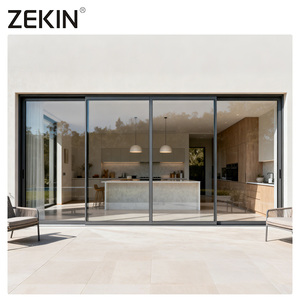
ZEKIN Soundproof Low-E Patio Sliding Door
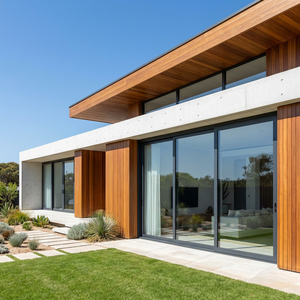
AS2047 Multi-Track Stacker Sliding Door
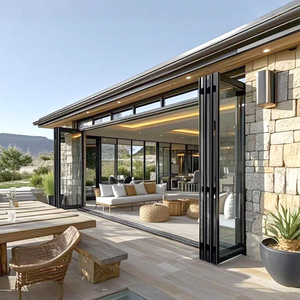
Thermal Break Folding Door With Screen
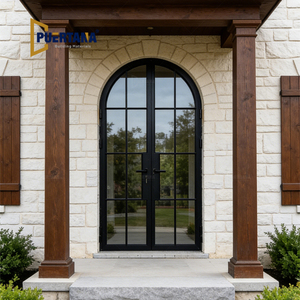
Thermally Broken Steel-Look French Door
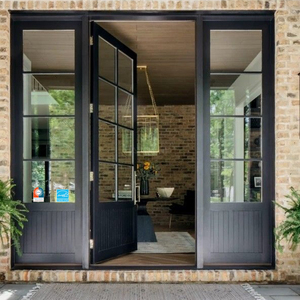
AMJ Exterior Entry Swing French Door
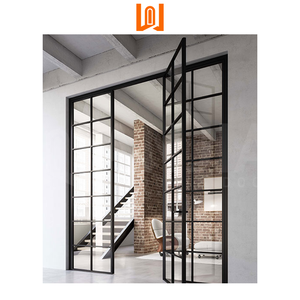
Crittall Style Double Glazed French Door
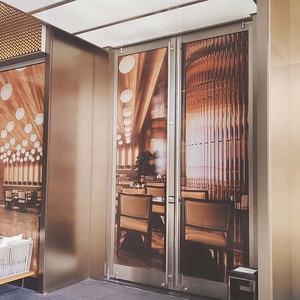
Postmodern Entry Casement Double Door
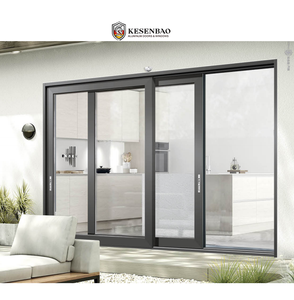
Hurricane Impact Exterior Sliding Door
Engineering Whitepaper: Aluminium vs. Traditional Steel Crittall
A technical breakdown comparing authentic hot-rolled traditional steel fenestration against high-performance thermally broken aluminium Crittall-style systems for modern building envelope envelopes.
The Evolution from Hot-Rolled Steel to Thermally Broken Extruded Aluminium
The iconic aesthetic created by Essex ironmonger Francis Henry Crittall in the 1880s defined the minimalist architectural language of the Art Deco, Bauhaus, and industrial modernist movements. Historically fabricated from hot-rolled carbon steel angle iron, original Crittall-style doors offered unmatched structural rigidity that allowed for gossamer-thin frame profiles and expansive glass panes divided by delicate horizontal and vertical glazing muntins.
However, when modern building codes such as UK Part L, the German GEG (Gebäudeenergiegesetz), and US Title 24 Energy Standards were introduced, traditional solid hot-rolled steel fenestration encountered insurmountable thermal transmission challenges. Steel exhibits high thermal conductivity (~50 W/m·K), leading to rapid cold bridging, excessive surface condensation, paint delamination, and building envelope energy failure. While hot-rolled steel doors can be artificially retrofitted with internal resin breaks, the resulting profiles become substantially heavier, prohibitively expensive, and susceptible to galvanic and atmospheric corrosion in coastal or high-humidity regions.
Our OEM/ODM aluminium Crittall-style external door systems overcome these structural physics limitations by utilizing custom multi-chamber extrusions composed of architectural-grade 6063-T6 or 6060-T66 aluminum alloys, mechanically crimped with polyamide (PA66 GF25) thermal insulation strips reinforced with 25% cross-woven glass fibers. This engineering paradigm achieves the slender, razor-sharp shadow lines of traditional industrial steel fenestration while delivering the strict U-values, air-tightness ratings, and zero-maintenance corrosion immunity demanded by tier-1 developers and international building authorities.
Engineering Benchmark: DERCHI thermally broken aluminium profiles deliver total system thermal transmittance values ($U_d$ / $U_w$) down to 1.1 - 1.4 W/m²K when configured with triple-glazed warm-edge argon units, compared to solid steel systems which struggle to achieve under 2.8 - 3.4 W/m²K without unwieldy bulk.
Comprehensive Technical Benchmark: Material Matrix
| Performance Vector | Aluminium Crittall (DERCHI Architectural) | Traditional Hot-Rolled Steel | Standard Non-Thermal Aluminium |
|---|---|---|---|
| Thermal Transmittance ($U_w$) | 1.1 – 1.5 W/m²·K (Part L / Passivhaus Compliant) | 2.8 – 3.6 W/m²·K (Severe Condensation Risk) | > 4.5 W/m²·K (Code Non-Compliant for Exterior) |
| Structural Sightline (Stile/Rail) | 35mm – 48mm ultra-slim sightlines | 30mm – 38mm classic profile | 55mm – 75mm bulky framing |
| Atmospheric Corrosion Resistance | Qualicoat Class 2/3 (C5 Marine Grade Certified) | Requires galvanizing; high rust risk at welds | Standard anodized/painted |
| Total System Mass / Structural Load | Lightweight (~2.7 g/cm³); minimal hinge stress | Extremely heavy (~7.8 g/cm³); heavy load on lintels | Lightweight (~2.7 g/cm³) |
| Glazing Flexibility | 24mm – 44mm Double/Triple Low-E with Duplex Spacers | Restricted to thin single or narrow 16mm double glazing | Standard 20mm – 28mm glazing |
| Acoustic Isolation ($R_w$) | Up to 42 dB (Laminated Acoustic Acoustic Interlayers) | 30 – 34 dB | 28 – 32 dB |
| Total Cost of Ownership (TCO) | Moderate Capex / Near-Zero Long-Term Maintenance | High Capex (3x–5x) / High Repainting Cost | Low Capex / High Energy Penalties |
Future Procurement Trends in Steel-Look Fenestration
Strategic analysis of global supply-chain realignments, sustainability mandates, and architectural engineering specifications shaping commercial and high-end residential projects.
Strict Carbon Audits & Recycled Alloys
B2B procurement policies in Western Europe and North America increasingly demand Environmental Product Declarations (EPDs). Specifiers are shifting towards low-carbon primary billets smelted using renewable hydro-power and high-scrap circular aluminium alloys (exceeding 75% post-consumer recycled content), drastically reducing the embodied carbon footprint of the building envelope.
Simulated Divided Lites (SDL) Superiority
Historically, architectural Crittall doors relied on True Divided Lites (TDL), segmenting individual glass panes into individual frames. Modern OEM/ODM procurement has migrated almost completely to high-performance Simulated Divided Lites (SDL). Continuous monolithic double/triple-glazed insulated units feature internal perimeter duplex spacer grids combined with precision-milled CNC aluminium astragal bars mechanically clipped and bonded with structural tape.
Impact & Wind-Load Resistance Integration
Extreme weather frequencies have necessitated severe wind-load and debris-impact engineering. Coastal specifications across Florida (TAS 201/202/203), Australia (AS2047 N6 Cyclonic), and the Caribbean require Crittall-style external doors to incorporate SentryGlas® (SGP) or structural PVB interlayers, capable of withstanding design pressures exceeding 5,500 Pa without structural failure or water ingress.
Concealed Hardware & Smart Access Integration
Traditional visible surface-mounted hinges and vintage rim locks are being replaced by concealed multi-axis 3D adjustable pivot systems, integrated overhead concealed door closers, and flush multipoint locking hooks. Furthermore, commercial hospitality and luxury residential projects now specify discreet motorization, biometric finger-vein sensors, and building management system (BMS) interfaces completely concealed within the thermal-break chamber.
Hybrid Indoor-Outdoor Floor Plan Unification
Contemporary architectural briefs reject the limitation of traditional small swinging doors. Global project procurement has pivoted dramatically toward floor-to-ceiling oversized pivot doors (measuring up to 2.2m wide by 4.0m high), flush-threshold multi-track pocketing sliding doors, and thermally broken bi-folding wall systems that carry the black industrial steel-look grid across seamless structural facades.
Why Global Specifiers & Importers Partner with DERCHI
From our headquarters in Foshan, China's aluminium capital, to high-profile multi-villa projects across the UK, Germany, and North America, we provide enterprise-scale manufacturing assurance.
Industrial Scale, German-Standard Precision, and Integrated Supply Chains
Guangdong Dejiyoupin Doors and Windows Co., Ltd. (DERCHI) stands among the premier fenestration manufacturing enterprises in Asia. Operating from a unified 180,000 square meter intelligent manufacturing mega-base in Foshan, Guangdong, our infrastructure is purpose-built to eliminate supply-chain bottlenecks for multinational project developers, architectural specifiers, and distribution wholesalers.
Employing over 600 specialized personnel—including a dedicated R&D engineering division holding more than 30 proprietary technology patents—we integrate profile extrusion validation, high-precision 5-axis CNC profile machining, robotic automated glass sealing, and continuous quality inspection under one roof. Our facilities operate under strict ISO 9001, ISO 14001, and ISO 45001 international management systems.
Premier Industry Endorsement: Demonstrating our uncompromising production tolerance and structural execution, DERCHI was selected by an established UK partner of German Schüco systems to manufacture bespoke aluminium entrance and fenestration packages for an exclusive multi-villa luxury residential scheme in England. Our assemblies matched the stringent acoustic and thermal thresholds required by UK building inspectors.
Full-Scope OEM/ODM Engineering Capabilities for Importers
We provide full-spectrum engineering services that eliminate the risk of international procurement:
- Free Architectural CAD & BIM Shop Drawings: Prior to production, our facade engineers model every opening according to your master door schedules, ensuring precision tolerance fitments, threshold drainage channels, and structural wall anchoring interfaces.
- Comprehensive Global Certifications: We engineer and manufacture our products to hold active testing certificates, including European CE (EN 14351-1), Australian AS2047 N6 Wind Pressure testing, and North American NFRC energy efficiency ratings.
- Bespoke Surface Treatments: Equipped with vertical powder-coating lines operating with AkzoNobel and Tiger Drylac pigments, we produce ultra-durable Qualicoat Class 2 finishes in deep matte jet black (RAL 9005), heritage bronze, anthracite grey (RAL 7016), and bespoke textured architectural patinas engineered for 30-year UV and salt-spray resistance.
- Export Protection & Logistics Engineering: Every order is packed using custom-welded steel stillages, foam corner shock protection, vacuum desiccants, and reinforced OSB crating engineered specifically for containerized intermodal ocean shipping into Rotterdam, Hamburg, Antwerp, Felixstowe, Long Beach, and Sydney without deflection or cosmetic damage.
Frequently Asked Questions by Global Specifiers & Importers
Direct technical answers addressing performance validation, customization flexibility, building code compliance, and export logistics.