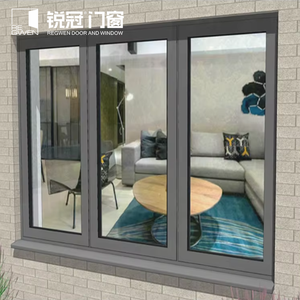
Precision Fenestration Lineup
Engineered Aluminum Window & Glazing Systems
Direct-from-factory high-performance systems precision-built in our 180,000 m² manufacturing plant, tested to exceed international structural, acoustic, and thermal thresholds.
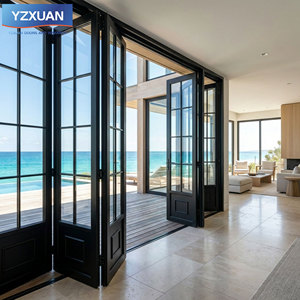
Luxury Retro Style Aluminum Folding Glass Door French Heritage Villa Garden House Interior Partition Kitchen
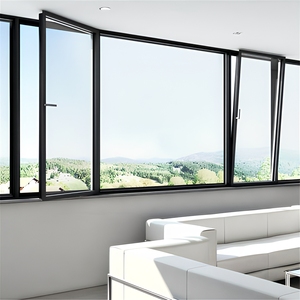
Modern Aluminum Windows Doors Swing Horizontal Double Tempered Glass Heat Insulation Stainless Steel Screen Netting Comply
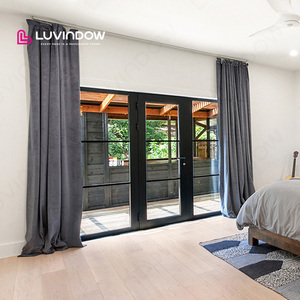
Luvindow Manufacturer Modern Double Exterior/interior Grill Iron Door Designs Glass Wrought Aluminum Door
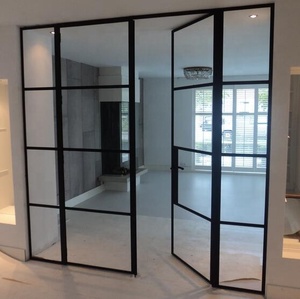
HOTIAN French Black Balcony Patio Door Wrought Iron Swing Crittall Door Steel Glass Saloon Windows And Doors
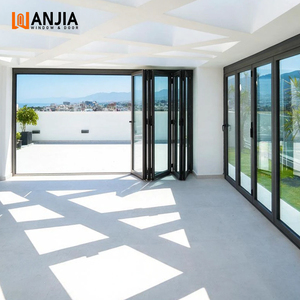
Heavy Duty Coastal Glass Commercial Doors Folding Glass Door Thermal Breaking Glass Bifold Doors
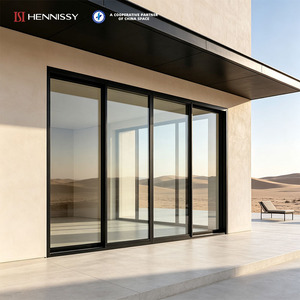
Modern NFRC Certified Thermal Break Aluminum Sliding Door with Low-E Double Glazed Glass U-value 1.7 for US Market Exterior Use
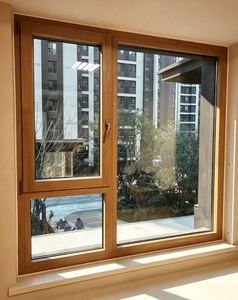
European High Energy Saving Triple Tempered Low-E Aluminum Wood Tilt Turn Windows Heat Insulation Waterproof Exterior Bedroom
180,000 m²
Industrial Fabrication Base
25+ Yrs
Engineering Heritage
100+
Patents & Global Certs
600+
Skilled Technicians
Engineering Excellence: Structural & Thermal Fenestration Systems
In modern high-performance architecture, an external window is no longer merely an aperture for daylighting; it operates as an active thermodynamic membrane, a sound dampening shield, and an essential structural member safeguarding against extreme cyclical wind loads. For institutional real estate developers, facade engineers, and procurement directors, sourcing through an OEM/ODM aluminum glazed windows factory requires deep scrutiny of alloy metallurgy, extrusion profile thickness, thermal break polymer compounds, and precise sealed insulating glass unit (IGU) construction.
As an industry-leading fabrication entity with over a quarter-century of technical mastery, Guangdong Dejiyoupin Doors and Windows Co., Ltd. (DERCHI) engineers fenestration envelopes that merge sleek visual minimalism with rigorous physical performance. Having proven our build-quality by manufacturing high-specification systems selected by a long-term UK Schüco partner for luxury villa communities, we bring unmatched reliability to commercial multi-family developments, bespoke estates, and institutional landmarks worldwide.
Targeted Product Matrix: Application-Specific Solutions
Navigating global building codes requires distinct fenestration mechanics. The following matrix illustrates our targeted product classes, structural specs, and architectural applications:
| Series & Typology | Thermal & Glazing Config | Target Acoustic (Rw) | Standards Compliance | Best Architectural Application |
|---|---|---|---|---|
| RG65 Casement System | Multi-cavity PA66 GF25 strip; 5mm+12Ar+5mm Low-E | 38 dB - 42 dB | EN 14351-1, CE, AS 2047 | Passive residential towers, suburban villas, coastal apartments |
| European Tilt & Turn Series | Triple Tempered Low-E; warm-edge spacers (44mm IGU) | 42 dB - 46 dB | Passive House compatible, EN ISO 10077 | Cold-climate luxury residences, healthcare institutes, alpine estates |
| NFRC Thermal Sliding Units | Interlocking thermal barrier; U-Value ≤ 1.7 W/m²K | 35 dB - 39 dB | NFRC certified, AAMA/WDMA, Florida HVHZ ready | High-rise balconies, hurricane-prone coastlines, modern condominiums |
| Heavy-Duty Commercial Bi-Folds | Dual-extrusion bottom-hung stainless roller tracks; 28mm IGU | 36 dB - 40 dB | BS 6375, AS 2047 N6 cycle tested | Resort storefronts, restaurant transitions, expansive luxury verandas |
Global Procurement Vectors & Technological Trends (2025–2030)
The global architectural fenestration sector is experiencing an unprecedented structural transition driven by aggressive carbon neutrality mandates (such as the EU Energy Performance of Buildings Directive, Germany's GEG, and California Title 24), supply chain de-risking, and digital building lifecycles. When setting procurement criteria for future projects, tier-1 buyers must address several mission-critical shifts:
Extreme Whole-Window U-Values (Uw ≤ 0.8)
Standard double-glazing is swiftly giving way to triple-pane assemblies featuring Krypton/Argon inert gas mixes, dual Low-E soft coats, and structural composite multi-chamber polyamide thermal breaks to eliminate building envelope thermal bridging.
Narrow Sightlines & Oversized Structural Glass
Modern architectural language favors concealed sash engineering, flush thresholds, and massive glass surfaces exceeding 3.2 meters in height. OEM manufacturing relies on multi-axis CNC fabrication to support heavy wind moments without profile bowing.
Traceable Carbon & Recycled 6063-T5 Billets
Institutional developers demand Environmental Product Declarations (EPDs). Specifying low-carbon prime aluminum, refined scrap recycling protocols, and non-hazardous chrome-free electrostatic powder coating has become essential for BREEAM and LEED v4.1 certification.
Integrated IoT Smart Building Actuation
Concealed motorized chain actuators, integrated solar shading glass, and magnetic reed contact sensors embedded directly inside frame grooves provide centralized building management system (BMS) telemetry without degrading clean architectural lines.
Direct-to-BIM Fabrication Workflows
Contractors no longer rely on paper submittals. Front-end 3D Revit models tie directly into factory ERP and CNC processing lines, minimizing detailing discrepancies and reducing project lead times from initial design to site delivery.
Turnkey Package Consolidation
Developers are moving away from multiple fragmented subcontractors. Consolidating windows, pivot entry units, curtain walls, and garage doors under a single certified OEM fabricator significantly lowers freight risk, container usage, and on-site alignment disputes.
Factory Infrastructure: The DERCHI Manufacturing Advantage
Recognized as one of the premier top-tier window and door brands in China, Guangdong Dejiyoupin Doors and Windows Co., Ltd. (DERCHI) operates from Foshan, Guangdong—the worldwide epicenter of precision aluminum extrusion and architectural engineering. Spanning over 180,000 square meters of production space with a dedicated technical workforce of 600+ specialists, our facility provides true end-to-end manufacturing autonomy.
In-House Extrusion & Surface Treatment
We cast virgin 6063-T5/T6 billet extrusions with precision wall tolerances. Surface treatments include 40-year Qualicoat Class 2 fluorocarbon PVDF coatings, AkzoNobel powder coats, and advanced anodizing for aggressive C5 marine environments.
Automated IGU Glazing Clean-Rooms
Insulated Glass Units are processed on dust-free robotic lines with automated desiccant filling, primary polyisobutylene (PIB) extrusion, secondary silicone structural bonding, and computerized 95%+ Argon gas flush monitoring.
Certified Structural Performance
Tested and certified to Australian AS 2047 N6 cyclonic standards, CE EN 14351-1, ISO 9001, and North American NFRC thermal standards, guaranteeing unyielding airtightness (Class 4) and watertight integrity (Class 9A/E1050).
30+ Technological Patents
Our dedicated R&D wing pioneers patented corner crimping joint matrix designs, secondary multi-fin EPDM co-extruded acoustic gaskets, and micro-drainage pressure equalization systems preventing water backflow during 120 km/h squalls.
Free Engineering Submittals
Our English-speaking facade engineering team delivers complete CAD shop drawings, structural wind moment calculations, glass stress analysis, and thermal profile simulations within 48 to 72 hours of project brief receipt.
Sea-Freight Packaging Integrity
Finished frames and IGU panels are protected using multi-layer PE shrink film, high-density edge protectors, and IPPC-certified fumigated structural plywood crates for secure intermodal container shipment worldwide.
Procurement FAQ: Critical Factors for B2B Importers & Specifiers
Drawing on decades of supplying projects across Europe, North America, Australia, and the Middle East, our technical directors address the core challenges faced by professional buyers:
What are the key technical differences between 6063-T5 and 6063-T6 aluminum alloys for architectural windows?
6063-T5 aluminum undergoes rapid artificial aging after extrusion, achieving a typical tensile strength of around 150 MPa and yield strength of roughly 110 MPa. It delivers excellent surface finish characteristics, making it ideal for standard residential casements and intricate architectural trim. In contrast, 6063-T6 is solution heat-treated and artificially aged to reach higher structural thresholds—tensile strength ≥ 205 MPa and yield strength ≥ 170 MPa. DERCHI uses T6 tempers for oversized pivot frames, commercial curtain wall transoms, and high-windload coastal installations to avoid deflection while maintaining narrow sightlines.
How do DERCHI thermal break systems prevent interior condensation and heat transfer?
Rather than using basic poured-and-debridged polyurethane resins, our systems employ structural multi-chambered polyamide strips (PA66 GF25 reinforced with 25% glass fiber). These strips match the thermal expansion coefficient of aluminum, preventing delamination across extreme temperatures (-30°C to +80°C). By isolating the exterior aluminum profile from the interior face, thermal conductivity drops dramatically from 160 W/m·K down to under 0.3 W/m·K. Paired with triple EPDM co-extruded center gaskets, the dew point shifts outside the interior frame face, eliminating condensation and interior water pooling.
What glass build-up is required to satisfy NFRC and European CE energy regulations?
Compliance depends on the target climate zone. For North American NFRC certification in moderate zones, a 28mm double-glazed unit (6mm Low-E #2 + 16mm Argon + 6mm Clear) with warm-edge composite spacers achieves a system U-factor between 0.26 and 0.30 BTU/h·ft²·F (approx. 1.5–1.7 W/m²K). For Northern Europe under EN ISO 10077-2, we utilize a 44mm or 50mm triple-glazed assembly (4mm Low-E #2 + 16Ar + 4mm Clear + 16Ar + 4mm Low-E #5) with composite Technoform warm-edge spacers, driving overall window performance (Uw) down to 0.78–0.85 W/m²K, which meets Passivhaus criteria.
What documentation and structural calculations are supplied for building permit approvals?
DERCHI provides a complete technical documentation submittal binder tailored to your local municipal or engineering authority. This includes certified CAD workshop elevations, 1:1 cross-sectional joinery details, structural glass load stress analyses (ASTM E1300 / EN 1288), windload deflection calculations (checking L/175 or L/250 spans), laboratory test reports for water tightness (EN 12208) and air permeability (EN 12207), as well as official Factory Mutual, CE Declarations of Performance (DoP), or AS 2047 compliance certificates.
What quality control protocols are carried out prior to container dispatch?
Every production batch passes an 8-stage QA inspection protocol: (1) Spectral analysis of raw aluminum billets, (2) Coating adhesion cross-hatch testing and film thickness measurement, (3) Corner joint hydraulic pull-apart tensile tests, (4) In-line optical scanning of tempered glass to prevent nickel sulfide inclusions, (5) Argon gas concentration validation (≥90%), (6) Complete test-rig assembly of random sashes to check hardware friction and sash clearances, (7) Water spray chamber testing at 600 Pa, and (8) Crate vibration/impact assessments. Clients receive high-resolution inspection videos and signed QC sheets before balance payment and container release.
How does DERCHI resolve on-site installation challenges across different international regions?
We adapt our perimeter mounting extrusions to suit regional construction methods. For North America, we provide factory-extruded nail fins (flanges) with pre-punched fastener slots for wood framing. For the UK and Europe, we supply concealed anchor brackets, sub-frame systems, and extended sill drip trays tailored to cavity brick walls. For high-rise concrete structures, dynamic steel fixing brackets with thermal shims are detailed. Furthermore, every crate includes step-by-step 3D exploded assembly manuals, and our engineering department provides real-time video installation support aligned with your regional time zone.