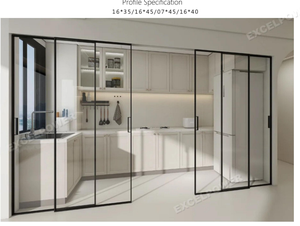
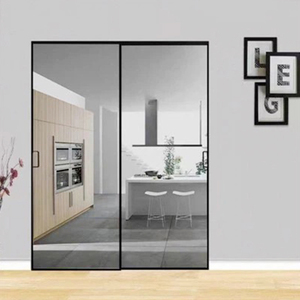
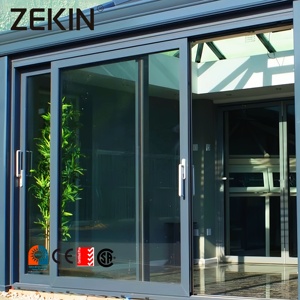
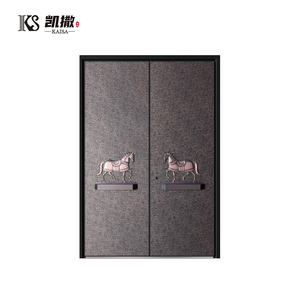
Featured Industrial Door Portfolios
Precision-engineered systems fabricated for commercial developments, residential multi-family towers, and ultra-luxury architectural residences globally.
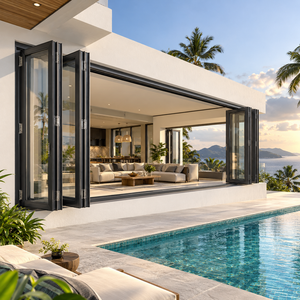
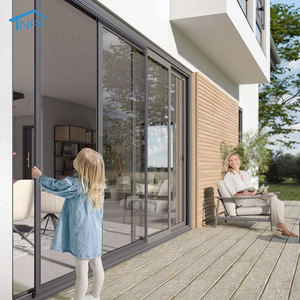
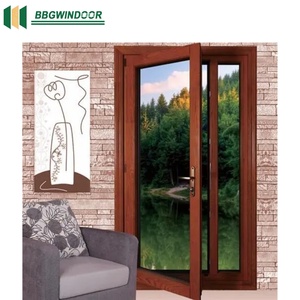
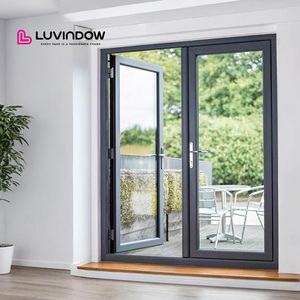
180,000m²
Smart Manufacturing Base
25+
Years Industry Engineering
600+
Skilled Craftspeople & Staff
100+
Global Patents & Certifications
Evaluating Top 10 Aluminium Alloy Door Manufacturers
Procuring architectural fenestration requires auditing beyond basic unit pricing. Enterprise specifiers must verify metallurgical purity, structural tolerances, thermal boundary integrity, and compliance across rigorous multi-jurisdictional standards.
1. Primary Ingot Metallurgy
Tier-1 fabricators strictly utilize virgin 6063-T5 or 6063-T6 architectural grade billets. Secondary or contaminated scrap profiles exhibit subsurface porosity, weak structural deflection resistance, and inferior anodizing absorption.
2. Polyamide Thermal Barriers
Low-end suppliers use cheap PVC strips prone to brittle failure and shear separation. Leading manufacturers incorporate PA66 GF25 (polyamide reinforced with 25% glass fiber) to ensure matching linear thermal expansion with the aluminum skin.
3. Surface Coating Integrity
Marine and high-UV building envelopes necessitate electrostatic powder coating compliant with Qualicoat Class 2 or AAMA 2604/2605 specifications. Fluorocarbon (PVDF) 3-coat finishes prevent chalking and micro-fissuring.
4. Structural CNC Corner Crimping
Avoid mechanical screw-fastened joints for exterior installations. Premium factories utilize heavy-duty cast aluminum corner cleats injected with two-part polyurethane matrix adhesives via automated multi-head CNC machines.
5. Fenestration Code Compliance
A reliable manufacturer provides accredited lab documentation confirming structural loading, water penetration under dynamic pressure, and cyclic wind testing: CE (EN 14351-1), NFRC, and AS2047.
6. Hardware & Perimeter Gasketing
Industrial performance requires continuous, vulcanized EPDM or cellular silicone gasket seals and multi-point stainless steel locking gear from European leaders such as Siegenia, Roto, Hoppe, or certified proprietary systems.
Engineering Benchmark & Testing Protocols
Comparative baseline data for commercial and luxury villa door systems across international testing regimes.
| Performance Characteristic | Reference Test Standard | Commercial Grade Threshold | DERCHI Factory Achieved Spec |
|---|---|---|---|
| Thermal Transmittance (UD / U-Value) | EN ISO 10077-1 / NFRC 100 | ≤ 1.8 W/(m²·K) | ≤ 0.95 – 1.20 W/(m²·K) (Triple Low-E) |
| Air Infiltration & Exfiltration | EN 12207 / ASTM E283 | Class 3 / ≤ 1.5 m³/(h·m²) | Class 4 (≤ 0.5 m³/(h·m²)) High Air-Tightness |
| Water Resistance Under Pressure | EN 12208 / ASTM E331 | Class 7A (300 Pa) | Class 9A / E1050 (≥ 1050 Pa Dynamic Pressure) |
| Wind Load & Deflection Resistance | AS 2047 (N6 Rating) / EN 12210 | Class C3 (1200 Pa) | Class C5 / AS2047 N6 (≥ 4500 Pa Ultimate Service) |
| Acoustic Attenuation (STC / Rw) | EN ISO 717-1 / ASTM E90 | Rw ≥ 32 dB | Rw ≥ 42 – 47 dB (Laminated Acoustic Cavities) |
| Burglar Security Rating | EN 1627-1630 (RC Classes) | RC1 / Basic Multipoint | RC2 & RC3 Certified Concealed Multipoint Hardware |
Manufacturing Powerhouse in Foshan
Based in Guangdong Dejiyoupin Doors and Windows Co., Ltd. (DERCHI), our operations leverage over 25 years of engineering authority within China’s global metallurgy hub. Spanning an expansive 180,000 m² smart production base, our facilities unify automated extrusion processing, robotic CNC machining, automated glass curing, and specialized quality-control test labs.
DERCHI is recognized among the top 10 premium door and window industrial brands in China. Over 600 specialized workers and in-house CAD structural designers support turnkey engineering deliverables—from custom shop drawings to structural thermal calculations for large-scale developments.
Our architectural systems have been chosen by a long-term UK Schüco installation partner for exclusive multi-villa communities across Great Britain, verifying that our dimensional repeatability and finishing standards rival leading European luxury systems.

Future Architecture Trends in Aluminium Fenestration
Analyzing emerging engineering, structural, and aesthetic developments transforming the global building facade landscape.
Ultra-Minimalist Sightlines
Architectural demand has transitioned rapidly toward ultra-narrow interlock profiles (as slim as 20mm to 25mm visible sightline). Engineers integrate structural silicone glazing and concealed sub-frame jambs recessed directly into structural concrete walls.
Net-Zero Thermal Envelope
Global energy codes (such as UK Building Regs Part L, German GEG, and California Title 24) are pushing thermal metrics to extreme limits. Multi-chamber thermal profiles with aerogel or high-density polyurethane filling are becoming standard requirements.
Mechatronic Access & Automation
High-end pivot and sliding systems are incorporating concealed electromagnetic linear drives, biometric smart locks, concealed magnetic contact sensors, and full integration with BACnet or KNX home automation systems.
Future Procurement Trends for Volume Buyers
How real estate developers, contractors, and national distributors are mitigating supply-chain volatility and optimizing landing costs.
Direct Factory-to-Jobsite Models
Mid-tier international importers and commercial GC firms are increasingly bypassing domestic distributors, procuring directly from tier-1 Chinese manufacturers with in-house CAD drafting departments to preserve 30% to 45% in capital margins.
Parametric BIM & Schedule Sync
Procurement directors demand parametric Revit/IFC digital assets upfront. Aligning shop drawing CAD elevations directly with the architectural door schedule minimizes field measurement corrections and eliminates expensive remakes.
Third-Party Pre-Shipment Audits
Leading international project managers mandate third-party quality control (SGS/TÜV/Intertek) or comprehensive factory video telemetry verifying hydrostatic water testing and micro-finish uniformity before container loading.
Frequently Asked Procurement Questions
Direct technical clarity for project managers, facade engineers, and volume building material buyers.
How do DERCHI aluminum doors guarantee compliance with local building codes?
All door assemblies are fabricated under ISO 9001 certified quality control systems and are pre-engineered to comply with regional codes: CE Marking (EN 14351-1) for Europe, AS2047 / AS1288 for Australia and New Zealand, and NFRC / ASTM protocols for North America. For each project, our engineering department furnishes verified structural calculations, test certifications, and project-specific shop drawings for municipal building control sign-off.
What is the difference between non-thermal and thermally broken aluminum doors?
Non-thermal aluminum profiles consist of a continuous metallic extrusion. Because aluminum is a conductive metal, exterior cold or heat transfers straight into the interior, causing high heating/cooling costs and severe condensation. Thermally broken systems separate exterior and interior aluminum profiles using an engineered structural polyamide insulator (PA66 GF25), drastically reducing heat conductivity and preventing condensation.
How are oversized pivot and sliding doors protected during transoceanic shipping?
Export units are wrapped in protective polyethylene film, fitted with corner impact buffers, protected with multi-layer high-density pearl cotton, and crated inside fully enclosed fumigated plywood cases with integrated steel forklift bases. For large glazed pivot doors, moisture-absorbing desiccant packs are inserted to protect internal hardware mechanisms against sea humidity.
Can custom hardware (smart locks, access controls) be integrated at the factory?
Yes. We precision-mill lock pockets and cable raceways using multi-axis CNC routers. We can factory-install European branded hardware (such as Siegenia, Hoppe, GU) or integrate custom 3D face recognition, biometric scanners, automated concealed drop-seals, and electronic multi-point locksets based on project specifications.
What is the typical manufacturing lead time for commercial or custom villa orders?
Following official client sign-off on detailed CAD shop drawings and glass schedules, standard production lead times are typically 25 to 35 working days. Specialized finishes (such as custom fluorocarbon metallic paints or bespoke cast aluminum relief plates) generally require 35 to 45 working days.
Ready to Engineer Your Architectural Door Package?
Submit your door schedules, architectural elevations, or structural tender specifications. Our technical engineering team provides preliminary CAD shop drawings and factory-direct estimates within 24 business hours.