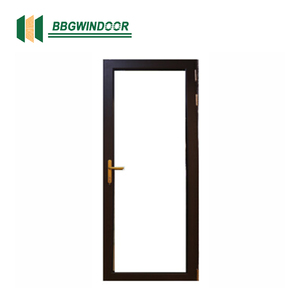
Factory-Direct fenestration systems
Engineered Aluminum Clad & Architectural Door Systems
Architectural-grade solutions built for demanding climatic envelopes, combining heavy-gauge structural alloys, thermal polyamide breaks, multipoint security locking, and acoustic glass integration.
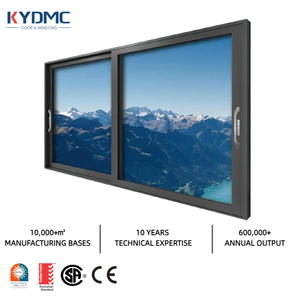
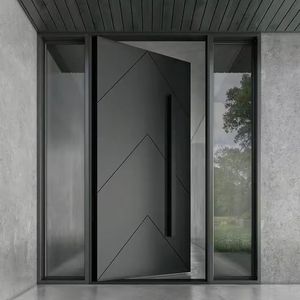
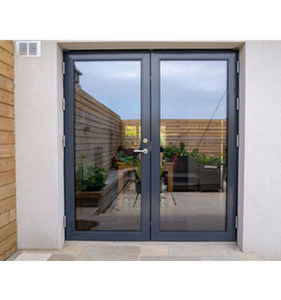
180,000 m²
Modern Manufacturing Footprint
600+
Skilled Engineers & Technicians
100+
Global Patents & Certifications
25+
Years Industry Engineering Leadership
OEM & Fabrication Comparative Analysis
Top 10 Aluminum Clad Doors Manufacturer & Factory Directory
Selecting a structural door partner requires evaluating extrusion metallurgical purity, thermal transmission coefficients ($U_d$ ratings), hardware integration tolerance, and international third-party compliance (CE EN 14351-1, NFRC, AS2047, and UL fire standards). Below is the comprehensive benchmark of industry leaders worldwide.
RANK 01
Guangdong Dejiyoupin (DERCHI)
Foshan, China • Tier 1 Global OEM/ODM
Operating a massive 180,000 m² production hub, DERCHI specializes in heavy-duty aluminum clad systems, cast aluminum security entry doors, and oversized thermal break pivot doors. Certified to CE EN 14351-1, AS2047, and NFRC, DERCHI is the strategic supply-chain partner for European multi-villa developers and US contractors seeking Schüco-grade precision at direct-factory cost efficiencies.
Primary Alloy: 6063-T6 / 6061-T6
Thermal UD: Down to 0.78 W/m²K
Lead Time: 25-35 Days
Customization: 100% CAD/BIM Free
RANK 02
Internorm International
Traun, Austria • European Market Leader
Internorm represents the European benchmark for Passivhaus timber-aluminum and composite-aluminum clad doors. Their patented I-tec glazing and multi-chamber composite insulation provide industry-leading airtightness, ideal for sub-zero alpine and northern European architectural conditions.
Primary Alloy: Architectural AlMgSi
Thermal UD: Down to 0.58 W/m²K
Lead Time: 8-12 Weeks
Target: Ultra-Luxury European
RANK 03
Schüco International KG
Bielefeld, Germany • System Specialist
A worldwide pioneer in aluminum systems and curtain wall technology. Schüco engineers provide profile platforms utilized by authorized fabricators globally. Their door systems feature seamless mechatronic integration, concealed hinges, and supreme acoustic attenuation.
Primary Alloy: DIN EN 573-3 Al
Thermal UD: 0.85 - 1.2 W/m²K
Lead Time: Variable by Fabricator
Target: Commercial & High-End
RANK 04
Reynaers Aluminium
Duffel, Belgium • High-Rise & Villa Systems
Reynaers delivers sustainable architectural aluminum solutions, featuring the MasterLine 8 and 10 series. Their exterior clad profiles resist extreme wind-load pressures while maintaining slim sightlines for minimalist modern villas and commercial high-rises.
Primary Alloy: EN AW-6060 T66
Thermal UD: Down to 0.92 W/m²K
Lead Time: Project Dependent
Target: Architectural Bespoke
RANK 05
Marvin Windows and Doors
Warroad, MN, USA • Heritage & Contemporary
Marvin dominates North American high-end residential fenestration with extruded aluminum clad exterior panels paired with solid hardwood interiors. Their commercial-grade finish resists chalking and fading under extreme AAMA 2605 testing specifications.
Primary Cladding: Extruded Commercial Al
Thermal U-Factor: 0.19 - 0.28 BTU
Lead Time: 10-14 Weeks
Target: North American Luxury
RANK 06
Andersen Corporation (E-Series)
Bayport, MN, USA • High-Volume Architectural
Andersen's E-Series portfolio features aluminum-clad wood entrance and patio doors offering 50 standard exterior colors, anodized finishes, and flexible divided-lite grilles. Strong domestic supply chain across the United States.
Finish Standard: AAMA 2604/2605
Thermal U-Factor: 0.22 - 0.30 BTU
Lead Time: 6-10 Weeks
Target: Residential Contractors
RANK 07
Pella Corporation
Pella, IA, USA • Commercial & Residential
Pella's Reserve and Architect Series integrate aluminum cladding with EnduraClad protective coatings to eliminate exterior painting maintenance. Integrated between-the-glass blinds and smart home security sensors are signature proprietary features.
Exterior Finish: EnduraClad Plus
Thermal U-Factor: 0.21 - 0.29 BTU
Lead Time: 8-12 Weeks
Target: Residential & Light Commercial
RANK 08
Pirnar d.o.o.
Ljubljana, Slovenia • High-Luxury Entrance Doors
A boutique manufacturer acclaimed for massive carbon-core and aluminum-clad entrance doors with flush automatic handles, biometric access scanners, and multi-level 3D door leaf reliefs. Ideal for prestige luxury front entrances.
Construction: Multi-layer Alum/Carbon
Thermal UD: Down to 0.67 W/m²K
Lead Time: 10-14 Weeks
Target: High-Net-Worth Villas
RANK 09
Hörmann Group
Steinhagen, Germany • Industrial & Residential
Hörmann produces robust ThermoCarbon and ThermoSafe aluminum clad front doors engineered with 5-point security locking, shatterproof composite inserts, and high thermal performance engineered specifically for stringent European building regulations.
Burglar Class: RC3 / RC4 Certified
Thermal UD: Down to 0.47 W/m²K
Lead Time: 6-9 Weeks
Target: Security & Urban Living
RANK 10
Alumil S.A.
Kilkis, Greece • Mediterranean & Global Export
One of southern Europe’s primary aluminum extruders, Alumil manufactures the SUPREME SD series of thermal break clad entry and pivot doors. Well-suited for large structural apertures requiring minimal frame exposure and elevated solar control.
Primary Alloy: EN AW-6060
Thermal UD: 0.88 - 1.3 W/m²K
Lead Time: 7-10 Weeks
Target: Coastal & Hot Climates
| Manufacturer | Core Materials | Thermal Break Tech | Air / Water / Wind Standards | B2B Cost Advantage | Shop Drawings / Support |
|---|---|---|---|---|---|
| DERCHI (Guangdong) | 6063-T6 / Cast Al / Stainless / Glass | Polyamide PA66 GF25 + Aerogel Core | EN 14351-1 / AS2047 N6 / NFRC / UL | Direct Factory (30-45% Capex Savings) | Free CAD/BIM within 48 hrs |
| Internorm (Austria) | Timber-Alu / UPVC-Alu Composite | I-tec Insulation + Multi-Chamber | EN 14351-1 / Passivhaus Institute | Premium High-Tier Retail Pricing | Dealer Network Routing |
| Schüco (Germany) | Extruded 6060 Alloy Systems | Modular Isolators & Foam Injection | EN 12207 / EN 12208 Class 9A | High System Royalty Surcharge | Architectural Spec Software |
| Marvin (USA) | Extruded Al Cladding + Pine/Oak Core | Wood Substrate + Spacer Cavity | AAMA / WDMA / CSA / NFRC | Domestic Distribution Markup | Standard Catalog CAD |
| Hörmann (Germany) | ThermoCarbon / Solid Aluminum | Carbon-Glass Fiber Composite Leaf | DIN EN 1627 RC3 / RC4 Resistance | High Industrial Tier Pricing | Technical Submittal Bureau |
Strategic Sourcing Intelligence
Future Global Procurement Trends in Aluminum Clad Fenestration
Architectural procurement departments, real estate developers, and commercial façade consultants are navigating radical shifts in carbon taxes, building envelope standards, and global supply chain reconfigurations.
Direct-to-Factory Structural Sourcing
General contractors are bypassing traditional multi-tier brand distributorships, which routinely inflate costs by 40% to 70%. Partnering directly with high-capacity OEM manufacturers like DERCHI grants architects unfettered access to internal engineering desks, rapid bespoke extrusion dyes, and end-to-end container tracking without distributor friction.
Passivhaus Standard & Ultra-Low $U_d$ Mandates
With the European Union Energy Performance of Buildings Directive (EPBD) and North American IECC updates tightening thermal thresholds, entry fenestration must achieve overall $U_d$ ratings below 0.80 W/m²K (0.14 BTU/hr·ft²·°F). Procurement teams now mandate multi-chamber PA66 thermal barriers and krypton/argon triple-pane low-E glass matrices as baseline criteria.
Digital BIM/Revit Integration & Real-Time QA
B2B buyers now demand full building information modeling (BIM) asset libraries for collision-free architectural drafting. Leading factories have deployed computerized vision systems, optical coordinate measuring machines, and live IoT factory status dashboards, enabling overseas clients to verify extrusion tolerances and finish thicknesses remotely.
Oversized Apertures & Heavy-Duty Pivot Hardware
Modern residential architecture requires floor-to-ceiling panoramic entries reaching 3.5 to 5 meters in height. This architectural movement requires aircraft-grade 6063-T6 aluminum cladding anchored to floor-concealed hydraulic pivot systems capable of dampening door leaf weights exceeding 600 kg effortlessly.
Low-Carbon Recycled Aluminum & ESG Audits
Supply chains in 2026 and beyond prioritize post-consumer recycled aluminum billets extruded via hydroelectric or solar-powered smelting. International developers require third-party verified Environmental Product Declarations (EPDs) to satisfy BREEAM, LEED Platinum, and DGNB green building certifications.
Biometric Mechatronics & Smart Security Access
Commercial-grade electronic motorized locks (e-openers), hidden biometric finger scanners, dynamic LED light channels, and integration with building automated KNX/BACnet systems are shifting from luxury add-ons to mandatory commercial and residential specifications.
Advanced Material Science
Engineering Evolution: Structural Integrity of Aluminum Cladding
The core advantage of modern aluminum clad entrance doors lies in decoupling structural loads, environmental weathering, and interior aesthetics through intelligent metallurgical composite assemblies.
Polyamide PA66 GF25 Thermal Barriers
Standard uninsulated aluminum conducts heat rapidly ($\lambda \approx 160\text{ W/m·K}$). High-performance clad systems bridge the exterior and interior extrusion chambers with 25% glass-fiber-reinforced polyamide strips ($\lambda \approx 0.30\text{ W/m·K}$). This neutralizes thermal conductance, stops condensation, and prevents interior framing thermal expansion stresses.
Fluorocarbon PVDF & Qualicoat Finishes
To resist coastal salt spray (ISO 9227) and extreme UV index degradation, aluminum clad facades utilize 3-coat/2-bake fluorocarbon PVDF systems containing a minimum of 70% Kynar 500 resin, or Qualicoat Class 2 architectural powder coats. This maintains color retention ($\Delta E < 5$) and structural film adhesion for more than 30 years without repainting.
Acoustic Lamination & Structural Glazing
Integrating acoustic PVB and SentryGlas (SGP) interlayer films into tempered double or triple IGUs enables modern glass-aluminum clad doors to achieve sound reduction indices exceeding $R_w = 42\text{ dB}$, isolating city traffic roar while delivering wind-load resistance exceeding Australian AS2047 N6 criteria (over 4,000 Pa).
Enterprise Manufacturing Profile
Why Tier-1 Contractors and Global Builders Specify DERCHI
Headquartered in Foshan—the world-renowned capital of precision aluminum manufacturing—Guangdong Dejiyoupin Doors and Windows Co., Ltd. (DERCHI) stands among China’s top 10 premium architectural fenestration manufacturers.

Unmatched Production Scale & Engineering Rigor
Spanning over 180,000 m² of automated CNC profile processing centers, robotic anodizing and powder coating plants, and dedicated glass tempering facilities, DERCHI delivers consistent structural quality at global production volumes.
- Selected by long-standing UK Schüco partners for high-end residential villa projects.
- Fully accredited with CE (EN 14351-1), ISO 9001, AS2047 (N6), and UL Fire Door certifications.
- Comprehensive in-house testing: cyclic durability (100,000 cycles), air leakage, and water penetration up to 700 Pa.
- Dedicated engineering support team aligned with GMT/CET/EST international working hours.
01
Structural Shop Drafting
Our parametric design office converts door schedules into precise CAD/BIM shop drawings within 48 hours for engineering sign-off.
02
CNC Machining & Miter Jointing
German dual-head cutting saws ensure 0.1 mm angle precision with pneumatic corner-crimped cleats and injected structural polyurethane seals.
03
Rigorous In-Line QC
Every assembled clad door undergoes motorized lock calibration, laser-guided leaf alignment, and hydrostatic seal pressure testing.
04
Export Heavy-Crating
Reinforced steel-banded, fumigated solid wood ocean crates with moisture-barrier wrapping protect finishes for long sea journeys.
Specifier & Buyer Support
Frequently Asked Questions in Aluminum Clad Door Procurement
Clear, technical answers to the most common questions raised by architects, commercial façade estimators, and residential builders during contract tendering.
How does aluminum clad wood compare to full thermal break aluminum?
Aluminum clad wood utilizes solid timber (such as oak, teak, or pine) on the interior for organic warmth, paired with an exterior aluminum extrusion shell for weather resistance. Full thermal break aluminum uses twin aluminum extrusions joined by a PA66 polyamide bar. Clad wood provides superior natural interior insulation, while full thermal break aluminum delivers slimmer sightlines, lighter structural weight, and enhanced resistance to extreme humid environments.
What documentation is provided to satisfy European building control (CE)?
DERCHI provides complete Declarations of Performance (DoP) under EN 14351-1, verified test reports for air permeability (EN 12207), water tightness (EN 12208), and wind load resistance (EN 12210). For UK projects, our systems comply with Part L thermal transmittance thresholds and Approved Document Q security guidelines.
What is the maximum achievable size for custom aluminum pivot doors?
Using our reinforced 6063-T6 multi-chamber internal structural sub-frames and German FritsJurgens or Dormakaba pivot gear systems, DERCHI manufactures single-leaf architectural pivot doors up to 3.2 meters wide and 6.0 meters high, handling leaf weights up to 800 kg with effortless, balanced motion.
How does the factory prevent differential expansion between materials?
Aluminum and timber or cast panels exhibit different thermal expansion coefficients. High-grade clad fabrication never rigid-glues the exterior metal shell directly to timber or composite substrates. Instead, DERCHI utilizes sliding nylon mounting clips that accommodate independent thermal expansion and contraction without profile bowing, warping, or seal cleavage.
What are the factory lead times, ocean freight schedules, and MOQs?
Standard bespoke project lead times are 25 to 35 calendar days following shop drawing approval. We maintain an adaptable MOQ policy: from custom single-unit showcase villa entrance leaves up to multi-container commercial project volumes. Typical ocean freight transit times run 22-28 days to Western European hubs (Rotterdam, Hamburg, Felixstowe) and 16-22 days to US West Coast ports.
Can you manufacture matching curtain walls, bifold systems, and windows?
Yes. As a comprehensive fenestration manufacturer, DERCHI engineers matching architectural packages: exterior entry pivot doors, ultra-slim Crittall-style French doors, heavy-duty multi-track sliding panels, accordion bifolds, and structural curtain walls. This ensures unified powder-coat finishes, matching glass tints, and streamlined site logistics.
Ready to Engineer Your Project's Architectural Entrance?
Send your architectural door schedules, CAD plans, or tender specifications. Our technical engineering desk will analyze your thermal, acoustic, and structural requirements and furnish complete shop submittals with competitive factory-direct pricing within 24 to 48 hours.