AAMA & CE Certified
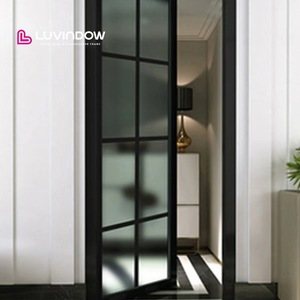
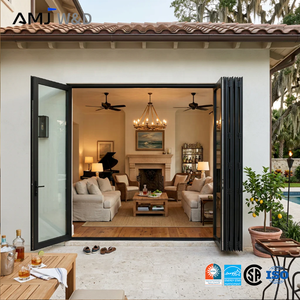
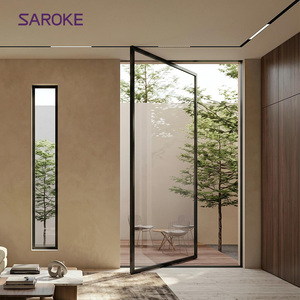
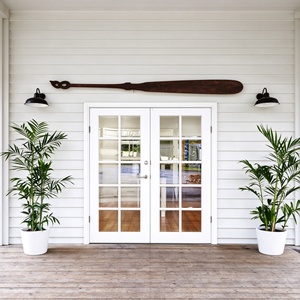
Double Tempered Glass Narrow Frame Aluminum Material 48 Inches French Doors Entry Doors
Narrow 38mm sightline profile, 5+12A+5mm low-E argon double glazed, heavy-duty multipoint hardware.
High-performance fenestration assemblies engineered for strict structural, acoustic, and thermal thresholds in tropical, temperate, and coastal climate zones.
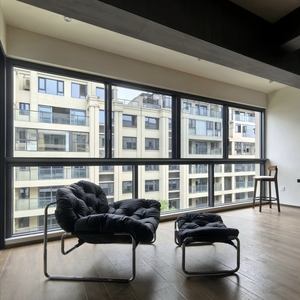
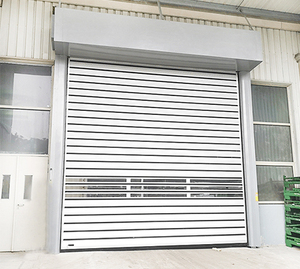
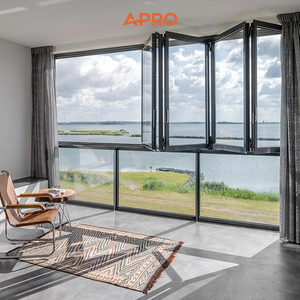
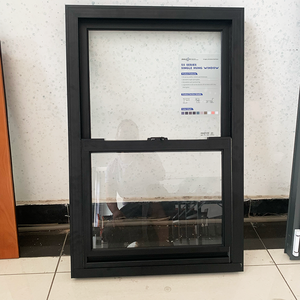
Aluminum jalousie windows (commonly referred to in modern architecture as operable louvered glazing assemblies) have undergone a profound technological transformation over the past decade. Once regarded primarily as simple residential louvers suitable only for temperate vernacular cottages, today's architectural jalousie windows represent sophisticated, high-performance building envelope systems. Driven by stringent global mandates for reduced building operational energy, enhanced indoor air quality (IAQ), and climate-resilient envelope engineering, operable aluminum louvers are being specified in premier institutional buildings, high-end residential complexes, educational campuses, and luxury hospitality developments across North America, Europe, Australia, and Southeast Asia.
"Modern architectural jalousie fenestration delivers up to 90% free ventilating aperture per unit opening area compared to roughly 45% for awning windows and 40% for sliding units—slashing reliance on mechanical HVAC systems while exceeding wind pressure tests exceeding 3000 Pascals when engineered with multi-point stainless steel cam gear drives."
The contemporary demand for natural displacement ventilation in sustainable building certifications (including LEED v4.1, BREEAM, and WELL Building Standards) has elevated the role of precision-engineered jalousies. By providing variable angle blade control (from 0 degrees fully closed to 89 degrees horizontal airflow), aluminum jalousie systems allow mechanical engineers to model passive cooling regimes with extraordinary aerodynamic precision. When paired with smart Building Automation Systems (BAS), motorized jalousie banks automatically modulate based on internal CO2 concentration, relative humidity, and diurnal ambient thermal swings, facilitating nocturnal purge cycles that significantly drop the thermal mass temperature of concrete structures without running energy-intensive chillers.
An objective, data-backed comparative audit of the world's leading manufacturers evaluated on structural metallurgy, thermal breaks, certifications, automation, and export capacity.
| Rank / Entity | Headquarters & Capacity | Primary Metallurgical Alloys | Water & Wind Pressure Compliance | Automation & Actuation Options | Export Footprint & Verification |
|---|---|---|---|---|---|
| 01 DERCHI (Guangdong Dejiyoupin) Foshan, China (Tier-1 Base) | 180,000 m² campus; 600+ personnel; 25+ years fenestration manufacturing experience | Primary 6063-T5 / 6063-T6 virgin billets; Wall thickness 1.8mm – 2.5mm | ✓ Compliant AS 2047 N6 (4500Pa wind), EN 12208 Class 9A water (600Pa) | Concealed 24V DC linear actuators, Modbus / BACnet BMS, manual rack & pinion | CE EN 14351-1, ISO 9001, AS 2047, NFRC, CSA; Direct export to EU, US, AU, ME |
| 02 Breezway Louvre Windows Brisbane, Australia | Multi-facility operations; Pioneer in Altair blade clip mechanisms | Extruded 6060-T5 architectural aluminum; injection molded UV-stabilized clips | AS 2047 cyclonic rating up to 3000Pa; water penetration tested to 300Pa | Powerlouvre 24V integrated motors with App/BMS protocols; manual handles | Oceania, North America, Southeast Asia, UK distribution network |
| 03 Safetyline Jalousie Sydney, Australia | Specialist architectural louver fabrication facilities; high security focus | Heavy-duty 6063 architectural aluminum with reinforced internal steel core bars | Tested to AS 2047; withstands up to 4000Pa wind load; air leakage Class 4 | Motorized automation integrated with rain/smoke sensors and building management | Australia, New Zealand, Pacific Islands, selected Middle East projects |
| 04 Schüco International Bielefeld, Germany | Global engineering powerhouse with network of licensed extrusion partners | Polyamide thermal-break EN AW-6060-T66 aluminum profiles | EN 12210 Class C5 wind resistance, EN 12207 air tightness Class 4 | Schüco TipTronic fully concealed mechatronic drive systems | Worldwide distribution; stringent CE & German DIN building standards |
| 05 Kawneer (Arconic Group) Norcross, GA, USA | Multi-continental manufacturing facilities serving commercial façades | 6063-T6 commercial architectural grade extruded aluminum | AAMA / WDMA / CSA 101/I.S.2/A440 tested, hurricane impact tested | Manual gear box, electric actuator links, pneumatic smoke exhaust modes | North America, United Kingdom, Continental Europe, South America |
| 06 Reynaers Aluminium Duffel, Belgium | European high-tech logistics and extrusion design center | Alloy EN AW-6060 T6; multi-chamber structural profile sections | EN 14351-1 certified, rigorous acoustic and thermal testing (U-values < 1.5) | Concealed electrical chain and rod actuators compatible with smart homes | Over 70 countries globally with dedicated technical support hubs |
| 07 Alspec Commercial Sydney, Australia | Extensive Australian distribution network; integrated window systems | Australian standard AS 1866 extruded aluminum profiles | Engineered for compliance with AS 2047 residential and commercial codes | Chain drives, manual lever lock systems, solar control louver couplings | Primary focus on Australasian region with expanding export channels |
| 08 YKK AP Inc. Tokyo, Japan / USA | Global industrial manufacturing conglomerate with massive extrusion dies | Proprietary high-silicon alloy extrusions with anodized finishes | JIS A 4702/4706 and ASTM standards certified for seismic zones | High-reliability Japanese micro-motor drives, manual ergonomic levers | Asia-Pacific, North America, Central America |
| 09 C.R. Laurence (CRL) Los Angeles, CA, USA | Global architectural glazing systems manufacturer and fabricator | 6063-T5 aluminum framing engineered for laminated and tempered glass blades | AAMA rated for institutional, commercial, and high-end residential | Electric linear drives, automated temperature sensor activation | North America, Western Europe, Australia, Latin America |
| 10 Hydro Building Systems (Technal / WICONA) Oslo, Norway / France | Circal 75R low-carbon recycled aluminum extrusion leader | Hydro CIRCAL aluminum billet (min 75% post-consumer scrap) | Strict European EN standards, passive house thermal criteria | Integrated KNX automation, emergency smoke and heat extraction (SHEV) | Global reach across Europe, Middle East, Asia, and the Americas |
How evolving carbon metrics, hurricane codes, and IoT building technologies are shifting tender specifications for commercial and residential developments.
Tier-1 commercial developers and glazing subcontractors are increasingly bypassing regional intermediaries to contract directly with large-scale Asian manufacturing bases. With global shipping routes and raw bauxite price volatility, direct framework procurement guarantees fixed-rate extrusion pricing, dedicated factory floor scheduling, and comprehensive CAD/BIM engineering integration prior to containerized dispatch.
Manual crank handles are being systematically phased out in commercial, hospitality, and civic specifications in favor of 24V DC brushless servo motors concealed entirely within the mullion jambs. Modern jalousie tenders mandate seamless communication with central BACnet, Modbus, or KNX automation frameworks to dynamically control natural purge cycles, storm closure triggers, and solar tracking modes.
With life-cycle assessment (LCA) scores directly impacting institutional financing and tax credits, procurement officers are requiring Environmental Product Declarations (EPDs). Virgin aluminum smelters powered by renewable hydropower and closed-loop scrap recycling processes (e.g., 6063-T6 with minimum 30-50% recycled content) now enjoy significant bidding advantages in EU and Australasian tenders.
From thermal break polyamide barriers to acoustic laminated louver blades, the technical boundaries of modern fenestration continue to expand.
Historical jalousies suffered from heavy conductive thermal bridging. Modern high-specification profiles incorporate reinforced Polyamide (PA66 GF25) thermal strut isolators between interior and exterior aluminum chambers. This breakthrough drops frame U-values from over 6.0 W/m²K down to under 2.1 W/m²K, enabling compliance with strict European GEG and ASHRAE 90.1 energy mandates.
Coastal developments across the Caribbean, Florida, Northern Australia, and Southeast Asia demand rigorous missile impact resilience. Cutting-edge jalousies utilize laminated safety glass blades (6mm + 1.52mm SentryGlas + 6mm) clamped within CNC-machined structural aluminum carriers, rated to pass ASTM E1886/E1996 Large Missile D tests and AS/NZS 1170.2 cyclonic wind loads exceeding 4.5 kPa.
Acoustic isolation was historically the greatest vulnerability of jalousie assemblies. Contemporary high-end systems employ continuous marine-grade dual EPDM or Santoprene co-extruded compression gaskets along every blade overlap and jamb channel. Combined with acoustic laminated glass, modern jalousie assemblies achieve weighted sound reduction indices of Rw 34 to 38 dB.
When preparing international tender documents or evaluating bids from overseas aluminum jalousie window manufacturers, architectural specifiers and general contractors must avoid vague descriptions such as "standard powder-coated jalousie". Failure to codify explicit metallurgical, coating, and mechanical tolerances frequently results in accelerated galvanic corrosion, water ingress during monsoonal downpours, or premature mechanical gear failure in marine environments. Below are the mandatory technical parameters that should govern your procurement contracts.
Tender documents should explicitly stipulate primary aluminum alloy 6063-T5 or 6063-T6 conforming to ASTM B221 or EN 573-3. Avoid secondary or uncertified remelted scrap ingots that contain high iron contaminants, which drastically impair corrosion resistance in coastal salt-spray environments. For commercial and multistory applications, structural perimeter jamb profiles must possess a nominal wall thickness of no less than 2.0mm to resist torque generated by operating bars and sustained gusting pressures. Sub-frame anchor brackets must be fabricated from 304 or 316-grade stainless steel to eradicate galvanic corrosion risks.
Jalousie mechanisms have numerous friction points and interlocking surfaces where moisture and airborne particulate matter gather. Surface treatment must meet or exceed AAMA 2604 or AAMA 2605 standards for high-performance organic coatings (70% PVDF fluoropolymer resins) or Qualicoat Seaside Class 2 powder coatings with minimum film thicknesses of 60 to 80 microns. Where architectural anodizing is specified, require Class I (minimum 18 to 25 microns) with nickel acetate or electrolytic cold seal verification, guaranteeing a minimum 3,000-hour neutral salt spray test resistance under ASTM B117.
The mechanical drive bar constitutes the primary mechanical failure point in sub-standard louver units. High-reliability jalousie systems utilize an internal concealed drive bar driven by a worm gear or heavy-duty cam lever fabricated strictly from die-cast zinc alloy (Zamak 3/5) or 316 marine-grade stainless steel. Nylon or unreinforced plastic pivot pins must be prohibited in high-traffic commercial or coastal project specifications; all pivot rivets and internal bushings must feature Teflon-impregnated bronze or 304/316 stainless steel to ensure a minimum lifecycle rating of 30,000 continuous open/close cycles without lash or mechanical play.
Depending on daylighting and shading requirements, specifications must differentiate between:
(a) Glass Louvers: Minimum 6mm or 8mm fully tempered safety glass (BS 6206 / ASTM C1048) or 6.38mm – 13.52mm laminated glass with polished, arrissed edges to prevent edge stress fractures during blade clamping.
(b) Solid Extruded Aluminum Slats: Hollow airfoil or elliptical extruded aluminum slats (6063-T5) with internal acoustic or thermal polyurethane foam cores where complete privacy, heavy sun-shading, and maximum forced-entry protection (EN 1627 RC2/RC3) are paramount.
With an expansive 180,000 m² advanced manufacturing footprint in Foshan, China, DERCHI (Guangdong Dejiyoupin Doors & Windows Co., Ltd.) delivers end-to-end engineering excellence, rigorous export quality control, and factory-direct cost advantages for leading architects, developers, and distributors across Europe, North America, and Australia.
State-of-the-art intelligent manufacturing lines, automated CNC cutting, precision milling centers, and specialized anodizing/powder-coating facilities housing 600+ skilled craftsmen and technical engineers.
Over a quarter century of structural window and door engineering experience, backing 30+ proprietary invention and utility patents. Trusted by major international developers and UK Schüco installation partners.
Comprehensive third-party test reports and certifications including CE EN 14351-1, ISO 9001, AS 2047 (N6 Cyclonic tested), NFRC, and UL fire-rated door assemblies with full Declaration of Performance (DoP).
In-house structural and facade engineering department providing complimentary project CAD shop drawings, structural wind-load calculations, and 24-hour CET/GMT aligned client coordination.
Clear, engineering-driven answers to the most common technical, logistical, and compliance questions raised by international commercial buyers.
Whether you require a complete containerized shipment of custom-engineered aluminum jalousies for a tropical resort, or high-performance thermally broken facade assemblies for a European residential tower, our senior engineering team is ready to review your schedules and CAD drawings.