Featured Aluminium & High-Performance Glass Door Solutions
Engineered to balance architectural expression with rigorous structural, acoustic, and thermal envelope performance benchmarks.
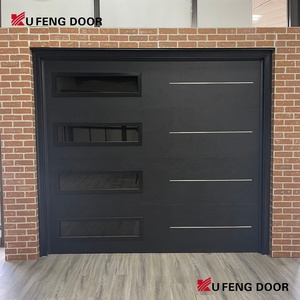
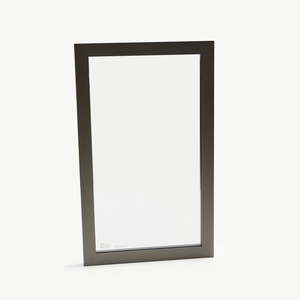
Italy Brand Aluminum Door & Window Frames for Bathroom Cabinets and Kitchens
Send an Inquiry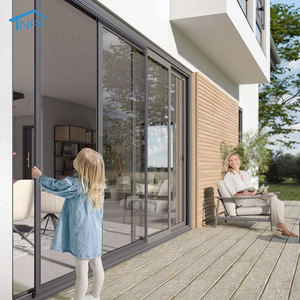
Aluminum Alloy Magnetic Roller Blind Stainless Insect Control Sliding Doors
Send an Inquiry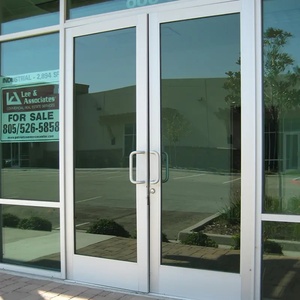
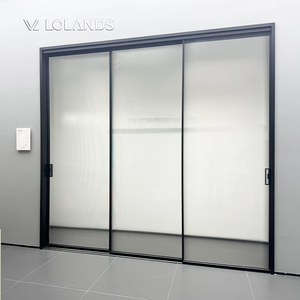
Modern Aluminum Alloy Double Glazing Sliding Wardrobe & Sound Insulation Doors
Send an Inquiry
Why Top Global Specifiers Rely on DERCHI Engineering
Consolidated production excellence from Foshan, China — blending high-capacity extrusion, high-precision CNC machining, and comprehensive international testing regimes.
Full CNC Fabrication Matrix
Our facility utilizes 4-axis and 5-axis European CNC machining centers to perform milling, drilling, and slotting with sub-millimeter tolerances (±0.2mm). Every profile cut matches project-level BIM/CAD shop drawings flawlessly.
- Automated corner-crimping with structural dual-component adhesives
- Custom architectural profiles utilizing 6063-T5 and 6061-T6 prime billets
- Seamless integration with European multi-point locking gearsets
Certified Verification System
Certified to EN 14351-1 (CE marking), AS 2047 N6 cycle testing, UL fire classifications, and ISO 9001 quality matrices. DERCHI produces auditable Factory Production Control (FPC) dossiers for municipal compliance across tier-one jurisdictions.
- Extreme wind load testing up to N6 ratings (Australian standards)
- In-house cyclic testing exceeding 200,000 operational cycles
- Traceable anodizing (Qualanod) and fluorocarbon powder coats (Qualicoat)
Engineering Support on Your Schedule
Operating with dedicated engineering teams aligned to CET, GMT, and EST business zones. We provide rapid parametric CAD drawings, thermal performance modeling, and direct structural anchoring coordination for architects and builders.
- Free preliminary shop drawings delivered within 24–48 hours
- Dedicated English-speaking fenestration project engineers
- Direct coordination with port logistics for Rotterdam, Felixstowe, and Long Beach
Future Procurement & Technological Trends in Aluminium Glazing
Essential insights for developers, façade consultants, and procurement managers targeting compliance, decarbonization, and long-term building life-cycle efficiency.
1. Polyamide Thermal Barriers
Global energy regulations—including European EPBD revisions, Germany's GEG, and UK Approved Document L—demand whole-door U-values (UD) below 1.2 W/m²K. The market has shifted permanently from mechanically crimped resin systems to continuous, multichambered fiberglass-reinforced polyamide (PA66 GF25) thermal breaks.
Procurement teams must prioritize multi-cavity thermal struts and aerogel-infused insulative panels to mitigate dew point condensation and eliminate exterior-to-interior bridging across extreme seasonal deltas.
2. Concealed High-Security Hardware
Modern architectural design trends demand ultra-narrow profiles and uncluttered, frameless sightlines without compromising forced-entry resistance. High-spec projects increasingly mandate EN 1627 RC2 or RC3 resistance classifications.
The industry standard now integrates multi-point motorized locking bolts directly inside the frame profile extrusion. Electronic access controls, motorized pivot floor springs, and biometric access mechanisms are integrated directly during factory fabrication rather than installed ad-hoc on job sites.
3. Decarbonized Aluminium & Circularity
With Scope 3 emissions reporting becoming standard across international tenders, real estate asset managers are screening suppliers for low-carbon primary billets. Sourcing hydro-powered aluminium billets with carbon intensities under 4.0 kg CO₂e/kg Al represents a distinct commercial differentiator.
Furthermore, EPD (Environmental Product Declaration) filings and fully recyclable gaskets (EPDM systems compliant with Cradle-to-Cradle guidelines) represent mandatory checklist items for Class-A green builds.
| Performance Dimension | Test Standard / Regulatory Baseline | Commercial Benchmark | DERCHI Fabrication Standard |
|---|---|---|---|
| Thermal Transmittance (UD) | EN ISO 10077-1 / EN ISO 10077-2 | 1.4 – 1.8 W/m²K | Down to 0.85 W/m²K (Triple Glazed + Aerogel Polyzone) |
| Structural Wind Load | EN 12210 / AS 2047 | Class C2 / N3 (1200 Pa) | Class C5 / N6 Rating (Serviceability > 3000 Pa) |
| Air Permeability | EN 12207 / ASTM E283 | Class 3 (600 Pa) | Class 4 (Highest EU standard, 4-stage co-extruded EPDM) |
| Water Tightness | EN 12208 / ASTM E331 | Class 7A (300 Pa) | Class 9A / E1050 (> 1050 Pa with dual drainage) |
| Burglar / Intrusion Resistance | EN 1627 – EN 1630 | RC1N / Basic Entry | RC2 to RC3 Configuration with multi-point perimeter hooks |
Frequently Asked Questions by Commercial Buyers
Direct technical and commercial clarifications covering engineering specifications, customs documentation, testing standards, and logistics workflows.
FAQ How does DERCHI ensure structural conformity with European and British building regulations?
Every fenestration run is engineered to fulfill EN 14351-1 requirements. For each customized production order, our engineering team verifies load calculations using finite element modeling, providing matching Factory Production Control (FPC) documentation, Declaration of Performance (DoP), and CE markings ready for building inspectors and municipal sign-off.
FAQ What glass unit configurations are fabricated for high-performance doors?
We configure double and triple-pane insulated glass units (IGUs) incorporating 6mm, 8mm, or 10mm toughened safety glass (EN 12150) or acoustic laminated glass (EN 14449). Assemblies feature warm-edge spacer bars, 90% argon gas filling, and offline double/triple silver Low-E coatings to optimize solar heat gain coefficients (SHGC) and thermal performance.
FAQ How does your team resolve dimensional tolerances for large-format pivot and sliding systems?
Oversized installations (up to 4.5 meters in leaf height) utilize aerospace-grade alloy billets (6063-T6) with enlarged wall thicknesses (up to 3.0mm). Frames feature internal corner-cleats that are hydraulic-crimped and sealed with German-engineered two-component structural resin. Pre-assembly fit checks are executed on leveling jigs before crating.
FAQ What packaging and logistical protections prevent freight damage during sea transit?
All items undergo a multi-tier packaging protocol: protective strippable low-tack film on all powder-coated faces, corner edge guards, high-density polyethylene air bubble wrap, and fumigated steel-strapped plywood crates. Openings are desiccant-treated to prevent moisture staining during sea transit across changing temperature zones.
FAQ What are your standard lead times from shop drawing sign-off to port departure?
Standard architectural fabrication cycles range from 25 to 35 business days following final CAD drawing approval and finish validation. Bespoke extrusion dies or specialty curved-glass configurations require approximately 40 to 45 business days. Fast-track production lines are available for time-sensitive commercial projects.
FAQ Can DERCHI accommodate third-party pre-shipment inspections (e.g., SGS, TÜV)?
Yes. We routinely host independent technical auditing teams (SGS, Intertek, TÜV SÜD) at our 180,000 m² Foshan facility for visual dimension validation, coating thickness testing (micron gauge), water immersion verification, and operability cycle audits prior to container sealing.