Featured Products & Factory-Direct Assemblies
Precision-extruded architectural solutions manufactured by Guangdong Dejiyoupin Doors and Windows Co., Ltd. (DERCHI), engineered under strict ISO 9001 and CE standards for demanding commercial and residential structures.
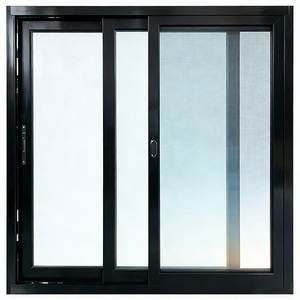
Industry Whitepaper: Specifying Heavy-Duty Aluminium Net Sliding Doors for Global Architecture
In modern high-performance building envelopes, an aluminium net sliding door (often referred to as an integrated screen patio door, triple-track security sliding door, or diamond mesh sliding entrance) must do far more than facilitate smooth ingress and insect exclusion. International developers and architects operating under tight thermal directives (such as the UK Part L, German Gebäudeenergiegesetz - GEG, and North American NFRC thresholds) require multi-functional fenestration systems. These doors must seamlessly unite primary structural glazed panels with high-tensile 304 or 316 marine-grade stainless steel wire netting, delivering airtightness, hurricane wind-load resistance, acoustic attenuation, and forced-entry deterrence in a unified frame.
As international supply chains gravitate toward Tier-1 Chinese manufacturers with comprehensive industrial clusters, understanding the precise metallurgy, multi-cavity thermal insulation, track extrusion geometry, and multi-point hardware mechanics is critical for procurement executives. Guangdong Dejiyoupin Doors and Windows Co., Ltd. (DERCHI) leads this transformation through proprietary 6063-T5/T6 alloy extrusions, multi-stage fluorocarbon and Qualicoat powder finishing, and precision-engineered stainless roller carriages designed for cycle lives exceeding 100,000 smooth operations.
Engineering Hallmarks of Chinese Aluminium Net Sliding Systems
Evaluating the material differences between standard commercial sliding sashes and enterprise-grade architectural integrated security net sliding patio systems.
High-Tensile 304/316 King Kong Mesh
Unlike fragile glass fiber or aluminum insect netting, industrial-grade security screen doors incorporate 0.8mm to 1.0mm diameter wire woven 304/316 marine-grade stainless steel mesh (known in the industry as King Kong diamond wire mesh). Tension-clamped into heavy-wall structural profiles with shear-resistant hidden wedge locks, this netting withstands knife-shear tests (AS 5041), dynamic impact bursts (AS 5039), and severe crowbar attacks without compromising ventilation or outside visibility.
Multi-Track Extrusion & Concealed Drainage
DERCHI's three-track and four-track sliding profiles feature independent internal cavities dedicated to glass sash travel, security net sliding, and concealed drainage. Extruded from virgin 6063-T6 architectural billet aluminum with minimum wall thicknesses ranging from 2.0mm to 3.0mm, these systems integrate step-down siphon drainage chambers and anti-backflow baffle valves, preventing rainwater infiltration during extreme wind pressures of up to 4500 Pa (equivalent to Category 5 typhoons).
Polyamide PA66 GF25 Thermal Decoupling
To eliminate thermal bridging while keeping insect defense intact, the structural frames incorporate 24mm to 34mm German-standard polyamide (PA66 GF25) thermal barrier strips reinforced with 25% glass fiber. This delivers a low overall heat transfer coefficient (U-value down to 1.35 W/m²·K when paired with argon-filled warm-edge low-E triple glazing). Builders achieve compliant energy ratings without having to sacrifice oversized sliding openings up to 3.5 meters in height.
Architectural Specification Matrix: China Aluminium Net Sliding Systems
A reference checklist for international engineering tenders, building control compliance, and quality auditing.
| Performance Parameter | Standard Specification | Heavy-Duty Premium (DERCHI Spec) | Compliance & Test Protocol |
|---|---|---|---|
| Alloy Composition & Temper | Commercial 6063-T5 Secondary Ingot | Primary Billet Virgin 6063-T6 / 6061 Structural | GB/T 5237, ASTM B221, EN 755 |
| Profile Wall Thickness | 1.4 mm – 1.6 mm | 2.0 mm – 3.0 mm Reinforced Interlockers | EN 14351-1, AAMA/WDMA 101 |
| Flyscreen / Security Net Mesh | Fiberglass / Standard Aluminum Mesh | 0.8mm – 1.0mm 304/316 Stainless King Kong Mesh | AS 5039 / AS 5041 Knife Shear Test |
| Thermal Transmittance (Uw) | 2.8 – 3.4 W/m²·K (Non-Thermal) | 1.3 – 1.7 W/m²·K (PA66 GF25 Thermal Break) | ISO 10077-1, NFRC 100/200, EN 10077 |
| Wind Pressure Resistance | 2000 Pa – 2500 Pa (Serviceability) | 4500 Pa – 5000 Pa (Cyclonic N6 Rating) | AS 2047 N6, ASTM E330, EN 12210 Class C5 |
| Acoustic Insulation (Rw) | 28 dB – 31 dB | 38 dB – 43 dB (Laminated Acoustic IGU) | ISO 717-1, ASTM E413 sound transmission |
| Hardware & Roller Carriage | Zinc-alloy Single Plastic Roller (80kg) | Quadruple 304 Stainless Tandem Rollers (450kg) | EN 13126-15 Class 4, 100,000 cycles |
| Surface Coating Longevity | Ordinary Powder Coat (40-60 microns) | AkzoNobel / Tiger PVDF Fluorocarbon (80+ microns) | AAMA 2604/2605, Qualicoat Class 2 |
Future Procurement Trends: Where Aluminium Net Sliding Doors Are Heading
Strategic market analysis for developers, distributors, and general contractors planning project pipelines across 2026–2030.
1. Minimalist Ultra-Narrow Sightlines with Concealed Screens
Architects worldwide are rejecting heavy, clunky multi-track framing in favor of panoramic views. The fastest-growing procurement trend is the "Phantom Screen" integration—where the structural interlock sightline is narrowed down to 18mm–26mm, and the heavy stainless security net nests entirely within the wall pocket or behind an ultra-slim secondary mullion. This gives ultra-luxury villas continuous floor-to-ceiling glass exposure while remaining 100% insect-proof.
2. Mechatronic Drive Systems & Smart Building Automation
Commercial mixed-use and premier villas are shifting to motorized automated sliding doors. Next-generation net sliding doors feature concealed brushless DC motors in the top transom, pinch-prevention infrared curtains, and magnetic reed switches linked to central BMS (Building Management Systems). Procurement demands increasingly mandate that screen panels can operate independently or synchronize with the glass panel via IoT voice, remote, or wall-mount touch controllers.
3. Zero-Carbon Recycled Billets & EPD Certification
With the European Carbon Border Adjustment Mechanism (CBAM) and US LEED v4.1 certifications accelerating green building standards, Tier-1 Chinese suppliers are adopting hydroelectric-smelted low-carbon aluminum billets. Environmental Product Declarations (EPD) and recycled content percentages (>40% circular alloy) are transitioning from optional marketing claims into mandatory tender prerequisites for European and Oceanian municipal contracts.
Technological Frontiers in Chinese Door & Screen Production
How automated CNC processing, automated corner crimping, and computerized tension stretching have modernized Chinese door fabrication.
Robotic CNC Precision Machining
Leading Foshan manufacturers utilize 5-axis German and Italian CNC machining centers capable of milling hardware pockets, multi-point lock mortises, and weep holes across single 7-meter extrusions with micro-level accuracy (±0.1mm). This eliminates on-site alignment issues, guarantees tight perimeter weatherstripping, and prevents water capillary action at mechanical corner joints.
Hydraulic Corner Gluing & Pin Crimping
Traditional screw-fastened door corners are prone to sagging, rattling, and air leakage under heavy wind. High-end Chinese factories use cast aluminum corner cleats injected with two-component German polyurethane glue, reinforced with automated hydraulic double-pin crimping. This creates a permanent, water-sealed frame joint capable of supporting heavy double- and triple-glazed sashes up to 450kg.
Pneumatic Uniform Mesh Tensioning
The primary flaw in low-cost mesh doors is screen waviness and uneven tension. DERCHI implements automated pneumatic tension tables that stretch 304/316 King Kong wire under multi-directional hydraulic pressure before automated clamping. This ensures optical flatness, zero acoustic vibration during heavy winds, and a clean planar surface that resists sagging over decades of heavy use.
Why Leading Builders Partner with DERCHI (Guangdong Dejiyoupin)
Headquartered in Foshan—the world’s foremost epicentre of precision aluminium extrusion—Guangdong Dejiyoupin Doors and Windows Co., Ltd. (DERCHI) stands as an elite Chinese manufacturer delivering high-performance fenestration systems to the global market. Over 25+ years of continuous engineering expansion has established our 180,000 square meter smart manufacturing base, staffed by more than 600 skilled technicians.
- Chosen by UK Schüco Partner: Selected by a premier UK building contractor for luxury multi-villa programmes, meeting exacting European fenestration tolerances.
- Rigorous International Certifications: Certified for European CE (EN 14351-1), ISO 9001, UL Fire Resistance, and tested to Australia’s highest AS 2047 N6 cyclone standard.
- Free In-House BIM & CAD Engineering: Dedicated bilingual structural engineers create custom shop drawings, wind-load calculations, and elevation schedules prior to extrusion.
- Global Logistics & Port Reach: Professional heavy-duty plywood export crating delivering straight to Rotterdam, Hamburg, Antwerp, Felixstowe, Long Beach, and Sydney.

Frequently Asked Questions: Sourcing Aluminium Net Sliding Doors from China
Real-world technical answers addressing overseas shipping, custom specifications, compliance, and warranty guarantees.
What is the difference between standard flyscreens and 304/316 King Kong security screens?
Standard flyscreens use vinyl-coated fiberglass or soft aluminum wire (0.2mm–0.3mm gauge). They prevent insect intrusion but can be torn by pets or sliced by utility knives, offering zero burglar deterrence. King Kong security screens use high-tensile 0.8mm–1.0mm 304 or 316 marine-grade stainless steel wire woven into a rigid mesh. Held in place with heavy mechanical wedges, they act as an anti-theft security barrier capable of passing AS 5039/5041 impact and knife-shear tests, while still preserving 65%+ natural airflow and high visibility.
How does thermal break technology affect an aluminium net sliding door?
Aluminum is naturally conductive. Without a thermal break, outdoor heat or sub-zero cold transfers directly into your interior, causing condensation and energy loss. DERCHI integrates reinforced polyamide nylon strips (PA66 GF25) between the interior and exterior aluminum chambers. In a triple-track sliding system, this thermal break decouples both the primary glazed sash and frame, cutting door thermal transmittance (U-value) from ~3.5 W/m²·K down to 1.4–1.7 W/m²·K, fully complying with modern European energy codes.
Can you provide custom RAL powder coatings and coastal-rated finishes?
Yes. We operate fully automated horizontal and vertical powder coating lines certified to Qualicoat Class 2 and AAMA 2604/2605 standards. For residential villas, we offer any custom RAL color, ultra-matte architectural blacks, or realistic heat-transfer fluorocarbon wood grains. For coastal applications within 500 meters of seawater, we provide 80+ micron PVDF (polyvinylidene fluoride) coatings and marine-grade 316 stainless hardware to resist C4/C5 marine atmospheric corrosion.
How are large sliding glass & net doors protected against transit damage?
Export door systems are packaged to avoid shipping damage. Frames are disassembled or pre-hung depending on project dimensions. Extrusions are wrapped with protective electrostatic film, cushioned with high-density EPE foam corner protectors, strapped with heavy polymer banding, and enclosed inside fully enclosed, fumigated, forklift-accessible marine-grade plywood crates. Glass and screen panels are shipped with anti-vibration shock absorbers.
What documentation and test certificates are provided for local building permits?
For every project schedule, DERCHI provides an engineering submittal package including: signed CAD shop drawings, structural section calculations, glass test certificates (CE EN 12150, SGCC ANSI Z97.1, AS/NZS 2208), air/water/wind pressure reports (AS 2047, EN 14351-1, ASTM E283/E331), and comprehensive factory quality inspection reports signed off prior to crating.
What is the standard production lead time and minimum order quantity (MOQ)?
Because we operate an expansive 180,000 m² direct-manufacturing facility, our minimum order quantity is adaptable: we support custom private villa packages (MOQ starting at 1 set/project) up to high-volume commercial hotel developments exceeding 5,000 square meters. Standard fabrication lead times range from 25 to 35 business days following final CAD drawing and finish sign-off.
Start Your Direct Factory Procurement Consultation Today
Send us your door schedule, rough opening dimensions, architectural elevations, or wind-load requirements. Our Foshan engineering team will prepare structural CAD shop drawings, hardware schedules, and an FOB/CIF commercial quote within 24 business hours.
Get a Quote