Engineered Architectural Window & Door Solutions
Precision-manufactured in our Foshan industrial complex. Every profile integrates certified thermal breaks, multi-cavity barrier insulation, and world-class multi-point locking gear tailored for international building envelopes.
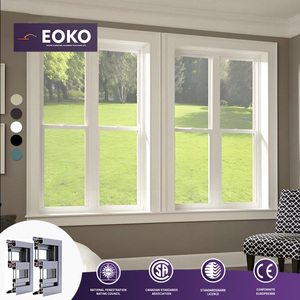
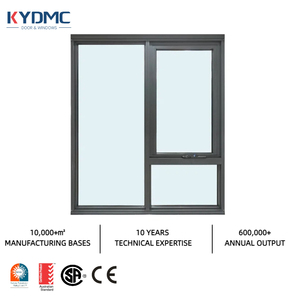
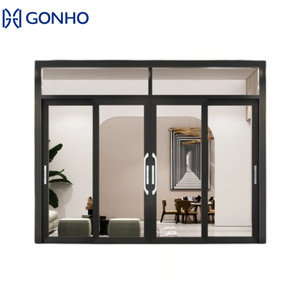
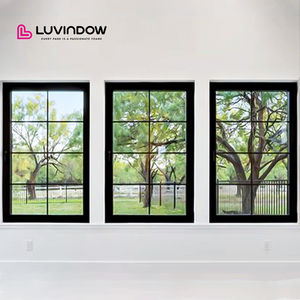
The Mechanics of High-Performance Tilt & Turn Fenestration
Tilt & turn window architecture represents the pinnacle of European building physics. Combining dual-axis hardware with multi-stage isobaric drainage, it outperforms standard sliding or casement systems across all climatic parameters.
Dual-Action Kinematic Hardware
Operated via an ergonomic single-handle interface, the perimeter transmission gear drives multiple hardened mushroom cam locks into three-dimensional frame keeps. Turn 90° for full inward swing (side-hung mode for effortless glass maintenance and emergency egress); turn 180° for top tilt (hopper mode delivering draft-free displacement ventilation through a continuous 100mm upper apex aperture).
Polyamide Thermal Barriers
Thermal bridge neutralization is achieved using PA66 GF25 (25% glass-fiber reinforced polyamide) multi-cavity struts. These create a robust thermodynamic barrier between interior and exterior 6063-T6 aluminum extrusions, yielding whole-window thermal transmittance figures down to Uw ≤ 0.85 W/m²·K when paired with argon-filled triple insulating glass units.
Continuous Isobaric Sealing
Unlike conventional compression strips, our tilt & turn frames deploy a triple-gasket circuit engineered from peroxide-cured cellular EPDM with vulcanized corner joints. The oversized central fin creates an isolated pressure-equalization chamber that repels static and dynamic water penetration under wind-driven rain exceeding 1,200 Pa pressure differentials.
| Performance Characteristic | Aluminium Tilt & Turn (Derchi) | Standard Sliding System | Traditional Projecting Casement | Testing Standard Reference |
|---|---|---|---|---|
| Thermal Transmittance (Uw) | 0.80 - 1.20 W/m²·K (Triple / Low-E) | 2.20 - 3.40 W/m²·K | 1.40 - 1.90 W/m²·K | EN ISO 10077-1 / NFRC 100 |
| Air Infiltration Rating | Class 4 (q100 ≤ 3 m³/h·m²) | Class 2 (Brush seals leak) | Class 3 - Class 4 | EN 12207 / ASTM E283 |
| Water Tightness Under Pressure | Class E1200 (≥ 1,200 Pa) | 300 - 450 Pa | 600 - 900 Pa | EN 12208 / ASTM E331 |
| Acoustic Attenuation (Rw) | 38 dB - 48 dB (with acoustic PVB) | 26 dB - 32 dB | 32 dB - 38 dB | EN ISO 717-1 / ASTM E413 |
| Structural Wind Load Deflection | Class C5 (Design Load ≥ 2,000 Pa) | Class C2 / C3 | Class C4 | EN 12210 / AS 2047 (N6) |
| Forced Entry Security Classification | RC2 / RC3 (Multipoint all-round) | Basic Cam Lock (Vulnerable) | RC1 / RC2 | EN 1627-1630 / PAS 24 |
Why Commercial Contractors Choose DERCHI
Ranked among the top fenestration fabricators in Guangdong, we bridge the gap between Chinese advanced manufacturing economics and stringent Western architectural compliance.

Automated CNC Processing Lines
Our Foshan manufacturing center utilizes 5-axis German elumatec machining centers for precision extrusion cutting, robotic corner crimping, and automated hardware milling. This ensures linear profile tolerances within ±0.2mm and mitre alignments that guarantee lifelong structural squareness under heavy IGU loads.

Comprehensive BIM & CAD Support
We provide full structural static calculations, wind load simulations, and detailed 2D/3D CAD shop drawings for every fenestration schedule. Our engineering division reviews anchor point loading, thermal expansion gaps, and interface details with structural concrete or curtain wall frameworks before issuing fabrication tickets.

Rigorous Multi-Standard Testing
DERCHI systems are fully certified to international standards: CE (EN 14351-1) for Europe, AS 2047 (N6 rating) for Australia, NFRC for North America, and UL Fire-Rated protocols. We maintain an in-house calibrated test chamber testing for air permeance, structural cyclonic gusting, and dynamic water spray.
Future Procurement & Product Trends (2025–2030)
The global fenestration supply chain is undergoing profound structural shifts driven by decarbonization mandates, envelope automation, and accelerated project lead times.
Low-Carbon Aluminum Alloys
Global developers demand documented Environmental Product Declarations (EPDs). Sourcing is pivoting to circular billets produced using renewable hydroelectric smelters, reducing primary carbon footprints from 16.7 kg CO2e/kg down to under 4.0 kg CO2e/kg aluminum.
Smart Mechatronic Integration
Tilt & turn hardware is converging with building automation systems (BAS). Concealed chain-actuators integrated into the Euro-groove allow automated nighttime purging, CO2-triggered opening, and biometric sensor verification without sacrificing manual handle operation.
Passivhaus Glazing Evolution
With Europe's revised EPBD directive and North America's Energy Star 7.0 standards, procurement mandates are shifting to Vacuum Insulated Glass (VIG) and warm-edge, TPS-sealed hybrid triple units that deliver center-of-glass Ug values of 0.40 W/m²·K in slender 36mm cavity pockets.
Ultra-Slim Structural Frames
Architectural demand favors concealed sash designs where the operable frame is hidden behind the outer masonry or structural mullion profile. This increases natural daylight transmission by up to 18% while offering unobstructed sightlines.
Strategic Supply Chain Analysis: Direct Chinese Export vs. Regional Sourcing
For commercial contractors managing mid-to-large scale multi-family, hotel, or commercial building portfolios, buying directly from tier-one Chinese fenestration manufacturers like DERCHI eliminates multiple distributor tiers. Traditional procurement pathways route European profile designs through local assemblers, creating compound markups of 40% to 65% alongside fragmented warranty handovers. Direct procurement from our Foshan facility couples standardized German hardware systems (Siegenia, Roto, Hoppe) with our high-volume extrusion and glass tempering efficiency.
Furthermore, our direct-to-site containerization optimizes logistics. Utilizing steel-reinforced cantilevered stillages, shrink-wrapped desiccant modules, and barcoded inventory systems matching architectural window schedules, general contractors receive prefabricated, fully glazed, and pre-adjusted tilt & turn assemblies ready for immediate rough-opening installation.
Frequently Asked Questions for Window Importers
Clear, technically precise answers regarding structural warranties, test documentation, packaging protections, and custom profile extrusion requirements.
How do you verify U-values for local building code submissions?
We provide localized thermodynamic simulation reports generated via LBNL THERM and WINDOW software in compliance with ISO 10077-1/2 and NFRC 100. Each calculation accounts for frame profile conductance (Uf), spacer warm-edge psi (Ψ) values, and actual glass center-of-pane performance (Ug) based on your project's specific glass build-up and overall dimensions.
What hardware options are supplied with DERCHI tilt & turn systems?
We supply either genuine European-manufactured hardware gear (such as German Roto NT / NX, Siegenia Aubi, or Sobinco) or high-grade domestic commercial assemblies certified for over 25,000 continuous operating cycles under EN 13126-8 Grade 4/5. All gearboxes feature integrated anti-mishandling devices to prevent concurrent tilt and turn engagement.
How are units packaged to prevent ocean transit damage and condensation?
Every sash and outer frame is protected with 80-micron low-tack protective film, corner foam guards, and encased in heat-treated fumigated plywood crates or customized steel A-frames. Crates are lined with moisture-barrier polyethylene sheets and packed with active silica desiccants to prevent anodized/powder coat oxidation during 30+ day ocean transit.
Can you manufacture custom extrusion dies for architectural specifications?
Yes. With our in-house tooling division, we can design, cut, and validate custom 6063-T6 or 6005-T5 architectural aluminum extrusion dies within 18–25 calendar days. Extrusions are available in Qualicoat Class 2 powder coats, PVDF (AAMA 2605), or Class 1 anodized finishes with minimum 20-year colorfastness guarantees.
What is the standard warranty and post-handover support protocol?
We back our commercial fenestration products with a comprehensive 10-year warranty covering frame structural integrity, thermal break adhesion, and powder coating adhesion, alongside a 5-year replacement warranty on mechanical hardware and IGU hermetic seal failure. Our bilingual technical team provides remote live installation guidance aligned with CET/GMT hours.
What are the minimum order quantities (MOQ) and production lead times?
Our standard production runs accommodate custom projects starting from a single 20-foot GP container (approx. 80–120 window units depending on dimensions) up to multi-tower shipments exceeding 100,000 square meters. Standard manufacturing lead time upon CAD shop-drawing sign-off is typically 30 to 45 business days.
Connect Directly with Our Façade Engineering Team
Send us your window schedules, project architectural elevations, or structural tender specifications. Our technical engineering division will generate comprehensive CAD shop drawings, glass thermodynamic matrices, and factory-direct pricing within 48 hours.
Send an Inquiry