Engineering Authority • Global Fenestration Standards

Top China Aluminum Swing Window Suppliers & Exporter

Precision Architectural Fenestration, High-Performance Thermal Barrier Systems, and Certified Commercial Glazing for Global Specifiers, Contractors, and Façade Engineers.

Strategic Sourcing White Paper

Navigating High-Performance Fenestration Sourcing from China

For commercial developers, real estate investment trusts, and general contractors operating across North America, Europe, Oceania, and the Middle East, procuring architectural fenestration requires an uncompromising equilibrium between thermal transmission compliance (U-factor/SHGC), structural integrity under cyclonic loading, and manufacturing lifecycle economics. As a preeminent Chinese window and door industrial group operating out of Foshan, we synthesize cutting-edge metallurgical engineering with world-class fenestration certifications—including AS2047, NFRC, CE EN 14351-1, and Florida Miami-Dade County NOA impact approvals.

180,000m²
Foshan Mega Production Base
25+
Years Engineering Mastery
100+
Patents & Global Certifications
600+
Specialized Fenestration Artisans
Flagship Portfolio

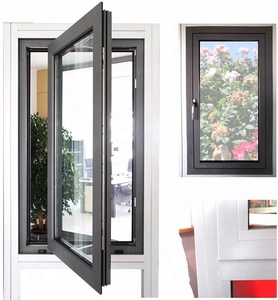
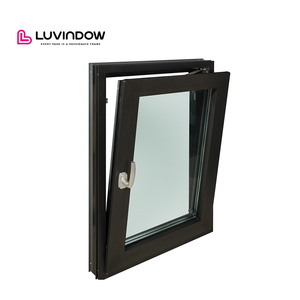
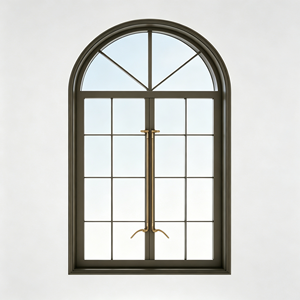
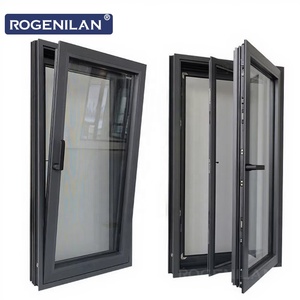
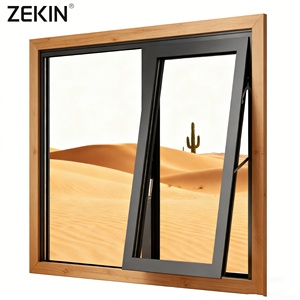
Engineered Architectural Aluminum Swing Window Systems

Precision-machined from prime 6063-T5/T6 primary aluminum alloys, equipped with polyamide PA66 GF25 thermal isolators and insulated multi-seal gasketing. Explore our certified swing configurations below.

Engineering Specifications

Standard Architectural Performance Benchmark Matrix

Compare our baseline engineering thresholds against international commercial building requirements. Every export production batch undergoes lot-specific hydrostatic pressure, air permeation, and mechanical fatigue verification.

Performance Characteristic Test Standard Achieved Engineering Value Architectural Application Field
Thermal Transmittance (U-Value) ISO 10077-2 / NFRC 100 / EN 673 Uw 0.8 – 1.4 W/m²·K (Bespoke: ≤ 0.65) Passive buildings, luxury residential, green certification projects
Structural Wind Load Resistance ASTM E330 / AS 4055 / EN 12210 Class C5 / Serviceability ≥ 4500 Pa High-rise coastal towers, exposed alpine resorts, cyclonic zones
Water Penetration Resistance ASTM E331 / AS 2047 / EN 12208 Static ≥ 700 Pa / Dynamic ≥ 1000 Pa Monsoon belts, exposed littoral frontages, tropical marine sites
Air Infiltration Permeability ASTM E283 / EN 12207 / AS 4420.4 < 0.1 m³/(h·m) @ 100 Pa (Class 4) Hermetic building envelopes, cleanroom facilities, cold climates
Acoustic Attenuation (STC / OITC) ASTM E90 / ISO 717-1 Rw + Ctr = 38 – 46 dB Airport zones, central business districts, urban medical complexes
Forced Entry Security (Burglar Resistance) EN 1627 / PAS 24 / AS 5039 Class RC2 / RC3 / Commercial Grade Embassies, financial facilities, secured private estates
Industry Horizon

Technological Frontiers & Future Sourcing Trends (2025–2030)

The international aluminum swing window sector is undergoing a massive shift fueled by decarbonization directives, stringent energy codes, and computerized building envelope integration. Understanding these macro trends safeguards project value and regulatory adherence.

⚙

Hyper-Insulating Polyamide Thermal Breaks

Traditional cold-bridge aluminum frames are obsolete. The market has shifted toward multi-cavity, continuous polyamide 66 reinforced with 25% glass fiber (PA66 GF25) extrusion isolators with low-lambda foam inserts. This technology minimizes linear thermal bridging down to Psi values under 0.035 W/(m·K), allowing slim 70mm to 90mm systems to meet European Passivhaus and North American Energy Star V7 parameters without profile mass bloat.

PA66 GF25 Isolators Multi-Chamber Zero-Condensation
⚡

Smart Mechatronic & Concealed Hardware

Modern façades demand pure planar aesthetics. Inward and outward swing systems are transitioning rapidly toward fully concealed, 180-degree multi-axis heavy hinges capable of supporting sash weights of over 250 kg. Concurrently, integration with Building Management Systems (BMS) through concealed 24V linear chain actuators and biometric multi-point locking enables automated nighttime purge ventilation and smart climate control integration.

Concealed 180° Hinges BMS Interfacing Automated Purge
🌱

Decarbonized Circular Metallurgy

Scope 3 carbon reporting in Europe (CBAM) and North America (LEED v4.1 / Buy Clean) now mandates rigorous Environmental Product Declarations (EPD). Tier-one Chinese manufacturers are actively migrating to low-carbon primary aluminum smelted with hydroelectric power alongside closed-loop post-consumer recycled billets. This reduces embodied carbon from 16.5 kg CO₂e/kg aluminum down to less than 4.0 kg CO₂e/kg profile, future-proofing imports.

Low-Carbon Billet EPD Verified CBAM Compliant
🛡

Vacuum Insulated Glazing (VIG) Integration

While argon-filled triple-glazed IGUs dominate current high-spec procurement, hybrid Vacuum Insulated Glazing (VIG) is becoming the standard for slimline profiles. By establishing a 0.1mm high-vacuum chamber between float panes supported by micro-pillars, VIG yields centre-of-glass thermal performance of Ug 0.4 W/m²·K within an overall thickness under 10mm, reducing total sash structural mass by up to 40% while enhancing sound isolation.

VIG Hybrids Ug ≤ 0.40 W/m²·K Acoustic Shield
🌊

Hurricane Resiliency in Temperate Regions

Climate volatility has expanded hurricane and high-velocity wind-borne debris criteria outside traditional Caribbean and Florida regions into coastal Japan, Australia, and Western Europe. Modern swing casements are engineered with ionoplast interlayers (SentryGlas®) bonded directly into deep aluminum glazing channels with structural silicones, providing structural retention even under cyclical storm pressures exceeding 6500 Pa.

HVHZ Tested Structural Silicone Missile Level D
🖥

Parametric BIM & Pre-Fabrication Protocols

Leading overseas contractors no longer purchase windows from static 2D elevation catalogs. Procurement has shifted to end-to-end digital integration: factory engineers ingest Revit models, process fabrication tolerances via CAM directly to 5-axis CNC double-head profile machining centers, and export customized shop installation drawings alongside IFC models for automated quantity surveying and clash detection.

BIM / IFC Workflows 5-Axis CNC Milling Millimeter Precision

Factory Authority • Foshan Industrial Core

25+ Years of Engineering Mastery: Guangdong Dejiyoupin (DERCHI)

Operating across an immense 180,000 m² modern manufacturing ecosystem in Foshan, Guangdong—the recognized epicenter of China's high-grade architectural aluminum cluster—DERCHI stands among the elite top 10 door and window manufacturers nationwide. We do not merely assemble fenestration; we engineer complete building envelopes.

Our dedicated team of over 600 skilled technicians, metallurgists, and export engineers ensures seamless technical execution from the earliest shop drawing phase to delivery on-site. Validated by long-term project partnerships—including supplying a UK-based British builder and long-term partner of German Schüco for upscale multi-villa complexes—our manufacturing pedigree meets and surpasses Europe's and America's most exacting quality bars.

  • ✔ Exhaustive International Validation: Fully accredited under CE (EN 14351-1), ISO 9001, Australian AS 2047 (N6 cyclone rating), and UL fire-rated certifications.
  • ✔ In-House R&D & 30+ Intellectual Property Patents: Continuous testing for air, water, and cyclic structural endurance on calibrated testing rigs prior to factory release.
  • ✔ Full Complementary Solutions: Single-source coordination for entrance swing doors, pivot systems, heavy curtain walls, interior architectural wooden doors, and automated garage portals.
  • ✔ Dedicated Time-Zone Engineering Support: English-speaking façade engineers aligned with GMT/CET/EST working hours to expedite CAD reviews and tender submittals.
Contact Us
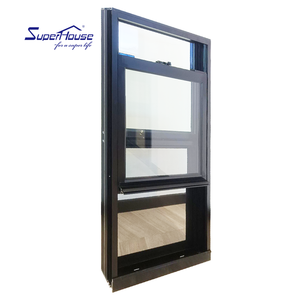
Aerial view of the massive 180,000 square meter DERCHI manufacturing facility in Foshan
Expert Procurement Insights

Frequently Asked Questions for Sourcing Aluminum Windows

Key considerations for import compliance, ocean logistics packaging, profile alloy grades, and on-site glazing tolerances.

What profile alloy and thermal break configurations should be specified for coastal environments?

Specify virgin 6063-T6 or 6061-T6 aluminum alloys with an architectural anodized coating (minimum 20–25 μm, Qualanod certified) or PVDF fluoropolymer paint finish (≥ 40 μm, AAMA 2605 compliant) to resist salt spray corrosion. For thermal barriers, mandate continuous crimped Polyamide PA66 GF25 strips. Avoid cheap pour-and-debridge polyurethane resin systems in demanding climates, as differential expansion rates can induce delamination over a 15-year lifecycle.

How does DERCHI guarantee compliance with regional building codes like AS 2047, NFRC, or CE EN 14351?

Every export project begins with a shop-drawing audit against local codes. For Australia, products conform to AS2047, passing N6 structural deflection and air/water infiltration tests via accredited laboratories (NATA-certified partners). For the US, we execute thermal simulations adhering to NFRC 100/200/500 protocols. For the European Union, CE Declarations of Performance (DoP) under EN 14351-1 are accompanied by verified factory production control documentation.

What packaging protocols prevent profile scratch and glass breakage during multi-modal ocean freight?

Finished units receive protective PE film on all visible profile surfaces, with high-density EVA foam corner caps. The entire sash is sealed in vacuum shrink-wrap to isolate humidity. Windows are then secured inside non-fumigation treated solid marine plywood crates reinforced with galvanized steel corner straps and internal shock absorption spacers. Crates are loaded with custom dunnage and heavy-duty tie-downs in dry containers (20GP/40HQ) to prevent transit shifting.

Can DERCHI engineer custom CAD shop drawings matched to complex architect schedules?

Yes. Our in-house fenestration engineering department comprises over 40 structural and façade designers. Upon receipt of your architectural window schedule, elevation plans, and wall sectional details, we produce comprehensive, dimensioned CAD shop drawings within 3 to 5 business days—at no initial cost. These detail anchor clip placements, structural shim calculations, water table flashings, sub-sill drainage paths, and thermal break alignments.

How are hardware reliability and cyclic durability verified for swing windows?

We partner with premier hardware manufacturers—including German Roto, Siegenia, Hoppe, and North American Truth—supplemented by our proprietary high-tensile stainless steel multipoint locking components. Hardware configurations undergo minimum 25,000 to 50,000 continuous open-close mechanical cycle tests under maximum sash weight without functional degradation, meeting European EN 13126 and Grade 4/5 salt spray corrosion endurance standards (EN 1670).

What are standard lead times, and how do you accommodate phased commercial delivery?

Following formal CAD drawing sign-off and color-sample approval, standard manufacturing turnaround spans 25 to 35 calendar days. For large-scale multi-family developments or high-rise residential towers, we schedule staged production runs matched to your site pouring and framing schedules, coordinating container shipments to arrive in just-in-time sequence at your discharge port (e.g., Rotterdam, Hamburg, Felixstowe, Long Beach, or Sydney).

Accelerate Your Architectural Fenestration Schedule

Connect directly with our Foshan engineering directors. Share your window schedule, Revit/CAD files, or tender performance specifications to receive certified thermal calculations, compliance reviews, and a detailed B2B price quote within 24 hours.

Contact Us