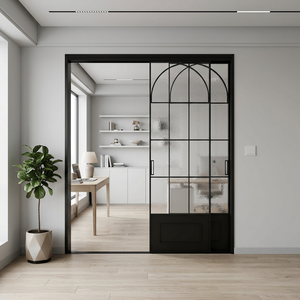
Curated Architectural Systems for Global Distribution
Explore our premium architectural aluminium-framed configurations. Every unit integrates structural durability, slim heritage sightlines, and high-performance insulated glazing designed to meet stringent international building envelopes.
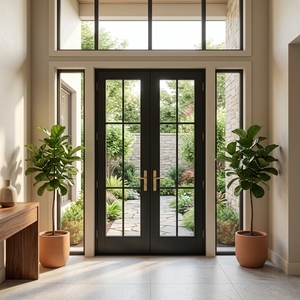
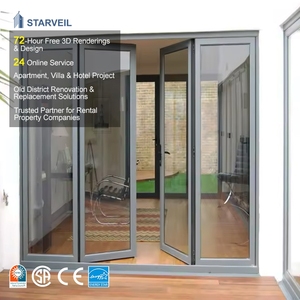
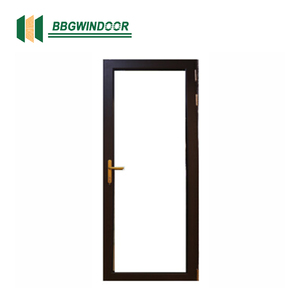
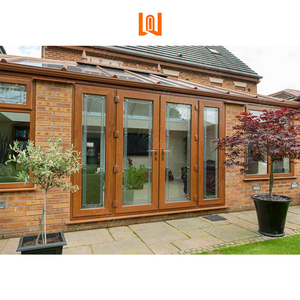
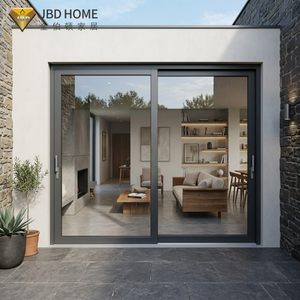
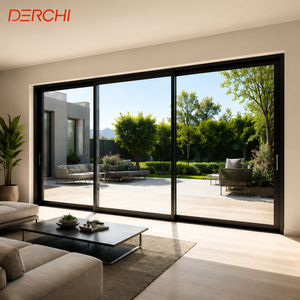
Engineering Superiority: Aluminium Crittall-Style Evolution
The architectural resurgence of early 20th-century steel glazing has met a fundamental engineering challenge: the thermal and structural limitations of traditional hot-rolled carbon steel. As leading manufacturers and global exporters, our factory provides the definitive solution through precision thermal break aluminium extrusion.
Advanced Thermal Isolation
Traditional steel fenestration suffers from severe thermal bridging, yielding condensation problems and U-values failing modern European (EN ISO 10077-2) or North American building envelopes. Our engineered French doors utilize multi-chambered 6063-T6 aerospace aluminum alloys fitted with high-density polyamide (PA66 GF25) thermal barriers, achieving overall door thermal transmittance values as low as Ud ≤ 1.1 W/(m²·K).
Ultra-Narrow Heritage Sightlines
Replicating authentic mid-century industrial fenestration requires razor-thin perimeter profiles. Through optimized structural wall thicknesses up to 3.0mm at high-stress pivot junctions, our profiles retain an ultra-slim sightline of 35mm to 48mm without structural deflection. These doors effortlessly accept massive acoustic laminated double- and triple-glazed units while retaining the iconic steel grid look.
Decade-Grade Surface Protection
Unlike raw steel that rusts when sealants micro-crack in maritime or humid atmospheres, our architectural aluminium receives Qualicoat Class 2 certified electrostatic polyester powder-coating or 25-micron deep marine anodization. Tested through over 3,000 hours of continuous neutral salt spray (ASTM B117), our surfaces withstand relentless coastal UV rays, extreme freeze-thaw cycles, and caustic industrial pollutants.
Technical Comparison: Traditional Steel vs. DERCHI Architectural Aluminium
| Performance Indicator | Legacy Hot-Rolled Steel | DERCHI Thermal Break Aluminium | Engineering Compliance Advantage |
|---|---|---|---|
| Thermal Conductivity (Frame) | 50 W/(m·K) (High Thermal Bridging) | 0.2–0.3 W/(m·K) (With PA66 Barrier) | Complies with UK Part L, German GEG, and IECC 2024 |
| Weight Burden on Hinges | Approx. 7,850 kg/m³ (Severe Load) | Approx. 2,700 kg/m³ (Balanced Rigidity) | Eliminates door sag; extends multipoint lock lifespan |
| Corrosion & Weathering | Prone to internal frame oxidation | Zero corrosion; Qualicoat Class 2 finishes | Suitable for Marine C5-M coastal zones without recoating |
| Wind Load Resistance | Rigid, but prone to weld failure | Heavy-duty structural chambers (Class N6) | Certified under AS 2047, EN 12210 Class C5 (2000 Pa+) |
| Water & Air Tightness | Basic face putty / single EPDM fin | Triple continuous EPDM co-extruded gaskets | EN 12207 Class 4 (Air) & EN 12208 Class 9A (Water) |
Future Procurement & Architectural Trends (2025–2030)
Architects, large contractors, and distributors must balance aesthetic demands against evolving global regulations. Our market intelligence identifies three decisive shifts in the aluminium Crittall-style French door sector.
1. Zero-Carbon Prefabrication & EPD Mandates
Institutional procurement across the EU, UK, and North America increasingly demands Environmental Product Declarations (EPD). Future supply chains favor low-carbon billet sources produced via renewable hydroelectric smelting. Our factory commits to circularity, utilizing up to 60% post-consumer recycled billet while producing verified lifecycle documentation.
2. Integrated Smart Access & Concealed Automation
Bulky external surface-mounted latches are rapidly disappearing. The emerging standard combines minimalist heritage horizontal glazing bars with fully embedded motorized multipoint locking, biometric recognition, and zero-clearance bottom drop-down draft seals. All mechanisms tie silently into KNX, Zigbee, or commercial BACnet building management platforms.
3. Factory-Direct CAD/BIM Customized Deliveries
Developers avoid intermediate import agent markups by working directly with agile Chinese manufacturing hubs that provide native Revit BIM families, exact parametric CAD shop drawings, and just-in-time container deliveries. Direct engineering consultations resolve structural mullion calculations and threshold sub-sill clearances before extrusion cuts occur.
Why International Developers & Specifiers Rely On Us
Operating from Foshan, the capital of precision aluminium processing, Guangdong Dejiyoupin Doors and Windows Co., Ltd. (DERCHI) represents top-tier Chinese manufacturing built to satisfy the highest international project requirements.
Scale: 180,000 m² Production Base
With an extensive manufacturing footprint, computerized double-head precision cutting equipment, automated multi-axis CNC routing, and dedicated corner-crimping lines, we produce over 35,000 square meters of high-end architectural fenestration monthly with micron-level tolerances.
Rigorous Certifications: CE, ISO, AS 2047, UL
Our doors do not rely on unverified claims. We validate our structural and security assemblies through accredited global laboratories, securing CE EN 14351-1 declarations of conformity, Australian AS 2047 cyclonic approvals, UL-rated fire resistance, and ISO 9001 certified manufacturing consistency.
Export Packaging & Dedicated Support
Exporting to major ports across Europe, the Americas, and Oceania requires specialized protection. All door frames are fully assembled, sealed, hardware-calibrated, and nested inside heavy-gauge fumigated marine plywood crates. Our English-speaking engineering teams align directly with Western business hours for real-time drawing reviews.
Frequently Asked Questions by Commercial Buyers & Architects
Clear, direct answers regarding testing, customization, installation, and international freight logistics.
How do your aluminium Crittall-style doors achieve airtightness and water ingress resistance?
Unlike traditional welded steel doors that rely on surface bead caulking, our aluminium French doors employ an engineered multi-chamber system fitted with continuous co-extruded automotive-grade EPDM gaskets. We integrate vulcanized pre-formed corner seals and internal multi-tier drainage channels with weep-hole check valves. Under testing per EN 1026/12207 and ASTM E283/E331, our systems prevent drafts up to 600 Pa dynamic wind pressures and prevent water penetration even under severe storm conditions.
Can the internal glazing bars (astragals) be customized to match historic architectural styles?
Yes, we provide three distinct astragal bar methodologies: 1) Surface-applied exterior and interior aluminium architectural profiles featuring high-adhesion 3M structural bonding tape with internal dummy spacer bars (creating the authentic divided-lite look while maintaining continuous insulated glass efficiency); 2) True through-mortise structural glazing mullions for heavy commercial applications; or 3) Internal decorative grilles hermetically sealed between glass panes for maintenance-free cleaning. Custom spacing, arch segments, and transoms are mapped precisely to your CAD shop drawings.
What hardware configurations and burglar-resistance standards are supplied with the doors?
Our standard French door suites integrate German-engineered Siegenia, HOPPE, or Roto multipoint latching hardware, securing the door leaf at 3 to 5 locking points along the jamb and perimeter. These hardware assemblies achieve European RC2 and RC3 burglar-resistance classifications under EN 1627. Handle choices range from authentic industrial raw bronze and forged blackened steel finishes to streamlined minimalist architectural levers with integrated keyways or smart fingerprint access modules.
What is the standard production cycle and shipping timeline for custom container-scale orders?
Upon final sign-off of our parametric CAD shop drawings and glass schedules, manufacturing standard lead-times are 25 to 35 business days. This window covers CNC extrusion machining, automated powder coating, thermal break assembly, double/triple insulated glass unit fabrication, dry-assembly quality inspection, and crate packing. Ocean freight from our closest deep-water ports (Shenzhen/Guangzhou) typically takes 22 to 32 days to European hubs (Rotterdam, Hamburg, Felixstowe) and 16 to 24 days to US West Coast terminals.
How do you guarantee that oversized double-door units remain plumb and square during shipment?
Every door frame is test-assembled in our Foshan quality control facility. Corner joints are joined with cast aluminum corner cleats injected with high-strength two-component polyurethane epoxy sealants, which cure into an immovable structural joint. For transit, frames and leaves are secured with temporary diagonal steel tension braces and wrapped with anti-abrasive foam blankets inside IPPC-certified fumigated structural wooden cases. We provide detailed installation manuals and uncrating diagrams to ensure immediate site installation without frame racking.
Transform Your Next Architectural Development
Consult with our facade engineering team today. Share your elevation drawings, window/door schedules, or thermal target requirements, and receive complimentary parametric CAD shop drawings and factory-direct pricing within 24 hours.