Architectural Fenestration & Integrated Opening Systems
When evaluating trusted aluminum clad wood window manufacturers, tier-one developers and architects demand seamless aesthetic and structural coherence throughout the building envelope. Below is our engineering-grade collection of thermally broken casement, sliding, and entryway systems manufactured to complement custom composite alu-wood window schedules.
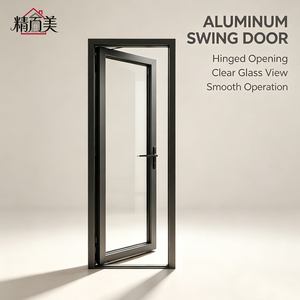
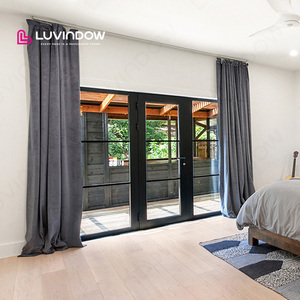
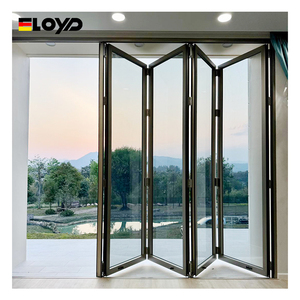
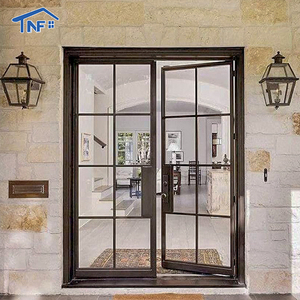
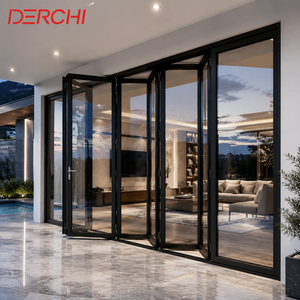
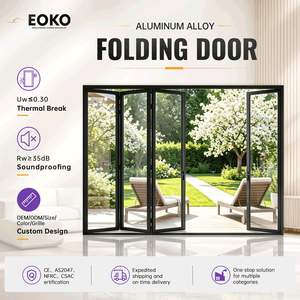
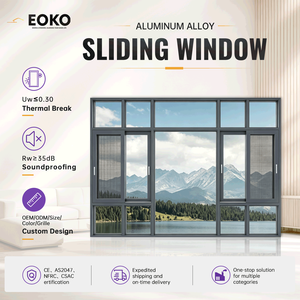
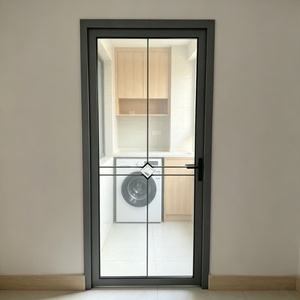
The Anatomy of High-Performance Aluminum Clad Wood Windows
Aluminum clad wood windows (also recognized across Europe as Holz-Alu Fenster) represent the pinnacle of architectural fenestration physics. By decoupling internal structural thermal comfort from exterior weather exposure, these hybrid profiles eliminate the inherent vulnerabilities of solid wood framing while outperforming conventional uninsulated metal frames.
The inner core features sustainably sourced, multi-ply finger-jointed engineered timber (such as Siberian Larch, American Red Oak, or Slow-Grown Nordic Pine). This laminated timber substrate provides structural dead-load capacity, superior thermal inertia, and natural vibration damping that drastically mitigates acoustic transmission. On the exterior envelope, architectural-grade extruded aluminum profiles (Alloy 6063-T6 or 6060-T66) act as an armor shield against ultraviolet radiation, torrential rainwater, coastal salt-mist, and cyclonic wind pressures.
Differential Thermal Expansion Decoupling
Aluminum expands and contracts at a rate of approximately α = 23 × 10-6/K, whereas organic timber remains stable longitudinally at roughly α = 5 × 10⁻⁶/K. Rigidly bonding these two dissimilar materials causes frame warping, seal rupture, and structural failure. Leading manufacturers utilize high-density polyamide (PA66-GF25) floating clips. These nylon structural clips allow unhindered micro-gliding of the aluminum shell across cyclical temperature deltas from -35°C to +80°C while creating an engineered 5mm rear ventilation cavity that continuously evacuates interstitial moisture.
Enterprise Advantage: Guangdong Dejiyoupin (DERCHI)
Operating from Foshan, Guangdong—the epicentre of global architectural metal and window manufacturing—Guangdong Dejiyoupin Doors and Windows Co., Ltd. (DERCHI) stands among the premier fenestration entities globally. Our direct-to-specifier production pipeline mitigates intermediary markups while enforcing rigorous ISO 9001 quality management.
180,000 m² Intelligent Production Base
Equipped with German 5-axis CNC machining centers (Homag, Weinig), automated robotic powder coating lines, and integrated assembly matrices ensuring dimensional tolerance within ±0.5mm across oversized architectural casements.
25+ Years Industrial Heritage & 600+ Specialists
Over a quarter century of specialized R&D in climatic window engineering. A multi-disciplinary team of over 600 façade engineers, timber treatment technicians, and export packaging professionals serving tier-one global markets.
Global Standards Compliance & Testing
Products are systematically certified to European CE (EN 14351-1), Australian AS 2047 (N6 cyclonic pressure rated), North American NFRC thermal standards, and Florida Miami-Dade County NOA hurricane impact protocols.
Dedicated Engineering CAD/BIM Support
Our in-house technical department provides complimentary shop drawings, isometric structural joinery calculations, and BIM Revit families mapped directly to your commercial or residential window schedule.
Comparative Performance Matrix: Fenestration Typologies
Architects and institutional developers routinely cross-examine envelope options against life-cycle costs, structural parameters, and sustainability goals. The data below illustrates the measurable performance delta of Aluminum Clad Timber versus competing frame assemblies.
| Performance Characteristic | Alu-Clad Wood (DERCHI System) | Standard Thermal Break Aluminum | Unclad Solid Timber | Reinforced UPVC / Vinyl |
|---|---|---|---|---|
| Overall Thermal Transmittance (Uw) | 0.78 – 1.10 W/(m²·K) (Passive House) | 1.40 – 1.90 W/(m²·K) | 1.10 – 1.40 W/(m²·K) | 1.30 – 1.70 W/(m²·K) |
| Expected Service Life | 50+ Years (Zero Rot Vulnerability) | 35 – 45 Years | 20 – 30 Years (High Maintenance) | 18 – 25 Years (UV Degradation) |
| Sound Transmission Loss (Rw / STC) | Up to 48 dB (Natural Timber Damping) | 34 – 40 dB | 38 – 42 dB | 30 – 35 dB |
| Structural Wind Load (EN 12210) | Class C5 / N6 (>3000 Pa Wind Pressure) | Class C4 / C5 | Class C3 | Class C2 / C3 |
| Embodied Carbon Impact | Carbon Negative Core (FSC Certified) | High Embodied Energy | Low / Carbon Sink | Fossil Fuel Derived / Microplastics |
| Exterior Maintenance Interval | Zero Sanding / Re-painting (PVDF Coated) | Periodic Wash Down Only | Every 2-4 Years Staining/Sealing | Periodic Cleaning; Brittle with Age |
Future Global Procurement Trends in Architectural Fenestration
The commercial and luxury residential fenestration landscape is undergoing seismic shifts driven by decarbonization mandates, evolving building physics codes, and advanced supply chain restructuring. Major institutional buyers are actively positioning their procurement strategies around four critical pillars:
1. Life Cycle Assessment (LCA) & EPD Mandates
The European Green Deal, along with US municipal carbon accounting laws (e.g., NYC Local Law 97), requires project specifiers to submit verified Environmental Product Declarations (EPD). Future alu-clad wood window procurement will favor manufacturers utilizing sustainably managed, FSC-certified Scandinavian or Siberian timber coupled with secondary low-carbon recycled aluminum billets, slashing cradle-to-gate carbon metrics by over 45%.
2. Vacuum Insulated Glazing (VIG) Hybridization
Traditional triple-glazing packages add immense weight (often >45 kg/m²), placing severe mechanical stress on operable sash hinges. The industry is rapidly adopting tempered Vacuum Insulated Glazing (VIG). VIG delivers center-of-glass thermal conductance Ug ≤ 0.45 W/(m²·K) in an ultra-slim 8.3mm profile, slashing overall sash weight by half while expanding maximum window span limits.
3. Direct-from-Factory Integrated Sourcing
Escalating general contractor overheads have made local multi-tiered distribution untenable for large-scale multi-family and hospitality developments. Commercial developers now form direct technical partnerships with mega-manufacturers such as DERCHI. Sourcing pre-glazed, pre-hung, factory-tested fenestration assemblies directly from source factories reduces unit procurement budgets by 30% to 40% while preserving strict warranty continuity.
Technological Evolution in Alu-Wood Engineering
Window engineering is moving away from passive barrier assemblies toward active building enclosure technology. Modern aluminum clad wood window systems integrate several advanced engineering breakthroughs:
- Continuous Multi-Cavity Co-Extruded EPDM Gaskets: Replacing conventional vulcanized rubber with cellular micro-porous silicone and EPDM seals, retaining elasticity under continuous -40°C compression.
- Concealed Mechatronic Hardware & Smart Actuation: Completely hidden tilt-and-turn hinges capable of supporting 200kg sash weights, fully integrated with BACnet/Modbus building management protocols for automated night purge ventilation.
- Bio-Based Non-Toxic Micro-Porous Timber Coatings: Waterborne primer systems that penetrate deep into the timber grain, preventing biological decay while remaining 100% free of volatile organic compounds (Zero VOC).
Passive House Institute (PHI) Standard Alignment
By pairing 86mm laminated timber profiles with polyurethane core insulation inserts and argon-filled Warm Edge Spacer triple-pane Low-E glass units, our alu-clad fenestration systems achieve verified isothermal lines where internal surface temperatures never fall below the 13°C dew-point threshold. This eliminates structural condensation risk and mold proliferation in ultra-humid environments.
The B2B Architectural Procurement Playbook
Executing a high-value fenestration package requires strict stage-gate management. At DERCHI, our global supply chain eliminates discrepancies through an integrated 6-phase engineering workflow:
Audit & Schedule
Comprehensive evaluation of architectural elevations, window schedules, acoustic indices, and local wind pressure requirements.
CAD Shop Design
Preparation of 1:1 cross-sectional joinery drawings, anchor flange interfaces, and sill drainage details for consultant sign-off.
Precision CNC Milling
Automated four-sided timber profiling and aluminum extrusion cutting under climate-controlled conditions (10% ± 2% timber moisture).
Multi-Point QA Testing
Each unit undergoes air infiltration, water resistance, and operational sash torque verification prior to packaging.
Ocean Packaging
Custom heavy-duty plywood crates with desiccant packs, corner edge armor, and vacuum-sealed wrapping against maritime humidity.
Site Support
Comprehensive installation guides, anchor fastening plans, and live remote engineering support aligned with local job site hours.
Frequently Asked Questions for Architectural Specifiers
Essential technical, logistics, and certification insights addressing common queries encountered by architects, general contractors, and developers when sourcing custom alu-wood windows.
How do aluminum clad wood windows prevent interstitial condensation and dry rot?
+
What timber species are recommended for coastal or high-humidity regions?
+
Can large-span alu-clad wood window assemblies meet Hurricane & Cyclonic wind load standards?
+
What are the lead times for custom bespoke alu-clad fenestration orders shipped to Europe or North America?
+
How does the thermal transmittance (Uw) calculation differ between NFRC and European EN standards?
+
Ready to Specify High-Performance Alu-Clad Fenestration?
Connect directly with our senior fenestration engineering consultants. Share your window schedule, CAD plans, or architectural specifications to receive an engineered proposal and detailed cost analysis within 24 hours.