Featured Industrial & Residential Entry Systems
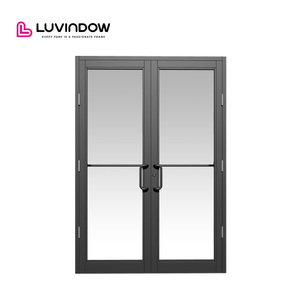
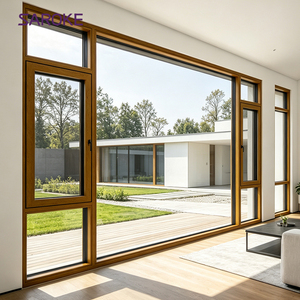
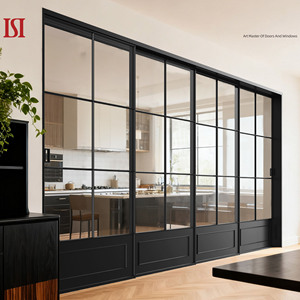
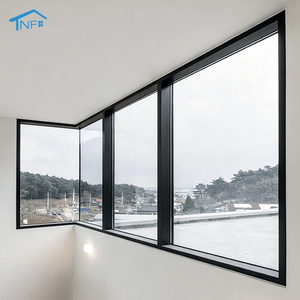
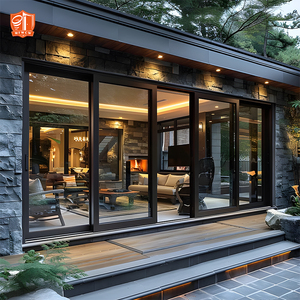
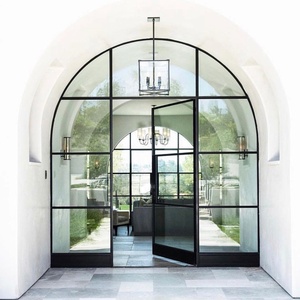
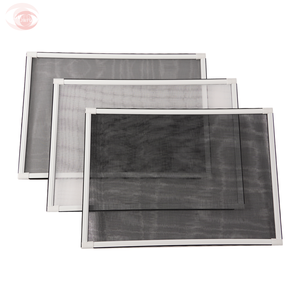
Explore our precision-fabricated storefront security doors, insulated arched French systems, minimalist heavy-duty lift sliders, and high-performance weather-screen assemblies engineered to international building standards.
Engineering Metallurgy & Structural Integrity in Modern Aluminum Entrance Architecture
An authoritative breakdown on why global developers, facade consultants, and general contractors are transitioning from traditional timber and standard composite entryways to advanced thermally isolated aluminum alloy systems.
Why Structural Aluminum Alloy 6063-T6 Defines Commercial & Residential Façades
In modern architectural fenestration, the building envelope represents the critical nexus between aesthetic vision and structural physics. An entrance door is subject to rigorous dynamic forces: continuous cyclic loading, mechanical torsion, intense climatic thermal differentials, and severe wind pressure. As an elite aluminum front door manufacturer and supplier, Guangdong Dejiyoupin Doors and Windows Co., Ltd. (DERCHI) engineers its door leaves and frame extrusions utilizing high-tensile primary aluminum alloy 6063-T6, completely rejecting secondary recycled scrap that compromises structural homogeneity.
By integrating continuous multi-chambered polyamide (PA66 GF25) thermal isolator strips reinforced with 25% transverse glass fibers, our systems decouple the exterior aluminum skin from interior structural members. This thermal break prevents thermal transmission, achieves overall door heat transfer coefficients (UD values down to 0.78 W/m²·K), and mitigates internal condensation even when external winter temperatures plummet past -30°C.

Future B2B Procurement Trends in Global Aluminum Entryway Systems
How international regulatory pressures, energy performance directives, smart urbanization, and architectural preferences are shaping commercial and residential door specifications over the next decade.
Passivhaus & Zero-Carbon Mandates
With stringent updates to the EU Energy Performance of Buildings Directive (EPBD), UK Future Homes Standard, and North American IECC 2024, procurement schedules now mandate verified UD values below 1.0 W/m²K. B2B buyers require complete aerogel-infused and argon-filled triple-glazed certifications to bypass building control inspections seamlessly.
Structural RC3 & Hurricane Hardening
High-net-worth residential compounds and hospitality properties demand seamless integration of EN 1627 RC2/RC3 burglar protection alongside TAS 201/202/203 hurricane impact ratings. Suppliers must embed 7-point automatic gear-driven espagnolettes, interlocking anti-jemmy studs, and laminated PVB/SentryGlas matrix profiles.
Smart Biometrics & Building Automation
Commercial developments and upscale penthouses are rapidly moving toward fully hidden motorized multipoint lock mortises compatible with BACnet, KNX, Control4, and discreet facial recognition/3D biometric fingerprint scanners seamlessly milled directly into the architectural pull handles.
Single-Source Envelope Bundling
Project architects and commercial general contractors are actively consolidating procurement. Rather than fragmented sourcing across distinct vendors, developers seek audited OEM/ODM facilities capable of simultaneously fabricating heavy front pivot doors, matching facade curtain walls, patio sliders, and interior casements.
Engineering Benchmark: Material Specification Matrix
Comparative technical analysis of DERCHI precision-engineered aluminum entry systems versus common market fabrications across critical architectural and structural metrics.
| Performance Metric | DERCHI Architectural Standard | Generic Market Specification | Engineering Compliance Standard |
|---|---|---|---|
| Alloy Metallurgy & Profile Wall | Primary Virgin 6063-T6 (2.0mm – 3.0mm structural wall) | Recycled aluminum scrap (1.2mm – 1.4mm profile) | EN 755-9 / ASTM B221 / GB 5237 |
| Thermal Transmittance (UD) | 0.78 – 1.10 W/m²·K (Aerogel + PA66 GF25 34mm barrier) | 2.20 – 3.50 W/m²·K (Cold bridges or thin PVC breaks) | EN ISO 10077-1 / NFRC 100 |
| Burglar & Intrusion Resistance | RC2 / RC3 Rating (Multipoint locking, anti-drill plates) | Standard single latch or RC1 baseline | EN 1627 / PAS 24:2022 Verified |
| Acoustic Isolation (Sound Reduction) | Rw = 38 dB – 44 dB (Acoustic laminate + EPDM seals) | Rw = 25 dB – 29 dB (Uninsulated cavities) | EN ISO 717-1 / ASTM E90 |
| Wind Load & Air Permeability | Class 4 Air / Class 9A Water / Class C5 Wind (AS 2047 N6) | Class 2 Air / Class 4A Water / Class B2 Wind | EN 12207 / EN 12208 / EN 12210 |
| Surface Treatment Longevity | Qualicoat Class 2 Powder Coat / PVDF (60–80 µm) | Commercial single-spray finish (<35 µm) | AAMA 2604 / AAMA 2605 (20+ Year Color Fastness) |
Guangdong Dejiyoupin Doors & Windows (DERCHI) Enterprise Advantages
Recognized as one of the top 10 premium door and window brands in China, DERCHI combines 25+ years of master fabrication with world-class engineering discipline.
Selected by UK Schüco Partner
A prestigious British homebuilder and long-term partner of German Schüco selected DERCHI for a high-profile multi-villa estate in the UK, validating that our precision tooling, micro-tolerance corner crimping, and hardware calibration match the strictest European elite standards.
Australian AS 2047 N6 Certification
Our architectural door assemblies successfully passed the extreme Australian AS 2047 N6 structural test—the highest obtainable rating for extreme cyclonic winds, air tightness, and structural deflection. These doors are deployed across cyclonic coastal zones and harsh inland deserts alike.
Comprehensive Quality Systems
Backed by an ISO 9001 quality management infrastructure, CE Marking according to harmonized European standard EN 14351-1, and UL fire-door compliance, DERCHI guarantees that every batch meets rigorous shop-drawing tolerances before crating.




Streamlined Commercial Procurement & Manufacturing Workflow
From preliminary architectural sketches to on-site handover, our engineering team manages international door orders with absolute transparency and micro-millimeter precision.
Architectural Brief
Evaluation of door schedules, rough opening dimensions, target U-values, wind pressure calculations, and access control hardware integration.
Shop Drawings (CAD)
Generation of comprehensive 1:1 cross-sectional CAD drawings, sill threshold connection details, and structural jamb anchor elevations.
CNC Machining
Profile cutting on German 5-axis CNC machining centers, precision laser mortising for multipoint locks, and hydraulic corner crimping.
QC Calibration
Pre-assembly inspection checking seal compression, motorized lock latching cycle, diagonal squareness (<0.5mm variance), and PVDF coating depth.
Export Crating & Log
Encapsulated PE protective film wrap, corner edge protectors, and IPPC-stamped fumigated plywood cases for safe maritime transport worldwide.
In-Depth B2B Procurement FAQ for Architects & Contractors
Direct technical answers addressing international compliance, oversized leaf stability, thermal efficiency, lead times, and customization protocols.
Yes. Every exterior entrance system manufactured for European and British projects holds official CE and UKCA declarations of performance under EN 14351-1. Our high-spec thermal break profiles and insulated composite cores comfortably achieve UD values below the 1.4 W/m²·K threshold required by Part L, with Passivhaus-ready configurations hitting 0.78 W/m²·K.
Through internal carbon-steel reinforced sub-frames and German FritsJurgens or Dormakaba heavy-duty floor pivot box mechanisms, we routinely engineer single-leaf pivot entry doors reaching up to 2.5 meters in width and 6.0 meters in height, accommodating leaf weights up to 800 kg with effortless, balanced finger-touch operation.
For marine applications, our extrusions undergo specialized pre-anodization electro-pickling followed by Class 2 AkzoNobel or Tiger Drylac fluorocarbon PVDF powder coating. This exceeds AAMA 2605 requirements, passing rigorous 3,000-hour neutral salt spray (ASTM B117) testing without blistering, chalking, or edge peel.
Absolutely. Our 5-axis CNC machining centers precisely pre-mill concealed conduit channels, wire-pass hinge loops, and mortise pockets for any specified European DIN or American ANSI mortise. We regularly integrate Winkhaus blueMatic, GU-Secury, SimonsVoss digital cylinders, and motorized face-ID systems before factory dispatch.
Standard bespoke production runs require 25 to 35 working days following signed CAD shop-drawing approvals. For multi-unit commercial developments requiring dedicated die-extrusion customizations or specialty cast aluminum reliefs, production schedules are scheduled between 40 to 50 days, supported by direct sea freight to Rotterdam, Hamburg, Los Angeles, Sydney, or Felixstowe.
Every door panel is protected with anti-scratch electrostatic wrap, edge-corner foam bumpers, and completely sealed within heavy-duty fumigated wooden crates reinforced with interior steel strap tensioning. Silica desiccant bags are inserted inside crating voids to prevent moisture condensation during tropical equatorial transits.
Request Complete Engineering Specifications & Project Quotes
Connect directly with our senior fenestration engineers to receive free CAD shop drawings, structural wind load analysis, and our 2026/2027 Architectural Door Systems Catalog tailored to your bill of quantities.
Get Catalog