Architectural Portfolio
High-Performance Aluminum & Engineered Doors
Engineered to comply with strict international fire-retardancy, weather-barrier, and forced-entry standards. Explore precision-fabricated systems configured for tier-one residential and commercial development projects.
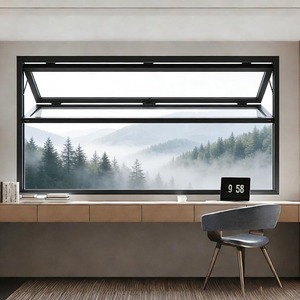
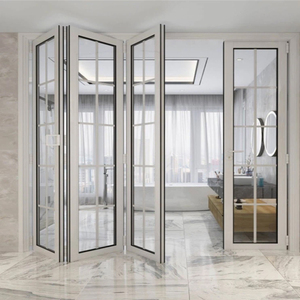
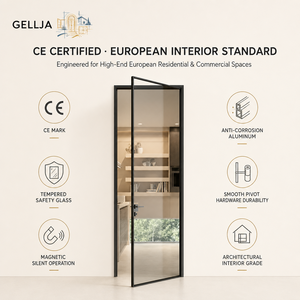
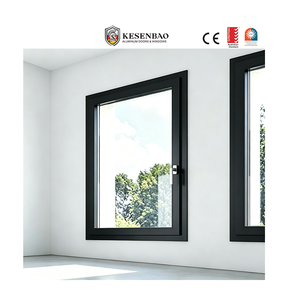
Integrated Screen System
NFRC Custom Double Glazed Aluminum Casement Windows With Integrated Screen Solutions
Send an Inquiry180,000 m²
Foshan Mega Production Facility
25+ Yrs
Precision Extrusion & Assembly
600+
Certified Engineers & Technicians
100+
Global Testing Patents & Passes
Engineering Standards
Engineering Anatomy of Heavy-Duty Aluminum Mesh Barrier Doors
In high-end architectural and security-conscious developments, aluminum security mesh doors represent a structural fusion of micro-engineered screen elements and industrial-grade hollow profile extrusions. Unlike standard insect screening, structural security mesh assemblies are engineered to resist high kinetic knife-shearing, crowbar levering, and forced human impact while sustaining uninterrupted natural ventilation and optic clarity.
A resilient aluminum mesh door relies primarily on two core components: a multi-chambered, primary virgin aluminum profile (predominantly 6063-T5 or 6063-T6 architectural alloy with wall thicknesses exceeding 2.0mm to 2.5mm) and a high-tensile infill mesh. The benchmark standard across North American, European, and Australasian markets specifies marine-grade AISI 316 or 304 structural stainless steel woven wire (typically 0.8mm to 1.0mm wire gauge, woven in a high-density 10x10 or 11x11 mesh per inch), chemically pretreated and electrostatically powder coated with UV-stabilized architectural polymers.
The linchpin of barrier longevity is the clamping and retention mechanics. Elite factories steer clear of mechanical rivets directly puncturing the perimeter mesh. Instead, patented high-pressure PVC wedge-grip friction locks or continuous aerospace-grade acrylic bonding strips prevent galvanically induced bi-metallic corrosion between aluminum frames and stainless meshes, maintaining complete perimeter load dispersion upon physical shock.
AS 5039 / EN 1627 Mechanical Integrity
Every frame assembly is rigorously verified through dynamic impact trials, continuous jimmy testing, and precision knife-shear resistance cycles, providing an uncompromising physical barrier against targeted intrusion.
Thermal Bridge Isolation
Multi-cavity polyamide (PA66 GF25) thermal barrier integration eliminates exterior thermal conduction, aligning perfectly with aggressive passive house and low-carbon building envelopes.
Corrosion Shield & Pre-Treatment
Subjected to 3,000+ hour neutral salt spray endurance (ASTM B117), our fluoropolymer (PVDF) and architectural Qualicoat powder systems maintain zero delamination even across severe offshore and maritime environments.
Future Horizon
Global Procurement & Manufacturing Evolution
How regulatory shifts, architectural aesthetics, and automated hardware integration are redefining aluminum mesh door specifications over the coming decade.
Smart Multi-Point Hardware Automation
Traditional manually keyed multi-point deadbolts are rapidly shifting to integrated smart access protocols. Commercial developers and high-end residential builders now mandate concealed magnetic contact sensors, biometrics, European motor locks, and centralized smart-home automation hooks integrated directly inside the aluminum profile stile without weakening structural integrity.
EPD Verification & Low-Carbon Alloys
Under tightening European CBAM (Carbon Border Adjustment Mechanism) and global green building frameworks (LEED v4.1, BREEAM), major importers now require third-party audited Environmental Product Declarations (EPD). Forward-thinking Chinese factories are substituting coal-powered smelting with hydro-powered, recycled billet aluminum (circular scrap ratios >40%) to drastically reduce embodied carbon metrics.
Ultra-Narrow Stile Visual Minimalism
Architects across North America, Europe, and the Middle East are rejecting bulky 100mm+ barrier profiles in favor of narrow-sightline configurations (visible face profiles under 45mm-55mm). This necessitates ultra-rigid alloys, precision CNC internal corner-cleat crimping, and high-tensile 316 marine wire meshes that deliver maximum light penetration and minimalist elegance without sacrificing anti-jemmy ratings.
| Engineering Attribute | Standard Perforated Aluminum Sheet | 304 Commercial Woven Mesh | 316 Marine-Grade Heavy Security Mesh |
|---|---|---|---|
| Corrosion Resistance (C1-C5 Zones) | Moderate; prone to edge pitting | High (Suburban / Inland zones) | Maximum (Coastal, Marine & Severe Urban) |
| Impact Resistance (Joule Rating) | Up to 150 Joules | Exceeds 450 Joules | Exceeds 650 Joules (High-impact defense) |
| Airflow & Optical Clarity | Low-Medium (Blocked sightlines) | High clarity, uniform airflow | Optimal airflow (over 45% free area) |
| Target Application Standard | Basic insect & pet retention | Residential barrier & privacy | Architectural security, bushfire (BAL40), RC2/RC3 |
Manufacturer Authority
Enterprise Factory Infrastructure & Technical Superiority
Guangdong Dejiyoupin Doors and Windows Co., Ltd. (DERCHI) is an industry-recognized top 10 premium system brand in China, delivering complete end-to-end extrusion, fabrication, and worldwide delivery support.
180,000 m² Mega Base
Situated in Shishan Town, Foshan — the epicenter of Chinese industrial metallurgy. Our automated stamping, CNC machining, and curing lines support multi-villa projects and high-volume commercial schedules effortlessly.
Tier-One Partner Validation
Selected by a long-term UK Schüco partner for luxury residential villa contracts, validating that our internal tolerances, profile anodization, and hardware joinery strictly match Europe's highest system tiers.
Certified Global Benchmarks
Fully compliant with CE (EN 14351-1), ISO 9001, AS 2047 N6 (Australia's demanding cyclic pressure and water test), and UL fire specifications for complete building control handover certainty.
CET / GMT Dedicated Technical Desks
Experienced bilingual architectural engineers who review schedule markups, calculate project wind-load requirements, provide free CAD shop drawings, and assist site contractors in real-time.
Procurement Due Diligence
Frequently Asked Questions on Aluminum Mesh Door Sourcing
Detailed technical clarity covering raw material verification, marine corrosion testing, logistics packaging, and custom architectural scheduling.
What are the key technical differences between 304 and 316 marine-grade mesh in aluminum barrier doors?
While both grades utilize high-tensile austenitic stainless steel woven wire, AISI 316 contains approximately 2% to 3% molybdenum, which substantially prevents chloride pitting and crevice corrosion. For projects within 5 kilometers of coastlines, coastal estuaries, or heavy industrial salt environments, specifying 316 marine-grade mesh is non-negotiable to prevent wire embrittlement and discoloration over a 15+ year operational cycle. For dry inland regions, 304 grade provides outstanding tensile defense at an optimized budget profile.
How does the factory insulate against galvanic corrosion between stainless steel mesh and aluminum frames?
Galvanic corrosion takes place when two dissimilar metals come into direct electrical contact in the presence of an electrolyte (moisture or coastal salt fog). DERCHI uses a non-conductive, high-dielectric continuous UV-stabilized PVC clamp wedge or insulated structural acrylic barrier tape between the mesh border and the aluminum profile extrusion. This mechanical barrier prevents galvanic reactions, maintaining long-term coating stability and structural integrity.
Can doors be configured to meet European EN 14351-1 CE declarations and Australian AS 5039 standards?
Yes. Every project order is custom engineered to align with destination regulatory requirements. For European tenders, our products are CE-certified and accompanied by complete declarations of performance (DoP) under EN 14351-1, verified for air permeability, water tightness, and structural wind resistance. For Australian commercial distributors, products are produced with verified dynamic impact, knife-shear, and jemmy-test certifications conforming to AS 5039 / AS 5041.
What export packaging measures prevent surface abrasion and transit distortion during long-distance ocean shipping?
All doors undergo a comprehensive 5-layer protective packaging sequence: (1) low-tack protective film over all visible powder-coated profiles, (2) shock-absorbing high-density polyethylene (EPE) corner protectors, (3) heavy cellular bubble wrapping, (4) moisture-proof desiccant-loaded vacuum seals, and (5) ISPM-15 compliant fully enclosed fumigation-free plywood crates reinforced with exterior steel banding. Crates are loaded with forklift spacers to avoid tipping and transit twisting.
What is the standard lead time for bespoke shop drawings, prototyping, and container-load production?
Upon receipt of your architectural door schedule and floor plans, our design desk delivers complete bilingual CAD shop drawings within 48 to 72 hours for client sign-off. Following formal drawing approval and hardware confirmation, standard mass fabrication for full 20GP/40HQ container loads completes within 25 to 35 business days. Fast-track production lines are open for phase-critical commercial projects upon request.
Ready to Engineer Your Project Doors with Direct Factory Assurance?
Whether you require standard screen configurations, large pivot assemblies, fire-resistant barriers, or custom anodized finishes for luxury developments — connect directly with our engineering team for free CAD layouts and direct factory quotations.