180,000
m² Production Base
25+
Years Industry Expertise
100+
Patents & Certifications
600+
Precision Engineers
Factory Direct Portfolio
High-Precision Aluminum Roller & Tambour Configurations
Engineered for high-frequency cycling, acoustic dampening, tight thermal barriers, and secure structural protection across commercial, architectural, and transport sectors.
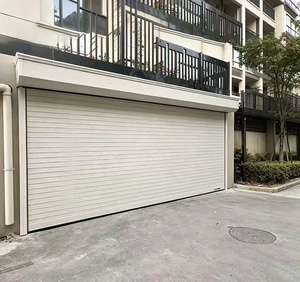
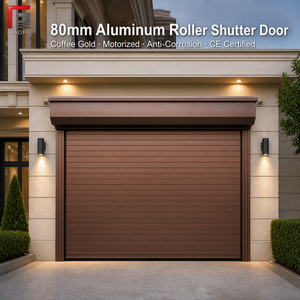
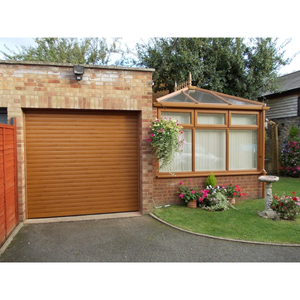
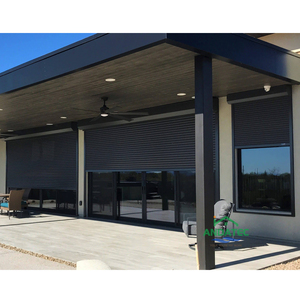
Residential Automation
Aluminum Automatic 10x7 Roll up Insulated Garage Tambour Door Kit Roller Shutter
Get Catalog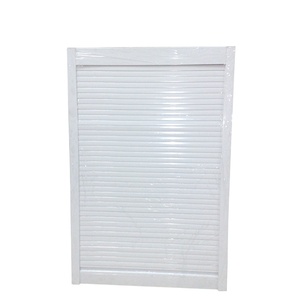
Structural Engineering and Architectural Utility of Aluminum Tambour Assemblies
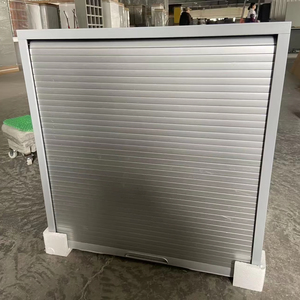
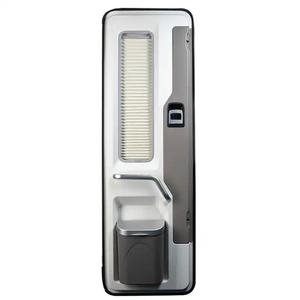
In modern industrial design and contemporary architectural envelopes, aluminum tambour doors—often classified interchangeably as extruded slat shutters, articulated roller enclosures, and roll-up coiling facades—represent an essential intersection of spatial efficiency, metallurgical integrity, and lifecycle economy. Unlike traditional swinging, sliding, or overhead sectional doors that demand extensive swing radii or dedicated overhead track clearance, the interlocking articulation of an extruded aluminum tambour slat coils neatly around an engineered torsion barrel or spiral track. This structural characteristic makes aluminum tambour doors indispensable across residential garages with restrictive ceiling utility conduits, specialty medical utility compartments, emergency vehicle payload lockers, and modern architectural cabinetry.
From an alloy perspective, leading global manufacturers have shifted from soft, unalloyed structural treatments to precision-formulated 6063-T5 and 6061-T6 structural aluminum alloys. The extrusion of architectural profiles using 6063-T5 aluminum provides exceptional tensile yield, sharp dimensional precision across narrow tolerances (within ±0.15mm), and an optimal substrate for durable exterior finishes. The surface treatment options include anodic oxidation (Class I, 18-micron minimum), fluorocarbon PVDF electrostatic coatings capable of withstanding 3,000 hours of continuous ASTM B117 salt spray testing, and thermoset architectural-grade polyester powder finishes conforming to Qualicoat standards.
Future Procurement Trends: What Global Sourcing Directors Must Prioritize
As enterprise procurement shifts toward digitized supply pipelines and strict Environmental, Social, and Governance (ESG) compliances, structural engineering managers and supply chain directors are adopting systemic evaluation criteria. Specifying tambour systems no longer hinges solely on purchase price per square meter; it requires end-to-end structural life-cycle assessment (LCA).
| Procurement Metric | Traditional Procurement Framework | Next-Gen Engineering & Strategic Sourcing |
|---|---|---|
| Material Integrity | Single-wall hollow slats; generic secondary remelt aluminum scrap. | Thermal-break double-walled profiles; polyurethane core; 6063-T5 virgin alloy. |
| Acoustic & Mechanical Friction | Direct metal-to-metal track contact; manual grease lubricants. | Integrated POM/Santoprene co-extruded dampening strips; zero-maintenance brush guides. |
| Safety & Compliance Validation | Self-certified workshop declarations without third-party audit. | CE EN 13241-1 certification, EN 12424 Wind Load Class 4/5, AS 2047 cyclonic testing. |
| Integration Protocols | Isolated mechanical dry contacts; manual lock cylinders. | Dry-contact RS485/Modbus BMS smart motorization; RFID/biometric central access. |
| Packaging & Sea Freight Tolerances | Corrugated paper wrap; high risk of transit denting and micro-scratches. | Heavy-duty reinforced plywood crating; protective PE wrap; modular track labeling. |
The emerging procurement landscape across Europe, North America, and Australia prioritizes factory-engineered "Drop-in Ready" cassette assemblies. Rather than sourcing individual slats, torsion counterbalances, lateral tracks, and motors from fragmented vendors, tier-one developers specify fully assembled cassettes. This approach minimizes site installation labor by up to 65%, eliminates field alignment issues, and delivers a unified manufacturer warranty across mechanical and electrical sub-assemblies.
Technological Evolution and Engineering Trends
The aluminum tambour door sector is undergoing several transformative engineering advancements:
1. Thermal Isolation and Polyurethane Injected Stabilization: Modern regulations such as Germany's Building Energy Act (GEG) and UK Building Regulations Part L have made single-skin metal closures obsolete for exterior enclosures. Advanced factories utilize automated, continuous injection lines that fill double-walled extruded slats with zero-ODP, high-density polyurethane (PU) rigid foam (typically 40 to 45 kg/m³). This achieves continuous thermal breaks that deliver U-values as low as 1.4 W/(m²·K), while simultaneously boosting acoustic transmission loss by up to 22 dB.
2. Structural Wind-Lock Geometries for Extreme Climatic Zones: Increased frequency of severe weather events has driven the deployment of interlocked storm-resistant end-locks. Rather than relying on friction clips, hurricane-rated tambour doors integrate cast-aluminum or hardened nylon end-locks mechanically fastened into the core of the slat. Under positive or negative cyclonic wind pressures (exceeding 2.5 kPa to 4.5 kPa), these end-locks engage directly into heavy-gauge extruded guide channels, preventing slat pull-out and curtain collapse.
3. Brushless DC Motors with Soft-Start/Soft-Stop Control: The mechanical stress on roller slats occurs predominantly during initial torque acceleration and final closure impact. Modern motorized tambour systems utilize smart tubular or side-mount brushless DC drives with integrated optical encoders. Controlled acceleration curves protect slat interlocks, lower operating decibel levels below 48 dBA, and extend operational lifespans beyond 100,000 continuous cycles.
R&D Horizons
Key Structural Pillars Driving Manufacturing Excellence
Understanding the critical performance vectors required to specify reliable tambour systems for heavy-duty commercial, harsh industrial, and luxury architectural applications.
Structural Anti-Intrusion (RC2/RC3)
Reinforced extruded guide tracks, bottom-rail deadbolt locks, and interlocking bottom slats stop forced pry attacks. The precision-engineered hinge knuckle resists high-tensile leverage forces, delivering commercial-grade security without industrial bulk.
Acoustic Dampening Precision
Specially engineered co-extruded Santoprene intermediate gaskets minimize metallic rattling during wind vibration and rapid rolling. Designed to meet strict hospitality and luxury residential noise limits, even during high-velocity cycles.
Extreme Cyclone & Typhoon Defense
Certified to AS 2047 N6 and EN 12424 standards. Slat thickness profiles up to 1.5mm combined with structural deep-pocket guide rails provide unyielding resistance against severe tropical coastal storms, high-pressure downdrafts, and coastal corrosion.
Enterprise Sourcing: Why Global EPC Contractors Choose DERCHI
Combining 25+ years of architectural door engineering, an expansive 180,000 m² smart production base in Foshan, and strict adherence to European, American, and Australasian standards.
Massive Scale & Fast Lead Times
Operating a state-of-the-art 180,000 m² automated production facility with 600+ skilled personnel. From high-speed extrusion lines to robotic assembly, our industrial footprint ensures reliable, high-volume order delivery on tight contract schedules.
Rigorous Multi-Region Compliance
Full conformance with CE (EN 14351-1 / EN 13241-1), ISO 9001, Australian AS 2047 N6, and UL fire standards. We provide complete third-party test documentation and Declarations of Performance (DoP) for project approvals.
Complimentary In-House CAD & BIM
Our engineering division prepares comprehensive CAD shop drawings, structural section cuts, anchor load calculations, and BIM assets customized to your door schedule, eliminating installation mismatches on site.
Precision Surface Engineering
In-house vertical powder coating and PVDF facilities offering the full RAL color spectrum, metallic textures, and architectural woodgrain finishes. Every surface treatment passes rigorous cross-hatch adhesion and accelerated weather exposure testing.
Single-Source Architectural Ecosystem
Consolidate your door schedule with one supplier. Alongside aluminum tambour doors, DERCHI manufactures high-security pivot doors, cast-aluminum entrance systems, exterior curtain walls, and interior flush doors—streamlining shipping and vendor management.
Export Logistics & Dedicated Support
Heavy-duty export crating designed for safe sea freight to major ports like Rotterdam, Hamburg, Los Angeles, and Sydney. Supported by technical sales engineers aligned with European and North American business hours.
Engineering Knowledge Base
Frequently Asked Procurement & Technical Questions
Technical guidance for specifiers, architects, facade engineers, and supply chain managers.
What alloy specifications and wall thicknesses are standard for DERCHI aluminum tambour doors? +
Our tambour slats and structural guide rails are extruded exclusively from prime 6063-T5 or 6061-T6 aluminum billets. Slat wall thicknesses range from 0.8mm for compact interior cabinetry and utility cabinets to 1.2mm–1.5mm double-walled, polyurethane-injected profiles for high-span exterior shutters. Guide rails utilize up to 2.0mm structural wall thicknesses to ensure uncompromised rigidity under dynamic wind loads.
How do aluminum tambour doors perform compared to standard steel sectional doors? +
Aluminum tambour doors offer distinct advantages over steel sectional doors: they are completely immune to atmospheric corrosion (crucial in coastal and high-humidity areas), require zero overhead track space thanks to their compact spiral or drum coil, reduce deadweight load on building lintels by 40%, and eliminate the rust, peeled galvanization, and cable-snapping risks common to traditional counterbalanced sectional hardware.
Can your automated tambour doors be integrated into central Building Management Systems (BMS)? +
Yes. Our motor drive packages—including tubular motors, center-mount openers, and external side-mount industrial gearboxes—support standard dry-contact signaling, RS-485 Modbus, and dry relay contacts. They interface directly with automated smoke extraction loops, access-control card readers, central fire alarms (triggering emergency egress auto-open), and smart building networks.
What export packaging is provided to prevent shipping damage during ocean transit? +
Export protection is critical. Every tambour curtain is wrapped in protective polyethylene films, interleaved with shock-absorbing foam, and packed inside fully enclosed, fumigated ISPM-15 plywood crates. Guide channels and hardware kits are boxed and strapped separately to prevent transit movement, ensuring goods arrive on site in pristine condition ready for assembly.
What are the lead times and Minimum Order Quantities (MOQ) for custom dimensions? +
Because our 180,000 m² manufacturing plant houses full-scale continuous extrusion, powder coating, and assembly lines, we maintain agile production flexibility. Standard MOQ is 1 complete set for architectural mockups, custom villa residences, or engineering prototypes. For commercial batches and container consignments, standard factory turnaround runs between 15 to 25 business days from final CAD shop drawing sign-off.