Engineered Fenestration Systems Specified for Bangkok Projects
Explore our precision-fabricated double-glazed aluminium systems, designed with aerospace-grade 6063-T5/T6 alloys, heavy-duty multi-point hardware, and warm-edge insulated glass units.
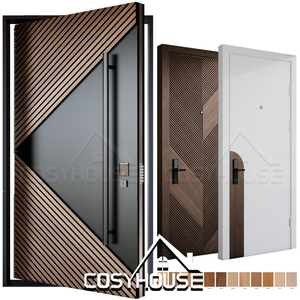
Luxury Modern Pivot Front Door Aluminum Exterior Entrance Door for Villa House Custom Design
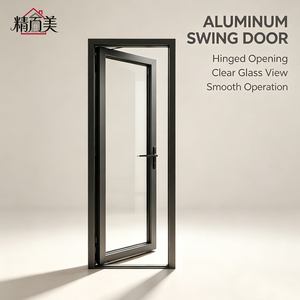
Powder Coated Energy Saving Noise Reduction High Security Modern Aluminium Glass Swing Door
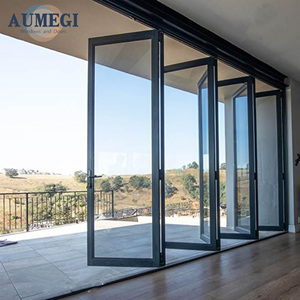
Aumegi Australian Style Bi Folding Aluminum Bi-fold Patio Sliding Folding Door System
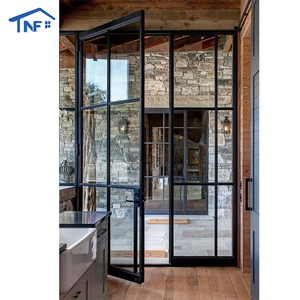
Aluminum Hinged Patio Doors European Standard Double Panels Swing Modern French Glass Doors
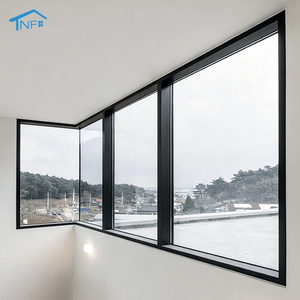
Modern Aluminum Alloy Frameless Fixed Glass Corner Windows with Integrated Screen
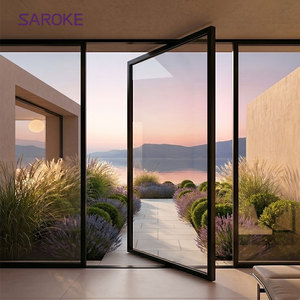
American Standard Thermal Break Soft Close Slim Double Glass Aluminium Alloy Pivot Door
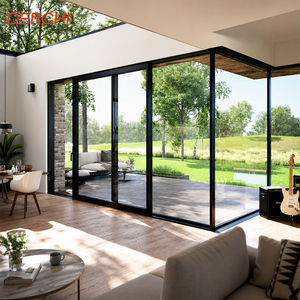
AS2047 Certified Double Glazed Stacker Doors Commercial Panoramic Sliding Doors
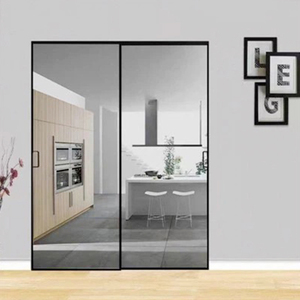
Trackless Aluminum Alloy Mosquito Net Sliding Glass Door System for Balcony and Patio
Bangkok's Tropical Macro-Climate: Why Standard Windows Fail
Bangkok operates under a tropical savanna climate (Köppen: Aw) characterized by relentless high ambient temperatures averaging 30°C to 38°C year-round, extreme relative humidity fluctuating between 70% and 92%, and intense monsoon-driven precipitation cycles from May through October. For high-rise condominiums along the Chao Phraya River, luxury residential villas in Bang Na, and mixed-use commercial centers across Sukhumvit, fenestration is the single most vulnerable structural element in building envelopes.
Standard architectural aluminium windows imported without localized tropicalization consistently trigger systemic building failures within 18 to 24 months. These vulnerabilities stem from severe solar thermal conductance, non-extruded hollow aluminium profiles acting as massive thermal bridges, degraded sealant polymers exposed to high UV-A and UV-B indices (averaging UV 11+ in Bangkok), and inadequate multi-tiered weeping channels unable to drain monsoon cloudburst volumes of over 80 mm/hour.
Polyamide PA66 Thermal Barrier
We incorporate structural 24mm to 34mm PA66 GF25 (polyamide reinforced with 25% glass fiber) thermal breaks between exterior and interior aluminium extrusions. This stops direct thermal conductance, slashes HVAC cooling consumption by up to 38%, and eliminates internal condensation risks.
Monsoon Watertight Decompression
Our drainage design implements an isobaric pressure-equalization chamber with triple vulcanized continuous EPDM gasket seals. Under positive wind pressures up to 3500 Pa (equivalent to tropical typhoons), water is rapidly evacuated outward through concealed offset drain baffles.
Solar-Shield Low-E Glazing
Every Bangkok-bound double-glazed unit features double-silver or triple-silver magnetron sputtering Low-E on surface #2, filled with 90%+ Argon gas and desiccant-loaded warm-edge spacers. This provides an ultralow Solar Heat Gain Coefficient (SHGC ≤ 0.26) while transmitting abundant visible daylight.
Engineering Benchmark: Standard Market Windows vs. DERCHI Tropical Series
Building owners and MEP consultants in Thailand are increasingly demanding verifiable engineering data over cosmetic promises. The table below details tested laboratory performance across critical thermal, acoustic, and wind-loading parameters compliant with Thai Building Energy Code (BEC) and international ASTM / EN / AS2047 frameworks.
| Performance Characteristic | Common Local Market Spec (Bangkok) | DERCHI Tropicalized Double Glazed System | Building Code & Project Value |
|---|---|---|---|
| Thermal Transmittance (U-Value) | 5.7 – 6.2 W/m²·K (High conductivity) | 1.3 – 1.6 W/m²·K (Thermally Broken) | ✓ Surpasses Thai BEC Mandate |
| Solar Heat Gain Coefficient (SHGC) | 0.72 – 0.81 (Severe interior heat gain) | 0.22 – 0.28 (Double-Silver Low-E) | ✓ Substantial AC load reduction |
| Acoustic Attenuation (Rw / STC) | 24 – 27 dB (Street & Skytrain noise leaks) | 38 – 42 dB (Laminated Acoustic DGU) | ✓ Quiet luxury living standard |
| Water Penetration Resistance | 150 – 250 Pa (Occasional monsoon leakage) | ≥ 600 Pa (Class 9A / ASTM E331) | ✓ Absolute monsoon barrier |
| Surface Coating Durability | Standard Anodized (Pitting within 3 years) | Qualicoat Class 2 Fluorocarbon (PVDF) | ✓ 20-Year Anti-Fade Guarantee |
| Air Permeability Class | Class 2 (Leakage of humidity & PM2.5) | Class 4 (EN 12207 airtight compression) | ✓ PM2.5 filtration seal |
Tailored Applications Across Bangkok's Urban Landscape
No single fenestration design serves all architectural typologies in the Bangkok Metropolitan Region. As a flexible manufacturer with proprietary extrusion profiles and custom shop-drawing capabilities, DERCHI supplies targeted solutions across four distinct urban sectors:
Sukhumvit, Sathorn & Silom
High-altitude structural wind pressures and deafening traffic from the BTS Skytrain, motorbike corridors, and expressways necessitate high acoustic damping (Rw 40+ dB) with AS2047 N5/N6 structural wind load compliance.
Chao Phraya Riverfront
Riverfront residences face extreme atmospheric moisture, reflective sunlight, and seasonal squalls. Our heavy-duty aluminium sliding and pivot doors utilize 316-marine-grade stainless components and corrosion-proof PVDF coatings.
Bang Na, Krungthep Kreetha & Ratchaphruek
Expansive contemporary private estates require wide-span, multi-panel bi-fold and stacker doors with barrier-free, trackless thresholds that seamlessly integrate indoor air-conditioned living spaces with tropical outdoor gardens.
Thonglor, Phrom Phong & Ari
Boutique hotels, luxury retail showrooms, and office headquarters require thermal comfort, oversized floor-to-ceiling glass facades, automatic sensor operations, and seamless coordination with Thai TREES green rating benchmarks.
Bangkok's Building Evolution: Sustainability, Regulations, and Quality Demands
The construction and real estate sector in Greater Bangkok is undergoing an unprecedented structural shift. Developers and architectural firms are moving rapidly away from low-cost, single-glazed aluminium windows toward world-class fenestration systems driven by three macro trends:
1. Enforcement of Thailand's Building Energy Code (BEC) & TREES Certification
The Ministry of Energy's Department of Alternative Energy Development and Efficiency (DEDE) has mandated strict BEC compliance for all new and renovated buildings larger than 2,000 m². Simultaneously, institutional property developers in Bangkok are competing aggressively for TREES (Thai's Rating of Energy and Environmental Sustainability) and LEED v4.1 certifications to attract premium multinational corporate tenants and eco-conscious luxury buyers. DERCHI's double-glazed thermal break windows deliver an Overall Thermal Transfer Value (OTTV) well under the national maximum limit of 30 W/m², enabling developers to harvest critical green building points easily.
2. The War on Urban Noise Pollution and High-Density Living
Bangkok ranks among Southeast Asia’s most vibrant yet acoustically dense metropolitan capitals. Ambient urban noise levels along major arterial routes like Rama IV, Phetchaburi, and Sukhumvit regularly exceed 75 to 82 dBA due to commercial vehicle traffic, tuk-tuks, and elevated transport infrastructure. In luxury developments where unit prices exceed 250,000 THB/m², sound privacy is no longer an optional upgrade—it is a defining sales metric. Our acoustic double-glazed units, featuring asymmetric glass thicknesses (e.g., 6mm Low-E + 12A + 8.38mm Acoustic PVB Laminated), disrupt soundwave resonance across low and high frequencies, creating true sanctuary-level indoor environments (≤ 35 dBA).
3. Urban Air Quality & PM2.5 Infiltration Control
Between December and March, Bangkok experiences severe thermal inversions trapping hazardous PM2.5 particulates at ground level. Traditional sliding window frames in Thailand lack continuous compression seals, allowing micro-dust particles and humid air to bypass frame perimeters freely. DERCHI casement, tilt-and-turn, and specialized lift-and-slide doors feature multi-point locking compression hardware with continuous high-resilience EPDM gaskets that form an impervious hermetic seal, shielding interior spaces from smog, allergens, and fine particulate pollution.
Why Bangkok Contractors Partner Directly with DERCHI
As Guangdong Dejiyoupin Doors and Windows Co., Ltd., we combine 25+ years of fenestration engineering expertise with an immense 180,000 m² automated production base, delivering premium systems without middleman markups.
Full In-House Custom CAD & BIM
Our dedicated engineering department prepares free, millimetre-accurate architectural shop drawings, structural wind load calculations, and BIM models tailored to your project schedules and rough opening elevations before glass cutting or extrusion.
Stringent Multi-Standard Testing
Certified under ISO 9001 quality management, CE mark (EN 14351-1), AS2047 N6 wind pressure ratings, and UL fire certifications. We guarantee that structural frames and corner joints withstand severe tropical wind shear and physical impacts.
Streamlined Export to Bangkok Ports
Located in Foshan adjacent to major Greater Bay Area container ports (Nansha & Shekou), our direct maritime routes deliver sea freight to Bangkok Port (Klong Toey) and Laem Chabang Deep Sea Terminal in just 4 to 7 sailing days, complete with ASEAN Form E preferential tariff documentation.
Bangkok Buyer FAQ: Technical & Logistics Guide
Direct, highly transparent answers to the questions most frequently raised by Thai architects, general contractors, and developers before placing orders.
All insulated glass units (IGUs) are assembled in an automated, climate-controlled cleanroom. We use dual-seal barrier systems: primary polyisobutylene (PIB) seal to block water vapour, backed by high-modulus structural silicone secondary seals. Internal spacers are packed with synthetic 3A molecular sieve desiccant that completely eliminates moisture trapped in the air cavity, guaranteeing zero internal fogging under 95% outdoor relative humidity.
Under the ASEAN-China Free Trade Agreement (ACFTA), our export compliance team issues an official Certificate of Origin (Form E) with your shipping manifest. This reduces the standard Thai customs import tariff for aluminium architectural products (HS Code 7610.10) down to 0% import duty. Clients only pay local Thai Value Added Tax (VAT 7%) upon port customs clearance.
Once CAD shop drawings are officially signed off, standard production ranges from 25 to 35 calendar days depending on profile finishes and glass specifications. Ocean freight from Nansha or Shekou port directly to Bangkok Port (Klong Toey) or Laem Chabang Terminal requires only 4 to 7 sailing days. We provide complete bill of lading (B/L), commercial invoice, packing list, and real-time container tracking.
Yes. Our windows and doors are tested up to AS2047 N6 and EN 12210 Class C5 wind loads, capable of withstanding cyclonic wind pressures exceeding 3,000 Pa. To defeat driving monsoon rains, we engineer stepped-level sub-sills with concealed pressure-equalized drainage slots and dual-layer finned weathering strips, ensuring 100% water tightness up to 600 Pa test pressure.
Every export order is paired with an English-fluent facade engineer who generates full shop drawings, horizontal and vertical sections, anchor detailing, and perimeter waterproofing diagrams. While we do not dispatch local installers to Thailand, we provide comprehensive, step-by-step 3D visual installation manuals, video walkthroughs, and live video technical support during Bangkok site construction hours.
We employ heavy-duty export packaging: aluminium profiles are wrapped in protective anti-scratch films, edged with shock-absorbent corner guards, and encased in fumigation-free solid plywood crates. For extra-large double-glazed panels or oversized pivot doors, steel A-frame transit racks are used inside open-top or high-cube sea containers, ensuring zero glass breakage upon arrival at your Bangkok site.
Request a Fast Technical Proposal & Factory-Direct Quotation
Whether you are sourcing custom fenestration for an exclusive villa in Thonglor, an expansive master-plan community in Bang Na, or a high-rise residential tower in Sathorn, our engineering team in Foshan is prepared to evaluate your window schedule, calculate optimal U-values, and generate formal CAD shop drawings.