Featured Aluminium External French & Patio Door Collections
Precision-fabricated utilizing aeronautical-grade 6063-T6 architectural aluminium alloys, multipoint security locking hardware, and high-efficiency thermal barriers calibrated for Scandinavian coastal winds and sub-zero freeze-thaw cycles.
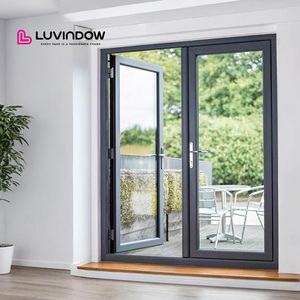
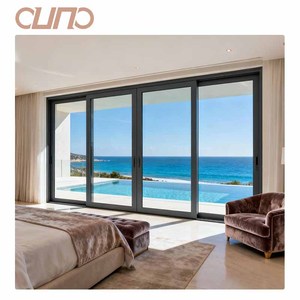
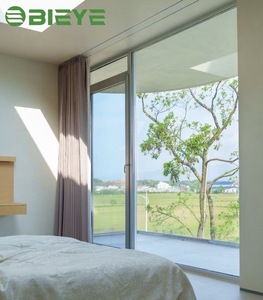
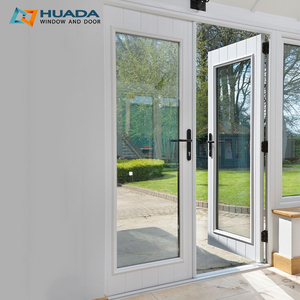
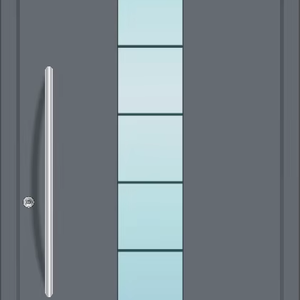
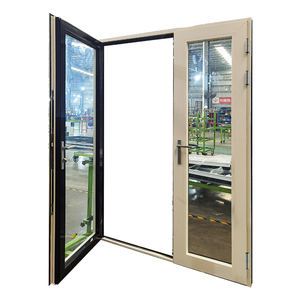
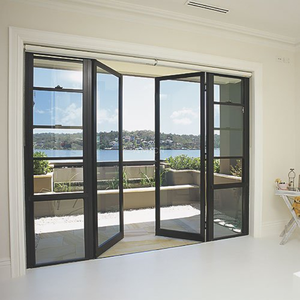
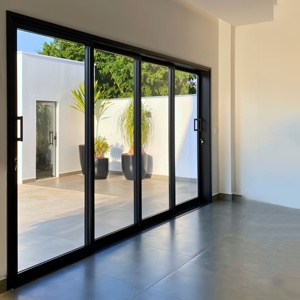
Aluminium French Doors in the Swedish Climate: Physics, Codes, and Thermal Realities
Designing fenestration for Sweden demands an uncompromising convergence of insulation physics, moisture mitigation, and wind-load resilience governed by Boverkets byggregler (BBR).
Boverket (BBR) U-Value Benchmarks
In accordance with Swedish building regulations, modern exterior building envelopes require overall thermal transmittances ranging between Ud 0.80 W/m²K and 1.1 W/m²K. DERCHI incorporates multi-chamber polyamide PA66 GF25 thermal struts up to 34mm in depth, interrupting interior-to-exterior conductive paths. When coupled with warm-edge composite spacers and dual low-emissivity soft-coat panes with argon gas cavity fills, our systems prevent interior condensation during -25°C Norrland cold snaps.
Pressure Equalization & Air Permeability
Driven rains across Sweden’s West Coast (Västkusten) impose severe wind-driven moisture stress. DERCHI French doors employ cascading, pressure-equalized drainage chambers combined with co-extruded EPDM cellular weatherstripping. Meeting EN 12207 Class 4 air tightness and EN 12208 Class E900 water resistance, our profiles prevent capillary suction under coastal gale pressures exceeding 900 Pa.
Structural Rigidity & SS-EN 1627 RC3
Swedish specifiers frequently mandate certified burglary protection under Swedish Standard SS-EN 1627. Unlike lightweight residential sliders, DERCHI commercial-grade French casement doors feature heavy-wall extrusion profiles (2.0mm–2.5mm wall thickness) equipped with German Siegenia or Roto multipoint hook locks, anti-jemmy security hinges, and laminated P4A/P5A safety glass inserts to eliminate break-in vulnerabilities.
Localized Application Scenarios Across Swedish Regions
From minimalist archipelago retreats to restored brick heritage in Skåne, our custom factory-direct manufacturing caters specifically to local architectural demands.
Stockholm Archipelago & West Coast (Skärgården)
Properties situated in Sandhamn, Vaxholm, or Sotenäs endure extreme salt aerosol exposure and sustained autumnal storms. DERCHI provides Qualicoat Class 2 marine-grade polyester powder finishes with 80+ micron paint layers, preventing filiform corrosion. Concealed drainage slots channel driven seawater back onto granite terraces without corroding inner hardware or frame tracks.
Modern Funkis Villas & Falu-Red Contrasts
Swedish residential modernism (Funkisstil) relies on crisp geometric sightlines and daylight optimization. DERCHI French door assemblies offer ultra-slim stiles (narrow as 58mm) in matte anthracite (RAL 7016), jet black (RAL 9005), or customized deep Falun-contrast tones. The dual-color option allows developers to match traditional Swedish timber cladding externally while maintaining pristine white (RAL 9016) interiors.
Urban Hospitality & Fika Terraces
In high-footfall cafés, bistros, and boutique hotels in Gothenburg, Malmö, and Stockholm, entry doors must merge acoustic abatement with effortless ingress. DERCHI acoustic glass packages deliver an Rw rating up to 45 dB, shielding dining guests from tram line vibrations. Incorporating 15mm low-clearance thermal step thresholds satisfies Swedish handicap accessibility rules (BFS Tillgänglighet) without compromising draft-proofing.
Market Shift: Why Swedish Specifiers Are Transitioning from Wood to Aluminium
While timber has historically served as Sweden's dominant fenestration medium, systemic climate pressures, lifecycle sustainability metrics, and building lifecycle costing are driving a significant structural transition.
Zero-Maintenance Durability vs. Timber Rot
Standard pine (furu) French doors in Sweden require scraping, oiling, and repainting every 3 to 5 years, especially on sun-exposed and rain-beaten southern and western elevations. DERCHI thermally broken structural aluminium profiles retain dimensional stability across humidity extremes, never swell, jam, warp, or rot, effectively dropping 30-year operational maintenance costs to zero.
Glazing-to-Frame Ratio (Dagsljuskrav)
Under Swedish building codes (BBR Section 6:322), indoor occupied living spaces require minimum daylight factor calculations (Dagsljusfaktor ≥ 1.0%). Because aluminium boasts dramatically superior tensile modulus compared to timber or PVC, DERCHI French door stiles can be cast narrower while supporting triple-pane acoustic assemblies weighing over 180 kg per active leaf. This amplifies natural illumination during Nordic winter twilight.
Circularity & Low Embodied Carbon Billets
Sweden’s climate declaration law (Klimatdeklaration för nya byggnader) holds property developers accountable for lifecycle greenhouse gas metrics (GWP). DERCHI sources low-carbon hydro-smelted primary aluminium ingots and re-melt recycled billets for profile extrusions, supporting BREEAM-SE and Miljöbyggnad Gold certifications for eco-conscious Scandinavian contractors.
Architectural Specifier Matrix: DERCHI French Doors for Sweden
Validated physical parameters conforming to EN harmonized standards and Swedish National Board of Housing, Building and Planning requirements.
| Performance Criterion | Certified Value / Class | European & Swedish Test Standard | Engineering Specification Summary |
|---|---|---|---|
| Thermal Transmittance (Ud) | 0.78 – 1.1 W/m²K | SS-EN ISO 10077-1 / -2 | Multi-chamber PA66 GF25 34mm thermal struts + triple glazing with Krypton/Argon fill |
| Air Tightness | Class 4 (600 Pa) | SS-EN 12207 | Continuous vulcanized co-extruded EPDM gaskets with double internal seal baffles |
| Water Tightness | Class E900 – E1200 (900–1200 Pa) | SS-EN 12208 | Cascade internal chamber drainage with concealed forward weep vents and check valves |
| Wind Load Resistance | Class C5 (2000 Pa design load) | SS-EN 12210 | High-moment-of-inertia reinforcement profiles to resist deflection along Swedish coastal bays |
| Burglar Resistance | RC2 / RC3 (Resistance Class) | SS-EN 1627 – SS-EN 1630 | Multipoint heavy-duty hook locks, anti-drill plates, mushroom cams, P4A/P5A security laminates |
| Acoustic Attenuation | Rw (C; Ctr) = 38 – 45 dB | SS-EN ISO 717-1 | Asymmetric glass configurations (e.g. 6mm Low-E + 16Ar + 4mm + 16Ar + 8.76 PVB laminated) |
| Surface Corrosion Class | Qualicoat Class 2 / C5 Marine | EN 12206-1 / ISO 12944 | Pre-anodized pretreatment + architectural thermosetting fluoropolymer/polyester powder coating |
Direct Factory Manufacturing by Guangdong Dejiyoupin (DERCHI)
Operating a sprawling 180,000 m² smart production base in Foshan, China, Guangdong Dejiyoupin Doors and Windows Co., Ltd. (DERCHI) ranks among China’s top 10 specialized door and window manufacturing enterprises. For over 25 years, our engineering department has fabricated bespoke architectural fenestration packages for high-precision international markets.
Chosen by prominent European general contractors and a long-standing UK partner of German Schüco for high-end luxury villa programmes, DERCHI brings industrial-scale manufacturing precision directly to Swedish builders, developers, and door distributors without middleman markup.

Swedish B2B Buyer & Specifier FAQ
Common inquiries from Swedish architects, project developers, and building material wholesalers concerning direct factory ordering, logistics, compliance, and warranty guarantees.
How do DERCHI external French doors fulfill Swedish CE and EN 14351-1 compliance?
Every external door system exported to Sweden carries complete CE marking compliance governed by harmonized European standard EN 14351-1. DERCHI furnishes an official Declaration of Performance (DoP) specific to your project's sizes, glass specs, and hardware configurations. Our factory quality control adheres strictly to ISO 9001 protocols, and our systems are laboratory-tested for air infiltration, water tightness, structural wind deflection, and thermal transmittance, providing Swedish building inspectors (Byggnadsnämnden) with verifiable documentation for fast-track site sign-off.
What glass configuration is necessary to achieve whole-door Ud ≤ 0.9 W/m²K in Sweden?
To comfortably satisfy Boverket (BBR) requirements and Passivhus criteria in Sweden, we engineer an insulated glass unit (IGU) utilizing a triple-pane build-up: typically 6mm Low-E Toughened + 16mm Argon + 4mm Float + 16mm Argon + 6mm Low-E Toughened, spaced with non-metallic warm-edge composite spacers (such as Technoform or Swisspacer). Paired with our 85mm or 95mm multi-chamber polyamide thermal break door profiles, the complete system achieves an independently verified Ud between 0.78 and 0.88 W/m²K, preventing cold down-draughts and internal pane condensation during severe Scandinavian winters.
What are the lead times and shipping routes to Swedish container ports?
Our typical manufacturing cycle for bespoke architectural French doors is 25 to 35 calendar days following CAD shop drawing approval and color confirmation. Freight is dispatched via sea container from our nearby deepwater ports (Shenzhen / Guangzhou) directly to Swedish gateways including Port of Gothenburg (Skandiahamnen), Port of Helsingborg, or Stockholm Norvik, with an ocean transit time averaging 28 to 35 days. We coordinate complete export customs declarations and supply all commercial documentation (EUR.1 certificates, Bill of Lading, Packing Lists) to facilitate clean import clearance via Swedish Customs (Tullverket).
Can you configure low-threshold options compliant with Boverket accessibility (Tillgänglighet)?
Yes. Swedish building standards (BBR avsnitt 3:1) mandate that exterior entrance doorways provide barrier-free passage without step hazards higher than 20mm (preferably 15mm max). DERCHI supplies specialized thermally broken flush or semi-flush aluminum thresholds equipped with integrated sill gaskets, heavy-duty ramp transitions, and hidden sub-floor drainage trays. These configurations guarantee compliance with Swedish wheelchair accessibility while sustaining high-performance resistance to coastal rain infiltration.
How does DERCHI ensure finish resilience against the salt air of Bohuslän and Halland?
Extrusions destined for coastal Sweden receive our pre-treatment chromate-free wash followed by an optional anodized pre-treatment or primer layer prior to electro-static architectural powder coating. We utilize certified Qualicoat Class 2 ultra-durable powders (AkzoNobel Interpon D2525 or Tiger Drylac), engineered to endure 1,000+ hours of continuous acetic acid salt spray (AASS) testing without bubbling, chalking, or edge delamination, ensuring your coastal French doors remain pristine for decades.
Do you supply CAD shop drawings, BIM models, and engineering calculations before production?
Absolutely. Before cutting metal, our in-house fenestration engineering department prepares comprehensive 2D CAD shop drawings detailing outer frame dimensions, rough opening allowances, glass sightlines, section cuts, anchor points, thermal break locations, and threshold junction details. We calculate wind load deflections and overall thermal models for your specific door schedule. We do not manufacture until your project architect or lead contractor signs off on the approved drawings.
What locking systems are used to meet Swedish insurance anti-burglary standards?
To align with Swedish insurance criteria (Stöldskyddsföreningen - SSF guidelines) and SS-EN 1627 RC2 / RC3, we equip our active French door leaves with German-engineered multipoint locking systems featuring forged steel top and bottom security hooks, central deadbolts, anti-lift pins, and European profile lock cylinders with pick-and-drill resistance. Both primary and slave sashes interlock with heavy-duty internal concealed shootbolts embedded into the reinforced head and threshold extrusions.
How does DERCHI protect custom French doors during container transit to Sweden?
Export packaging is engineered for rough marine voyages and cold-weather unloading. Each door leaf and frame module is individually encased in a low-tack protective film, wrapped in heavy EPE closed-cell foam shock buffers, reinforced on all corner corners with corrugated angle guards, and crated inside fully enclosed fumigated plywood crates (ISPM 15 compliant). Glass units are secured with anti-slip rubber blocks to prevent vibration fractures during transit across Baltic and North Sea routes.
Plan Your Swedish Door Schedule with DERCHI Engineers
Whether you require a single bespoke villa entrance or 200 French patio door sets for a multi-family timber-frame development in Stockholm, Gothenburg, or Malmö, our bilingual engineering team is available during Central European Time (CET) to evaluate your door schedule, prepare CAD shop drawings, and quote transparent factory-direct pricing.