Architectural Systems for Coastal & High-Velocity Wind Zones
Engineered with primary thermal break configurations, heavy-duty marine powder coating, multi-point locksets, and laminated tempered safety glass designed for residential and commercial Manila projects.
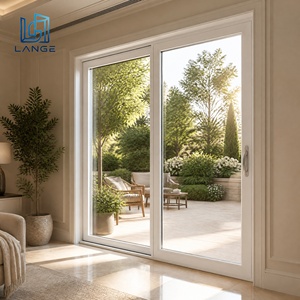
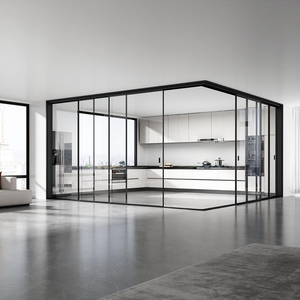
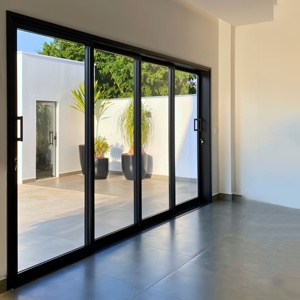
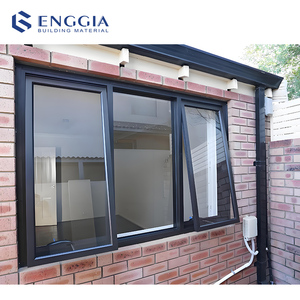
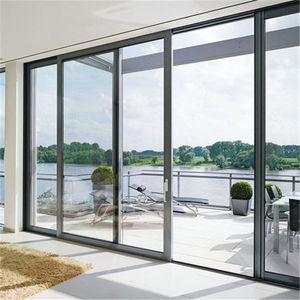
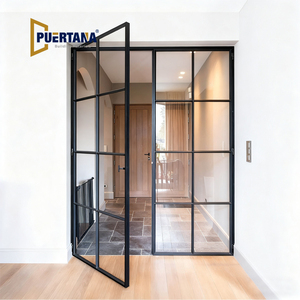
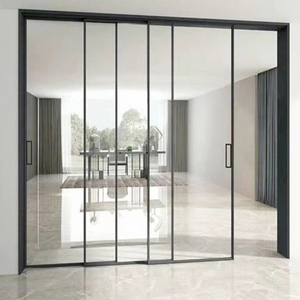
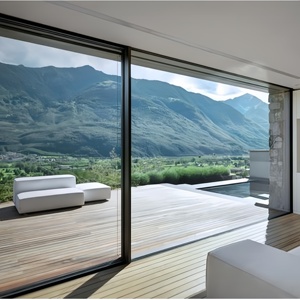
Engineering Outdoor Door Systems for the Philippine Microclimate
Specifying exterior fenestration systems for the Philippine market—particularly the Greater Manila Area, Metro Cebu, and Southern Luzon—demands a comprehensive understanding of destructive microclimatic forces. Manila is exposed to an average of twenty typhoons annually, sustained ambient relative humidity levels exceeding 85%, and aggressive chloride-ion penetration from Manila Bay. For real estate developers, structural consultants, and architects, specifying conventional commercial-grade doors frequently results in water ingress, air infiltration, sash sagging, hardware seizure, and galvanic corrosion.
As a seasoned aluminium outdoor doors manufacturer and supplier for Manila, Guangdong Dejiyoupin Doors and Windows Co., Ltd. (DERCHI) engineers its product envelopes to counteract these failure points. Our doors are constructed utilizing primary architectural aluminum billet 6063-T5/T6 with minimum wall profiles ranging from 2.0mm to 3.0mm on structural load-bearing frames. Through our experience working on luxury villas in Forbes Park and Dasmariñas Village to high-rise commercial structures in Bonifacio Global City (BGC) and Ortigas, we deliver factory-direct solutions validated under international testing standards.
Typhoon-Grade Structural Loading
Profiles engineered to exceed 4500Pa ultimate limit state wind loads. Our heavy-duty patio sliding systems maintain structural integrity under severe gale deflection without frame detachment or glass blow-out.
Cascaded Multi-Cavity Drainage
Tropical downpours exceeding 80mm/hour render standard sliding tracks vulnerable to backflow. Our systems integrate stepped sill tracks, hidden downward-discharge valves, and EPDM pressure seals that prevent water penetration.
PVDF & Marine-Grade Finishes
Finishes compliant with Qualicoat Class 2 and AAMA 2605 requirements. Using fluoropolymer PVDF coatings and 25-micron architectural anodization prevents bubbling, chalking, and coastal pitting.
Localized Application Scenarios Across the Philippine Archipelago
Architectural execution across the Philippines encompasses divergent typologies, each imposing bespoke engineering constraints. Standard off-the-shelf door systems fail when installed indiscriminately across varied geographical environments. Below is an engineering analysis of our outdoor door systems deployed in key local scenarios:
| Application Context | Environmental Challenge | Recommended System Architecture | Primary Engineering Value |
|---|---|---|---|
| Coastal & Waterfront Villas (Batangas, Palawan, Boracay) | Chloride-laden sea spray, Category 5 typhoon gusts, extreme UV exposure. | Thermal Break Casement / Heavy Lift & Slide Doors with 316 Stainless Steel multi-point hardware and 8mm+12A+8mm PVB laminated tempered Low-E glass. | Zero structural oxidation; prevention of salt-air corrosion; high water-tightness (700 Pa rating). |
| High-End Urban Residences (Makati, Alabang, Greenhills) | Acoustic disturbance from urban transit, solar heat gain, air conditioning energy loss. | Multi-Panel Slim Frame Sliding Systems or Pivot Entrance Doors with Polyamide PA66 thermal barrier strips. | Acoustic isolation up to Rw 42 dB; low U-values (<1.6 W/m²K) dramatically reducing HVAC load in tropical climates. |
| Mountain & High-Altitude Retreats (Tagaytay, Baguio) | Significant diurnal temperature variance, condensation, continuous mountain rains. | Thermal Break Casement Systems with triple weather-stripping vulcanized EPDM gaskets. | Total prevention of internal profile condensation; robust perimeter compression against driving winds. |
| Commercial & Hospitality Resorts (BGC Retail, Cebu Lobbies) | High foot-traffic duty cycles, wide unobstructed clear openings, strict accessibility codes. | Heavy-Duty Commercial Bi-Fold and Automated Sliding Glass Walls with recessed ADA-compliant drainage thresholds. | Bespoke roller carriage systems rated up to 400kg per leaf, ensuring frictionless operation through 100,000+ opening cycles. |
Architectural & Procurement Trends Shaping the Philippine Market
The Philippine construction and real estate landscape is experiencing an unprecedented structural upgrade. Driven by progressive sustainability benchmarks such as the Philippine Green Building Council's BERDE rating scheme and the rapid expansion of premier horizontal gated communities, procurement methodologies are shifting permanently away from uncertified, locally fabricated manual profiles toward fully integrated, engineered systems.
1. The Transition to Thermally Broken Envelopes
Historically, the tropical climate prompted local builders to specify standard non-thermal aluminum frames under the incorrect assumption that thermal breaks were strictly intended for freezing environments. Modern building physics has invalidated this. In Metro Manila, where ambient external temperatures hover at 35°C with radiant solar heat exceeding 50°C on metal profiles, conductive heat transfer forces HVAC compressors to run continuously. Discerning developers now mandate polyamide PA66 thermal barriers to decouple external and internal aluminum extrusions, driving energy savings up to 30% in luxury residential developments.
2. Large-Format Expanses & Minimalist Sightlines
Modern Filipino architecture leans heavily into contemporary tropical modernism—characterized by open-plan living, spatial permeability, and seamless transitions between indoor living rooms and lanai or pool decks. This design intent demands multi-panel sliding configurations with single sash widths exceeding 2.5 meters and heights reaching up to 3.5 meters. To deliver these dimensions without structural failure, our systems utilize specialized structural alloys with high second moments of area (Ix/Iy values), permitting ultra-slim interlocks (down to 20mm) that do not flutter or deform during monsoon pressure fluctuations.
3. Integration of Smart Access & Perimeter Security
High-end residential projects in Metro Manila prioritize high-level residential security without compromising visual aesthetics. The trend has shifted away from auxiliary steel security grilles toward embedded, multi-point motorized locking mechanisms compatible with central smart-home automation. Our exterior casement and pivot doors integrate biometric access, electro-mechanical locking pins, and structural safety laminate glass that repels forced entry while maintaining an ultra-clean architectural profile.
DERCHI Enterprise Capabilities: Why Developers & Architects Partner With Us
With an extensive manufacturing footprint spanning over 180,000 square meters in Foshan, China—the global epicenter of high-end aluminum extrusion and fenestration technology—DERCHI has established itself as an authoritative manufacturing partner for Philippine and international developers. We do not operate as a basic trading intermediary; we are a vertically integrated industrial producer with over 25 years of specialized R&D and fabrication heritage.
180,000 m² Automated Production
Equipped with European CNC machining centers, automated double-head cutting saws, and automated corner crimping lines. Our scalable capacity guarantees precise schedule adherence for multi-unit projects.
Dedicated CAD/BIM Shop Drawings
Every Manila order is backed by comprehensive, project-tailored structural shop drawings, wind load calculations, glass deflection verifications, and anchor detailing provided free of charge prior to cutting.
Rigorous International Certifications
Our fenestration assemblies are fully certified under CE (EN 14351-1), AS 2047 (N6 cyclone rating), ISO 9001, and UL fire door standards. Verified by independent international testing bodies.
Our international track record includes long-term engineering collaborations across demanding regulatory regions including the United Kingdom, Germany, Australia, and North America. Having been selected by leading UK contractors as an alternative to European legacy brands, DERCHI delivers matching dimensional tolerances and hardware longevity at factory-direct pricing. For Philippine contractors, this eliminates the quality-variance risks typically encountered with uncertified imports.
Manila Procurement & Technical FAQ
How do DERCHI outdoor door systems resist Manila Bay's marine salt corrosion?
All aluminum extrusions supplied for coastal or bayside installations in Manila undergo chemical pre-treatment followed by Qualicoat-certified fluorocarbon (PVDF) electrostatic spraying or hard-anodizing treatments (minimum 20-25μm). Hardware components, including multi-point lock pins, hinges, and roller bearings, are made exclusively from AISI 316-grade stainless steel rather than standard 201 or 304 grades, ensuring complete protection against rust, pitting, and oxidation.
Can your exterior doors withstand Philippine Signal No. 4 and 5 typhoons?
Yes. Our heavy-duty architectural systems are tested and certified to AS 2047 standard with an N6 structural classification—the highest achievable rating—withstanding cyclic and static wind pressures exceeding 4500 Pascals (equivalent to wind speeds over 250 km/h). Furthermore, sashes feature reinforced structural chambers and are glazed with high-strength SentryGlas (SGP) or PVB laminated tempered safety glass to withstand dynamic debris impact.
What is the typical production and shipping timeline to the Port of Manila?
Upon final sign-off of our detailed CAD shop drawings, fabrication requires approximately 25 to 35 calendar days depending on system complexity and finish customization. Sea transit from our Foshan export hub to the Port of Manila (South or North Harbor) typically requires only 4 to 7 days. We coordinate all export documentation, bill of lading releases, and packaging via steel-reinforced fumigated crates to ensure zero transit damage.
Do you support local Philippine contractors with on-site installation guidance?
Yes. Every door configuration is fully assembled, dry-fitted, and function-tested in our factory before disassembly and crating. We supply extensive installation manuals, exploded structural anchor diagrams, and video walkthroughs. For large-scale residential developments or commercial façades, our bilingual structural engineers provide real-time remote video support or can be dispatched on-site for technical supervision.
Can DERCHI manufacture custom dimensions and match specific RAL architectural palettes?
DERCHI operates as a fully customized, project-specific manufacturer. We do not force projects into rigid modular sizes. We engineer oversized pivot doors up to 4 meters tall and panoramic multi-track sliding layouts spanning over 12 meters wide. Any architectural shade from the standard RAL palette, customized metallic anodizing, or hyper-realistic fluorocarbon wood-grain transfers can be tailored to match your project specifications.