High-Performance Hurricane & Extreme Weather Window Systems
Direct-from-factory impact-resistant windows and exterior door assemblies engineered with heavy-gauge aluminum alloys (6063-T6), thermal polyamide break barriers, and laminated structural safety glazing conforming to EN 14351-1 and EN 12210 criteria.
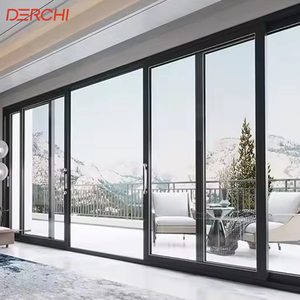
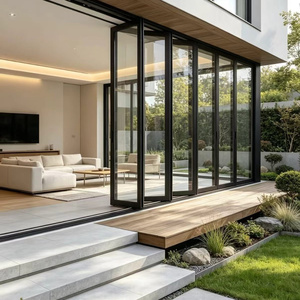
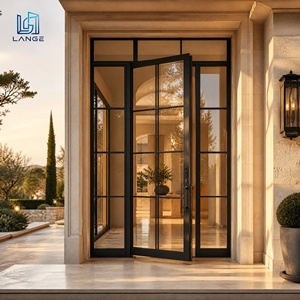
The Engineering Reality: Why Finland Demands Hurricane-Grade Structural Fenestration
While the term "hurricane window" is historically rooted in tropical storm regions (Miami-Dade / ASTM E1886/E1996), Finnish structural engineers, architects, and envelope consultants increasingly mandate impact-tested, gale-resilient window technologies for the Baltic perimeter.
Baltic Gale Surges & Wind Pressure
Winter storms across the Gulf of Finland and Bothnian Bay produce sustained localized cyclonic wind pressures exceeding 2400 to 3000 Pascals (EN 12210 Class C5 / AS 2047 N6). Standard casement profiles experience sash deflection, frame twisting, and seal blowout under dynamic cyclical gust loading. DERCHI's reinforced internal alloy webs withstand continuous high-amplitude pressure reversals without residual deformation.
Sub-Zero Driven Sleet & Water Ingress
Finnish maritime blizzards propel horizontal, sub-cooled slush under violent hydrostatic forces. Traditional drain weeping slots frequently freeze over, causing ice damn backpressures that breach internal gaskets. Our engineered hurricane assemblies utilize stepped multi-chamber drainage baffles and vulcanized EPDM/silicone triple-barrier gaskets certified to EN 12208 Class 9A/E1200 water tightness.
Arctic Impact Resistance: Flying Debris & Ice
Severe Scandinavian coastal gales dislodge heavy tree branches, roof slate fragments, and compacted shoreline sea-ice shards. By incorporating aerospace-grade SentryGlas (SGP) and multi-ply poly-vinyl butyral (PVB) structural interlayer laminates within tempered outer lites, the fenestration retains 100% barrier containment even when subjected to large missile impact energies exceeding 450 Joules.
Resolving the Structural Paradox: Extreme Rigidity vs. Arctic Thermal Insulation
Historically, heavy structural hurricane windows with massive solid aluminum profiles formed colossal thermal bridges, which are unacceptable under Finland's strict Building Decree on the Energy Performance of Buildings (RakMK 1010/2017), requiring residential U-values between 0.8 and 1.0 W/m²K.
- Multiaxial Polyamide Isolators: Featuring 34mm to 42mm high-density Technoform PA66 GF25 thermal breaks reinforced with 25% continuous glass fibers, ensuring structural shear transfer under hurricane loads while blocking interior condensation.
- Argon/Krypton Warm-Edge IGU: Structural triple-glazing with double warm-edge composite spacers (Swisspacer Ultimate), dual microscopic soft-coat Low-E layers, achieving an overall window U-factor as low as Uw = 0.78 W/m²K.
- Qualicoat Seaside Marine Anodization: 25-micron anodic oxidation and architectural powder coatings formulated to resist Finnish coastal de-icing salts, maritime Baltic brackish mist, and acidic winter smog without blistering or pitting.

Engineered for Finland's Topographical & Architectural Diversity
From exposed archipelago summer residences in Åland to modern residential towers in the Helsinki Metropolitan area, our aluminum impact systems are specifically calibrated to local building envelopes.
Coastal Luxury Villas & Mansions
Exposed sea-facing residential façades along Espoo, Hanko, and Porvoo require massive floor-to-ceiling glass expanses that withstand relentless maritime gusts while maintaining quiet, draft-free acoustic environments (Rw + Ctr ≥ 42 dB).
Remote Island & Waterfront Havens
Offshore locations exposed to unmitigated Baltic gale waves and salt air demand maintenance-free alloy 6063-T6 frames that eliminate the routine repainting and warping inherent to traditional Scandinavian wood-alu combinations.
Urban Towers & Commercial Complexes
High-elevation wind pressure increases exponentially with building height. Our commercial sliding, curtain wall, and tilt-turn systems accommodate positive and negative wind gusts up to 3000 Pa with zero frame creaking or pressure drops.
Arctic Hospitality & Eco-Lodges
Glass igloos, panoramic arctic chalets, and wilderness resorts face extreme thermal deltas (ΔT > 50°C) alongside sudden polar blizzard fronts. Dual-certified thermal impact assemblies prevent thermal shock shattering and perimeter air leaks.
Key Structural Trends Reshaping Finnish Window Procurement
Understanding the evolutionary shifts in Finnish building specifications helps general contractors, developers, and distributors gain sustainable market advantages.
The Rise of Low-Carbon Circular Aluminum
Finland's 2035 carbon neutrality goal is driving strict Life Cycle Assessments (LCA) in procurement. DERCHI supplies architectural profiles extruded with high-recycled-content aluminum smelted via renewable hydropower, accompanied by verifiable Environmental Product Declarations (EPD) to maximize BREEAM and LEED v4 credits.
Expansive Daylight with Ultra-Slim Sightlines
Short winter daylight hours in Finland necessitate maximizing solar heat gain coefficient (g-value) and visual light transmittance (TL). Architects are actively replacing bulky, wide-timber frames with heavy-duty structural aluminum profiles that support multi-ton IGUs with ultra-slim 25mm to 45mm visible sightlines.
Stringent Burglar Resistance (EN 1627 RC2/RC3)
Modern luxury residential and institutional projects combine hurricane impact protection with forced-entry defense. Because impact laminated glass does not yield under sledgehammers, crowbars, or cutting torches, integrating German multipoint peripheral locking gear delivers certified RC2/RC3 protection in one unified envelope.
Comparative Performance Benchmark for Finnish Projects
Quantifiable engineering parameters comparing conventional Scandinavian wooden/clad windows with DERCHI's industrial-grade hurricane aluminum fenestration systems.
| Performance Parameter | Standard Finnish Wood-Alu Window | DERCHI Heavy Hurricane Impact Series | Compliance / Test Standard |
|---|---|---|---|
| Design Wind Load (P1) | 1200 Pa to 1600 Pa (Class C3) | 2400 Pa to 3000 Pa (Class C5 / AS 2047 N6) | SFS-EN 12210 / EN 1991-1-4 |
| Thermal Transmittance (Uw) | 0.9 – 1.2 W/m²K | 0.78 – 0.95 W/m²K (Triple/Quad Warm-Edge) | EN ISO 10077-1 / RakMK 1010 |
| Water Tightness Under Gale | Class 7A (300 Pa) | Class 9A / E1200 (1200 Pa Static/Dynamic) | SFS-EN 12208 |
| Air Permeability | Class 3 (600 Pa) | Class 4 (Tightest Scandinavian Air Sealing) | SFS-EN 12207 |
| Debris & Impact Resistance | Non-rated (Standard float/tempered glass) | 9-lb Large Missile Impact & 9000 Cycles | ASTM E1886/E1996 / ISO 16932 |
| Acoustic Attenuation (Rw+Ctr) | 32 – 36 dB | 42 – 47 dB (Acoustic Multi-Ply Laminated) | EN ISO 717-1 |
| Expected Service Life to Recoat | 8 – 12 years (Exterior wood rot/staining risks) | 30+ years (Qualicoat Seaside Marine Class) | ISO 9227 Corrosion Testing |
DERCHI Factory Capabilities: Precision Engineering for Nordic Partners
Guangdong Dejiyoupin Doors and Windows Co., Ltd. (DERCHI) operates one of Asia's most advanced architectural fenestration and door manufacturing hubs, located in Foshan, China. We serve high-tier general contractors, property developers, and window distributors across Europe, the UK, Scandinavia, and North America.
180,000 m² Automated Facility
Equipped with computerized German CNC cutting centers, four-corner pneumatic crimping machines, and high-precision glass handling lines capable of producing oversized structural glazed units up to 3.5m × 7.0m with zero dimensional tolerance drift.
Rigorous Certifications & Patents
Holder of CE marking according to EN 14351-1, ISO 9001 quality systems, Australian AS 2047 (N6 cyclone pressure rating), and over 100 patented structural designs. Chosen by long-term European tier-1 builders for high-end luxury villa programmes.
Comprehensive CAD/BIM Detailing
Our dedicated engineering department prepares free, meticulous CAD shop drawings, connection node cross-sections, and thermal calculation models tailored to your structural window schedule, eliminating on-site integration errors in Finland.

Direct Sea Freight Logistics to Finnish Seaports
We operate turnkey, standardized ocean freight pathways to major Finnish freight hubs including Port of Helsinki (Vuosaari), Port of Kotka, and Port of Turku. Every crate is custom-built with heavy-gauge fumigated wooden boxes, vapor-barrier desiccants, and anti-shock edge cushions to ensure flawless trans-oceanic delivery.
- Dedicated English-speaking technical project managers operating on EET / CET time zones.
- 100% pre-assembly function testing before packaging: hardware cycle verification, seal compression checks.
- Complete documentation packages: CE Declaration of Performance (DoP), structural load reports, and maintenance guides.
Frequently Asked Questions for Finnish Building Projects
Detailed answers to the key engineering, regulatory, and logistical questions raised by Finnish architects, structural engineers, and building contractors.
How do DERCHI impact windows comply with the National Building Code of Finland (RakMK)?
Our aluminum hurricane window systems are fully certified with CE marking under the harmonized European standard EN 14351-1. We supply complete project-specific Declaration of Performance (DoP) documents. Furthermore, our multi-chamber thermal breaks and triple-pane Low-E insulated glass units (IGU) can be calibrated to achieve overall U-values down to 0.78 W/m²K, strictly complying with the Finnish Ministry of the Environment Decree 1010/2017 on energy efficiency.
Why should a Finnish project choose hurricane impact glass over standard toughened glass?
Standard tempered glass is vulnerable to catastrophic failure when impacted by gale-borne flying objects (roof tiles, falling pine branches) or severe localized pressure spikes along the coast. Once shattered, the building envelope is breached, leading to immediate internal water destruction and structural roof lift. Impact laminated glass with high-grade PVB or SGP interlayers stays securely within the frame even if fractured, maintaining continuous weather-tight protection against Arctic blizzards.
What surface finishes are recommended for Baltic coastal salt spray corrosion?
For installations within 5 kilometers of the Finnish coastline (e.g., Helsinki archipelago, Hanko, Kotka, Turku), we specify Qualicoat Seaside certified powder coatings or high-micron architectural anodization (25µm). These treatments are tested according to ISO 9227 acetic acid salt spray (AASS) for over 3000 hours, completely guarding against filiform corrosion and blistering from brackish Baltic waters.
Can you provide custom RAL colors and two-tone finishes for Finnish heritage preservation?
Yes. We offer complete dual-color customization: the exterior frame can be powder coated to traditional Nordic architectural palettes (such as RAL 7016 Anthracite Grey, RAL 7024 Graphite Grey, or Falu Red tones), while the interior aluminum surface can feature subtle wood-grain sublimation transfers or modern architectural whites (RAL 9010/9016) to complement Scandinavian interior design.
What is the typical production and ocean transit schedule to Helsinki or Kotka?
Once CAD shop drawings and glass schedules are approved by your structural team, production in our Foshan factory typically requires 25 to 35 business days. Direct ocean container shipping to Port of Helsinki (Vuosaari) or Port of Kotka takes approximately 28 to 35 days. We provide end-to-end container tracking, packing manifests, and bill of lading (B/L) documentation for swift Finnish customs clearance.
How are cold bridges prevented at the window-to-wall perimeter interface?
Proper installation in Finland requires positioning the window frame within the insulation layer of the wall buildup. We supply extended aluminum thermal sub-frame receivers, pre-installed perimeter sealing flanges, and detailed AutoCAD installation guides illustrating correct application of vapor-permeable exterior tape, expanding polyurethane foam, and interior vapor barriers to eliminate perimeter condensation.
Ready to Engineer Resilient Fenestration for Your Next Finnish Project?
Send your window schedule, architectural elevations, or structural requirements directly to our engineering department. Our team will generate free CAD shop drawings, glass performance evaluations, and factory-direct pricing within 24 hours.