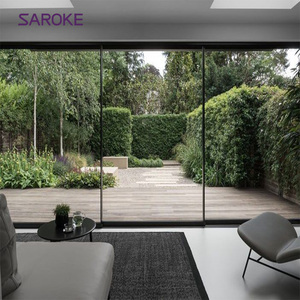
Export Portfolio
Certified Architectural Fenestration Systems
Factory-direct structural glazing, cottage-profile systems, and thermally partitioned profiles engineered to fulfill strict European Building Regulations (Gebäudeenergiegesetz - GEG) and passive structural thresholds.
Industry Whitepaper Analysis
Precision Engineering for the German Fenestration Market
Addressing the structural, acoustic, and thermal insulation requirements for high-performance aluminium cottage window systems under DIN EN ISO 10077 and GEG frameworks.
0.8 W/m²K
Uw Capability (Passivhaus Ready)
RC2 / RC3
Burglar Resistance (DIN EN 1627)
Class 4
Air Permeability (DIN EN 12207)
180,000 m²
Extrusion & Assembly Capacity
Polyamide Thermal Barriers
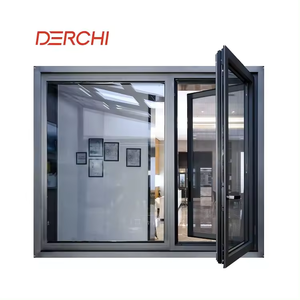
Standard aluminium alloys feature elevated thermal conductance. DERCHI incorporates multi-chamber, fiberglass-reinforced PA66 (polyamide) isolator strips up to 34mm depth. Coupled with polyurethane foam aerogel infusion, this stops thermal conduction cold bridges, bringing total window thermal transmittance down to Uf values < 1.2 W/m²K.
Aesthetic Sprossen Configuration
Cottage style (Landhausstil) demands authentic historical sightlines. We provide both True Divided Lites (TDL) with independent insulated glass units and internal/external simulated Georgian bars (Wiener Sprossen). Extruded profiles preserve traditional aesthetics while maintaining complete hermetic perimeter sealing.
Hardware Compatibility
Seamless accommodation of standard European Euro-groove hardware systems. Products can be integrated with Siegenia, Roto, or G-U tilt-and-turn (Dreh-Kipp) mechanisms, concealed multi-point perimeter mushrooms, and anti-drill backplates ensuring compliance with DIN EN 1627 security thresholds.
Technical Parameters
Structural Performance Benchmarks (DIN Standards)
Standard parameters verified against German structural and energetic specifications for retrofit and new construction programs.
| Performance Indicator | German Standard Benchmark | DERCHI Cottage Profile Specification | Compliance Note |
|---|---|---|---|
| Thermal Transmittance (Uw) | GEG Requirement: ≤ 1.30 W/(m²K) | 0.85 – 1.10 W/(m²K) | Exceeds standard requirements; suitable for KfW 40/55 efficiency houses |
| Burglar Resistance (Einbruchschutz) | DIN EN 1627: RC2 / RC2N recommended | RC2, RC3 Certified Configurations | Multipoint locks, laminated safety glass (P4A/P5A), anti-jemmy keeps |
| Acoustic Insulation (Schallschutz) | DIN 4109: Class 3 to Class 5 | Rw up to 45 dB | Asymmetric soundproof glazing configuration with acoustic PVB interlayers |
| Air Permeability (Luftdichtheit) | DIN EN 12207: Class 3 or 4 | Class 4 (600 Pa) | Triple EPDM continuous co-extruded gasket seal perimeter |
| Resistance to Wind Load | DIN EN 12210: Class C3 / B4 | Class C5 (≥ 2000 Pa) | High moment of inertia (Ix/Iy) profile reinforcements |
Architectural Applications
Localized Applications Across the German Market
Optimized for regional climates and strict municipal preservation codes throughout Germany, from Alpine zones to heritage city centers.
Denkmalschutz & Urban Retrofits
Preserving architectural heritage within historical centers (Altstadt) requires narrow sightlines that harmonize with strict preservation regulations (Denkmalschutz). Our ultra-slim aluminium cottage systems faithfully reproduce historical grid aesthetics without the maintenance vulnerabilities of wood or the structural heft of uninsulated plastics.
Bavarian Alpine Climates
In regions like Upper Bavaria and the Black Forest, window assemblies confront extreme thermal swings, sub-zero winters, and dense snowdrifts. Combining insulated PA66 breaks with structural triple warm-edge glazing (Argon-filled, 4mm-16Ar-4-16Ar-4) eliminates condensation risks and cuts radiant interior heat loss.
Modern Suburban Villas & Tiny Estates
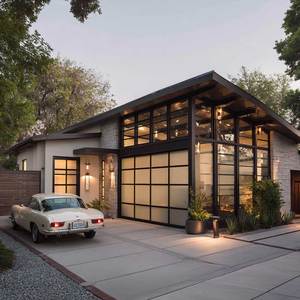
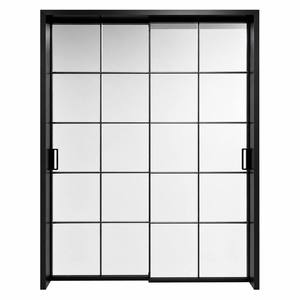
Modern German villas in dynamic regions around Frankfurt, Munich, and Berlin combine industrial loft touches with cottage grid sensibilities. Our customized Crittall-inspired partitions and floor-to-ceiling slim cottage casements blend open sightlines with dynamic German Tilt-and-Turn operations.
Strategic Trends
Evolving Trends in the German Building Sector
How legislative updates and design shifts are shaping modern fenestration requirements.
Tightening GEG 2024 Criteria
The revisions of the Gebäudeenergiegesetz push architects toward holistic envelope efficiency. fenestration is no longer judged solely on glass performance (Ug); total window metrics (Uw) below 0.9 W/m²K are becoming the baseline for new builds seeking state subsidies (KfW Förderung).
Circular Economy & Recyclability
The German market increasingly mandates verified lifecycle assessments (Ökobilanzierung). Unlike PVC compounds that degrade across extrusion recycling cycles, structural architectural aluminium retains mechanical purity, supporting circular economy guidelines (DGNB certification).
Acoustic Comfort in Dense Hubs
Accelerating inner-city densification around metropolitan transport arteries has positioned acoustic decoupling front and center. Multi-cavity gasket channels paired with varied glass thicknesses neutralize urban traffic noise effectively.
Enterprise Strengths
Why Direct Sourcing from DERCHI Delivers a Competitive Edge
Consolidating engineering precision, cost efficiency, and certified export execution.
180,000 m² Production Base
Based in Foshan—the hub of aluminium manufacturing—our automated plant employs 600+ personnel. We manage the full lifecycle internally, from direct profile extrusion and CNC precision corner-crimping to double-baking powder coating lines.
Recognized Global Performance
Backed by 25+ years of engineering experience and 100+ patents, our products pass extreme tests like AS2047 N6 wind resistance. We have supported a UK partner and long-term German Schüco collaborator across dozens of villas, underscoring our reliability for complex builds.
Direct CET Business-Hour Support
Avoid time-zone friction with our dedicated technical desk. Our English-speaking fenestration engineers synchronize with Central European Time (CET/MEZ) to review CAD shop drawings, confirm wind loads, and finalize performance schedules smoothly.
End-to-End European Logistics
Export goods travel inside steel-reinforced, vapor-barrier crates designed for container sea freight straight to Hamburg, Bremen, or Rotterdam. We coordinate with local German forwarding agents to streamline on-site deliveries and curb delays.
Full Material Customization
Whether projects demand textured architectural Qualicoat powder coatings, DB 703 micaceous iron ore tints, custom anodized bronze, or RAL classic matching, our production tracks your schedule without imposing large minimum orders on bespoke runs.
BIM & Specification Support
We supply detailed 2D/3D CAD cross-sections and BIM models early in design. This simplifies coordination for German architects and general contractors, making client sign-offs and regulatory approval steps more predictable.
Procurement FAQ
Questions German Buyers Ask About Direct Sourcing
Addressing compliance, installation, tariffs, and performance documentation for German specifiers.
Do your aluminium cottage windows comply with German GEG 2024 and DIN EN 14351-1?
Yes. Every assembly shipped to Germany carries CE marking supported by a Declaration of Performance (DoP) under EN 14351-1. For the thermal envelope, our polyamide thermal breaks, triple-sealed EPDM configurations, and triple argon-filled glazing hit overall Uw values below 1.1 W/(m²K), meeting both GEG mandates and higher efficiency benchmarks for KfW 40/55 subsidized renovations.
Can DERCHI integrate German-made hardware systems like Siegenia, Roto, or G-U?
Yes. Our extrusion tooling relies on standard Euro-groove channels (Standard-Euronut). We routinely equip sash and frame components directly with genuine Siegenia or Roto Dreh-Kipp (Tilt-and-Turn) running gear, concealed hinge tracks, mushroom head security cams, and German-spec lock sets based on order requirements.
How do you handle site dimensions and architectural approvals (Freigabezeichnung)?
We follow a structured sign-off flow: Before cutting begins, our engineering team draws CAD shop plans (Werkplanung) detailing exact millimetric dimensions, profile depths, drainage paths, glass make-ups, and Georgian bar alignments. Sashes go to production only after the German architect or project lead signs off on the drawings.
How are items packed to protect finishes on transit into German ports?
All units are protected with PE peelable film over visible metal faces, corner protectors on outer angles, sealed shrink-wrap against moisture, and solid plywood sea crates reinforced with steel strapping. This keeps sea humidity and port handling from damaging coatings across long hauls into Hamburg, Bremerhaven, or Rotterdam.
What are the typical lead times and customs arrangements (DDP/CIF)?
Standard manufacturing takes 25 to 35 business days following drawing sign-off and deposit receipt. Sea freight to North European ports typically requires roughly 28 to 35 transit days. We quote on flexible Incoterms, covering CIF, FOB, or end-to-end DDP (Delivered Duty Paid), which manages German import processing, customs clearance, and road transit right to site.
Ready to Engineer Your Window Package for the German Market?
Send through your window schedule, architectural drawings, or tender specifications. Our technical engineering team will review requirements and deliver a detailed CAD proposal with full thermal documentation.