Certified Life Safety · UL 10C / UL 10B / NFPA 252 Compliant
UL Fire-Rated Door Procurement & Engineering Guide
How to specify, verify, and source certified 20-to-180 minute fire-rated steel, aluminium-composite, and oversized pivot doors for high-performance architectural developments.
A certified UL fire-rated door is not merely a single slab; it is a meticulously engineered, interdependent life-safety opening assembly comprising frame anchors, structural cores, intumescent seals, and listed hardware. Guangdong Dejiyoupin Doors and Windows Co., Ltd. provides tested solutions configured to withstand destructive furnace exposure and critical high-pressure hose-stream impact tests under Underwriters Laboratories standards.
Specifying fire doors requires navigating exact code parameters. Sourcing non-harmonised components can invalidate insurance coverage and fail building control inspections. Review our tested configurations below.
Fire Rating & Standard
Core & Internal Structure
Max Certified Leaf Size
Glazing & Vision Lite Limit
Mandatory Hardware & Gasketing
20-Minute (UL 10B / UL 10C) Smoke & Draft Assembly
Engineered composite mineral core / Solid structural timber matrix
Single: 1200 × 3000 mm Double: 2400 × 3000 mm
Up to 1.93 m² (3000 sq in) Listed fire-rated ceramic or wire glass
Heavy-duty 1.5mm - 2.0mm steel sheets over poured/compressed perlite insulation
Single: 1400 × 3200 mm Double: 2600 × 3200 mm
Opaque panel default (Specialist 180-min rated prism lites on request)
Three-point fire bolt locks, UL heavy-duty overhead concealed closers, fire-rated expansion bolts.
Critical Engineering Note: Field modification, unauthorised drilling, or fitting non-UL listed trim will instantly void the factory-applied UL metal certification label. Guangdong Dejiyoupin Doors and Windows Co., Ltd. machines all lock cutouts, wire raceways, and hinge mortises via automated CNC machines prior to label application.
Enterprise Authority
Guangdong Dejiyoupin Doors and Windows Co., Ltd.
Recognised as one of China's top 10 premium manufacturers in the architectural fenestration sector, Guangdong Dejiyoupin Doors and Windows Co., Ltd. represents 25+ years of continuous engineering leadership. Operating from Foshan—the world's foremost centre for advanced architectural metal fabrication—our industrial base spans over 180,000 square metres.
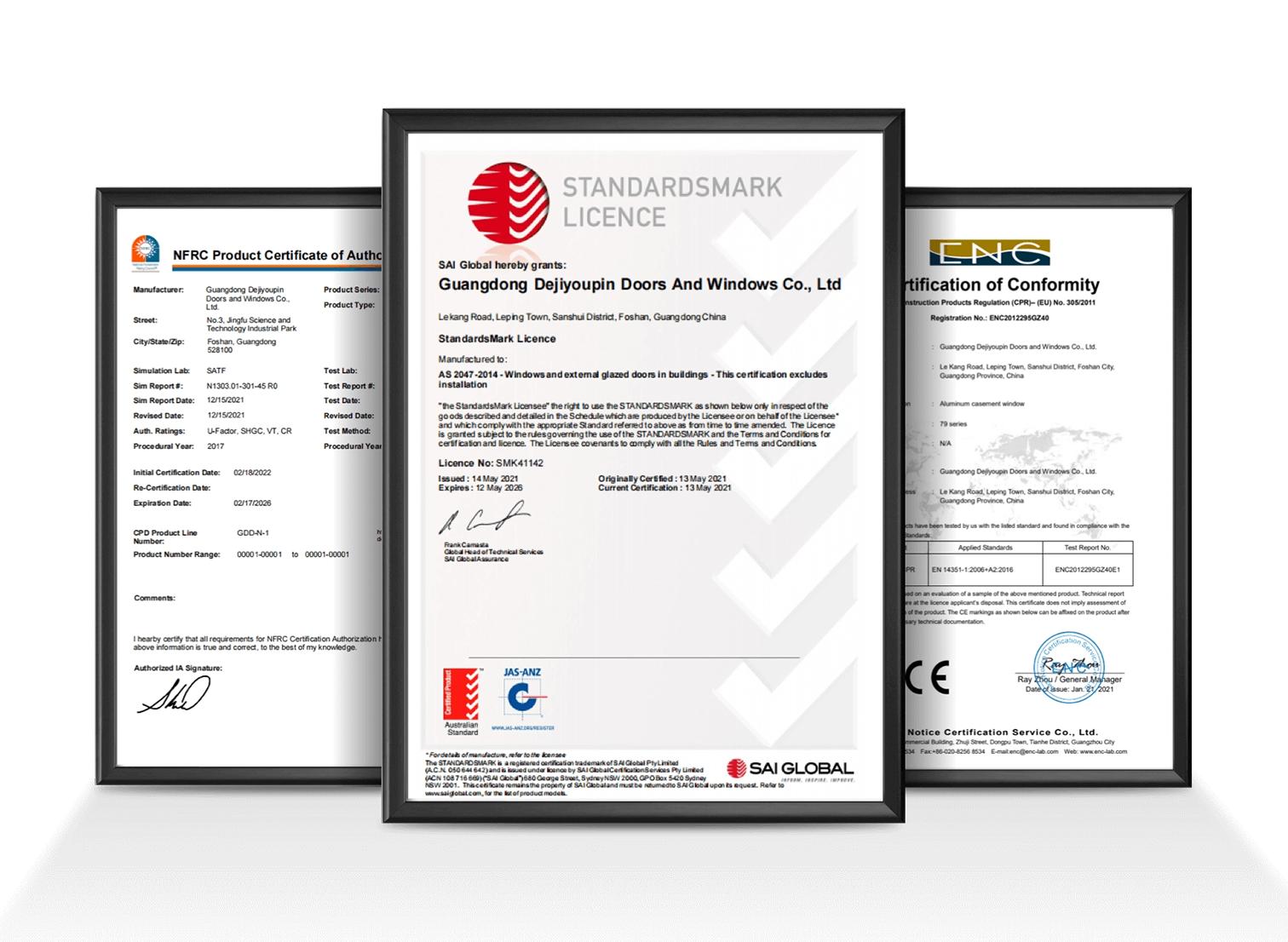
We do not broker generic doors; we design, test, extrude, and fabricate comprehensive entry solutions for international Tier-1 builders, architects, and facade contractors. Our engineering department works in lockstep with standards bodies to guarantee full conformity with North American UL standards, European CE (EN 1634-1, EN 14351-1), and Australian AS 2047 frameworks.
Full-scale testing protocols with certified metallurgical and fire-core consistency
Recognised supplier for prestigious multi-villa and hospitality contracts internationally
Proprietary CNC tooling capable of maintaining tight ±0.5mm tolerances on structural frames
Why Commercial Specifiers Choose Our UL Assemblies
Resolving the friction between strict fire code compliance and contemporary minimalist architectural aesthetics.
Full Assembly Certification
Every frame, door leaf, glass insert, and hardware cut is UL-listed together as a single harmonious assembly. No jurisdictional red-tape on jobsite sign-offs.
Complimentary custom shop drawings and full submittal documentation designed to match your schedules, section cuts, and rough wall anchor profiles.
Direct-from-Factory Value
By eliminating multiple tiers of export brokers, our 180,000 m² Foshan factory delivers direct price advantages with predictable lead-time scheduling.
Rigorous Testing
Tested to the Limits of Thermal Stress
Life-safety fire doors must withstand extreme conditions. Our UL-certified assemblies are subjected to furnace temperatures escalating above 1000°C (following standard time-temperature curves) followed instantly by the devastating high-impact water jet stream of the UL Hose Stream Test—confirming that the door panel will not buckle or blow open under thermal blast conditions.
Global building codes have largely phased out neutral-pressure testing (UL 10B) in favor of UL 10C positive pressure. This replicates real fire physics by forcing heat and hot smoke outward above the 40-inch neutral axis plane, making integrated edge intumescent seals mandatory for modern commercial approvals.
Thermal Barrier Multi-Functionality
Commercial specifiers no longer accept doors that only provide fire separation. The emerging requirement demands high thermal resistance (low U-values), sound deadening (up to STC 45), and hurricane-rated wind load protection seamlessly engineered into a single UL-stamped opening.
Invisible Smart Egress Hardware
Bulky external panic bars and traditional surface-mounted closers are yielding to fully concealed electro-magnetic power transfers, automated concealed floor springs, and IoT fire alarm-integrated locking systems capable of microsecond automated sealing during central alarm trips.
Manufacturing Protocol
From Specification Schedule to Site Handover
Ensuring zero-error fabrication for high-liability fire protection assemblies.
01
Code Audit
Review of UL ratings, wall types & egress
02
CAD Approval
Shop drawing sign-off with UL hardware schedule
03
Core Forming
High-density non-combustible core lamination
04
CNC Machining
Pre-drilled factory mortises for certified trim
05
UL Labeling
Individual serialization & third-party labeling
06
Crated Export
Reinforced sea freight packing to site
Engineering & Submittals
In-house drafting team matches rough wall openings, anchor systems, and panic hardware schedules to local life safety codes.
Precision Quality Control
Dimensional tolerance audits (±0.5mm), latch clearance verifications, and gap calibration to fulfill NFPA 80 compliance criteria.
Engineered Export Crating
Corner-armored, moisture-barrier wooden crating designed for safe intermodal container ocean logistics to global destinations.
Installation Support
Clear field installation manuals, torque specs, and remote video technical consulting during regional installation phases.
Virtual Verification
Inspect Our Manufacturing Lines in 360°
Gain transparent verification of our 180,000 m² Foshan facility, advanced automated laser cutting lines, frame folding bays, and core lamination workshops.
What is the critical difference between UL 10B and UL 10C certifications?
The fundamental difference lies in air pressure dynamics during the test. UL 10B is a neutral or negative pressure fire test where air flows into the furnace through door perimeter gaps. In contrast, UL 10C enforces positive pressure testing, where the neutral pressure plane is established at 40 inches above the sill. Everything above 40 inches experiences outward positive pressure, forcing flames, extreme heat, and combustion gases against door perimeter cracks. This requires the integration of Category G/H intumescent edge seals to prevent flame-through. Modern international codes (such as IBC and NFPA 5000) specify UL 10C compliance for commercial occupancies.
Can our project installers drill hinge or lock mortises on site without voiding the UL label?
No. Under NFPA 80 (Standard for Fire Doors and Other Opening Protectives), field drilling or machining on a certified fire door is strictly restricted to minor surface applications (such as 1-inch diameter cylinder holes or small fastener pilot holes). Modifying mortises, adding non-factory vision lites, or trimming edges will immediately revoke the door’s certification and cause building inspector rejections. Guangdong Dejiyoupin Doors and Windows Co., Ltd. machines every cut, lock pocket, and raceway in our factory based on your approved door hardware schedule prior to applying the metal certification label.
What is the distinction between "Fire-Protective" and "Fire-Resistive" glazed doors?
Fire-protective glazing (tested to UL 9 or NFPA 257) blocks smoke and flames but does not block radiant heat transfer. Consequently, building codes generally restrict its application to 20 or 45-minute openings with maximum area limits (such as 100 or 1296 sq in) to prevent spontaneous ignition of items on the unexposed side. Fire-resistive glazing (tested to ASTM E119 / UL 263 / UL 10C) utilizes intumescent multi-laminates that foam up to become opaque fire barriers, effectively blocking radiant heat transmission. This allows architects to specify expansive floor-to-ceiling glass wall and door systems with 60, 90, or 120-minute certifications without size penalties.
How are fire doors verified upon arrival at our international construction site?
Every door leaf and matched frame manufactured by Guangdong Dejiyoupin Doors and Windows Co., Ltd. carries a permanent, serialized metal UL label riveted directly to the hinge edge of the leaf and the rebate of the frame. This label displays the fire rating duration (e.g., 60 Min, 90 Min, 3 Hour), test criteria (UL 10C), hourly temperature rise rating (if applicable), and an individual traceability serial code registered with Underwriters Laboratories for third-party auditing.
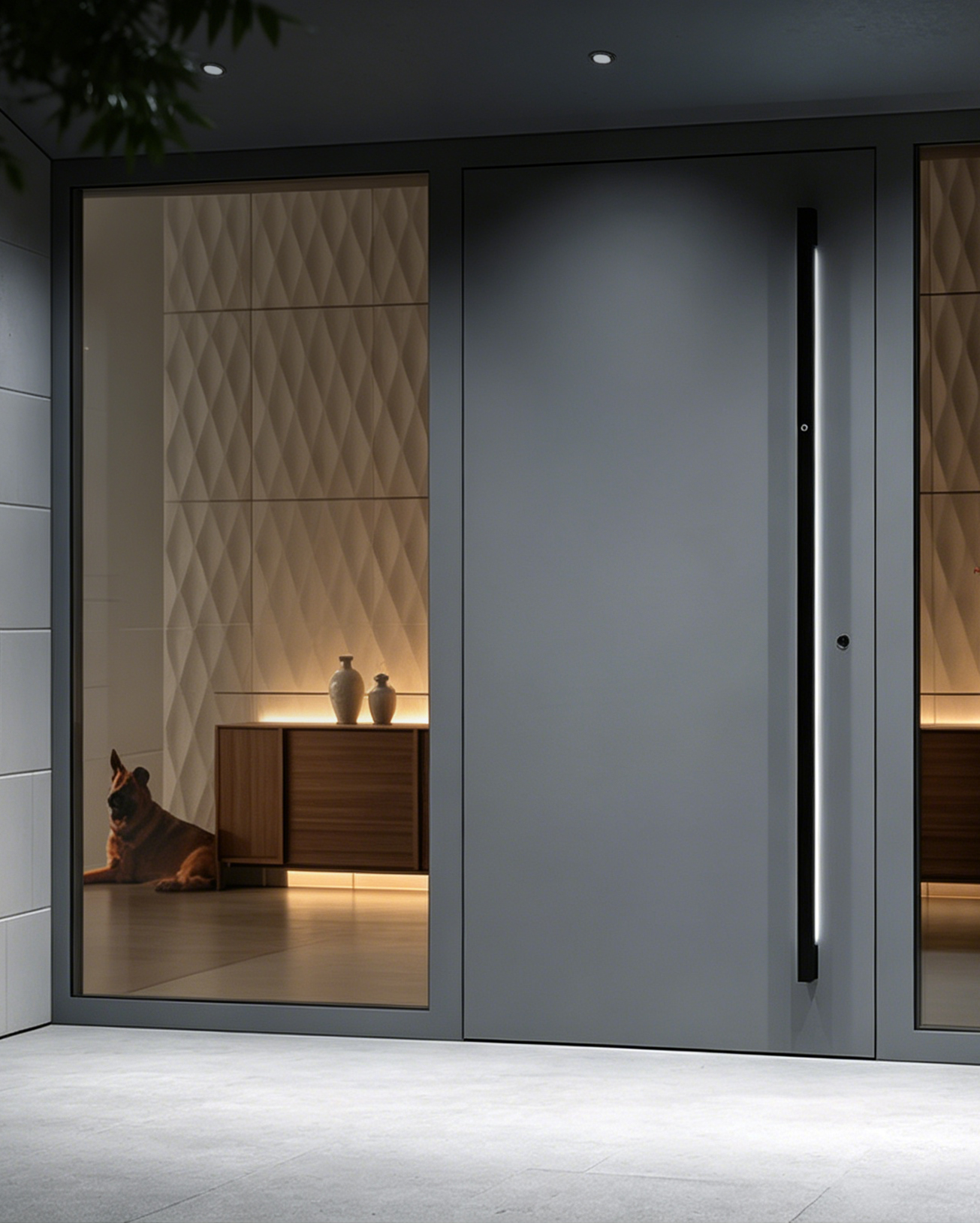
Can oversized pivot doors achieve authentic UL fire certification?
Yes. While pivot configurations were historically challenging due to clearance gaps and thermal warp under furnace heat, Guangdong Dejiyoupin Doors and Windows Co., Ltd. has engineered specialised internal multi-axis thermal lock pins, perimeter automated drop seals, and intumescent graphite core liners. Our fire-rated pivot assemblies achieve authentic 60-to-90 minute positive pressure compliance up to monumental heights of 3.2 meters.
Project Consultation
Submit Your Fire Door Schedule
Our engineering team provides comprehensive tender analysis, compliance validation, and shop drawings. Include your project parameters for accelerated response: